REVIEW · SIEM REAP
Experience Tranquility: Kampong Phluk Floating Villages Tours
Book on Viator →Operated by Marvel Angkor Tours · Bookable on Viator
Floating villages feel different than land tours.
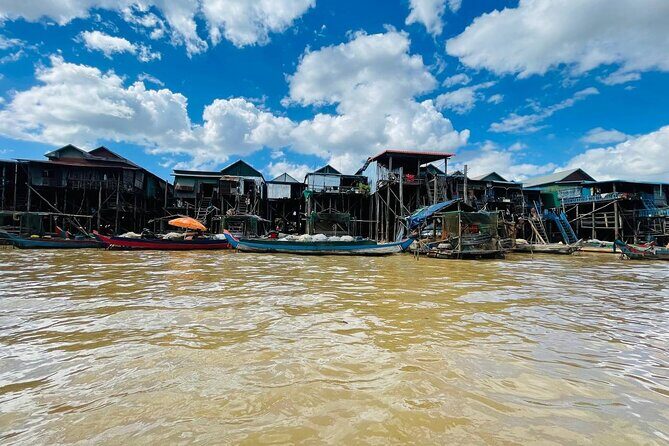
You head out toward Kampong Phluk on Tonle Sap Lake, where stilted houses sit above the water and everyday life spills right onto the waterway. I like that the experience is set up with a professional photographer so you get practical help for better shots, not just a quick stop-and-go photo moment.
My favorite part is the guide energy. When Mr. John runs the tour, he’s funny in a way that keeps things light, and he shares clear context about culture and life around the lake. In another guide experience, Mr. Pich brings strong knowledge of history and culture for the area, and the whole outing stays engaging.
One thing to plan for: it’s mostly outdoors and on the water for a few hours, so heat, sun, and getting a little wet are part of the deal. If you hate sun exposure, this tour will be harder to enjoy.
In This Review
- Key highlights worth your time
- Getting to Kampong Phluk: the Tonle Sap part of the day
- Tonle Sap Lake first: stilt homes and real community spaces
- The flooded forest: mangroves by boat (and why it’s special)
- Pepper farm and a Buddhist temple: the side of Kampong Phluk beyond water
- Photography with a pro: how this tour helps you take better shots
- Price and what $235 buys you in real terms
- Guides who keep it fun: Mr. John and Mr. Pich’s style
- Who should book this tour (and who should think twice)
- Should you book Kampong Phluk with this provider?
- FAQ
- How long is the Kampong Phluk Floating Villages tour?
- What does the $235 price include?
- Is pickup available?
- Is food included?
- Are admission tickets included?
- Is this tour private?
- What should I wear for the pagoda?
- Do I need to cover up from the sun?
- Is free cancellation available?
Key highlights worth your time
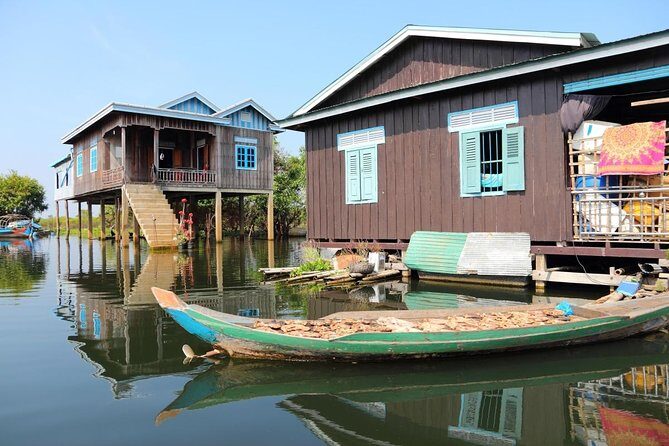
- Stilted village life: you’ll spot houses plus practical community buildings like restaurants, schools, and even a health clinic on the water
- Flooded forest boat ride: you’ll go through mangrove trees in a flooded forest setting that’s hard to replicate elsewhere
- Dry-land add-ons: a stop at a pepper farm and a Buddhist temple rounds out the experience beyond the water
- Private for your group: only your group participates, so your pace and questions stay yours
- Smart inclusions: transport, an English-speaking guide, a boat, and drinking water are included
- Dress and sun rules: cover up for sun, and bring clothing that meets pagoda rules (shoulders and knees covered)
Getting to Kampong Phluk: the Tonle Sap part of the day
This trip starts in Siem Reap, then moves you toward Tonle Sap Lake for a full taste of the floating village lifestyle. You’ll have transport included, and pickup is offered, which matters because you don’t want to burn half your day figuring out roads and boats.
The timing is built for a half-day window: about 4 to 5 hours. That’s long enough to see more than one side of the area (village + flooded forest + dry-land stops), but short enough that you won’t feel trapped. If you’re also doing Angkor-area temples that day or the next, this format helps you keep your schedule sane.
One small but real plus: the tour is private to your group. That means you can ask your guide to slow down when you see something interesting—like the way the village structures sit high on stilts—without competing with a bigger crowd.
You can also read our reviews of more tours and experiences in Siem Reap.
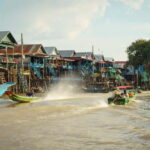
Tonle Sap Lake first: stilt homes and real community spaces
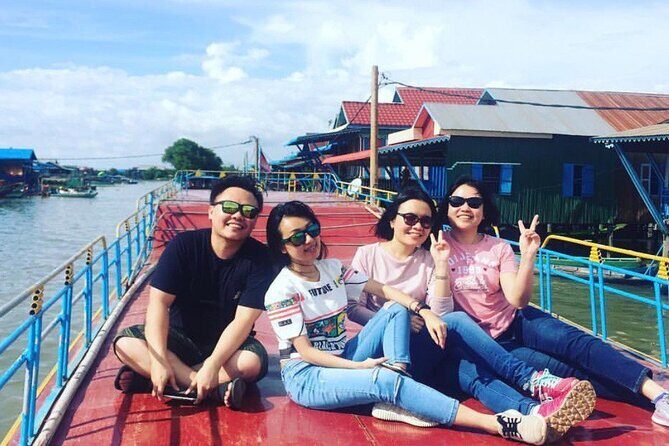
When you reach the floating village area at Tonle Sap, you’re not just looking at houses on water. You get to see how daily life is organized around it.
Here’s what stands out visually right away: homes on high stilts keep living spaces above the water level. And as you explore, it’s not only residential. You can also see practical community buildings on the water—things like restaurants, schools, and a health clinic. Seeing that mix changes the way you look at the place. It stops being a “tourist floating village” photo set and starts feeling like a functioning community.
You’ll also notice there are routes and sightlines shaped by the waterway itself. That’s why a guided visit helps. A good guide points out what you’re actually seeing and gives context for how people make the lake part of everyday routine.
Dress tip that matters here: plan for sun. Even if it’s breezy on the water, the time outside adds up fast. The tour strongly suggests clothing that covers your body from the sun, and that’s honestly the difference between a comfortable day and a miserable one.
The flooded forest: mangroves by boat (and why it’s special)
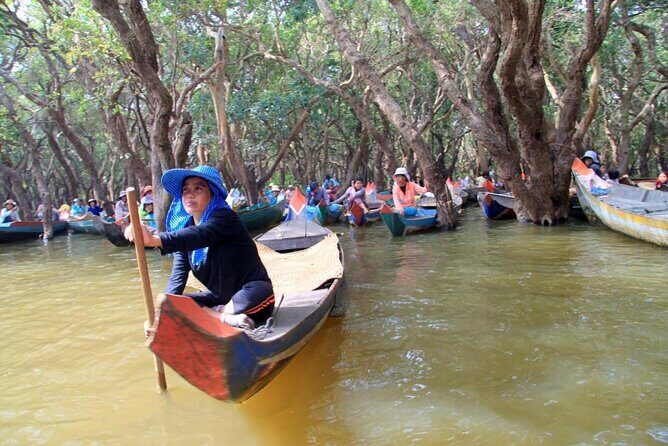
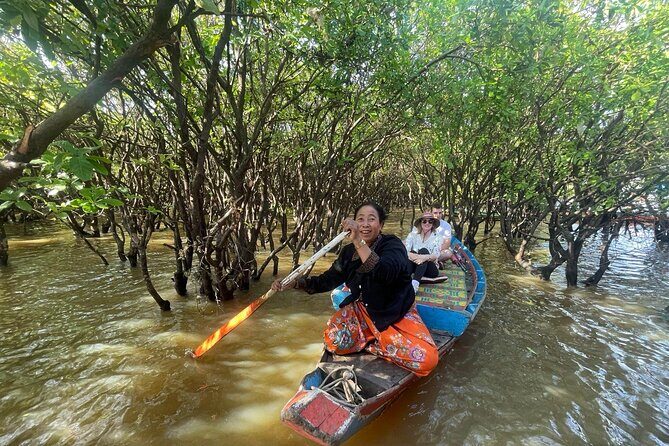
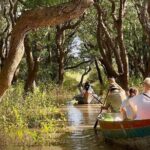
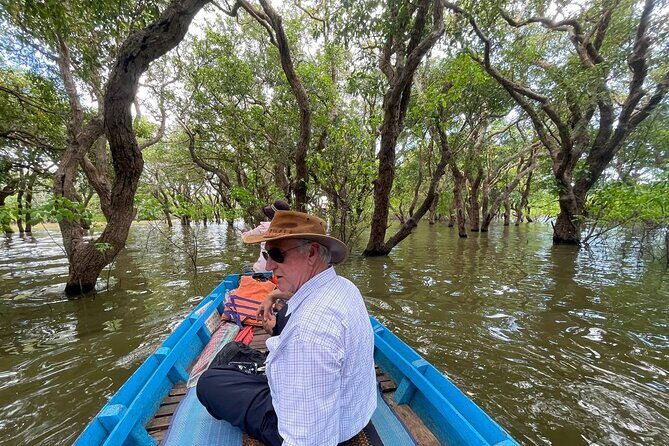
The flooded forest section is the moment that tends to linger in your memory. You’ll go for a boat ride through mangrove trees, which is exactly the kind of Tonle Sap detail that most land-based tours can’t match.
This is where you slow down—because the environment doesn’t work like a typical pathway. You’re moving through waterways bordered by mangrove growth, and it feels more like you’re traveling through a living system than just visiting a place.
Practical note: you should expect you’ll be on the boat experience during this part. So if you’re sensitive to being out on the water—wind, splash, the possibility of cooler air—dress for that. Bring or wear something you don’t mind getting damp.
Why this stop is valuable: it’s not only a scenery moment. It helps you understand that the lake environment isn’t a flat background; it’s part of how the community lives and how the area changes with flooding conditions.
Pepper farm and a Buddhist temple: the side of Kampong Phluk beyond water
After you return to dry land, the day widens a bit. You’ll visit a local pepper farm and then a Buddhist temple.
The pepper stop is a nice break from pure “water view” time. It gives you a more grounded sense of local agriculture and how the surrounding region supports livelihoods. Even if you’re not buying anything, it’s a useful reminder that floating village life connects to land activity too.
Then comes the temple visit. This is where the tour’s clothing guidance is not optional. When entering the pagoda area, you must cover your shoulders and knees. If you show up in shorts or a sleeveless top, you’ll either be uncomfortable or need a workaround. I’d rather you be prepared than scramble.
This temple stop also gives you a change in pace after the boat ride. The flooded forest can be physically and visually intense. The temple adds quiet, simple structure to the day.
Photography with a pro: how this tour helps you take better shots
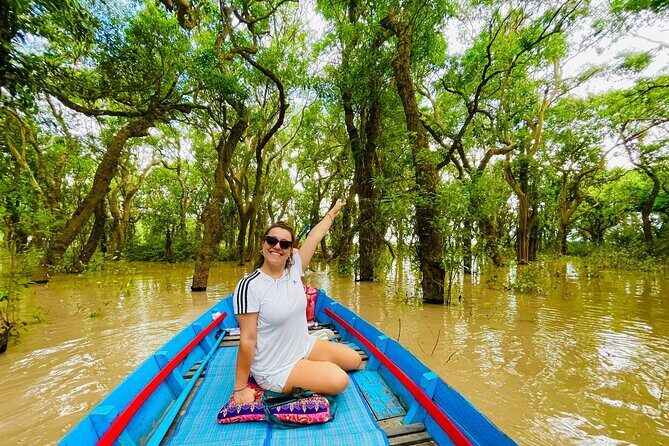
The tour is described as being enhanced by a professional photographer, and that’s a big deal for two reasons.
First, you’re dealing with tricky lighting and movement. You’ll be photographing water reflections, stilt structures, and people in everyday settings. Second, you’re photographing in an environment where respect matters—so it’s helpful when guidance is about framing and timing, not just where to point your camera.
If photography matters to you, here’s what I’d pay attention to while you’re there:
- Look for lines created by the water and the stilt platforms—these lead your eye through the scene
- Don’t ignore context shots. A wide view tells a story. A close detail shows life and craft
- Use your guide’s input to avoid random snapping. Ask what’s most important to capture
Even if you’re not a “serious camera” person, this part still helps. It can make your photos feel more intentional and less like you were just documenting a stop.
Price and what $235 buys you in real terms
The price is $235 for a half-day experience around Tonle Sap and Kampong Phluk. You’ll want to judge this by what’s included, not by the setting alone.
Here’s what the package covers:
- Transport
- An English-speaking tour guide
- A boat
- Drinking water
What’s not included:
- Food and drinks
- Admission ticket
So the value question becomes simple: you’re paying for guided time plus the boat-based access that makes this trip possible, along with a private-group setup. If you try to recreate this on your own, you’ll spend time arranging boats and a guide, and those logistics can quietly become the most expensive part.
My honest take: this price starts to make sense when you want more than a quick sightseeing pass. The private feel, the boat and flooded forest segment, plus the pepper and temple stops are the cost drivers.
Big planning point: since food isn’t included, don’t let hunger hijack the second half of the tour. Either eat beforehand or plan to grab something after.
Guides who keep it fun: Mr. John and Mr. Pich’s style
One reason this tour works is the guide tone. In one experience, Mr. John brought humor and kept the day fun while also sharing a lot about culture. That combination matters because floating village life can be both fascinating and emotionally serious. A lighter touch helps you stay present.
In another experience, Mr. Pich was praised for having strong knowledge of the history and culture connected to the area. That’s the other half of a good day: not only “what you’re seeing,” but also “why it matters.”
If you care about getting real context, these guide styles are the difference between a camera walk and a meaningful guided visit.
Who should book this tour (and who should think twice)
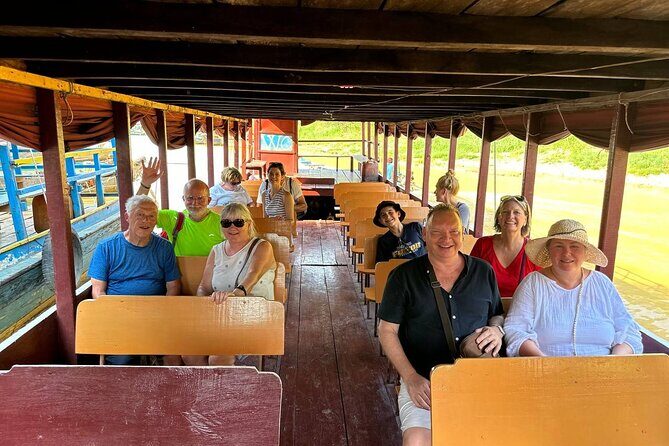
This tour suits you if you want:
- A half-day outing from Siem Reap that includes water + flooded forest
- A guided look at how people live in a place where water isn’t scenery—it’s infrastructure
- Better-than-average photo time thanks to the professional photographer support
- A private-group feel where your questions actually get answered
Think twice if:
- You’re very heat-sensitive, because you’ll be outside most of the day
- You strongly dislike boats or the feeling of being on water for part of your trip
- You need a strict full meal included—food and drinks are not part of the package
Should you book Kampong Phluk with this provider?
I think you should book it if you’re the kind of traveler who wants more than “pretty water views.” The best reason to go is the mix: stilt village life, a mangrove flooded forest boat ride, then dry-land stops like a pepper farm and a Buddhist temple.
The tour also feels like good value when you factor in what’s actually included: transport, guide, boat, and drinking water, plus photo support. Just come prepared for the sun and wear the right clothing for the temple.
If your ideal day is comfortable, low-effort touring with no sun exposure and no water time, you may be happier choosing something more land-based. But if you want a memorable Tonle Sap experience, this is the kind of trip that delivers.
FAQ
How long is the Kampong Phluk Floating Villages tour?
The tour lasts about 4 to 5 hours.
What does the $235 price include?
Transport, an English-speaking tour guide, a boat, and drinking water are included.
Is pickup available?
Yes, pickup is offered.
Is food included?
No. Food and drinks are not included.
Are admission tickets included?
Admission ticket is not included.
Is this tour private?
Yes. It’s a private tour/activity, and only your group participates.
What should I wear for the pagoda?
When entering the pagoda, you must cover your shoulders and knees.
Do I need to cover up from the sun?
Yes. The tour suggests wearing clothes that cover your body from the sun since you’ll be outside most of the day.
Is free cancellation available?
Yes. You can cancel up to 24 hours in advance for a full refund.