REVIEW · SIEM REAP
Cambodian Village Cooking Class
Book on Viator →Operated by beyond. unique escapes · Bookable on Viator
Siem Reap cooking starts like a food hunt. You ride out to a rural cooking garden after a market walk at Psar Chaa Old Market with guide Sophia, and you cook with local chefs such as Sunat. I love the market-to-meal flow, because you know exactly why each ingredient ends up in your plate.
Heat can be a real issue in Cambodia, but this class is set up so you can keep moving without feeling cooked alive. The one thing to plan around is timing: if people are late to the meeting point, the market portion can get slower.
In This Review
- Key highlights at a glance
- Why this cooking class feels worth your time in Siem Reap
- Psar Chaa Old Market: where you learn what Khmer cooking starts with
- Riding out to the garden pavilion: transport that keeps the day easy
- The lakeside cooking setup: open-air teaching where you can actually follow along
- Your Khmer menu: three dishes, three techniques, one take-home plan
- Fresh rice paper spring rolls
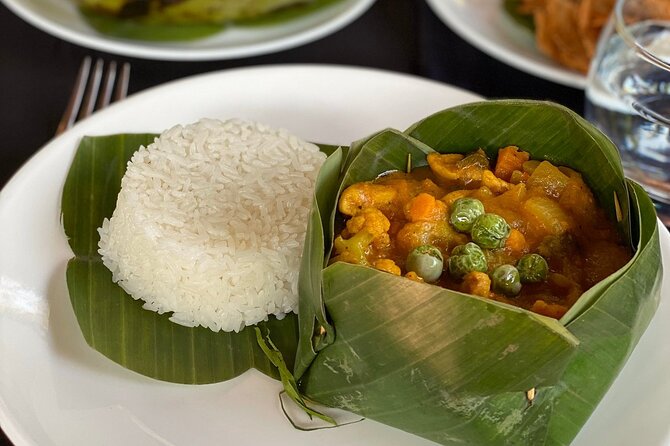
- Cambodian curry
- Bananas in palm sugar
- Eating what you cooked: the meal is part of the lesson
- Price and value: what $32 really covers in practice
- Timing tips and the one caution I’d repeat
- Who should book this class, and who might prefer something else
- Should you book Cambodian Village Cooking Class?
- FAQ
- Where does the Cambodian Village Cooking Class take place?
- How long is the cooking class?
- What does the price include?
- Do I get hotel pickup and drop-off?
- What dishes will I cook?
- Do you visit a market during the tour?
- Can dietary restrictions be handled?
- How big is the group?
- What is the cancellation policy?
Key highlights at a glance
- Psar Chaa Old Market first: Learn what to buy and what to look for in Khmer ingredients
- Small group (max 8): Easier questions and more hands-on help
- Tuk-tuk hotel pickup and drop-off: No stress on transport after temples and tours
- Three dishes you actually cook: Fresh rice paper spring rolls, Cambodian curry, bananas in palm sugar
- Lakeside garden pavilion setting: A calm, pretty place to work and eat
- Take-home recipe book: Practical steps you can use at home
Why this cooking class feels worth your time in Siem Reap
This is one of those Siem Reap activities that breaks up the temple routine without becoming a tourist trap. You get a real local start in a working market, then you move to a purpose-built cooking space where you’re not just watching—you’re cooking.
The small-group size (up to 8) matters more than you might think. With a bigger class, you can end up waiting your turn while someone else chops. Here, the pace stays human, and you can actually follow what the chef is doing—especially when it comes to timing and assembly.
I also like that you’re not stuck in a single room the whole time. The rhythm is simple: transport, market, cook, eat. Plus you’ll get practical comfort touches like bottled water and a cold towel, which makes a difference on a warm day.
You can also read our reviews of more tours and experiences in Siem Reap.

Psar Chaa Old Market: where you learn what Khmer cooking starts with
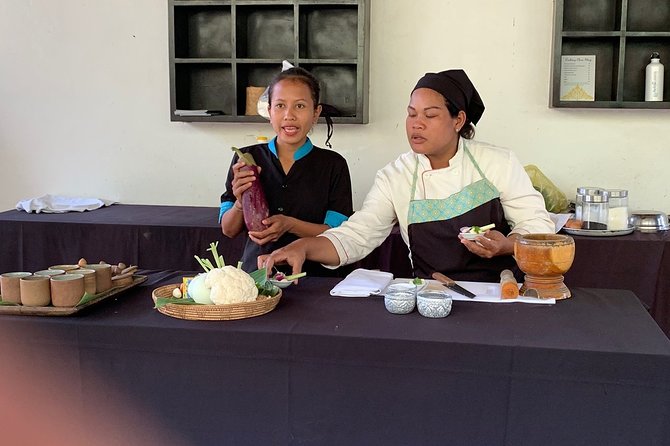
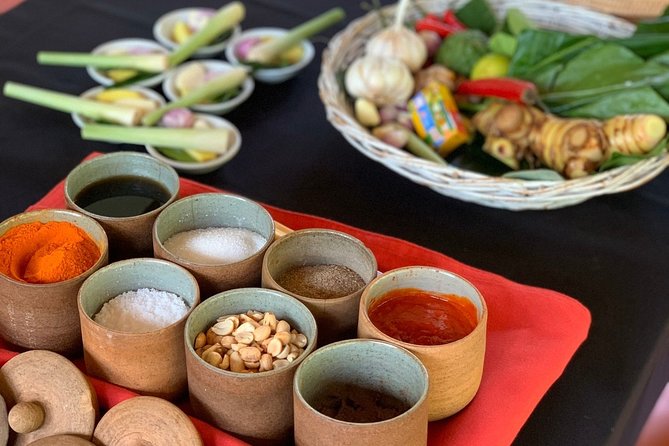
The tour begins at Psar Chaa – Old Market, and the point is not to admire stalls from afar. You walk through the market with your host/guide and learn how people shop for everyday Khmer food—produce, herbs, fruits, and the ingredients behind dishes you’ll cook later.
This part is especially useful because markets in Cambodia teach you more than names. You learn what ingredients look like when they’re fresh, how they’re grouped, and what families actually buy for meals. The guide Sophia is repeatedly mentioned in recent groups, and the common thread is that she keeps the explanations clear while pointing out what matters in real cooking.
You’ll also have chances to sample local items along the way (when available). That turns the market visit from sightseeing into a mini lesson. You start noticing flavors before you even reach the kitchen.
One practical note: the market walk can involve sun and walking time. Wear light clothes, bring water, and expect to move. If you’re sensitive to heat, this is still manageable, but plan to stay comfortable.
Riding out to the garden pavilion: transport that keeps the day easy
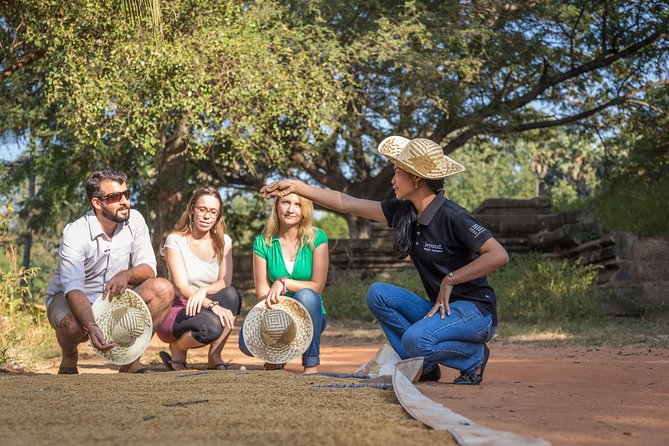
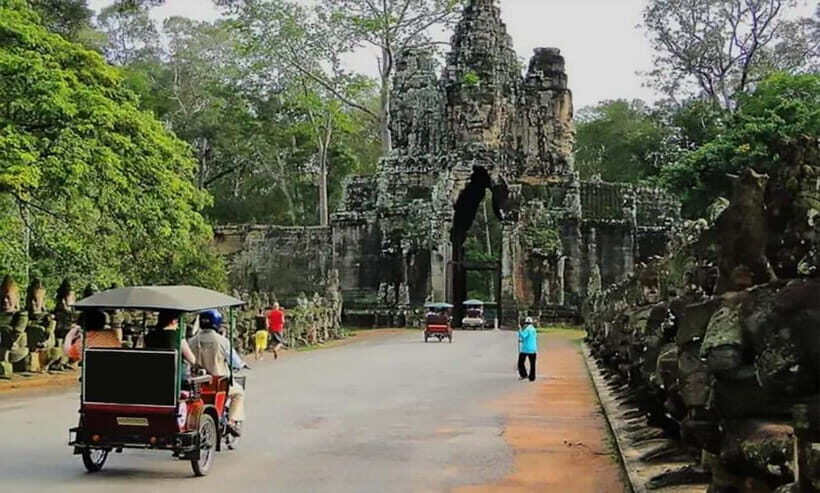
After the market, you head out by tuk-tuk to a rural cooking area outside Siem Reap. Hotel pickup and drop-off are included, so you don’t have to figure out transport or bargaining after a busy travel day.
This is a small detail, but it changes the whole experience. In Siem Reap, you can spend your energy on logistics—waiting for rides, getting back into a vehicle, and trying to time things around traffic. With a scheduled pickup, the day runs like a plan.
Many groups also highlight that tuk-tuk drivers are friendly and practical about pickup. Still, the main thing you control is being ready when they arrive. Go to the pickup point a few minutes early so you don’t stress the start.
The lakeside cooking setup: open-air teaching where you can actually follow along
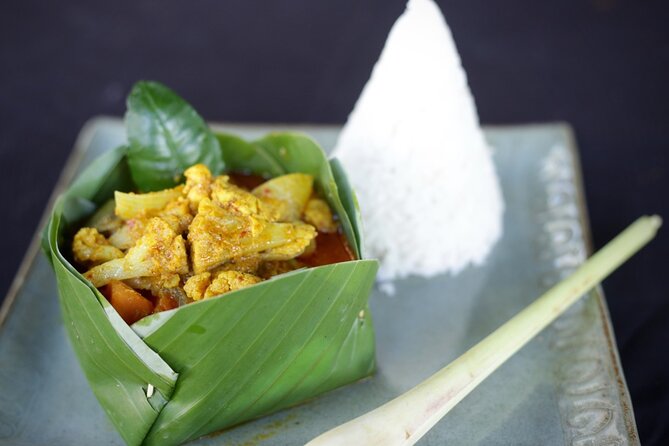
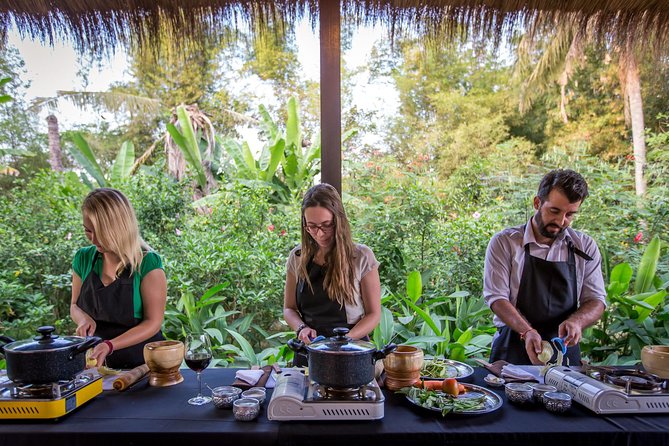
The cooking lesson happens at a purpose-built garden pavilion. One of the biggest advantages here is the setting: many groups describe the pavilion as modern and open-air, with a view of water nearby.
Why does that matter? Because when you’re cooking, you need to see what’s happening. A good kitchen setup keeps airflow moving, and it helps the chefs teach steps clearly—especially when you’re learning techniques for the first time.
Recent experiences also mention a calm, peaceful feel to the space, which turns what could be a chaotic “class” into something more like a focused, guided workshop. You’re still working hard enough to learn, but you’re not trapped in a stuffy room.
You’ll be working with chefs and assistants who guide you step by step. Some groups even mention learning skills like knife handling along the way. The overall vibe is supportive: you’re expected to participate, but you’re not thrown into the deep end.
Your Khmer menu: three dishes, three techniques, one take-home plan
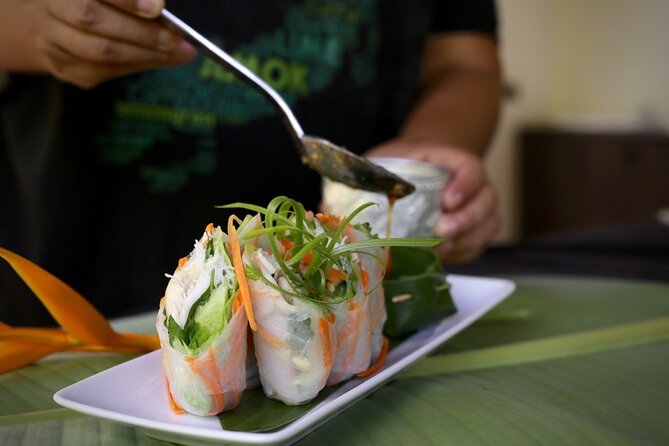
This class is built around a three-course menu, and you’ll make the dishes yourself under instruction. The menu is:
- Fresh rice paper spring rolls
- Cambodian curry
- Bananas in palm sugar



Fresh rice paper spring rolls
Spring rolls are a great first dish because they teach you the basics of assembling and timing. Rice paper can be forgiving, but it still asks you to pay attention—how you handle it, how you fill it, and how you finish it without turning everything into a sticky mess. If you’re worried about cooking in a hands-on class, spring rolls are usually a confident start.
You’ll learn the practical way locals approach this kind of dish, not just the final result. That’s what helps you recreate it later.
Cambodian curry
Curry is where Khmer cooking becomes much more than “spices in a pot.” You learn how curry works as a balance of flavors and textures. Even if you don’t leave with every ingredient memorized, you’ll understand the logic of the dish: how aromatics and sauces come together, and how the curry’s body forms.
If you like food with depth, curry is usually the dish that sticks in your memory.
Bananas in palm sugar
This dessert keeps the lesson grounded in everyday Khmer ingredients. Bananas + palm sugar is simple on paper, but it teaches you how sweet desserts should taste—warm, sticky, and not overly heavy. You get to see how the sweetness is controlled and how the final texture feels.
It also gives you a sweet ending that doesn’t require a lot of complicated gear back home. You can see the method and repeat it.
Eating what you cooked: the meal is part of the lesson
After cooking, you sit down for the 3-course meal you prepared. This is one of those moments that makes the whole class click. You stop thinking of it as “a class” and start thinking like a cook: what did I do, what changed, and why does it taste right?
You’ll also get a drink with your meal—either local beer or a soft drink, depending on what you choose. That small included choice matters, because it keeps the meal feeling complete rather than like a break between activities.
You’ll likely also be served in a setting that matches the pavilion’s peaceful look—near water—so it’s not just food. It’s a calm pause in the middle of your day.
Price and value: what $32 really covers in practice
At $32 per person for about 3 hours, this class can feel like a bargain when you count the pieces.
Here’s what you’re getting value from:
- Hotel pickup and drop-off by tuk-tuk (transport is usually where “cheap” tours get expensive later)
- A guide/host to explain ingredients and market context
- Hands-on instruction with a chef
- A full 3-course meal made by you
- A recipe book to take home
- Small comforts like bottled water and cold towels
So yes, you’re paying for cooking. But you’re also paying for a guided food education you can reuse at home. The recipe book is especially important. If you’ve ever done a cooking class and then forgotten how you made the dish, you know why this matters.
This class also keeps the group small, so you don’t feel like a number. That’s the kind of value that’s hard to “see” until you’re inside.
Timing tips and the one caution I’d repeat
Most classes run in the morning or afternoon. Plan your day so you have enough space afterward to digest food and not rush back into more heavy touring.
Also, be picky about timing at the start. One concern that comes up is that late people can slow the market portion. You can’t control other guests, but you can control your own punctuality. Show up early to the pickup point, and give yourself a few minutes for that last-minute meeting-point moment.
If you’re sensitive to heat, wear breathable clothing and don’t under-pack water, even though water is provided. The cooking part is set up to be comfortable, but Siem Reap weather still has its own opinions.
Who should book this class, and who might prefer something else
You should book if:
- You want a hands-on food lesson, not just a tasting tour
- You like understanding where ingredients come from—starting in the market
- You’d enjoy cooking three dishes instead of doing small samples
- You want a class with a calm lakeside setting, not a rushed kitchen cram session
You might skip or think twice if:
- You dislike walking in heat (even with cold towels, you’ll still spend time outdoors during the market visit)
- You’re the type who needs a perfectly fixed schedule with zero flexibility around other people’s timing
Should you book Cambodian Village Cooking Class?
My take: yes, if you want a real Khmer cooking day and not just another activity between temples. This experience has a smart structure—market first, then cooking, then eating what you made. The small group size, hotel tuk-tuk pickup, and take-home recipe book make the $32 feel practical, not gimmicky.
If you’re going to Siem Reap and only have time for one food-focused thing, this is a strong pick because you leave with both skills and ingredients’ context. Just arrive on time, wear light clothes, and come hungry—you’ll be fed well, and you’ll also understand what to recreate at home.
FAQ
Where does the Cambodian Village Cooking Class take place?
It runs in Siem Reap, with round-trip travel by tuk-tuk from your hotel to a rural village outside Siem Reap.
How long is the cooking class?
The experience lasts about 3 hours.
What does the price include?
You get hotel pickup and drop-off by tuktuk, an experienced local host/guide, a 3-course meal you prepare, small groups for hands-on help, a detailed recipe book, plus bottled water and a cold towel.
Do I get hotel pickup and drop-off?
Yes. Hotel pickup and drop-off by tuk-tuk is included.
What dishes will I cook?
You cook three dishes: Fresh Rice Paper Spring Rolls, Cambodian Curry, and Bananas in Palm Sugar.
Do you visit a market during the tour?
Yes. You start with a guided market visit at Psar Chaa – Old Market to learn about local ingredients.
Can dietary restrictions be handled?
Most dietary requirements and allergies can be accommodated. You need to advise your requirements when booking.
How big is the group?
The tour has a maximum of 8 travelers.
What is the cancellation policy?
You can cancel for a full refund up to 24 hours before the experience starts. Changes made within 24 hours are not accepted, and refunds are not available if you cancel less than 24 hours before.