REVIEW · SIEM REAP
Siem Reap: Angkor Wat Tour Explore The Most Iconic Temples
Book on GetYourGuide →Operated by Angkor Wat Combine Tours · Bookable on GetYourGuide
Early mornings in Siem Reap feel special.
This Angkor Wat tour strings together the temples you came for, with a smooth, private ride and enough time at each stop to actually look at carvings instead of just snapping photos and running. I like that it includes pickup and drop-off, plus the small comfort touches that matter in the heat.
Two things I really like: sunrise access at Angkor Wat (when you choose that option) and the calm, organized way you move through the Angkor Archaeological Park. The possible drawback is that the temple pass is not included, and you’ll need cash and the right shoulder/knee coverage before you go inside.
In This Review
- Key things to know before you go
- Why this 8-hour Angkor Wat circuit makes sense
- Transport + comfort details that actually help
- Temple pass: the one big thing you must plan for
- Sunrise at Angkor Wat: reflections, quiet, and photo leverage
- Angkor Wat interior: more than a postcard
- Banteay Kdei: a quieter Buddhist monastery stop
- Ta Prohm: the jungle temple effect (and why it’s worth the walking)
- Ta Keo: the unfinished temple you can feel in the details
- Bayon Temple: the faces, the towers, and the storytelling in stone
- Tonle Om Gate: the South Gate of Angkor Thom for a clean photo finish
- Timing tips that help you get the most out of the day
- Price and value: what $24 gets you, and what it doesn’t
- Who this tour fits best
- Should you book this Angkor Wat tour?
- FAQ
- How long is the Siem Reap Angkor Wat temple tour?
- What does the price include?
- Is the Angkor Wat temple pass included?
- Are there sunrise start times?
- What should I bring?
- What clothes are required for temple entrances?
- Is the tour wheelchair accessible?
- What language is the driver?
- Are pets allowed?
Key things to know before you go
- Private pick-up and drop-off from your hotel, with a driver who handles the day’s driving
- Optional sunrise at Angkor Wat, with a chance to reach the sunrise approach before the heaviest crowds
- Banteay Kdei as a quieter contrast, built for slower, peaceful temple-watching
- Ta Prohm’s jungle look, with massive tree roots wrapping the ruins
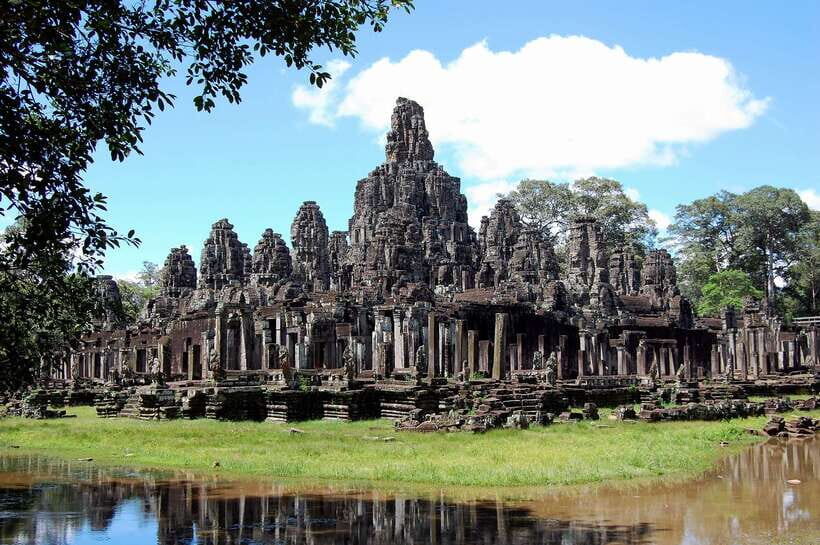
- Bayon Temple’s 200+ faces across 54 towers, plus scenes carved into stone
- Tonle Om Gate photo stop, the South Gate of Angkor Thom with its causeway lined by statues
Why this 8-hour Angkor Wat circuit makes sense
Angkor can feel overwhelming fast. You’re dealing with a huge park, long distances, and temples that are all visually intense in different ways. This format works because it focuses your day on a smart mix: the “must-see” icons plus a couple of temples that feel calmer and more atmospheric.
You’ll also appreciate the private logistics. Instead of coordinating with a group schedule, you get picked up near your hotel, transported between temples, and dropped back afterward. It’s a practical way to see a lot without feeling like you’re sprinting.
You can also read our reviews of more tours and experiences in Siem Reap.
Transport + comfort details that actually help
The tour includes private round-trip transportation, with the driver picking you up and taking you around the sites. You also get unlimited bottled water and a cool towel, which sounds small until you’re walking under strong sun and humidity.
It’s not just comfort for comfort’s sake. Staying hydrated and cooling down briefly helps you keep your energy for the real work: reading the carvings, noticing the architecture, and climbing your eyes up and down the towers without rushing. If you choose a tuk-tuk-style ride on the day, you might find the open air makes the heat feel more manageable.
Temple pass: the one big thing you must plan for
The Angkor Wat Pass (temple tickets) is not included in the tour price. The good part: the driver will take you to buy the pass before you start temple visits.
Plan for two things:
- Bring cash for the pass purchase.
- Wear clothes that follow the rules: shoulders and knees covered (this is required before you enter temple areas).
Also note this pass requirement isn’t optional. If you skip it, you won’t get into the temple zones. So treat the temple pass as your first-day “mission,” and you’ll keep the rest of the timing smooth.
Sunrise at Angkor Wat: reflections, quiet, and photo leverage
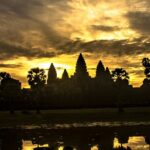
If you book the option that starts at sunrise, your day begins with an early pickup from your Siem Reap hotel. You’ll travel to the Angkor Archaeological Park, buy your entrance tickets, and then follow the early route to experience Angkor Wat at sunrise.
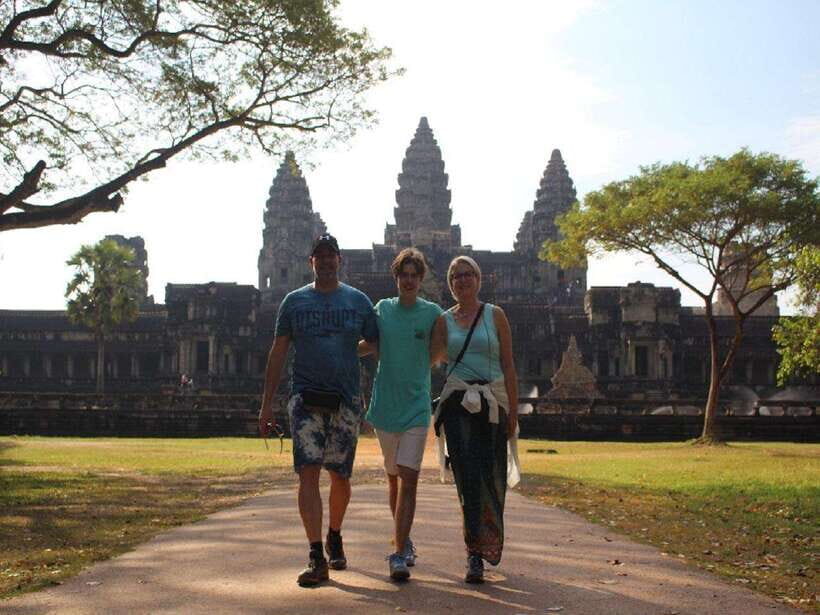
Sunrise at Angkor Wat is popular for a reason: the towers reflect in the surrounding moat, and the whole scene feels more spiritual and less chaotic. You’ll also have a practical advantage—there’s more breathing room for photos before the day’s main wave of visitors arrives.
One more useful detail: you’ll head through a lesser-used western entrance to experience Angkor Wat at that early hour. That kind of small routing choice can change your whole first impression of the site.
Angkor Wat interior: more than a postcard
After sunrise photos, you’ll explore inside Angkor Wat. This is one of those places where the “iconic” look is only the beginning. You’re originally looking at a complex that began as a Hindu temple for Vishnu and later became a Buddhist site, so the symbolism shifts over time.
What to look for during your walk:
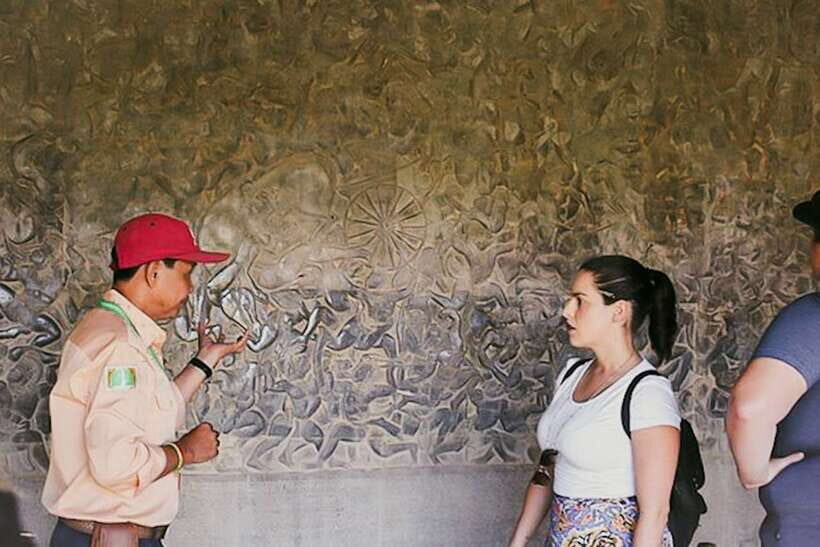
- Intricate bas-reliefs that tell stories in stone
- The grand galleries, which give you long views and changing angles as you move
- The central sanctuary areas, where the scale starts to feel almost overwhelming in a good way
If you’re short on time, don’t try to read everything. Instead, slow down for the sections that catch your eye—faces, myth scenes, and repeating patterns. Those details are what make Angkor Wat feel alive instead of just large.


Banteay Kdei: a quieter Buddhist monastery stop
Next up is Banteay Kdei, a temple many first-timers miss because it doesn’t have the same headline fame as Ta Prohm or Bayon. That’s exactly why it’s valuable on this route.
Banteay Kdei means “Citadel of Chambers,” and it’s a Buddhist monastery dating to the late 12th century. Expect serene corridors, unique carvings, and a partially ruined feel that creates a calmer, more mysterious atmosphere.
This is the stop I’d call your mental reset. When the day starts feeling like nonstop stone and crowds, Banteay Kdei gives you space to notice craftsmanship and layout—without that pressure to keep moving to the next big thing.
Ta Prohm: the jungle temple effect (and why it’s worth the walking)
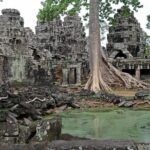
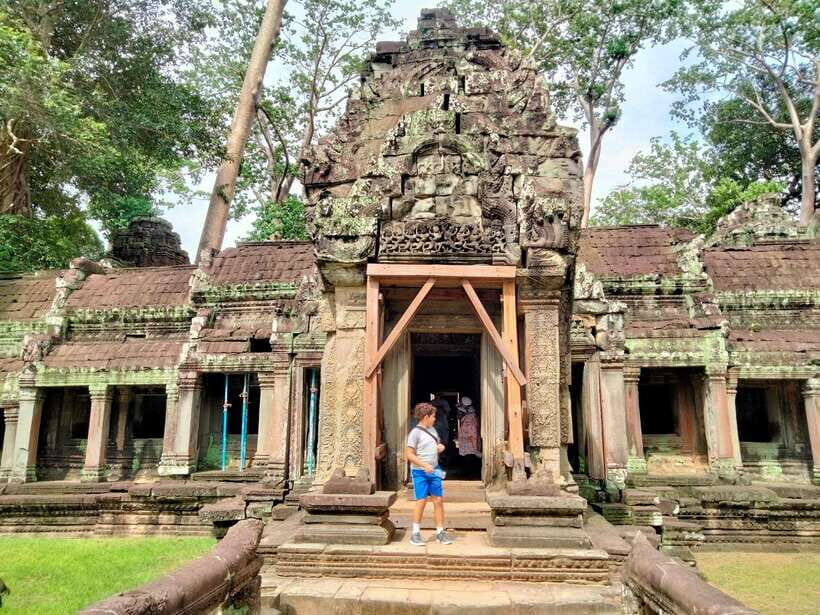
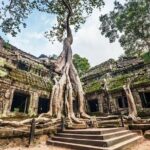
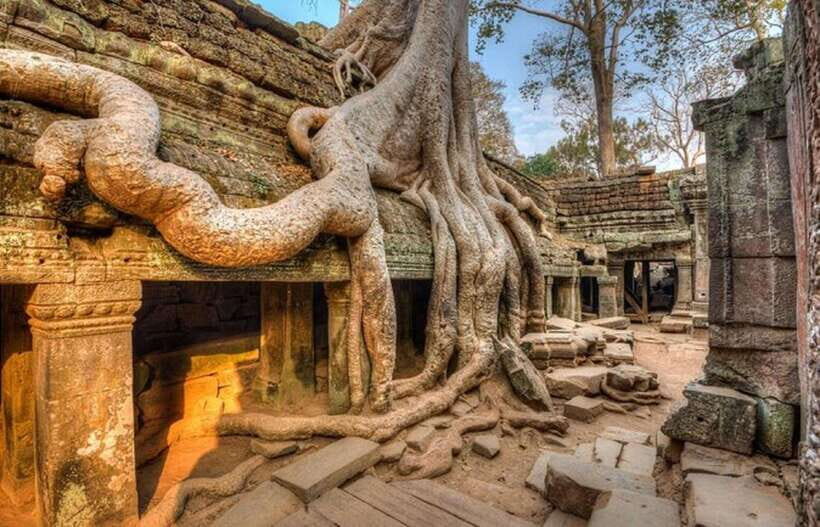
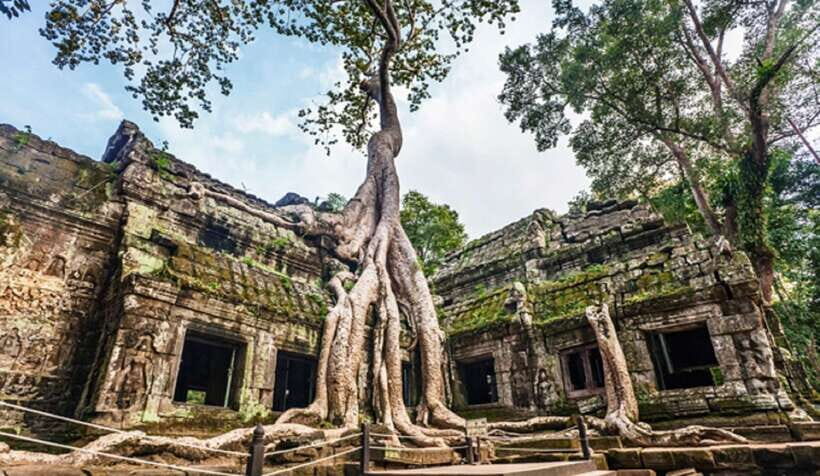
Then comes Ta Prohm, the temple famous for massive tree roots growing over the ruins. It’s one of the most photogenic stops at Angkor, and it’s also one of the most interesting to slow down in.
Ta Prohm was left largely unrestored, which creates that “jungle temple” look. You’re not seeing a perfectly restored monument—you’re seeing architecture being taken back by nature, with roots twisting around doorways and walls.
Practical advice for Ta Prohm:
- Wear comfortable shoes—this area can be uneven.
- Take a moment before you enter to adjust your pace, because you’ll likely want to stop often for photos and to look at how the roots interact with carvings.
- Watch your footing around roots and stones, especially if it’s humid or after recent rain.
Ta Keo: the unfinished temple you can feel in the details
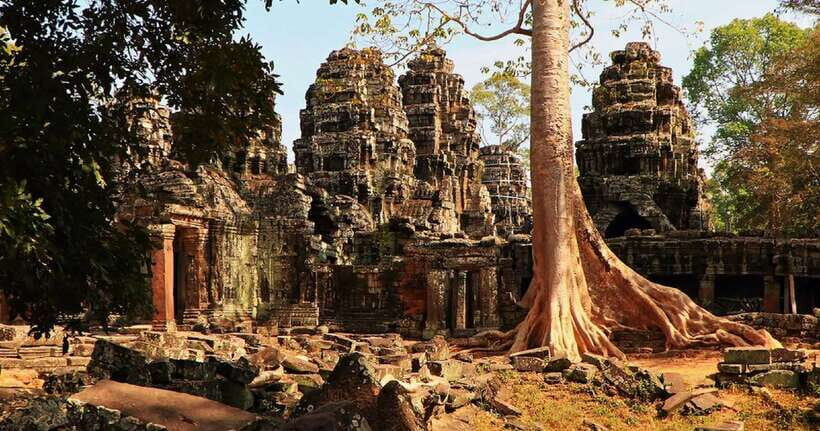
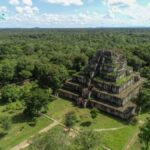
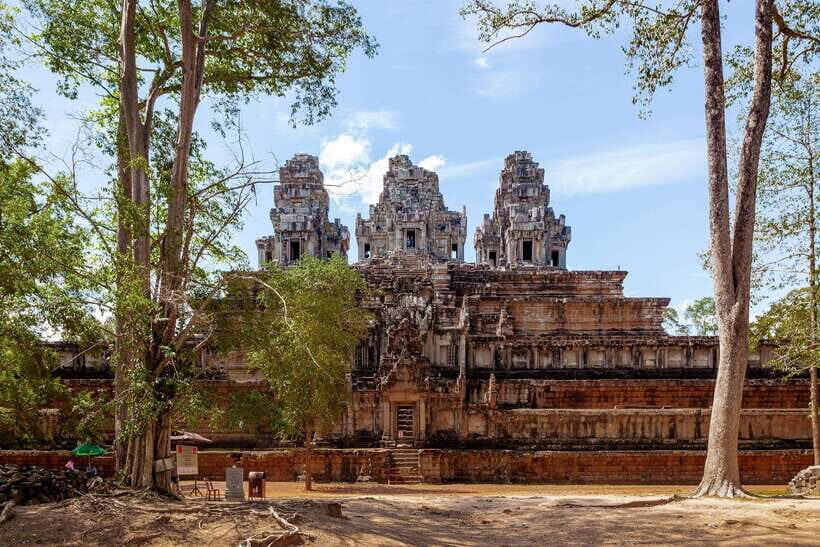
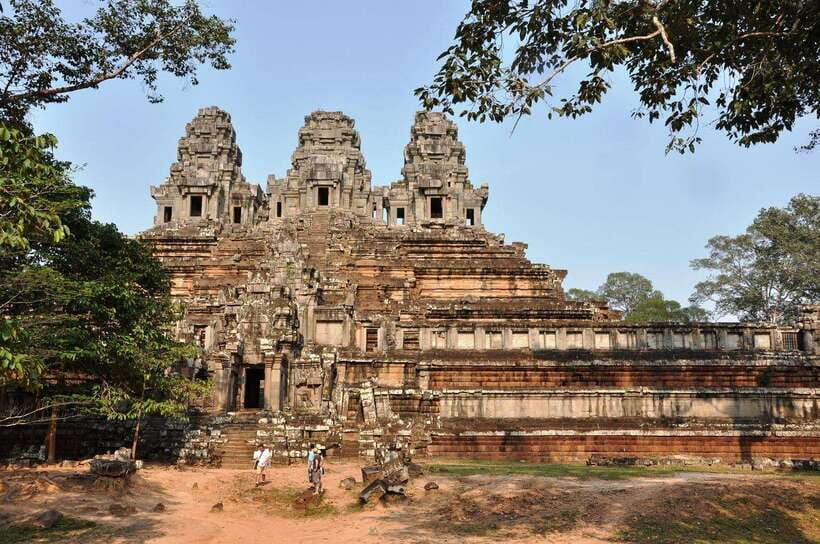
At Ta Keo, you’ll see something different from most other Angkor temples: it was never fully completed. Built during the late 10th to early 11th century (with later work by successors), Ta Keo carries an unfinished quality that sets the tone for how you experience it.
When a temple isn’t finished, it changes how surfaces and structure feel. You might find yourself looking for “the intention” behind the design—what was planned, what was left incomplete, and how that affects the overall look.
It’s a great counterbalance to the temples that feel polished and fully developed. Ta Keo can make the whole Angkor story feel more human: this wasn’t built in a single moment.
Bayon Temple: the faces, the towers, and the storytelling in stone
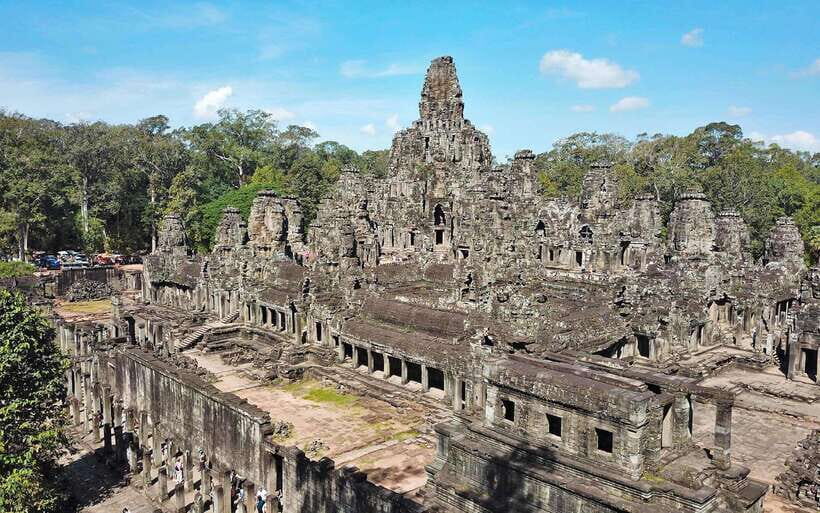
No Angkor day feels complete without Bayon Temple. It sits in the center of Angkor Thom, and it’s known for 54 towers crowned with 200+ stone faces.
Those faces are often described as Avalokiteshvara, and the effect is immediate: no matter which direction you walk, you feel watched. That’s not a spooky thing—it’s a design choice that makes the temple feel alive.
Bayon’s carvings also matter. You’ll see scenes that connect to daily life and historical battles, which helps you understand the temple isn’t only about religion; it’s also about people and power in the Angkor world.
Tonle Om Gate: the South Gate of Angkor Thom for a clean photo finish
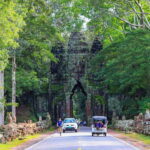
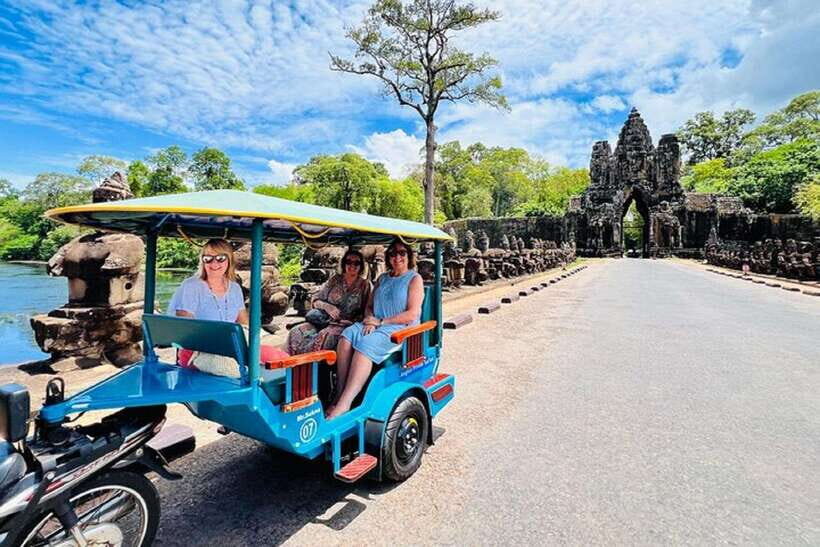
Toward the end, you’ll stop at Tonle Om Gate (South Gate of Angkor Thom). It’s a dramatic entrance with a causeway lined by statues of gods and demons. The massive gate is crowned with four giant stone faces, similar in spirit to what you saw at Bayon.
This makes Tonle Om Gate a smart closing stop. After you’ve seen the bigger clusters of temples, you get an entrance-and-approach moment that helps your brain map the space.
If you like photos, this is a great place to slow down for a few frames before heading back toward your hotel.
Timing tips that help you get the most out of the day
Even with a private driver, your experience depends on how you pace your own attention. Here’s how I’d plan your mindset for this kind of route:
- Decide in advance which temple you want to linger at (for many people, it’s Ta Prohm or Bayon).
- Treat the calmer temples—like Banteay Kdei—as your time to actually look.
- Bring simple expectations: you’re seeing a lot in one day, so you’ll never fully “finish” Angkor. You can, however, leave with a strong mental map.
Also remember: sunrise changes everything. If you can handle an early start, sunrise at Angkor Wat is often the best trade for fewer crowds and nicer light.
Price and value: what $24 gets you, and what it doesn’t
The listed price is $24 per group up to 2 for 8 hours. That’s unusually low for a private, hotel-to-temple day—especially because the tour includes private round-trip transportation, hotel pickup and drop-off, unlimited bottled water, and a cool towel.
What you should budget separately:
- Angkor Wat Pass / temple tickets (required, not included)
- Meals (not included)
So the real value equation is simple: you’re paying for private time and comfort, while the temple pass is your separate entry cost. If you’re traveling as a pair, the per-person value usually gets even better because you’re splitting a private vehicle day.
Who this tour fits best
This tour fits well if you:
- Want a straightforward, iconic Angkor route without navigating logistics yourself
- Care about photos but also want time to see details like bas-reliefs and tower faces
- Prefer comfort in the form of water, a cool towel, and a driver handling travel between temples
It’s not suitable for babies under 1 year and people over 95 years, and it’s not wheelchair accessible due to uneven terrain. You’ll also want to be ready for lots of walking, especially around Ta Prohm.
Should you book this Angkor Wat tour?
I’d book it if you want an efficient, private way to hit Angkor’s biggest sights and still get a few calmer moments. Sunrise at Angkor Wat is the standout choice if you like better light and a quieter start, and the mix of temples—Angkor Wat, Banteay Kdei, Ta Prohm, Ta Keo, Bayon, and Tonle Om Gate—gives you variety in a single day.
Book if you’re comfortable bringing cash for the temple pass, following the shoulder/knee dress rule, and wearing good shoes for uneven ground. Don’t book if you’re hoping for meals included or a fully accessible route—this is a temple-walking day, not a lounge-and-view day.
FAQ
How long is the Siem Reap Angkor Wat temple tour?
The tour duration is 8 hours.
What does the price include?
It includes hotel pick-up and drop-off, private round-trip transportation, unlimited bottled water, and a cool towel.
Is the Angkor Wat temple pass included?
No. The Angkor Wat Pass (temple tickets) is required and must be purchased separately.
Are there sunrise start times?
Yes. If you book the sunrise option, you’ll start with an early pickup and go to Angkor Wat for sunrise.
What should I bring?
Bring sunglasses, sunscreen, and cash.
What clothes are required for temple entrances?
You need to wear clothing that covers your shoulders and knees.
Is the tour wheelchair accessible?
No. It is not wheelchair accessible due to uneven temple terrain.
What language is the driver?
The driver speaks English.
Are pets allowed?
No, pets are not allowed.