REVIEW · SIEM REAP
Buddhist Water Blessing and Real Life Experience with Local
Book on Viator →Operated by Yoeun Serakyuth · Bookable on Viator
Holy water, real people, zero acting. This Siem Reap tour mixes temple time with a monk-led Buddhist water blessing and a look at everyday devotion near the city. I like that the guide makes Buddhism easy to follow, and I love that you’re given room to ask questions (especially at Wat Preah Prom Rath).
One thing to consider up front: you will get wet, and you should plan for a real change of moment, not just a quick sprinkle. Also, the overall flow can feel a bit loose in how stops are stitched together, depending on the day.
In feedback from guides connected with the tour, English support and a calm pace come up again and again, including work attributed to Serakyuth Yoeun. With pickup/drop-off by tuk tuk, a small max group, and included entrance tickets, it’s set up to feel straightforward rather than stressful.
In This Review
- Key highlights you’ll actually notice
- Why this Buddhist water blessing tour in Siem Reap feels different
- Starting at a local shrine near the King’s residence
- Wat Preah Prom Rath: Buddha’s story, explained where it belongs
- The local market stop you’ll remember more than you expect
- Preah Ang Chek Preah Ang Chom Temple and Khmer prayer culture
- Wat Po Banteaychey: the moment you get soaked
- What the guide adds (and why English matters here)
- Getting around by tuk tuk without turning it into a taxi day
- Price and value: what you’re really paying for at $42.15
- Dress and prep tips so the wet ritual stays enjoyable
- If one stop feels disorganized, here’s how to handle it
- Who this tour is best for (and who should skip it)
- Should you book the Buddhist water blessing tour in Siem Reap?
- FAQ
- How long is the Buddhist water blessing tour?
- What does the tour cost?
- Where does the tour take place?
- Is pickup and drop-off included?
- What transportation do you use?
- Are entrance tickets included?
- Will I get wet during the water blessing?
- What should I bring for the wet part?
- Is bottled water included?
- Is the tour affected by weather?
Key highlights you’ll actually notice
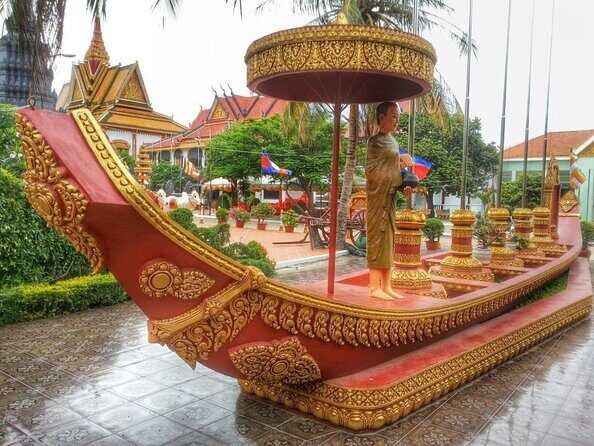
- Monk conversation time at Wat Preah Prom Rath with Buddha’s story explained inside the pagoda
- A Khmer praying monastery stop at Preah Ang Chek Preah Ang Chom, focused on spirit and statue devotion
- A local market detour where you’ll see stalls selling meat, produce, fish, drinks, food, and clothing
- Wat Po Banteaychey water blessing where you can expect to be fully soaked
- Private tuk tuk pickup and drop-off with an English-speaking guide
- Small-group comfort with a cap of 16 people
Why this Buddhist water blessing tour in Siem Reap feels different
A lot of Siem Reap temple tours are basically photo walks. This one gives you a real role in the moment, because you’re there for a holy water blessing from a Buddhist monk, not just to observe from a distance.
What makes it work is the pacing and variety. You get story time at Wat Preah Prom Roth (Buddha’s life), prayer-centered time at a Khmer temple, and then a practical local-life stop at a market before the wet part. It’s a short tour, but it touches several sides of daily culture.
I also appreciate that it’s designed to be easy going. You’re not expected to be an expert on religion, and the guide’s job is to translate meaning into something you can actually understand while you’re standing there.
You can also read our reviews of more tours and experiences in Siem Reap.
Starting at a local shrine near the King’s residence
You begin with a shrine locals use for daily prayers, located near the King’s residence area in Siem Reap City. This is a nice warm-up because it sets the tone: people are there for devotion first, tourism second.
Expect smaller, more personal-feeling moments here than you’d see at a huge landmark temple. If you’re the type who likes seeing how religious life fits into normal city routines, this start will help you get your bearings fast.
This first stop also makes the later temples feel less like separate attractions. You’ll notice the thread connecting prayer, belief, and community habits.
Wat Preah Prom Rath: Buddha’s story, explained where it belongs
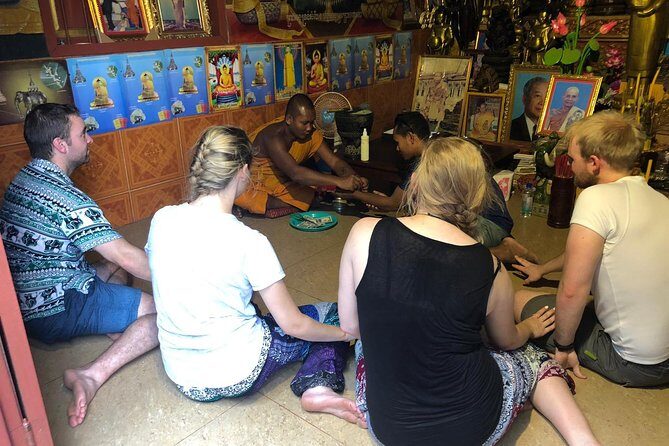
Stop one centers on Wat Preah Prom Roth, with Buddha’s story shared in the pagoda. The tour focus is clear: you’re not just walking through rooms, you’re learning what you’re seeing.
You’ll typically have time to enjoy the view inside, and if you want to, you can talk with monks. That question-and-answer option matters, because it turns temple time into conversation instead of a one-way lecture.
Practical note: this is a quieter moment than the wet blessing stop, so it’s a good chance to slow down, look at the artwork, and match the explanations to what’s on the walls. With about 45 minutes here, you get enough time without feeling stuck in one place too long.
The local market stop you’ll remember more than you expect
Between temples, you’ll visit a local market that’s described as mostly untouched by tourists. This is where the tour stops being only religious and becomes everyday life in Siem Reap.
You’ll see people selling fresh items like meat, vegetables, fish, drinks, and food. Clothing stalls are part of the mix too, so it doesn’t feel like a market built only for snacks. It feels like a working marketplace.
For me, this stop is valuable because it adds context. Temples don’t exist in a vacuum. When you see how locals buy ingredients, prepare meals, and move through their day, the religious spaces feel more connected to real routines.
If you’re sensitive to noise or strong smells, keep that in mind. Markets can be lively, but you’re guided through it, so you’re not left navigating alone.
Preah Ang Chek Preah Ang Chom Temple and Khmer prayer culture
Next is Preah Ang Chek Preah Ang Chom Temple, described as the most praying monastery for Khmer people. The emphasis here is on coming to pray to spirit and god statues, which gives you a different perspective than the Buddha-story focus at the earlier pagoda.
This stop is also about watching devotion in action. You’ll see people coming to pray, and you’ll understand the purpose of being there. With around 45 minutes, you get time to look around without rushing.
A small drawback to plan for: because the focus is prayer and rituals, this isn’t the stop that feels like a museum. If you want heavy walking and lots of structured explanations, you might prefer the Buddha-story atmosphere at Wat Preah Prom Roth. Still, if you want to understand how locals approach spiritual life, this temple is the point.
Wat Po Banteaychey: the moment you get soaked
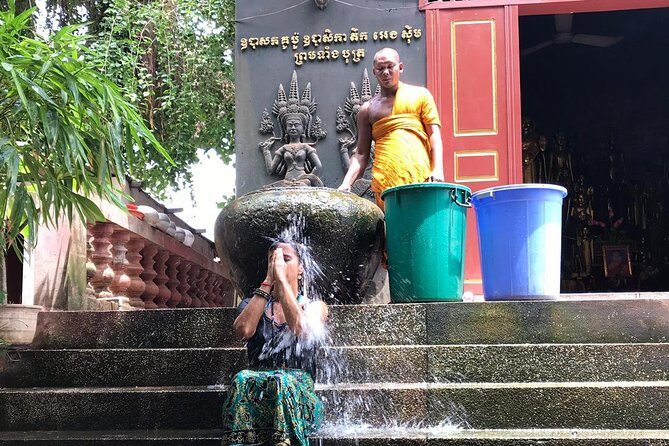
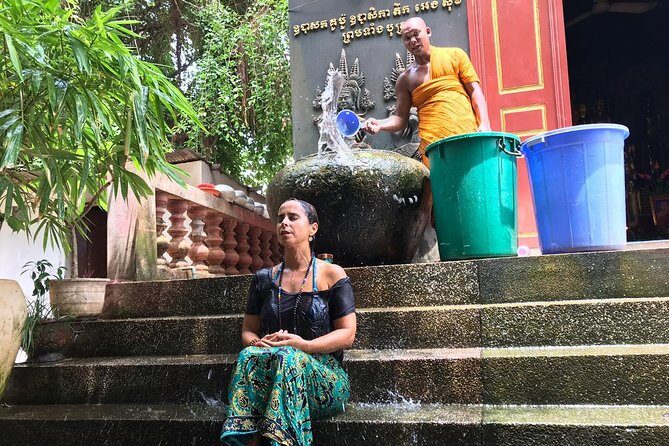
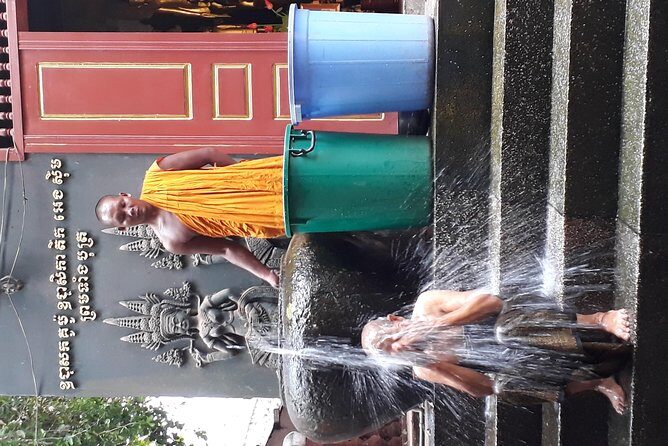
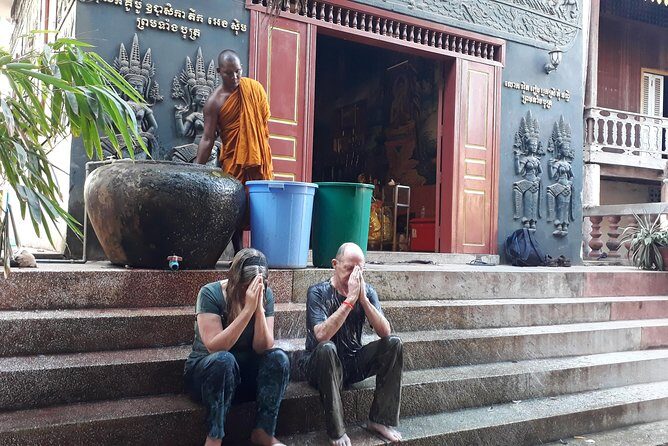
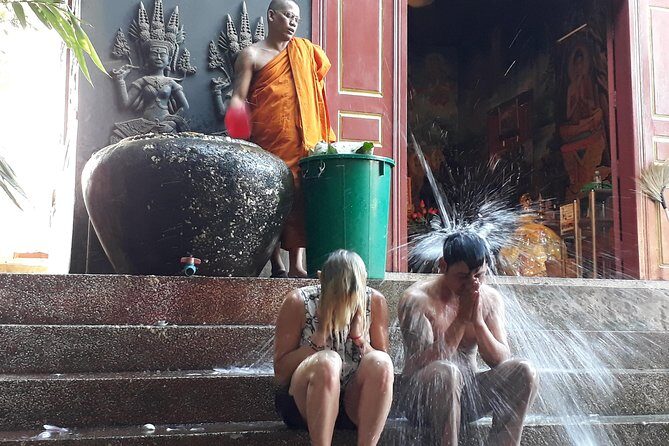
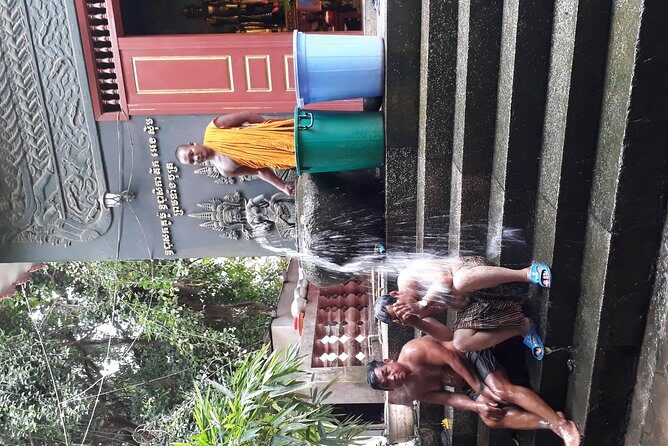
The highlight, and the one you need to prepare for, is the water blessing at Wat Po Banteaychey. Here a Buddhist monk gives the holy water blessing, and you will absolutely get wet.
This is the stop where the tour becomes more sensory. You’ll feel the water, and you’ll leave with the immediate physical reality of participating. The time is about 35 minutes, so it’s not a long ordeal, but it’s not a token ritual either.
Because the wet part is guaranteed, plan your clothing like it’s part of the activity. The tour doesn’t include extra clothes for after you get soaked, so you’ll want to bring:
- a towel
- spare clothes (or at least something dry to change into after)
One review specifically emphasized bringing a towel and spare clothes and noted a strong sense of peace right after. That makes sense: once the ritual moment is over and you’re warm/dry again, it can feel calming rather than chaotic.
What the guide adds (and why English matters here)
With this kind of religious experience, the guide isn’t optional. You’re walking into active spaces of devotion, and you’ll get the most out of it when someone explains what you’re looking at in plain language.
In feedback connected to this tour, Serakyuth Yoeun is named as a guide who was excellent and helpful. People highlighted that the guide shared ample history and culture and made sure needs were met. That “needs were met” part matters for a wet ritual, since comfort and timing are part of the experience.
The tour is described as English speaking with an easy going rhythm. With a maximum of 16 people, you’re more likely to feel like a small group rather than a rushed bus schedule. You can also ask questions without shouting over a crowd.
Getting around by tuk tuk without turning it into a taxi day
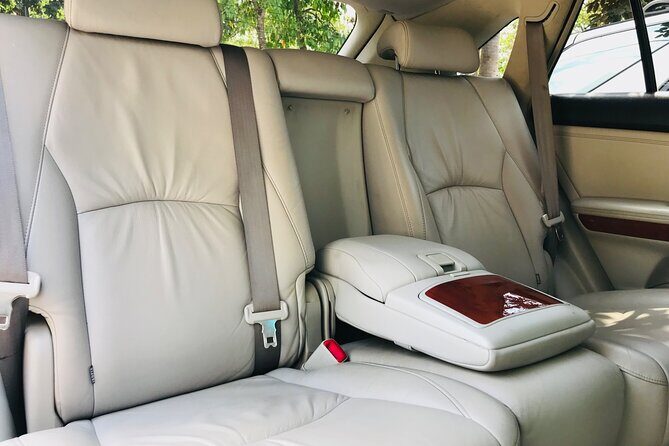
Transportation is private, and you ride in a tuk tuk with pickup and drop-off included. That might sound like a basic detail, but it affects the vibe.
You’re not spending your Siem Reap day doing logistics. You’re also not tracking down entrances on your own while wet clothing and towels are already on your mind. For a short 2 to 3 hour experience, this kind of transport support is a big part of the value.
You also get bottled water included (one bottle). It’s a small thing, but it reduces one decision during a temple-heavy morning or afternoon.
Price and value: what you’re really paying for at $42.15
At $42.15 per person, you’re not just paying for the blessing moment. You’re paying for a bundle:
- English-speaking guide
- private transportation by tuk tuk
- pickup and drop-off
- all fees and taxes
- admission tickets included for each stop
- bottled water
- and the structure that gets you through multiple temple settings and a market
That matters because temple admissions and transport costs add up fast when you piece them together yourself. Here, the price wraps those moving parts into one plan, and that keeps you focused on the actual experience.
I’d call it good value if you want a guided cultural route with minimal decision-making. If you already know exactly what you want to do and you’re comfortable arranging transport and tickets, the price might feel unnecessary. But for most people, the guided flow and included tickets are the reason it works.
Dress and prep tips so the wet ritual stays enjoyable
This tour doesn’t hide the fact that you’ll get wet at Wat Po Banteaychey. Build your comfort around that reality.
Do:
- wear modest clothes suitable for temple visits
- carry a towel
- pack spare clothing or something you can change into right after
Don’t:
- assume you’ll be able to buy emergency clothing on-site (the tour doesn’t include extra clothes)
- plan on alcohol during the activity (alcoholic beverages aren’t included)
Also, consider your footwear. If you’re unsure, bring something you can handle if it gets damp. You’ll be glad you did when the blessing happens.
If weather is poor, the tour can be affected since it requires good weather. That means your best strategy is to check your forecast and be ready for a potential date change if conditions are bad.
If one stop feels disorganized, here’s how to handle it
A balanced view matters. One feedback noted the actual tour felt a bit disorganized, and an art shop appeared as an ending stop that wasn’t expected. That kind of mismatch can happen on short tours when routes shift.
My advice: treat this as a guided cultural experience first, not a timed script with zero variation. If you’re flexible, you’ll still get the core moments: temples, monk interaction, and the water blessing.
If you hate uncertainty, you might prefer a private tour with a strict, fixed plan. But if you’re there for the lived experience and you can roll with small changes, it usually won’t ruin the day.
Who this tour is best for (and who should skip it)
This works especially well if you:
- want a short guided route that fits into a temple day
- like conversation and questions with monks
- enjoy seeing local daily life, not only landmark sights
- are okay with getting soaked and changing afterward
It may not be ideal if you:
- strongly dislike water contact and don’t want to plan around it
- hate markets (the market stop is part of the route)
- need a very rigid, clockwork itinerary with no schedule drift
Because the tour is described as easy going and has a small group size, it tends to suit a wide range of people who want culture with less stress.
Should you book the Buddhist water blessing tour in Siem Reap?
Book it if you want more than temple photos and you’re ready to participate in a monk-led ritual where you really get wet. The strongest draw here is the combination of monk interaction, temple learning, and a local market stop, all tied together by included transport and tickets.
Skip it if you can’t handle being soaked, or if you prefer a strict itinerary with zero improvisation. This isn’t that kind of experience.
If you do book: bring your towel and spare clothes, wear temple-appropriate modest outfits, and go with a patient, curious mindset. You’ll get a memorable slice of Siem Reap where religion and daily life sit side by side.
FAQ
How long is the Buddhist water blessing tour?
It lasts about 2 to 3 hours.
What does the tour cost?
The price is $42.15 per person.
Where does the tour take place?
It’s in Siem Reap, Cambodia.
Is pickup and drop-off included?
Yes. Pickup and drop-off are included.
What transportation do you use?
The tour includes tuk tuk and private transportation.
Are entrance tickets included?
Yes. Admission tickets are included for the temple stops.
Will I get wet during the water blessing?
Yes. At Wat Po Banteaychey, you absolutely get wet during the blessing.
What should I bring for the wet part?
Bring a towel and spare clothes if you want to change after the blessing. Extra clothes are not included.
Is bottled water included?
Yes. One bottle of water is included.
Is the tour affected by weather?
Yes. The activity requires good weather. If it’s canceled due to poor weather, you’ll be offered a different date or a full refund.