REVIEW · SIEM REAP
Bakong Temples & Floating Village Tour
Book on Viator →Operated by Easy Angkor Trip · Bookable on Viator
Temples meet living water.
I like how this tour pairs Bakong’s Khmer “temple-mountain” blueprint with the real, shifting life of Tonle Sap’s floating communities. It also helps that guides such as Mr Oun Kosorl (and other charming guides like Mr K) bring both Khmer architecture and everyday village routines into focus, not just stone and viewpoints.
I love the order of stops: you start with the quieter Roluos-area temples, then move on to Kampong Phluk for the part that feels genuinely human. One watch-out: key entry fees for some sites aren’t included, and the tour lists an Angkor Pass figure of $37 per person for under of Angkor Pass, so add that to your budget if you don’t already have the pass.
In This Review
- Key highlights at a glance
- Six to Eight Hours: A smart day that connects Khmer stone and Tonle Sap life
- Bakong’s temple-mountain layout: why this “prototype” is worth your time
- Roluos-area temples: Lolei and Preah Ko as the warm-up act
- Lolei: the northernmost Roluos temple group stop
- Preah Ko: the first built in Hariharalaya
- Kampong Phluk floating village: what you’re really seeing on Tonle Sap
- The emotional reality: the hard-to-see part
- The boat ride approach: why it matters more than you think
- Price and entry fees: how the $45 works in real life
- Getting around Siem Reap: pickup, comfort, and a realistic schedule
- Guide storytelling: when charm turns into context
- Who this tour fits best (and who might choose another option)
- Should you book the Bakong Temples & Floating Village Tour?
- FAQ
- What does the tour include?
- How long is the Bakong Temples & Floating Village tour?
- Is the tour private?
- Which stops are included and how are admissions handled?
- Do I need an Angkor Pass?
- What is the cancellation policy?
Key highlights at a glance
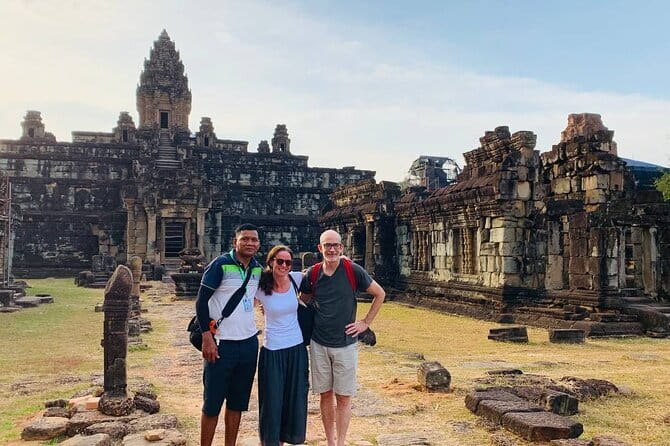
- Bakong as the prototype temple-mountain that later Khmer kings refined into bigger, more famous designs
- A clear mix of architecture and daily life, from moats and guardian statues to schools and homes on water
- Kampong Phluk’s two building styles, with structures floating directly or rising on high stilts in the dry season
- Guides who connect dots, with history explained in plain language by people like Mr Oun Kosorl and Mr K
- Pickup, air-conditioning, and cold water, which matters when you’re out for roughly 6 to 8 hours
Six to Eight Hours: A smart day that connects Khmer stone and Tonle Sap life
Siem Reap can overload you with temples. This plan keeps you moving, but it also gives you a second lens: what the Khmer world built, and what people built to survive around the water system that shaped their seasons.
You’re out about 6 to 8 hours, and the day is built around three temple stops plus one floating village stop. The timing works best if you like a full-feeling day without needing to stay up late or cram in a dozen sights.
This is also set up as a private tour in the sense that only your group rides along, with an English-speaking guide, pickup and drop-off, and an air-conditioned vehicle. Translation: you get more control over your pace than the big bus crowd.
You can also read our reviews of more tours and experiences in Siem Reap.
Bakong’s temple-mountain layout: why this “prototype” is worth your time
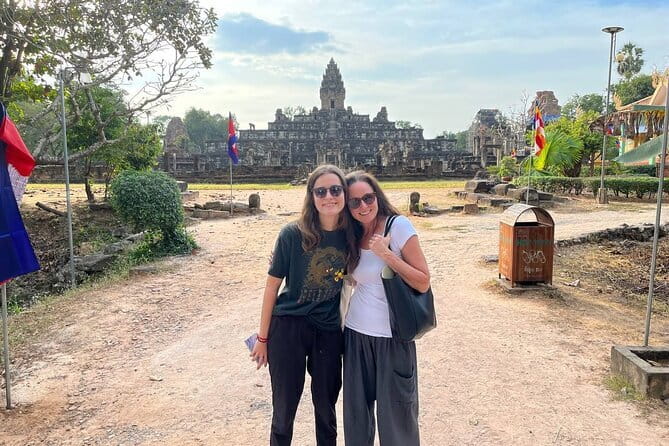
Bakong is the anchor of the day, and it’s not just famous. It’s foundational.
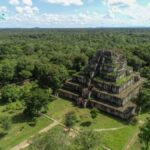
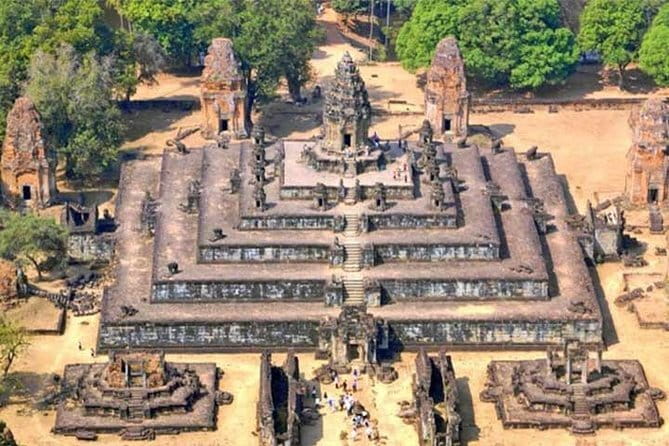
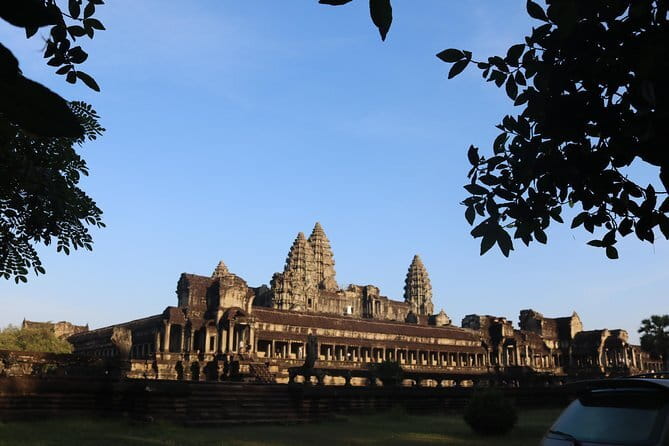
The big idea is that Bakong is the first temple-mountain of the Khmer Empire, built in 881 AD under King Indravarman I. The design is a staged symbol of Mount Meru, the sacred mountain in Khmer cosmology. You’ll see it in the five-tiered sandstone pyramid form, surrounded by moats and enclosing walls, turning the whole complex into a kind of spiritual diagram made of stone.
Two details I’d underline when you’re there:
1) The Naga causeway.
Bakong is noted as the earliest known example of a Naga causeway in Khmer architecture. If you’ve seen Naga snakes used elsewhere in later Angkor-area designs, this is where the story starts.
2) The guardian statues.
On the lower levels, Bakong preserves large stone guardians of elephants and lions. They’re not just decorations. They help you read the temple’s mood: protective, ceremonial, and built for people to approach in stages rather than wander casually.
Why I like this stop: it gives you a framework for Angkor later. When you understand Bakong’s role as an early blueprint, other temple-mountains don’t feel random.
Roluos-area temples: Lolei and Preah Ko as the warm-up act
Before you get the heavy hitter at Bakong, the tour goes to Lolei and Preah Ko. This is a good rhythm if you’re trying to learn something, not just collect stamps on a checklist.
Lolei: the northernmost Roluos temple group stop
Lolei sits as the northernmost temple of the Roluos group, a set of late 9th-century Hindu temples. In this group, you’ll find Preah Ko and Bakong as the other main names.
Lolei’s place in the lineup matters. It helps you settle into the temple-mountain language first—so when you reach Bakong, it feels like a clear next step, not a separate experience.
Practical note: the Lolei admission is not included, so if you’re working with tight time and money, keep an eye on your pass coverage (more on entry fees later).
Preah Ko: the first built in Hariharalaya
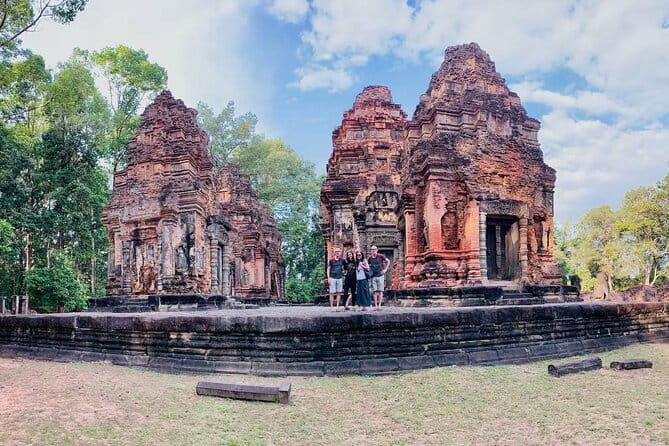
Preah Ko is described as the first temple built in the defunct city of Hariharalaya, about 15 kilometers southeast of the main Angkor temple area.
I find this detail useful because it changes how you view the stones. It’s not only about architecture; it’s about a specific city phase of Khmer civilization, then later history and reshuffling. Even with limited time, having that one sentence in your head helps you look longer rather than simply snap photos and move on.
Preah Ko’s admission is free on this plan, which is a nice bonus when you’re adding up day costs.
Kampong Phluk floating village: what you’re really seeing on Tonle Sap
Then the tour shifts from sacred stone to everyday survival—and it’s a big emotional swing.
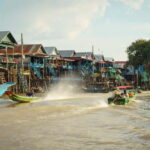
Kampong Phluk is built around Tonle Sap Lake, the largest lake in South East Asia, spanning five Cambodian provinces. Tonle Sap’s water levels change with the seasons, and the village is designed to adapt instead of resist.
Here’s the key structure difference you should look for when you arrive:
- Some buildings float directly on the water
- Others are on stilts that rise high enough for the dry season
That means the village is not fixed like a normal neighborhood. It’s closer to a seasonal machine. Even if you only spend about 3 hours there, this is the part of the day where your brain has to recalibrate.
I also like that the floating village visit tends to highlight more than views. In particular, you may be brought to see a school setting where children are learning English. That kind of stop changes the tone from sightseeing to perspective.
The emotional reality: the hard-to-see part
It’s also honest that you may come face-to-face with how difficult life can be for some families in water-dependent communities. At the same time, you might notice an attitude that feels steady and positive.
If you’re the type who gets uncomfortable watching struggle, go in with that awareness. The goal isn’t to turn it into a sad spectacle. The goal is to understand the system and the people living inside it.
The boat ride approach: why it matters more than you think
To reach Kampong Phluk, the tour uses a boat segment along the river. This isn’t just transportation. It’s a pacing tool.
Boat travel gives you a transition from temple dust and stone geometry into something looser: moving water, changing shoreline, and houses built around the idea of the horizon shifting. It also helps explain why the village infrastructure has to be both flexible and practical.
If you’re planning photos, remember that boat time can mean uneven angles and moving light. Use your phone wisely, or bring a camera strap so you’re not juggling gear while you’re trying to enjoy the ride.
Price and entry fees: how the $45 works in real life
The tour price is $45 per person, and that’s not bad for a full-day format that includes pickup/drop-off, air-conditioned transport, an English-speaking guide, and cold drinking water.
But the important part is what’s not included. Admission fees for some stops are listed as not included, and the tour specifically notes Angkor Pass at $37 per person for under of Angkor Pass.
So you’ll want to do this quick math before you commit:
- You pay $45 for the tour experience itself
- You may still pay for site entry, depending on what pass you already have and which stops require it
The split matters because Preah Ko and Bakong are listed as free admissions on this plan, while Lolei and Kampong Phluk are not included. In other words, you’re not paying for every stop—but you’re likely paying for at least one of the non-free parts.
My take on value: this tour feels like good money if you need a guide-driven day that stitches together temple architecture with a living community. It’s less of a bargain if you already know you’ll skip the floating village part or if you’re only interested in the most famous Angkor names.
Getting around Siem Reap: pickup, comfort, and a realistic schedule
The day runs about 6 to 8 hours with pickup and drop-off. That’s long enough to feel like you did a proper excursion, but short enough that you’re not trapped for the entire day in the hottest hours without breaks.
The included air-conditioned vehicle is a real quality-of-life feature in Siem Reap’s heat. Cold drinking water is also the kind of small inclusion that prevents the day from feeling like survival mode.
Because the tour uses multiple sites, a tight schedule is part of the deal. If you’re the type who likes to linger, I’d plan to focus your energy on fewer, high-meaning details—like the Naga causeway at Bakong or the two floating-village structure types—rather than trying to photograph everything.
Guide storytelling: when charm turns into context
This is a guide-heavy day in the best way.
In the experience feedback you’ll see a theme: guides like Mr Oun Kosorl and Mr K are described as charming and insightful, with history explained in a way that connects architecture to place and daily life.
Here’s what to look for while your guide is talking:
- Clear “why” answers, not just “what is this called”
- Specific pointers—like where to notice guardian statues on Bakong’s lower levels
- Explanations that connect the temple-mountain idea (Mount Meru symbolism) to later Khmer developments
If your guide is strong, your time at Bakong and the Roluos temples will feel less like walking through an open-air museum and more like learning the grammar of Khmer design.
Who this tour fits best (and who might choose another option)
This tour is a good match if you want:
- A temple day that doesn’t feel only about stone
- A floating village visit that focuses on how communities adapt to seasonal water changes
- A guide-led experience in English without the stress of planning each segment
It may be less ideal if:
- You want only the most famous Angkor sights and nothing else
- You dislike tours where part of the day involves seeing hard realities
- You’re hoping for a fully relaxed schedule with lots of free time for wandering
For most people, though, the balance is the point: you get a coherent arc from the Khmer “prototype” temple-mountain to the Tonle Sap community that keeps living inside its changing environment.
Should you book the Bakong Temples & Floating Village Tour?
I’d book it if you want a day that feels like more than a checklist. Bakong gives you the architectural backbone of early Khmer temple-mountain design, and Kampong Phluk adds the human side—homes, schools, and daily routines shaped by water levels.
Skip it if your budget can’t handle the likely additional admission costs (especially if you don’t already have the relevant pass) or if you strongly prefer to avoid places where the living conditions can be difficult.
If you do book: go with two priorities. One, listen for the architectural meaning behind what you see at Bakong. Two, treat the floating village as a community visit, not a spectacle. You’ll get more out of the day, and it’ll feel respectful rather than rushed.
FAQ
What does the tour include?
The tour includes an English-speaking tour guide, pickup and drop-off, cold drinking water, and an air-conditioned vehicle.
How long is the Bakong Temples & Floating Village tour?
The duration is approximately 6 to 8 hours.
Is the tour private?
Yes, it’s described as a private tour/activity, so only your group participates.
Which stops are included and how are admissions handled?
The plan includes Lolei, Preah Ko, Prasat Bakong, and Kampong Phluk Floating Village. Lolei and Kampong Phluk admissions are not included, while Preah Ko and Prasat Bakong are listed as free.
Do I need an Angkor Pass?
Admission fees are not included, and the tour lists Angkor Pass pricing at $37 per person for under of Angkor Pass. If you don’t already have a pass that covers the needed sites, you should budget for it.
What is the cancellation policy?
You can cancel for free up to 24 hours in advance for a full refund. If you cancel less than 24 hours before the experience starts, the amount paid is not refunded.