REVIEW · SIEM REAP
Siem Reap: Angkor Wat Sunrise Bike Tour & Jungle Breakfast
Book on GetYourGuide →Operated by Discova Southeast Asia · Bookable on GetYourGuide
Sunrise on Angkor Wat hits different. This 9-hour bike tour blends pre-dawn temple time with chef-prepared jungle breakfast, then rolls you through shaded paths linking Angkor’s major sights with fewer crowds and more quiet forest moments. Guides such as Seng, Thou, Chen, Tot, and Vichea are repeatedly praised for making the stones make sense, with clear explanations and great photo help.
The one thing to think about: it’s not a “sit back and cruise” day—there are off-road bits (sand and rough patches show up), and the pace plus heat can leave you tired after.
In This Review
- Key takeaways before you go
- Why Angkor Wat sunrise looks better when you’re moving
- The jungle breakfast picnic you’ll actually remember
- Cycling Angkor: quiet trails, shaded paths, and the occasional sandy surprise
- Bayon and the Terrace of the Elephants: where the city seems to watch you
- Ta Prohm, the Tomb Raider Temple, after you’ve ridden the park
- Support, pace, and bikes: what makes this tour feel easy
- Price value: is $75 a good deal for Angkor by bike?
- Who should book (and who should skip)
- Should you book this Angkor Wat Sunrise Bike Tour?
- FAQ
- How long is the Angkor Wat sunrise bike tour?
- What’s included in the price?
- Do I need an Angkor Wat Pass?
- Is lunch included?
- What temples and sights does the tour cover?
- What should I wear?
- Is pickup from my hotel included?
- Can I bring a child or request a child seat?
- Is there flexibility to cancel or change plans?
Key takeaways before you go
- Lotus towers at sunrise: an early start gives you the silhouette moment before the main crowds feel fully awake.
- Jungle breakfast made for you: a chef-prepared picnic set in a calm forest setting, often mentioned as a standout meal.
- Forest riding between temples: routes are planned to avoid heavy traffic and favor quiet park roads and shaded paths.
- Iconic stops, smart order: after Angkor Wat, you hit Bayon’s serene faces and then Ta Prohm’s famous roots-and-stone look.
- Support when you need it: an AC minivan follows along so you can rest, plus water, snacks, and usually fruit are on board.
- Dress and bike sizing matter: no sleeveless shirts, and you’ll need your height for the right-side bike setup.
Why Angkor Wat sunrise looks better when you’re moving
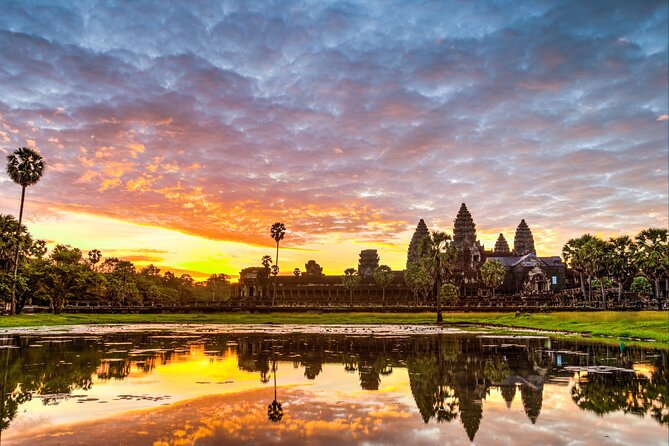
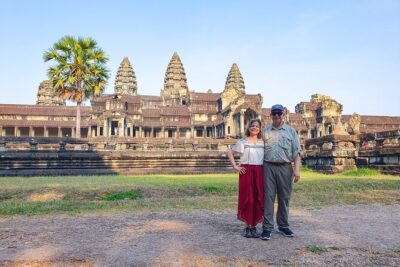
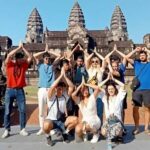
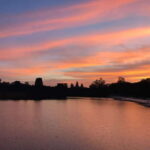
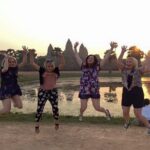
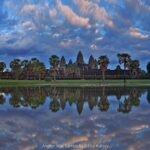
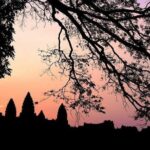
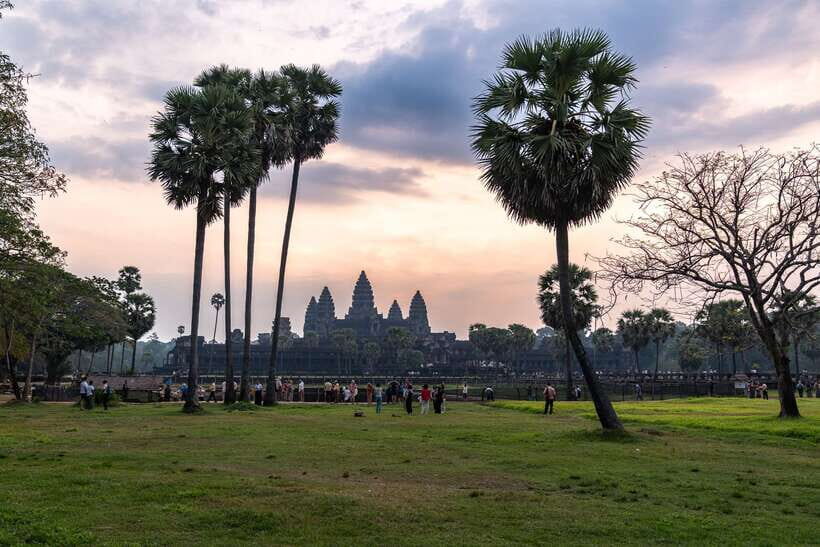
Angkor Wat is big—so big that doing it only by tuktuk can feel like you’re in a sprint. This tour flips that rhythm. You’re picked up early in the Krong Siem Reap area, transferred to the Angkor complex, and guided into the sunrise timing when the lotus-shaped towers are still turning from dark outline to full detail.
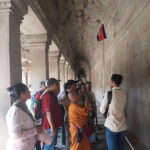
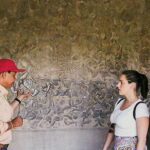
What I like most is that the sunrise isn’t just a photo stop. You then shift straight into a guided walk through Angkor Wat’s corridors and courtyards while the light is soft. That’s when carvings stand out and the place stops feeling like a postcard. The tour frames the temple as a 12th-century Khmer Empire masterpiece dedicated to Vishnu—so when you notice a motif, you know why it’s there.
You can also read our reviews of more cycling tours in Siem Reap
The jungle breakfast picnic you’ll actually remember
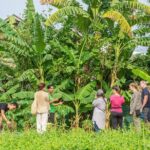
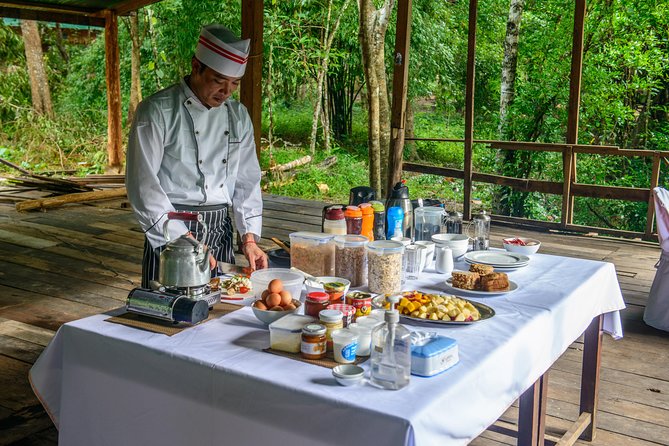
Right after Angkor Wat, there’s a break—and it’s not a rushed snack. Your chef-prepared breakfast is set up in a quiet forest pocket within the Angkor complex, described as private and calm, with food cooked fresh and served like a proper picnic.
Several guides get credit for keeping the morning feeling human. People mention omelets made to order, fruit, and a peaceful setting by morning sounds (not traffic). This meal also matters for practical reasons: you’ve been up early, you’ll cycle next, and the day is long. That’s why this “slow down” stop lands well—it gives you energy without the sugar-crash vibe.
One small consideration: this is morning food in a humid environment. If you’re sensitive to heat or stomach timing, aim to eat at a comfortable pace and sip water steadily afterward.
Cycling Angkor: quiet trails, shaded paths, and the occasional sandy surprise
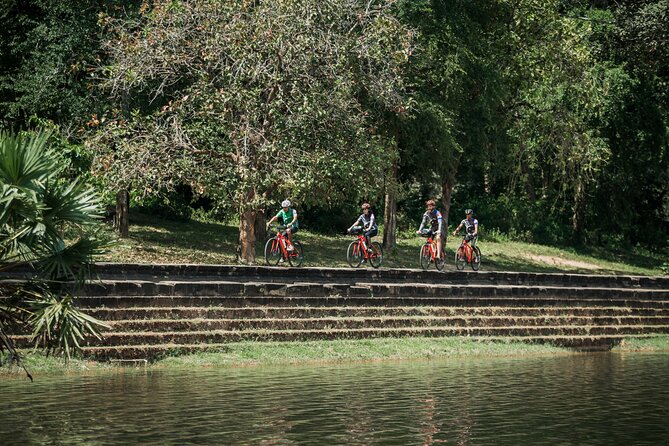
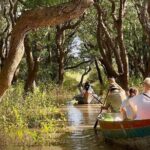
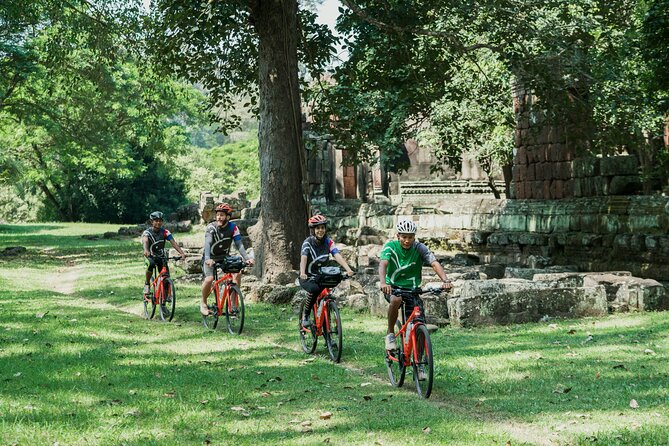
After breakfast, the day becomes a cycling tour through Angkor’s wider park area. The description promises gentle park roads and shaded paths connecting hidden temples and ancient gateways, while vehicle support stays nearby if you want to rest.
From the reviews, the real-world feel is clear:
- A lot of the riding is flat and shaded, so it’s manageable for many people.
- You still need basic comfort on a bike, because there can be off-road sections with sand, mud, roots, or bumpy patches. One person specifically cautioned about small sand stretches.
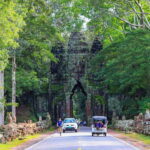
Here’s the practical benefit: cycling is how you get away from the “everybody turns left at the same time” feeling. Instead of being stuck waiting at tour-car traffic, you pass through smaller gates and quieter stretches where the morning air feels more open.
Bikes are provided with helmets, and you’ll also want to pay attention to two details before the ride:
- Your height matters for bike setup (you’ll be asked for it so they can arrange the right-side bike fit).
- Wear clothes that work for the heat and don’t violate the no-sleeveless-shirt rule.
Bayon and the Terrace of the Elephants: where the city seems to watch you
Bayon is the centerpiece of Angkor Thom, and the tour gives it the attention it deserves. You’ll arrive for a guided visit of Bayon Temple, famous for its 54 towers and more than 200 carved stone faces believed to represent King Jayavarman VII or Avalokiteshvara. Seeing those faces in the morning light—and understanding what you’re looking at—changes how the place feels. It’s not just “cool carvings.” It feels like a city still looking back.
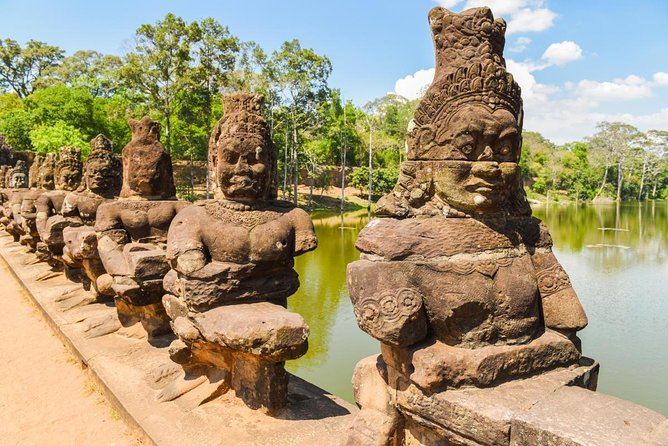
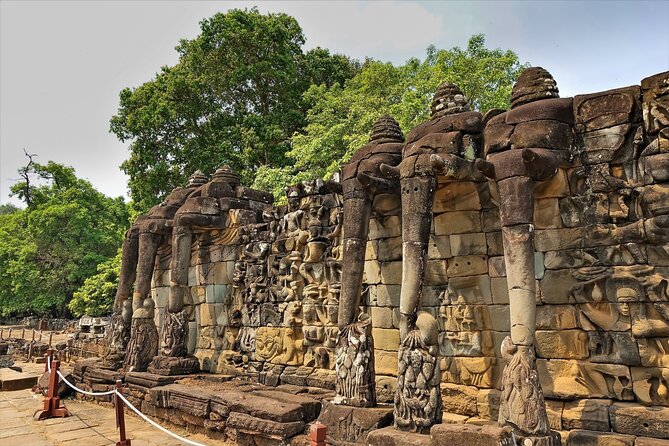
Then comes the Terrace of the Elephants. The tour includes a guided stop here that mixes sightseeing with bike time, which is a smart choice: it keeps the momentum without turning the stop into a 10-photo dash. The terrace setting also gives your legs a breather before the next temple push.
If you like photography, several guides are praised for finding good photo spots. People mention guides stepping in to help with pictures and using timing to get shots without turning it into a long queue.
Ta Prohm, the Tomb Raider Temple, after you’ve ridden the park
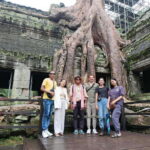
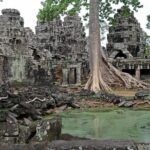
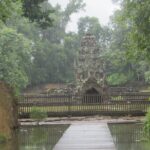
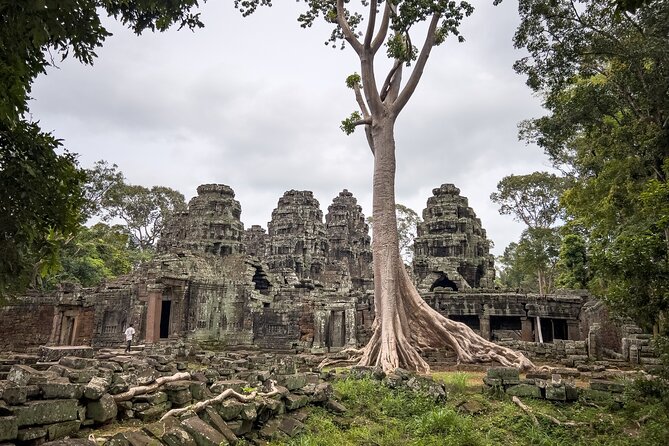
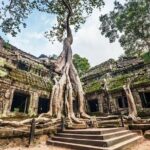
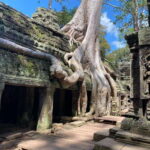
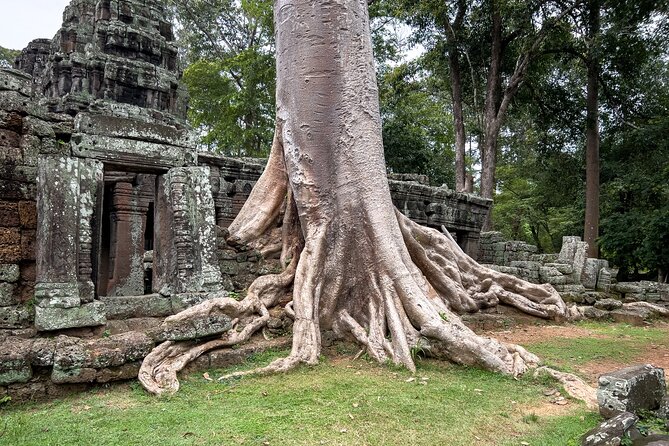
Ta Prohm is famous for a reason: massive silk-cotton and strangler-fig trees have rooted into the temple walls, with roots twisting through doorways and stone corridors. Doing it after sunrise and a bike ride makes it feel even stranger—in the best way—because your brain has already adjusted to “temples + forest,” then Ta Prohm turns that idea up to 11.
The tour includes a longer guided visit here (about 1.5 hours), which gives time to walk, pause, and really look. You’ll get explanations about architecture and symbolism from the guide, with people repeatedly praising the clarity and pacing of the commentary.
Also, note the name people give Ta Prohm. The tour leans into the atmosphere: this is a temple where nature and stone are in a slow tug-of-war, and the staging of the day supports that mood.
You can also read our reviews of more tours and experiences in Siem Reap

Support, pace, and bikes: what makes this tour feel easy
One reason this tour earns strong marks is the structure around comfort. You get:
- Hotel pickup and drop-off
- Bike and helmet
- English-speaking guides
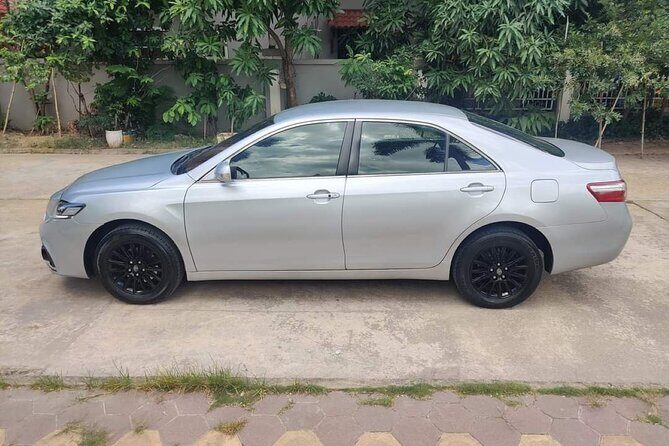
- Transfers and support in an air-conditioned minivan when you want a break
- Snacks, fruits, and bottled water
That last part matters in a place where heat can hit hard. Multiple reviews mention cool drinks on the route and cooling towels. One person even singled out a thoughtful touch: the driver offered cool lemongrass towels to help cool down during hot weather.
The bike quality also comes up again and again—people describe bikes in very good or pristine condition. That’s not a small detail. If you’re spending hours in the park, you want something that shifts smoothly and feels stable when the surface gets a little sandy.
Pace is another strength. Reviews describe guides adapting to the rhythm of the group, staying efficient with photo spots, and keeping the cycling portion fun rather than punishing.
Price value: is $75 a good deal for Angkor by bike?
At $75 per person for a roughly 9-hour experience, you’re paying for more than transport between temples. You’re buying:
- A pre-sunrise start with guided Angkor Wat time
- A chef-prepared jungle breakfast picnic setup
- Bike + helmet included
- Scheduled guided temple visits at Bayon and Ta Prohm, plus Terrace of the Elephants
- Ongoing support with water/snacks and a minivan backup for breaks
The key catch: the Angkor Wat Pass is not included and is required. So you’ll want to factor that into your total planning. But once that’s accounted for, $75 starts to feel fair because the tour covers a big chunk of “day costs” that other options often split out (guide time, breakfast, and the bikes).
If you’re comparing styles, this is a strong value move if you want a quieter feel and more control over your time at the temples, without giving up the safety net of a support vehicle.
Who should book (and who should skip)
This tour fits best if you:
- Like the idea of seeing Angkor in stages—sunrise, then guided temple time, then cycling between sights.
- Are comfortable riding a bike for a good chunk of the morning, knowing there may be rougher patches like sand.
- Prefer a plan with support rather than a “you’re on your own” adventure.
It’s also a great choice for couples, small groups, and people who want a calmer Angkor experience without fighting busloads at every corner.
Skip it if you’re pregnant, since it’s listed as not suitable for pregnant women. Also keep the dress code in mind: sleeveless shirts aren’t allowed.
If you’re traveling with kids, child seats are available on request, but they can accommodate up to 14kg. You’ll also want to share dietary needs in advance so the breakfast and lunch plans can match your requirements.
Should you book this Angkor Wat Sunrise Bike Tour?
If you want Angkor Wat at sunrise and you’d rather earn your temple time than motor through it, I’d book this. The biggest selling point is how the day is built: sunrise first, then a real meal in the forest, then riding routes designed to keep you shaded and away from heavy traffic, ending with Bayon and Ta Prohm.
Book it if you care about comfort and safety as much as sightseeing—because the minivan backup, water/snacks, and well-maintained bikes remove a lot of stress from the day.
Don’t book it if you’re looking for an ultra-easy ride with zero uneven ground. There can be bumpy or sandy sections, and it’s a long day. If you’re unsure, choose your comfort level honestly and remember you can take breaks with the support vehicle.
FAQ
How long is the Angkor Wat sunrise bike tour?
The total duration is about 9 hours.
What’s included in the price?
Bike and helmet, hotel pickup and drop-off, an English-speaking guide, transfers with air-conditioned minivan support for breaks from biking, a private breakfast picnic, and snacks, fruits, and bottled water.
Do I need an Angkor Wat Pass?
Yes. The Angkor Wat Pass is required and is not included.
Is lunch included?
Lunch is included for the Private Tour only.
What temples and sights does the tour cover?
You visit Angkor Wat, Bayon Temple, the Terrace of the Elephants, and Ta Prohm.
What should I wear?
Sleeveless shirts are not allowed.
Is pickup from my hotel included?
Yes. Hotel pickup and drop-off are included. You’ll need to share your hotel name and hotel address during booking.
Can I bring a child or request a child seat?
Child seats are available upon request, with a weight limit of 14kg. Discounts for children age 12 and under with kids bikes are available.
Is there flexibility to cancel or change plans?
Free cancellation is available up to 24 hours in advance for a full refund, and there is also a reserve now & pay later option.