REVIEW · SIEM REAP
Angkor Wat Sunrise Tour
Book on Viator →Operated by Easy Angkor Trip · Bookable on Viator
Sunrise at Angkor Wat feels like a rewind. The early start is the point here: you’ll beat the busiest hours and get guided context as you move through Angkor Wat and Angkor Thom, including Ta Prohm, made famous by Tomb Raider. The route is built for morning light, then temple-hopping through major ruins before the heat ramps up.
Two things I really like: first, the hotel pickup and drop-off. It removes the hassle of sorting tuk-tuks at 4:30am and lets you focus on the temples. Second, the small extras like cold drinking water and a towel mean you’re not arriving already worn down.
One caution: this is an early, physical day, and you’ll also want to budget the temple pass fee. The tour price doesn’t include the Angkor Temple Pass, listed at $37.00 per person, so check that before you book.
In This Review
- Key things that make this tour work
- Planning Your 4:30am Start From Siem Reap
- Value and Budget: The $37 Temple Pass Detail
- Hotel Pickup and a Smooth Ride in the AC Vehicle
- Stop 1: Angkor Wat at Sunrise (Why This Morning Matters)
- Stop 2: Bayon Temple and Angkor Thom’s Power Walk
- Stop 3: Chau Say Tevoda for a Quick, Focused Look
- Stop 4: Ta Prohm Temple, Famous for the Film and the Feeling
- Stop 5: Ta Nei for a Buddha-Dedicated Detour
- Stop 6: Bayon Temple Area Meets the South Gate Experience
- Timing, Heat, and How to Actually Enjoy the Day
- Who This Tour Is Best For (And Who Might Prefer Something Else)
- Should You Book the Angkor Wat Sunrise Tour With Easy Angkor Trip?
- FAQ
- How much does the Angkor Wat Sunrise Tour cost?
- How long is the tour?
- Is pickup and drop-off included?
- Does the tour include sunrise at Angkor Wat?
- What does the tour include besides the guide?
- What admission fees should I expect?
- Is it a private tour or a shared group?
Key things that make this tour work
- Sunrise timing with very early departure so you’re at Angkor Wat before the real crush
- English-speaking guide who explains what you’re seeing, not just how to walk around it
- Cold water and towel included for the warm, damp temple mornings
- Angkor Thom lineup built around Bayon and the South Gate, not random stops
- Ta Prohm plus film-fame context at a calm pace with time to look closely
- Temple pass not included for some sites, so budget for the $37.00 Angkor Temple Pass
Planning Your 4:30am Start From Siem Reap
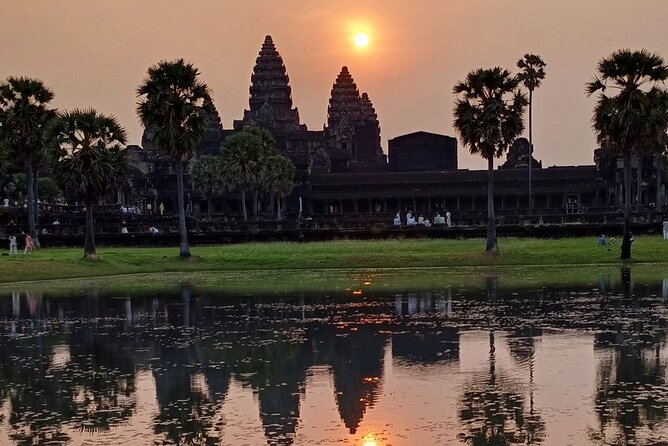
This tour is designed around one key idea: go early, when the temples feel alive instead of crowded. If you choose the sunrise option, the plan is departure from your hotel around 4:30am, with pickup offered. Practically, that means an alarm that feels rude, and a short ride to the entrance while the sky is still dim.
I like that the tour doesn’t leave you guessing. You’re not hunting for the right gate, the right time, or the right person at dawn. Instead, you get a guide and vehicle lined up, which matters on a day where a 30-minute delay can mess with sunrise timing.
Also, sunrise tours can be cold. Not forever, but long enough that you’ll be glad you didn’t wear only shorts and a T-shirt. Cambodia mornings in temple areas can shift fast as the sun climbs, so think layers you can peel off.
You can also read our reviews of more tours and experiences in Siem Reap
Value and Budget: The $37 Temple Pass Detail
Let’s talk money, since this matters for real-world value. The advertised tour price is $50.00 per person, and the tour includes guide, air-conditioned transport, cold drinking water, and pickup/drop-off.
What’s not included is the Angkor Temple Pass at $37.00 per person. The itinerary flags some stops as admission ticket not included, while others are listed as free. Since you’re paying a pass for at least the main Angkor Wat portion, you should assume your all-in temple cost is closer to about $87 total per person once that pass is added.
The upside is you’re not paying separately for every single temple visit on the route. The tour is set up to bundle multiple major sights into one morning-to-midday flow, and that’s where the value shows.
Hotel Pickup and a Smooth Ride in the AC Vehicle
The included pickup and drop-off is one of those “boring” features that turns out to be the difference between a good day and a mildly stressful one. Angkor is easy to get excited about, but early morning logistics can get messy fast. Having an assigned driver and guide means you skip the time-wasting steps.
You’ll ride in an air-conditioned vehicle, which is a real blessing once the day heats up. The itinerary is long enough (about 6 to 8 hours) that the comfort matters. Even if you don’t sweat much at 5am, you’ll likely feel it later.
Cold water and a towel sound like small things, but they change how you experience the hours on stone paths. I’d rather have those on hand than later hunt for a bottle while everyone else is already moving.
Stop 1: Angkor Wat at Sunrise (Why This Morning Matters)
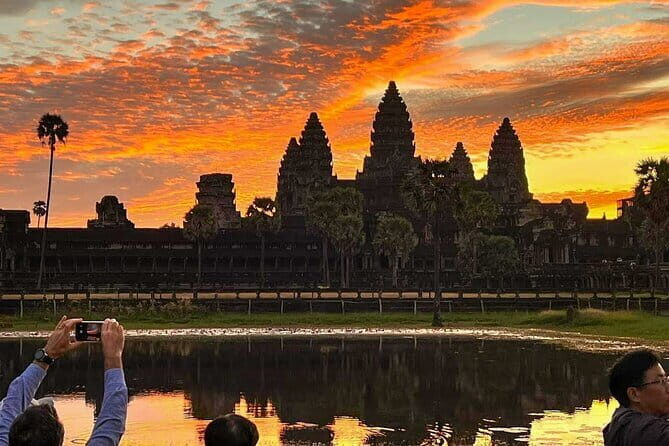
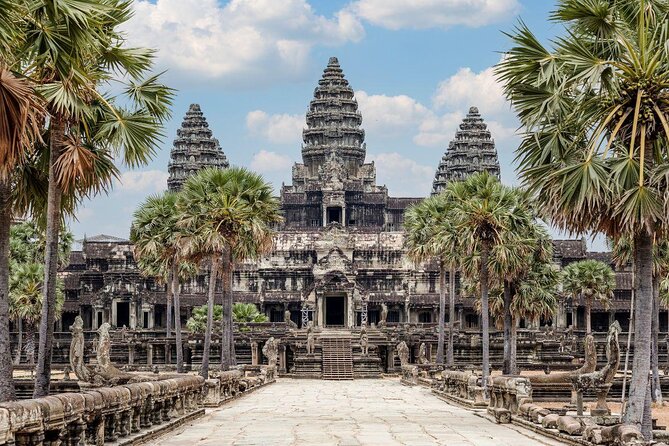
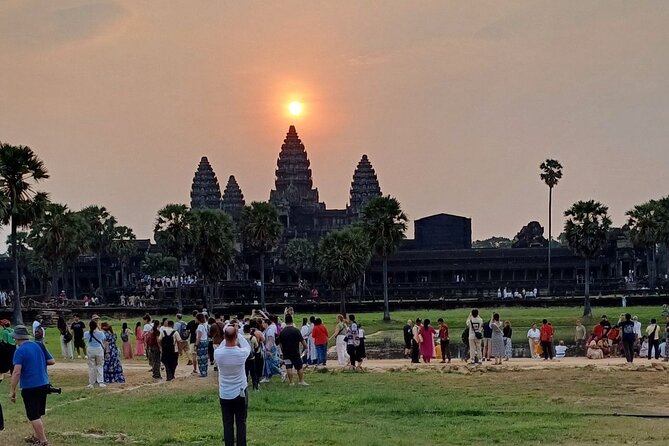
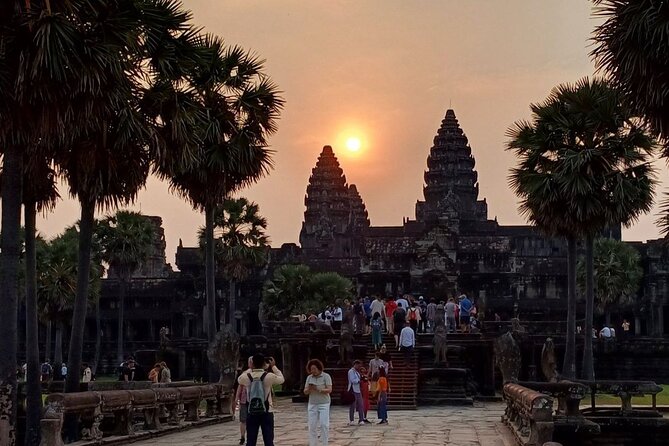
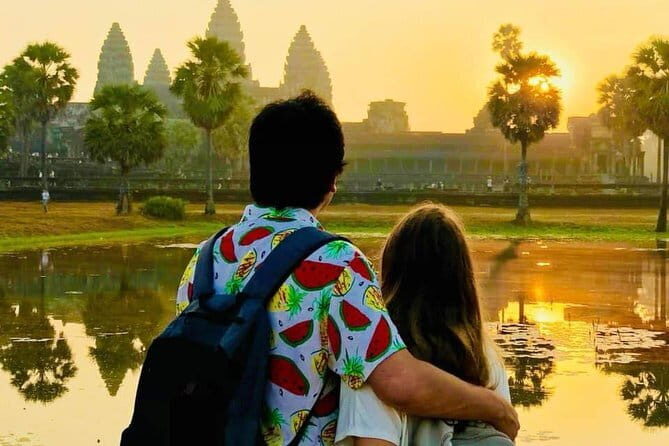
Angkor Wat is the star, and the tour gives it the time it needs. You’ll spend about 2 hours at Angkor Wat, and this is where the sunrise option pays off.
Angkor Wat is the largest and most famous Khmer temple, built in the 12th century during King Suryavarman II’s reign (roughly 1113–1150). It stands about 65 meters high and sits inside a moat. That scale becomes obvious when the morning light is low enough to show depth in the carvings and layers of the structure.
Here’s the practical part: sunrise at Angkor Wat is not just about a pretty sky. It’s also about visibility and atmosphere. Morning light tends to make the details easier to read, and the crowd flow is usually better when you arrive before most tour groups.
A good guide helps you do the sunrise right. In the experiences shared by people who booked this tour, the guide (often mentioned as Mr K / Kosorl Oun) is praised for knowing when and where to stand for photos. That’s not fluff. With a site this large, small positioning choices can make a huge difference.
One more reality check: you’re on uneven ground, and you’ll likely spend time standing. Wear shoes you trust.
Stop 2: Bayon Temple and Angkor Thom’s Power Walk
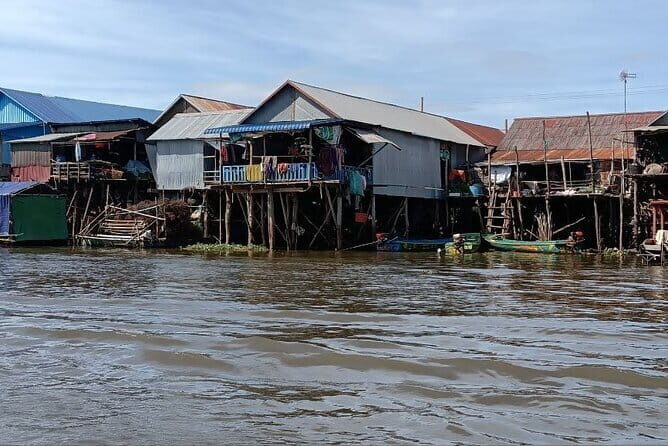
After Angkor Wat, the tour moves you into Angkor Thom territory. Stop 2 is Bayon Temple, listed for about 2 hours and noted as free.
Bayon is a Buddhist-style temple built in the late 12th to early 13th century by Jayavarnam VII. What people remember most are the 54 towers, each representing provinces of the Khmer empire. Up close, those towers feel less like decorations and more like a statement of reach and control.
The vibe changes here. Angkor Wat is famous for its symmetry and grandeur. Bayon feels more immediate, with faces and towers that can seem to follow you as you move around.
If you want one of the most memorable “walk moments” in Angkor Thom, Bayon is it. It’s also a good place to take short breaks because it’s a big complex, and you’ll likely be shifting directions a lot as you explore.


Stop 3: Chau Say Tevoda for a Quick, Focused Look
Chau Say Tevoda is a smaller stop, listed at 30 minutes and marked as admission ticket not included. It sits east of Angkor Thom, just south of Thommanon across the Victory Way. Built in the mid-12th century, it’s an Angkor Wat period Hindu temple.
This kind of stop is valuable because it gives your eyes a reset. You’re not always staring at the biggest most famous structures. Instead, you’re seeing a different piece of the puzzle—one that helps you understand how varied the Angkor area is, even within the same general time period.
The downside is it’s short. If you love slow, lingering ruins, you might wish for more time here. But in a 6 to 8 hour tour, the schedule has to make room for Ta Prohm, and that stop takes focus.
Stop 4: Ta Prohm Temple, Famous for the Film and the Feeling
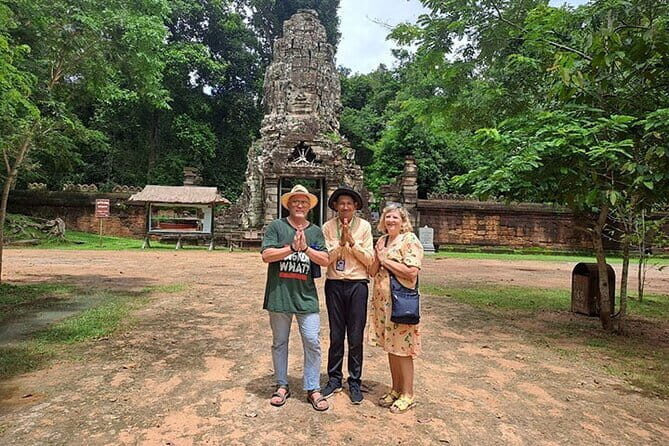
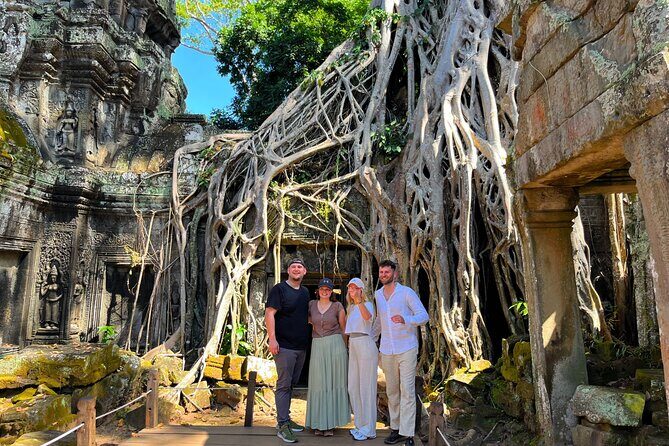
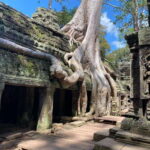
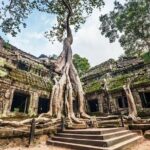
Ta Prohm is the stop people often talk about first, especially because of its Tomb Raider connection. The tour gives you about 2 hours here, and it’s listed as free for admission.
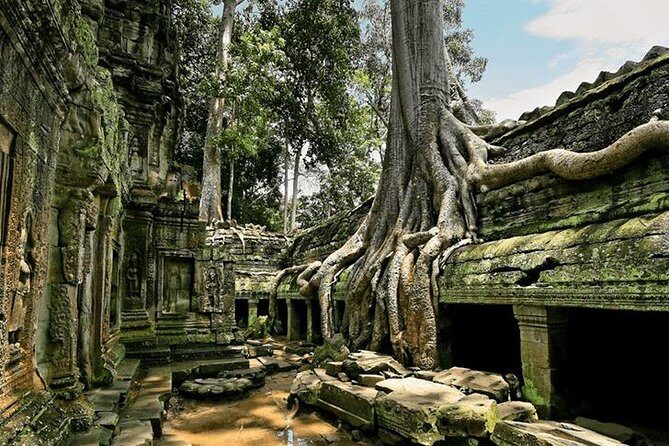
Ta Prohm was built in the late 12th century by Jayavarman VII and dedicated in 1186 to his mother. It started as a Buddhist background site but later became a Hindu temple, meaning you’re seeing layers of religious history mixed into the same stone.
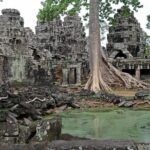
What makes Ta Prohm different when you’re actually there is how nature interacts with architecture. The temple feels alive in a way that formal, restored spaces often don’t. When the light filters through the trees, you get that classic “how is this still standing” feeling.
One practical note: Ta Prohm gets busy. A good guide helps you move to photo angles and viewpoints without wasting time crossing the same areas repeatedly. In the experiences shared for this tour, the guide is specifically praised for spotting photo spots and even more quiet viewpoints.
If your group wants space to take photos and not feel rushed, Ta Prohm is where the pacing really matters.
Stop 5: Ta Nei for a Buddha-Dedicated Detour
Next is Ta Nei, around 35 minutes, marked as admission ticket not included. It’s described as a late 12th-century stone temple near the northwest corner of the East Baray, a large reservoir. Ta Nei was dedicated to the Buddha.
This is a “less famous, but worth it” stop. It gives you variety after Ta Prohm and helps you see that Angkor isn’t one temple. It’s a whole system of sacred spaces with different purposes.
The trade-off is time. Like Chau Say Tevoda, it’s brief. Still, if you like temples that feel calmer and more local—places where you can actually take your time to notice details—Ta Nei can be a nice break from the heaviest crowd magnets.
Stop 6: Bayon Temple Area Meets the South Gate Experience
The final stop described is tied to Angkor Thom’s South Gate, with a time around 35 minutes and noted as admission free.
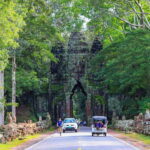
South Gate is one of five grand entrances to Angkor Thom. It’s described as the best-preserved and most famous gate. When you arrive, you’ll notice how the gateway acts like a threshold between the modern sense of arriving and the ancient sense of stepping into a city.
The South Gate has that signature Angkor feel: big stone, long causeway views, and carvings that pull your eye forward. Even if you don’t obsess over architectural details, gates like this help you understand Angkor as an organized urban space, not just a collection of temples.
This stop is also where you wrap your mental picture together. You started with sunrise at Angkor Wat, moved through central religious icons, and ended at a city entrance that frames the whole story.
Timing, Heat, and How to Actually Enjoy the Day
This tour is long enough that you should treat it like an all-day temple outing, even if the stops are spaced out. It’s built for morning freshness, then later movement through sun and stone.
Here’s what helps you enjoy it without hating it by mid-morning:
- Start hydrated, because you’ll get water during the tour but you still want to arrive in decent shape.
- Wear shoes with grip for uneven stone and roots, especially at Ta Prohm.
- Plan for sun. Even if you’re early at the gate, the later parts feel hotter as the day climbs.
- If you’re taking photos, remember that the best angles can mean standing still for minutes. That’s where a towel and water suddenly become worth more than you’d expect.
If you have kids or someone who tires quickly, the guide’s style seems to matter a lot. In the experiences shared from real bookings, people highlighted how Mr K adapted to family needs and kept the day smooth, even when someone wasn’t feeling 100%. That flexibility can be the difference between a rushed visit and a day that feels manageable.
Who This Tour Is Best For (And Who Might Prefer Something Else)
This Angkor Wat sunrise tour is a strong fit if you:
- want one organized day that covers major Angkor highlights without you figuring out timing and routing
- care about the sunrise experience instead of just visiting at opening time
- like a guide who explains what you’re seeing, not only where to walk
- prefer a more focused route: Angkor Wat plus a clear Angkor Thom set (Bayon, Ta Prohm, South Gate)
It might be less ideal if you:
- hate early starts or already feel wiped out with very early mornings
- want total independence and prefer wandering with no schedule
- dislike tours that include multiple stops in one day, even if the pacing is designed to work
The tour is also described as private for your group. That can be a real advantage if you want your own space and your guide can adjust your pace to your energy level.
Should You Book the Angkor Wat Sunrise Tour With Easy Angkor Trip?
I’d book it if sunrise is on your Angkor checklist and you want the day to run like it has a plan. The combination of early timing, pickup/drop-off, and an English-speaking guide who can help with photo spots and interpretation makes this feel like more than just transportation to temples.
I’d hold off or choose another option if you’re trying to keep costs ultra-low. After adding the $37 Angkor Temple Pass, your total is noticeably higher than the $50 headline price. Still, considering you’re covering Angkor Wat at sunrise plus multiple stops across Angkor Thom, it’s usually not a bad deal for a one-day hit.
If you book, do it with a simple mindset: this is a morning-first outing. You’re going early for a reason, and the payoff is worth it when you treat it like a real experience instead of a quick checklist.
FAQ
How much does the Angkor Wat Sunrise Tour cost?
The tour is listed at $50.00 per person.
How long is the tour?
It runs about 6 to 8 hours (approx.).
Is pickup and drop-off included?
Yes. Pickup and drop-off are offered, and the tour includes pickup from your hotel.
Does the tour include sunrise at Angkor Wat?
Sunrise is optional. If you choose the sunrise plan, the tour departs around 4:30am to visit Angkor Wat for sunrise.
What does the tour include besides the guide?
Included features are an English-speaking guide, air-conditioned vehicle, pickup and drop-off, and cold drinking water (plus a cold water and towel note).
What admission fees should I expect?
The Angkor Temple Pass is $37.00 per person and is not included in the tour price.
Is it a private tour or a shared group?
It’s private in the sense that only your group participates.