Angkor, minus the chaos. This full day is built for real temple time, with max 15 travelers and an air-conditioned ride so you start the day calmer and move smarter. You skip the sunrise scramble and still get the south-side views and key sights, including Bayon and Ta Prohm’s famous faces in the jungle.
Two things I really like: the smaller group (you can actually hear your guide) and the comfort factor of an air-conditioned van, even when it’s hot outside. One possible drawback is the budget math: the tour price is $25, but the one-day temple pass is $37 and isn’t included.
You’ll also get practical guidance, like how to enter through the south gate for a smoother start, and how to position yourself for the best angles while you’re there. In past tours with Angkor Buddy Tour, guides such as Joe and Sopheap Tann have led the day, with a driver named Pan mentioned in review notes.
In This Review
- Key things to know before you go
- Why skip the sunrise crowd for Angkor Wat?
- Pickup timing, the real price, and what $25 includes
- The day’s flow: from ticket office to first big monuments
- Angkor Wat: south-gate entry and smarter photo angles
- Angkor Thom South Gate: the entry point you’ll actually care about
- Bayon Temple and the smiling faces
- Terrace of the Elephants: a must-see stop in the Thom area
- Ta Prohm: jungle temple energy (and Tomb Raider tie-in)
- Comfort in the heat: breaks, water, and lunch choices
- Small-group touring: what 15 people changes on the ground
- Tickets, rules, and what to pack so you don’t get stuck
- Who this tour suits best
- Should you book this Angkor Wat full day tour?
- FAQ
- What is the duration of the Angkor Wat full day tour?
- How many people are in the group?
- What time is pickup from my hotel?
- Are the temple entrance fees included?
- Is breakfast or lunch included?
- Is bottled water provided?
- What dress code do I need for the temples?
- Are drones allowed at the temples?
- What is the minimum age to join?
- What happens if the weather is bad?
Key things to know before you go
- Small group cap (15) means less waiting and more time at each stop
- Pickup timing is usually 7:30–8:00 a.m. depending on your hotel
- South gate entry helps you avoid the most chaotic flow at the start
- You’ll cover Angkor Thom highlights: South Gate, Bayon, Terrace of the Elephants, and Ta Prohm
- Bottled water is unlimited, which matters in Siem Reap heat
Why skip the sunrise crowd for Angkor Wat?
Most Angkor day tours try to win the race to the temples. This one takes a different approach: you don’t need to start with the early-morning stampede. That matters because Angkor is busy even without sunrise. By avoiding the most chaotic hour, you’re more likely to enjoy the details instead of constantly adjusting to other people’s heads in your frame.
You still get a satisfying first stop at Angkor Wat, and the timing gives you a chance to settle into the complex before your brain turns into a checklist. It also helps with photos. Your guide can steer you toward spots that look good without you needing to sprint from platform to platform.
You can also read our reviews of more tours and experiences in Siem Reap
Pickup timing, the real price, and what $25 includes
This is priced at $25 per person for the guided experience, and it’s a solid value if you already plan your temple pass and meals. The day runs about 8 to 9 hours, and hotel pickup usually starts between 7:30 and 8:00 a.m. (depending on where your hotel is located).
What’s included:
- pickup and drop-off at city hotels
- transportation in an air-conditioned mini bus/van
- a professional English-speaking guide
- unlimited bottled water
What’s not included:
- breakfast and lunch (lunch is at your own expense)
- drinks beyond water
- the one-day temple entrance fee (listed as $37, covering temples for that day)
- travel insurance
- tipping the guide and driver (recommended)
Here’s the practical way I think about value: the $25 mainly buys you the guide, vehicle, and time-saving logistics. The $37 temple pass is what actually gets you into the temple zone. Add meals and you’re in a more complete day-budget. If you want the guide and transportation support, this feels like a fair deal for a full day.
The day’s flow: from ticket office to first big monuments
Your morning begins with hotel pickup, then travel to the ticket office area, which takes about 15 to 30 minutes. After you purchase your ticket, you’re set up to enter Angkor Wat and focus on the architecture instead of spending the day confused about where to go.
The pace here tends to be efficient without feeling like a rush. You get a full block of time at Angkor Wat (listed as 2 hours for that stop, with admission not included). That time window is important. Angkor Wat isn’t a quick photo-and-leave site. It’s all about lines, symmetry, and moving your viewpoint slowly enough to notice the carvings and how the complex is laid out.
Also note: there’s a dress code. Shoulders and knees must be covered, and you’ll want to come prepared with proper clothing. The last thing you want is a forced scramble before your first temple stop.
Angkor Wat: south-gate entry and smarter photo angles
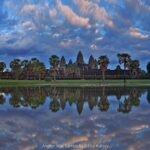
Angkor Wat is the icon, but the experience is more than seeing it once. What makes this tour feel different is the way you’re routed and guided. You enter through the south gate, described as the most restored of the four entrances. That detail matters because you’re starting in an area that feels cleaner and more complete, so the “wow” factor hits sooner.
Expect your guide to help you with angles. That sounds generic until you’re standing in a crowded courtyard and trying to frame the right perspectives without getting stuck behind the wrong group. Here, your guide’s job is basically to keep you pointed in the right direction and help you understand what you’re looking at—so your photos end up looking intentional, not accidental.
And yes, Angkor Wat’s carvings and proportions can feel overwhelming at first. A good guide helps you pick a few key things to watch for, then you’ll suddenly start seeing patterns: the way the temple is organized, and what the designers wanted you to notice as you move through the space.
Angkor Thom South Gate: the entry point you’ll actually care about
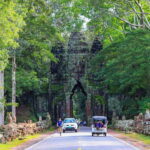
After Angkor Wat, you move toward Angkor Thom, the larger walled city area inside the Angkor empire zone. The standout here is the South Gate.
All five gates are similar, but this one is described as the most extensively restored and the most complete. That means you’re not just passing through—you’re entering through a gateway that offers a clearer view of what you came for. It’s also a useful transition from the grand temple complex of Angkor Wat into the more maze-like feel of Angkor Thom.
This is where the day starts to feel like a journey rather than a single monument. You’ll be in the right mindset to appreciate the shift: from one big iconic temple to a whole city of stone.

Bayon Temple and the smiling faces
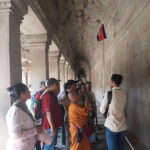
Next up is Bayon Temple, one of the most famous parts of Angkor Thom. Bayon is compact enough that you can navigate it without getting totally lost. The visit is about an hour, and the layout is described as maze-like with narrow corridors.
That “maze” aspect is why a guide helps. Without guidance, you can spend a lot of time backtracking, trying to find the main viewing zones and ending up with a crooked sense of the temple’s structure. With guidance, you tend to get a more logical route through the inner enclosures.
The headliner here is the famous faces—often described as smiling. It’s one of those sights that works whether you’re into history details or you just want to stand there and stare for a while. Bayon is also great for learning how the temple’s design guides movement and sightlines.
Terrace of the Elephants: a must-see stop in the Thom area
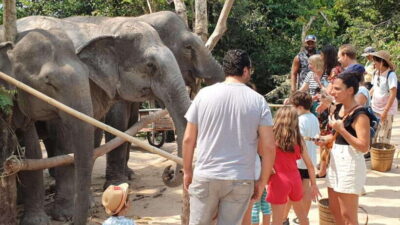
Within the Angkor Thom circuit, the tour highlights include the Terrace of the Elephants. This is one of the spots where the grand scale of the space becomes clearer. Terraces like this are where you can feel the temple city as a designed stage—big, ceremonial, and made for power and spectacle.
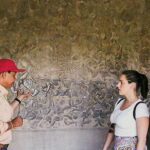
It’s also a good area for your guide to point out what to look for in the reliefs and how to interpret the stonework from the right distance. You don’t need to be an art expert. You just need your feet set in the right place, and your eyes guided to the most readable sections.
Ta Prohm: jungle temple energy (and Tomb Raider tie-in)
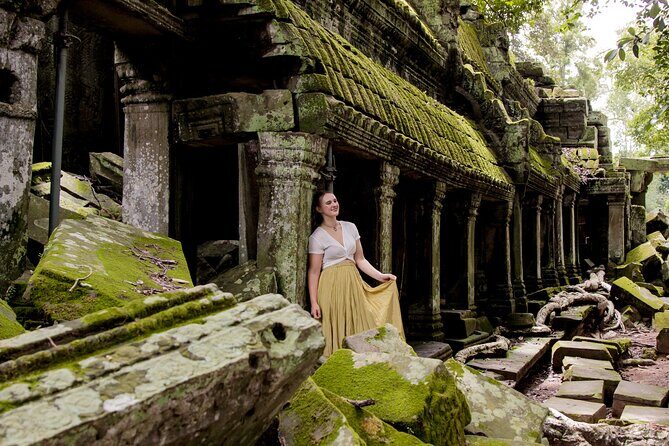
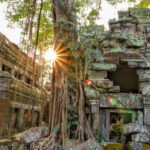
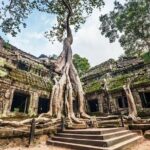
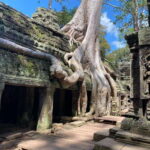
Then comes the day’s most atmospheric shift: Ta Prohm. If you’ve heard about it at all, it’s likely because it looks like nature and stone are sharing the space. That’s exactly the draw.
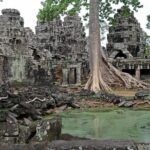
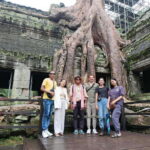
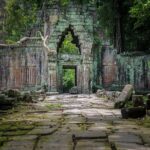
Ta Prohm is described as one of the most atmospheric temples, and it’s famous for the way trees and roots have grown into the ruins. The tour also specifically calls out the movie connection—Ta Prohm appears in Tomb Raider—which helps a lot if you want a quick cultural anchor before you start noticing the details in front of you.
Ta Prohm also has a strong historical note in the description: at one point, it was home to 2,740 monks. Even if you don’t absorb every historical layer, that kind of fact makes the ruins feel less like a backdrop and more like a place where real daily life happened.
Your visit is about an hour, and the day includes a lunch and rest break before you head here. That timing helps, because Ta Prohm rewards slow looking. If you’re wiped out from the morning heat, you’ll miss why people remember this one most.
Comfort in the heat: breaks, water, and lunch choices
Angkor day touring is hot work. The good news: you get unlimited bottled water, which is more helpful than it sounds. Staying hydrated keeps you from turning cranky halfway through Bayon and losing your attention.
Also, the tour includes rest breaks and a lunch window. Lunch is not included, but the tour description notes that the guide normally stops at a local restaurant inside the national park during lunch time. The tradeoff is simple: it can be more expensive than in town, but it’s described as the best choice for this tour.
That’s a reasonable compromise if you care about staying on schedule. Still, it’s smart to set expectations: you’ll likely spend more for lunch than you would in Siem Reap center, and drinks besides water may cost extra.
Small-group touring: what 15 people changes on the ground
A maximum of 15 travelers is a huge practical difference at Angkor. It cuts down the annoying issues that happen in bigger groups: long waits, guides talking over each other, and time lost to everyone trying to get a turn at the same photo spot.
With a smaller group, your guide can keep track of where you are and help the group manage the flow through corridors and courtyards. It also makes your questions feel easier to ask. If you like getting context—why a terrace is shaped a certain way, how the temple layout works—this structure supports that.
It’s also easier on your attention. You can actually look at what you’re standing in front of, rather than constantly preparing for the next checkpoint.
Tickets, rules, and what to pack so you don’t get stuck
Here’s the stuff I’d put on a quick checklist:
- Temple entrance fees: listed as $37 for a one-day pass covering all temples. You purchase it as part of the day.
- Mobile ticket: the tour notes mobile ticket is used.
- Dress code: cover shoulders and knees. Expect the rules to be enforced.
- Drone policy: drones at the temples are not allowed, unless you ask permission from APSARA.
- Weather requirement: the experience requires good weather. If it’s canceled due to poor weather, you’ll be offered a different date or a full refund.
- Age: minimum age is 5 years.
If you’re thinking about what to bring: a light layer for sun, a hat, and respectful clothing are the big ones. A scarf can be useful for meeting the dress requirements, but keep it legit—this site is strict about what counts as acceptable coverage.
Who this tour suits best
This tour fits well if you want:
- a full, organized day without sunrise chaos
- an English-speaking guide and air-conditioned transportation
- the biggest hits: Angkor Wat, Angkor Thom South Gate, Bayon, Terrace of the Elephants, and Ta Prohm
You may want to look elsewhere if:
- you’re chasing a very specific sunrise timing (this is designed to skip that rush)
- you’re trying to keep costs ultra-low (the $25 doesn’t include the $37 temple pass or meals)
If you’re traveling with kids, the minimum age is 5. For younger kids, the tour isn’t an option.
Should you book this Angkor Wat full day tour?
I’d book it if you want a well-paced day where the guide helps you make sense of what you’re seeing. The small group size is a real quality boost, and the comfort of an air-conditioned vehicle plus unlimited water is exactly what you want when the sun is doing its best work.
It’s also a good fit if you’d rather spend your energy on temples instead of fighting crowds right at opening time. Just go in with the right expectations: you’ll need to budget for the $37 temple pass and pay for lunch, and you should plan around strict dress rules and weather.
If those things work for you, this tour style is one of the more sensible ways to cover Angkor’s top sights in a single day without turning the experience into a sprint.
FAQ
What is the duration of the Angkor Wat full day tour?
The tour runs about 8 to 9 hours.
How many people are in the group?
The group is limited to a maximum of 15 travelers.
What time is pickup from my hotel?
Pickup is typically between 7:30 and 8:00 a.m., depending on your hotel location.
Are the temple entrance fees included?
No. The one-day temple entrance fees are listed as $37 and cover the temples. Admission is not included in the tour stops.
Is breakfast or lunch included?
Breakfast and lunch are not included. Lunch is at your own expense, and the guide normally stops at a local restaurant in the national park during lunch time.
Is bottled water provided?
Yes. Bottled water is included and listed as unlimited.
What dress code do I need for the temples?
You need respectful dress that covers your shoulders and knees. A proper scarf is mentioned as required, and you should avoid makeshift coverings.
Are drones allowed at the temples?
Drones are not allowed at the temples. You can ask permission from APSARA if needed.
What is the minimum age to join?
The minimum age is 5 years old.
What happens if the weather is bad?
This experience requires good weather. If it’s canceled due to poor weather, you’ll be offered a different date or a full refund.