REVIEW · SIEM REAP
Angkor Wat & Banteay Srey Tour
Book on Viator →Operated by Easy Angkor Trip · Bookable on Viator
Angkor in one smooth day beats the chaos. This tour is built for real-world comfort: hotel pickup, air-conditioned transport, and a temples pass stop that helps you get into the sites without turning your morning into an admin task. You’ll also have a guide and driver who keep the day moving at a sensible pace while you watch the countryside slide by.
My favorite part is the mix. You start with Angkor Wat at the top of the Angkor game, then you shift into Angkor Thom’s faces, Ta Prohm’s giant trees, and finish with Banteay Srei, the pink-stone Lady Temple. One thing to plan for: entrance fees are not included, so your final costs will be a bit higher than the $50 price tag once you add what’s needed for Angkor Wat.
In This Review
- Key things that make this Angkor day tour work
- Hotel Pickup to Temples Pass: The Siem Reap Rhythm
- Angkor Wat: 65 Meters of Stone Drama (Without Sunrise)
- Bayon in Angkor Thom: Smiling Faces and a Tough Later Chapter
- Ta Prohm: Spung Trees, Mixed Symbols, and Letting It Breathe
- Banteay Srei, the Lady Temple: Pink Sandstone and Craft Stops Mid-Route
- Banteay Samré: A Short, Worth-It Hindu Follow-Up
- Price, Value, and What’s Really Included in the $50
- Timing, Heat, and How to Keep Your Day Comfortable
- Guides, Photography, and the Kind of Answers You Want
- Quick sanity check: Is this tour for you?
- FAQ
- FAQ
- How long is the Angkor Wat & Banteay Srey Tour?
- Do you get picked up from your hotel in Siem Reap?
- What’s included with the tour price?
- Are entrance fees included for the temples?
- Are meals included?
- Is sunrise included in this tour?
- Is this a private tour?
- Does the tour use a mobile ticket?
- What is the cancellation policy?
Key things that make this Angkor day tour work
- Hotel lobby pickup plus air-conditioned rides so you’re not baking in traffic before temples
- A temples pass purchase as part of the flow, which saves time and confusion
- Angkor Wat 12th-century scale: 65-meter-high temple, moat setting, and carved reliefs
- Bayon’s 54 towers and 200+ smiling faces, with a story that includes later damage in 1811
- Ta Prohm’s spung trees and the Buddhist-to-Hindu layers you can still read in the stone
- Banteay Srei’s pink sandstone and a chance to see locals making sugar palm sweets mid-route
Hotel Pickup to Temples Pass: The Siem Reap Rhythm
This is the kind of Angkor tour that respects your time. You meet at your hotel lobby at the time you selected during booking, then you head to the ticket office area to buy the temples pass. That small step matters because Angkor days can fall apart when you’re hunting for tickets while heat rises and lines swell.
Once you’re on the road, the tour keeps things comfortable. You get A/C transportation, plus cool towels and cool drinking water during the ride. It’s simple, but it’s what makes a 7 to 10 hour day feel doable instead of like a marathon.
One more practical detail: the tour is set up as private for your group only. That helps if you want slower pacing, better photo stops, or fewer “everyone rush” moments in crowded areas. And since there’s mention of group discounts plus a mobile ticket, it’s designed for groups who want to travel together without losing convenience.
You can also read our reviews of more tours and experiences in Siem Reap.

Angkor Wat: 65 Meters of Stone Drama (Without Sunrise)
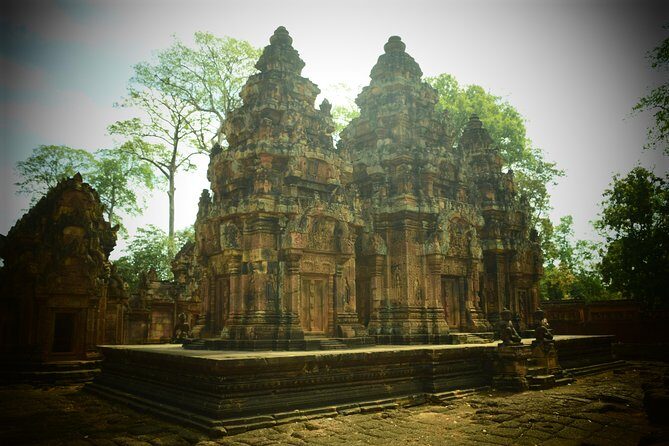
Angkor Wat is the headliner, and it earns the hype. It was built in the 12th century between 1113 and 1150 during the reign of Suryavarman II, and it rises about 65 meters high. You also get that classic setting: the temple sits inside a large moat, and the walls—both outside and inside—are covered with detailed base-reliefs.
Timing here is generous: plan on about 3 hours at Angkor Wat. That’s enough to take in the main spaces, plus to pause where the reliefs and layout make sense to you. The scale can feel overwhelming at first, so the guide’s job is to help you read what you’re seeing—what to look for, what it means, and where your best photo angles are.
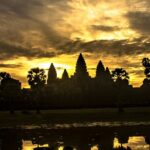
Important money note: the Angkor Wat admission ticket is not included. The tour includes the general temples pass step, but it still flags that entrance fees are extra. Also, sunrise is an extra charge, so if you’re dreaming of that dark-to-gold silhouette moment, you’ll need to add the sunrise option.
What you’ll like most:
- The sheer size and symmetry of the complex
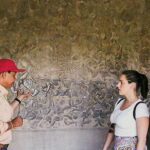
- The carved stories that reward slow looking
- A structured visit that doesn’t just dump you at the gate
What to consider:
- Your feet will feel it. Angkor Wat involves stairs and uneven stone, even when you’re moving with the group.
Bayon in Angkor Thom: Smiling Faces and a Tough Later Chapter
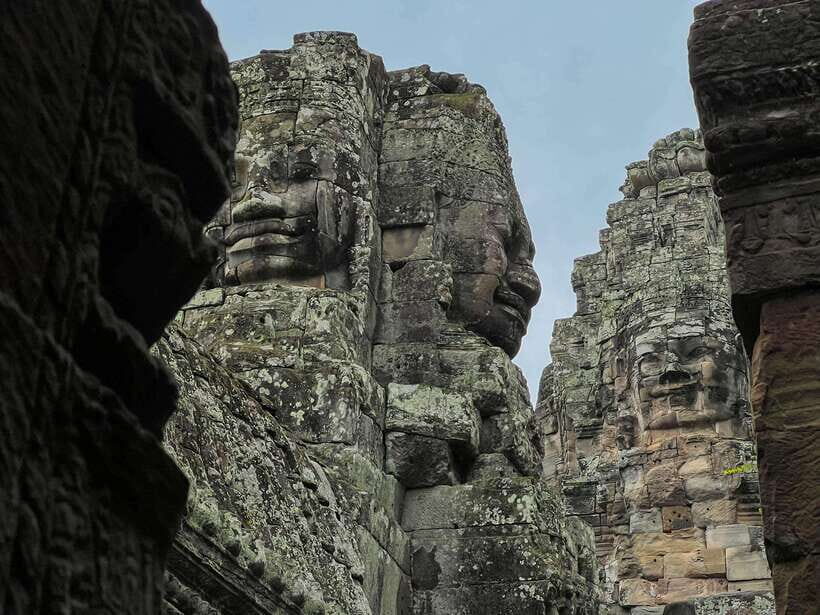
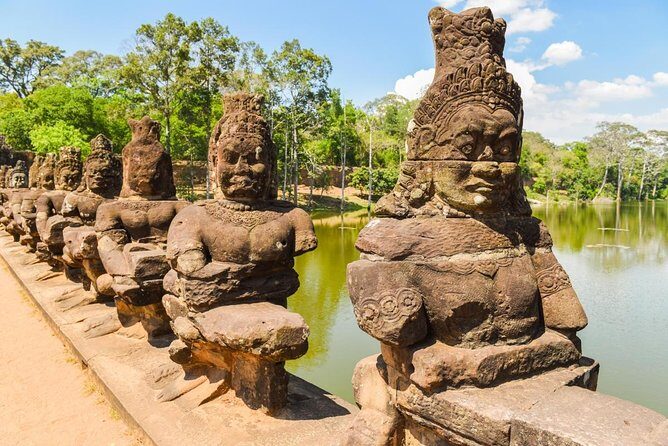
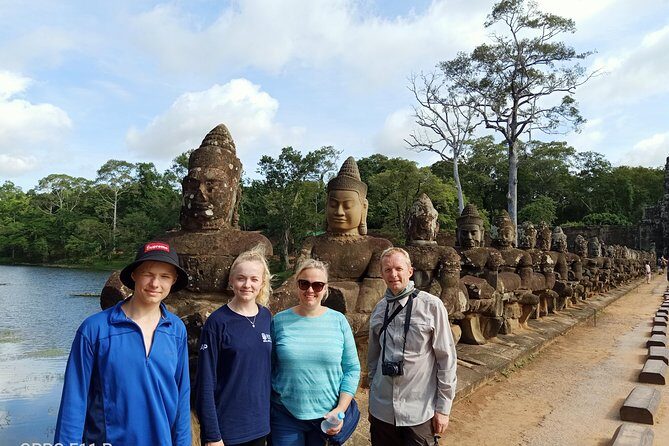
Next you move into Angkor Thom and its most famous feature: Bayon, also called Prasat Bayon or Angkor Thom. Bayon is a Buddhist-style temple built in the late 12th or early 13th century by Jayavarman VII. The big visual hook is the set of towers: 54 towers representing the 54 provinces tied to the Khmer empire’s world.
Then comes the facial overload—in a good way. There are over 200 carved smiling faces across the towers. They’re why Bayon is hard to forget. Even when you’re tired, you’ll keep glancing up.
Bayon also has a later-history weight. It was a thriving capital, but it suffered damage in 1811 by Cham invaders. That detail changes how you view the temple—less like a perfect postcard, more like a living monument with a real past.
You’ll get about 2 hours here. That should be enough to walk the main areas, take photos, and catch how the towers and interior spaces relate. If you want fewer crowds, aim to keep your photos tight and your time intentional. Don’t try to photograph everything from every angle.
Admission here is marked as free in the tour info, which helps keep costs controlled compared to Angkor Wat.
Ta Prohm: Spung Trees, Mixed Symbols, and Letting It Breathe
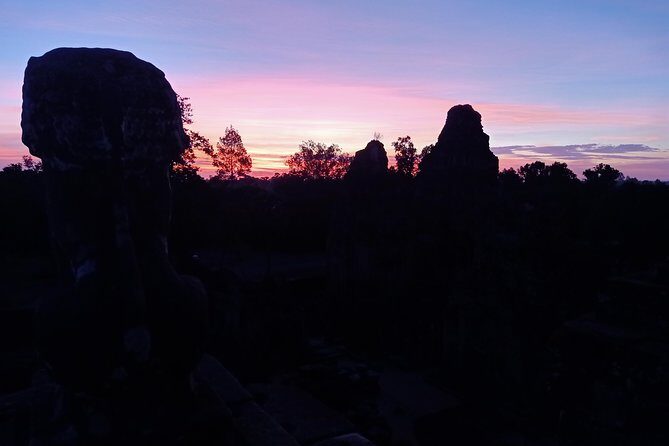
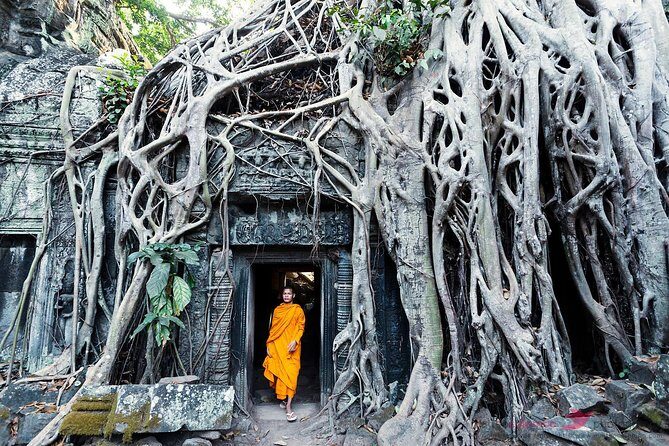
Ta Prohm is where Angkor starts to feel wild. The temple was built in the late 12th century by Jayavarman VII and dedicated in 1186 to his mother. The stone carries layers because the temple’s religious identity changed over time.
Originally it had a Buddhist background. Later, it was converted to Hindu use, and some Buddhist galleries were destroyed or replaced with Hindu symbols such as yoni and lingam. That means you don’t just see architecture. You see the temple’s shifting purpose written into its layout.
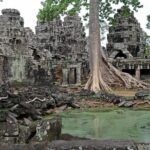
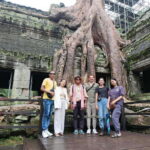
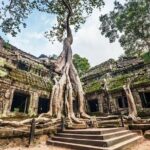
And then there’s the most famous feature: the trees locals call spung. They grow up, on, and over the sandstone block walls. Ta Prohm looks like nature is reclaiming the stone, but it’s also a reminder that this is not a “museum ruins” vibe. It’s a temple complex that feels occupied by living presence.
You’ll spend about 2 hours at Ta Prohm. It’s also located roughly 1.5 kilometers from Bayon through the Victory Gate, so you’re not just jumping randomly between sites—you’re moving along a real connection between areas.
Admission is listed as free in the tour info, another small cost saver.
Practical tip for Ta Prohm: wear shoes you trust. The ground can be dusty and uneven. If you’re sensitive to heat, time your breaks. Cool water and towels help, but you’ll still want to pace yourself.
Banteay Srei, the Lady Temple: Pink Sandstone and Craft Stops Mid-Route
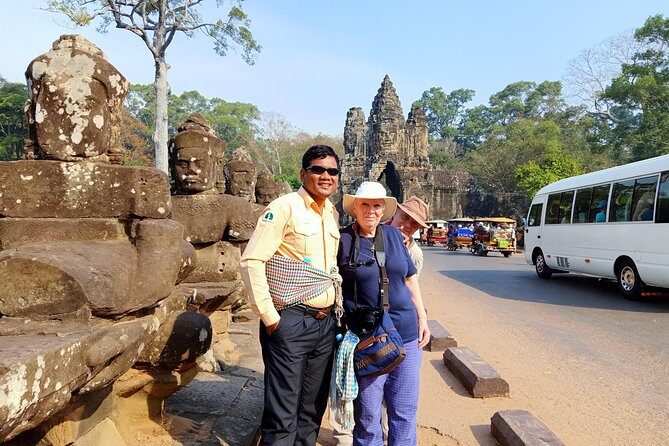
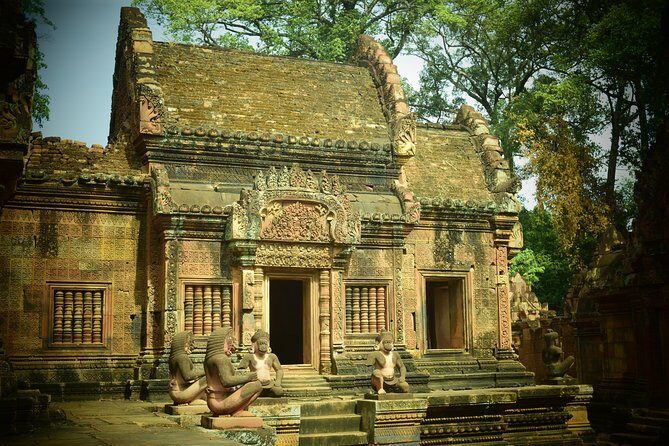
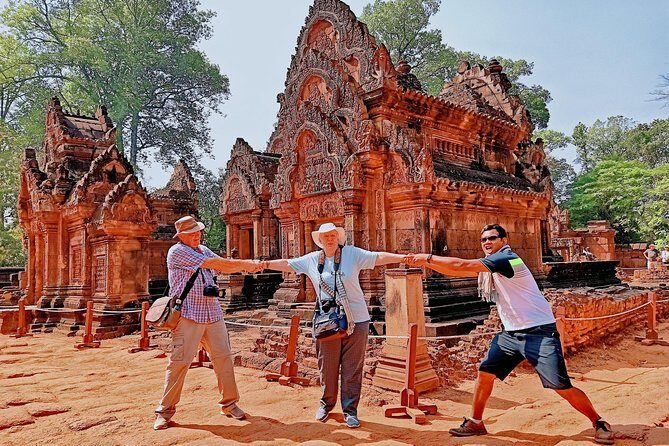
If Angkor Wat is your grand statement, Banteay Srei is your intricate work of art. It’s known for pink sandstone and delicate carvings, and it’s often called the Lady Temple. The carvings are the point here: fine details that you only appreciate when you slow down and look closely.
The distance matters. Banteay Srei sits about 35 kilometers from the main Angkor tour areas, so you’ll spend part of the day traveling out there. That’s also why this tour is often a “full day” commitment; it’s not just hopping around within one square-mile radius.
You’ll get about 2 hours at Banteay Srei. That’s a good window for both the main temple areas and the time needed to actually inspect the carvings without feeling rushed.
One unique bonus inside the day is a midway stop. The tour info says you may stop mid-way to see locals making natural sugar products from the sugar palm. If you like travel that includes how people live—not only what people built—you’ll probably enjoy this break. It’s not a full cultural workshop, but it’s a real-world sight that beats another souvenir shop.
Admission for Banteay Srei is marked as free in the tour info, which helps.


Banteay Samré: A Short, Worth-It Hindu Follow-Up
To close out the circuit, you’ll visit Banteay Samré. It’s a temple in the Angkor area located about 400 meters east of the East Baray. Built during the reign of Suryavarman II and Yasovarman II in the early 12th century, it’s a Hindu temple in the Angkor Wat style.
This stop is shorter: about 1 hour. That makes sense. It’s a nice follow-up after the intensity of Ta Prohm and the detail focus of Banteay Srei. You’re getting another “read” of Khmer temple design without losing the whole day to one complex.
Admission is marked as free for this stop too, according to the tour info.
If you’re tired (and by hour six, many people are), this is a good place to let the guide point out just a few key things and then enjoy the remaining time at a relaxed pace.
Price, Value, and What’s Really Included in the $50
At $50 per person, the big question is what you’re paying for. Here’s what the tour includes:
- A/C transportation
- Cool towels and cool drinking water
- A speaking guide and driver
- Mobile ticket
- Group discounts (not the same as public pricing, but a sign the provider plans for shared travel economics)
What’s not included:
- Entrance fees (with Angkor Wat specifically flagged as admission ticket not included)
- Meals
- Travel insurance
- Sunrise extra charge
So the value is mostly in logistics and time management. You’re paying to avoid the hassle of coordinating tickets, transportation, and a temple-by-temple plan. You’re also paying for guide interpretation—someone to connect dates, rulers, symbols, and the “why it looks like that” parts of Angkor.
If you’re the kind of traveler who enjoys a structured day and wants someone to help you see more than you would alone, this price can feel fair. If you’re planning a DIY route anyway, then you might compare costs against taxi or tuk-tuk time and tickets.
Timing, Heat, and How to Keep Your Day Comfortable
This tour is listed as 7 to 10 hours. That’s a wide range, which tells you to be ready for a real temple day, not a quick checklist.
The good news: the tour includes small comfort support—cool water and towels—plus air-conditioned transport. That helps a lot between temples, especially on warmer days in Siem Reap.
The “make or break” part isn’t the ride. It’s the walking and stairs inside the sites. Angkor Wat includes steep steps. Ta Prohm has uneven ground. Bayon involves climbing and looking up. If you have mobility limits, you’ll want to move slowly, take breaks, and use the guide’s help to decide where to spend extra time.
From the guide feedback, there’s an emphasis on being attentive to guests and adapting when people need a slower approach. That’s worth taking seriously. You don’t want a script that forces you to keep up when your body says stop.
Guides, Photography, and the Kind of Answers You Want
One of the strongest themes in the tour experience is the human side: guides who are enthusiastic and eager to explain what you’re seeing. Names that show up include Mr Oun Kosorl and Sinann, with other guides stepping in when needed. That kind of coverage matters because Angkor days run on momentum. If someone can’t make it, you still want the day to stay on track.
You’ll also get support that goes beyond facts. Several accounts highlight the guides’ friendliness and their attention to guest needs. There’s also a clear focus on photography help—guides who can point out good angles and actually help you get photos that feel like you were really there.
If you care about history, the guides also connect temple art to Khmer rulers and later events. Bayon’s damaged chapter in 1811, Ta Prohm’s religious shifts, and Angkor Wat’s reign details all come into focus when you have someone who can translate the stone into a story you can follow.
Quick sanity check: Is this tour for you?
You should book this tour if:
- You want an organized Angkor day with pickup, A/C comfort, and a guide
- You care about seeing the big names plus Banteay Srei’s fine carvings
- You’d rather pay for structure than spend time figuring out logistics
You might skip it (or adjust expectations) if:
- You want a purely self-paced temple day. This tour is designed to keep moving.
- You’re budget-tight and don’t want extra entrance fees, since Angkor Wat admission is not included.
- You’re hoping for sunrise without paying the sunrise add-on. That’s separate.
One last practical note: the tour allows free cancellation up to 24 hours in advance for a full refund, so if your plans wobble, you’re not locked in immediately.
FAQ
FAQ
How long is the Angkor Wat & Banteay Srey Tour?
It runs about 7 to 10 hours.
Do you get picked up from your hotel in Siem Reap?
Yes. Pickup is offered, and the meeting point is your hotel lobby at the selected time.
What’s included with the tour price?
A/C transportation, cool towels, cool drinking water, and a speaking guide and driver are included. A mobile ticket and group discounts are also part of the setup.
Are entrance fees included for the temples?
No. Entrance fees are not included. The Angkor Wat admission ticket is listed as not included, while Bayon, Ta Prohm, Banteay Srei, and Banteay Samré are marked as free in the tour info.
Are meals included?
No. Meals are not included.
Is sunrise included in this tour?
Sunrise is not included. There’s a sunrise extra charge.
Is this a private tour?
Yes. It’s listed as a private tour/activity, meaning only your group participates.
Does the tour use a mobile ticket?
Yes, the tour includes a mobile ticket.
What is the cancellation policy?
You can cancel for free up to 24 hours in advance for a full refund. Within 24 hours, there’s no refund.