REVIEW · SIEM REAP
8-Hour Private Guided Tour in Siem Reap Cambodia
Book on Viator →Operated by Real Cambodia Tours · Bookable on Viator
Four temples, one smart plan.
This private Angkor day is built around Angkor Wat, Bayon, Ta Nei, and Ta Prohm, with a licensed English-speaking guide who turns carvings and ruins into stories you can actually use. I love the licensed guide (including local-style explanations like Buddhist philosophy) and the fact it runs as a calm, private outing with private transportation. At each stop, you’ll get refreshing touches like ice-cold towels and bottled water.
One thing to watch: the tour price does not include temple entry. The provided entrance fee is $37 USD for one entrance ticket, and you’ll also need to plan for breakfast/lunch and tips.
In This Review
- Key Highlights I Think You’ll Care About
- Angkor Wat, Bayon, Ta Nei, and Ta Prohm in One 8-Hour Block
- Price and Tickets: The Real Cost Breakdown
- How Pickup and Private Transport Make the Day Easier
- Stop 1: Angkor Wat and the Vishnu Temple Perspective
- Stop 2: Bayon’s Smiling Faces and the Hindu-Buddhist Mix
- Stop 3: Ta Nei, a Jungle Temple Most People Don’t Notice
- Stop 4: Ta Prohm and the Tree Roots That Took Over
- Why the Guide Matters So Much Here (Including Local Names)
- Timing Tips: Working Within 7:30 AM to 3:30 PM
- Who This Private 8-Hour Tour Is Best For
- Should You Book This 8-Hour Private Guided Tour of Angkor Temples?
- FAQ
- What is the price of this private guided tour in Siem Reap?
- How long is the tour?
- What temples are included in the itinerary?
- Is the tour private, and is pickup included?
- What’s included, and what’s not included in the cost?
- What are the tour’s operating hours?
- Can I cancel for free?
Key Highlights I Think You’ll Care About
- Private setup for your group: you won’t be shuffled into a big crowd.
- Licensed English-speaking guide: you’ll get context, not just photos of stone.
- Stops that feel different: the route moves from grand temple city to jungle cover to tree-root drama.
- Refreshments during the day: drinking water is included, plus cold towels at the stops.
- Local guidance style: guides in the Real Cambodia Tours team include people like Mr Sann, Silong, and Mony, known for friendly, on-the-ground explanations.
Angkor Wat, Bayon, Ta Nei, and Ta Prohm in One 8-Hour Block
Angkor is big. If you try to “wing it,” you’ll spend more time figuring out timing than enjoying the temples. This tour’s real advantage is simple: it bundles four major sites into a single, organized day with a private guide and transport, so you can focus on what you came for.
The pace is built around long, temple-first visits. Each stop is planned for about two hours, which matters because Angkor isn’t a quick photo stop. You’ll want time to look up at towers and down at carved details, and a guide helps you see what to notice. If you like history, you’ll appreciate the context. If you mostly like atmosphere and architecture, you’ll still get value.
Since it’s private, you can also take the day at your preferred rhythm. That’s especially helpful at sites like Ta Nei and Ta Prohm, where the “best” moments often happen when you’re lingering—watching light shift across stone or noticing how roots and trees interact with the architecture.
You can also read our reviews of more tours and experiences in Siem Reap.
Price and Tickets: The Real Cost Breakdown
The headline price is $50 per person for an 8-hour private guided tour. That includes private transportation, a licensed English-speaking guide, drinking water, and VAT (10%). So you’re not paying extra for basic service.
Then there are the items that add up fast for most first-time visitors:
- Temple entrance fees are not included. The provided estimate is $37 USD for one entrance ticket.
- Breakfast and lunch are not included.
- Tip money is not included.
So when you’re judging value, don’t compare only the $50. You’re really paying for an organized, private day plus guide time, and then paying the monument admission separately. For many people, the guide portion is the difference between seeing temples and understanding them—especially at Bayon and the more complex Hindu-Buddhist mix areas.
If you’re traveling as a couple or a small group, private transportation can also feel like better value than hiring separate rides or joining a mixed group with limited pacing.
How Pickup and Private Transport Make the Day Easier
This tour offers pickup, and it’s private—only your group participates. That matters in Siem Reap because temple days can get messy when schedules slip or when everyone has to wait for the slowest traveler.
In practice, the transport setup can involve tuk-tuks arranged around your group size. One group of four was handled using two tuk-tuks, which is exactly the kind of real-world logistics you want: you don’t cram everyone into an uncomfortable situation, and the guide can keep your timing under control.
You’ll also get drinking water included, and the day is designed with refreshment moments at the temple stops. In the hot hours, that’s not a small comfort detail—it’s the kind of thing that keeps your attention on the temples instead of on fatigue.
Finally, the service window listed is 7:30 AM to 3:30 PM (Monday–Sunday). Timing is described as flexible based on your schedule, so you can ask for a start time that matches your energy and photography priorities, but you should plan within those hours.
Stop 1: Angkor Wat and the Vishnu Temple Perspective
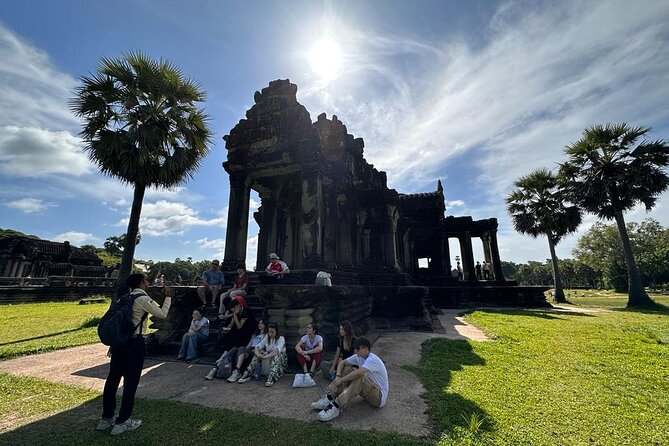
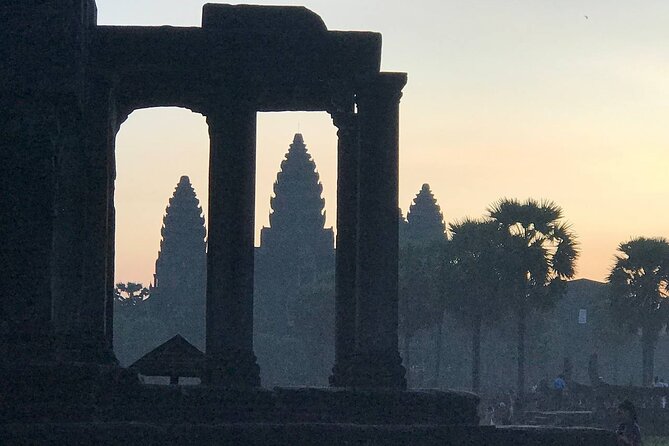
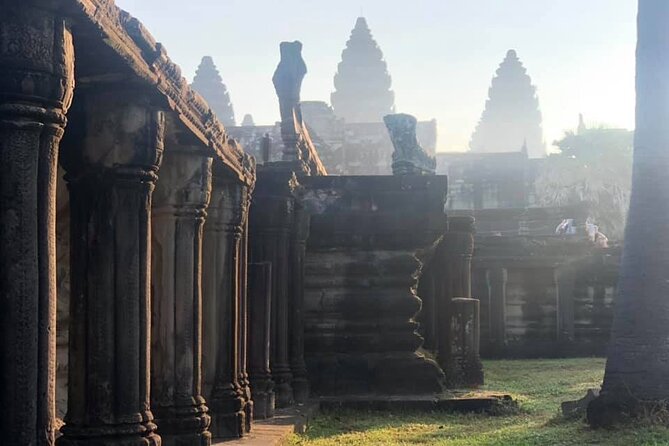
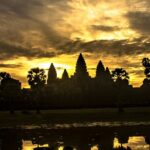
Angkor Wat is the one nearly everyone recognizes first, and for good reason. It’s described as the wonder of the world and the soul of the Cambodian people, built in the early 12th century and tied to the Khmer Empire as its capital. It’s also a Hindu temple dedicated to Vishnu.
What makes this stop worth your time isn’t only the famous silhouette. It’s the way the site rewards a “guided look.” A good guide helps you connect the layout and stonework to the religious ideas behind it. Even if you aren’t chasing facts, that context changes how you view each gallery and corridor.
You’ll have about two hours here, and that length is ideal for doing two things at once:
1) looking up and noticing symmetry and scale
2) slowing down for carvings and the kinds of details that a quick walk-by misses
A practical note: entrance tickets for the day are not included. You’ll want to budget for the $37 USD temple ticket so the day feels smooth rather than stressful at the entrance.
Stop 2: Bayon’s Smiling Faces and the Hindu-Buddhist Mix
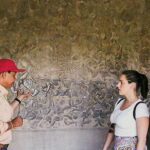
Next is Bayon, often called the temple with the big smiling faces, and described as the big city. It’s a Hindu-Buddhist temple built at the end of the 12th century, and it’s presented as full of Buddhist philosophy with many ancient temples nearby.
Bayon can feel like chaos if you treat it as a straight line of viewpoints. The guide is what helps it become organized in your mind. You’ll likely hear explanations that connect the carvings and imagery to spiritual meaning, and that’s where the experience shifts from “wow” to “I get it.”
You’ll spend about two hours here. That’s a nice window because Bayon isn’t only about the faces. You want time to circle, notice how different angles change what you see, and read the space as both architecture and symbol.
One consideration: because Bayon is so visually dominant, it’s easy to over-photograph. If you’re the kind of person who likes to slow down, this stop gives you room to balance pictures with actually looking.


Stop 3: Ta Nei, a Jungle Temple Most People Don’t Notice
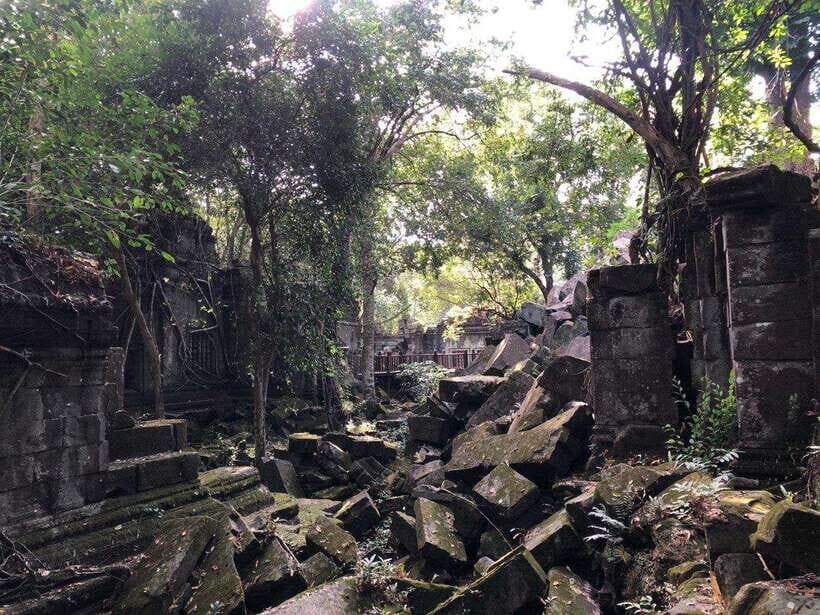
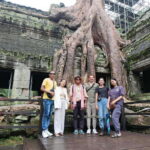
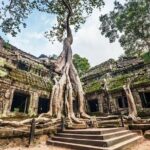
Ta Nei is presented as a hidden temple in the jungle—one that many people don’t see. A tree has overgrown the area, and that interaction between living nature and carved stone is the entire point of the stop.
This is the kind of location where timing and pacing matter. If you rush, you miss the drama of how the temple and jungle coexist. With about two hours allocated, you can walk the area, take in the tree-temple blend, and not feel like you’re sprinting between landmarks.
The value of having a guide here is that the significance won’t stay locked in your own guesses. Even simple explanations—why it’s called hidden, what the relationship between temple and jungle suggests—help you appreciate Ta Nei as more than a detour.
If you like atmosphere and “less crowded-feeling” sights, Ta Nei is a strong reason to pick this itinerary instead of only doing the two headline sites.
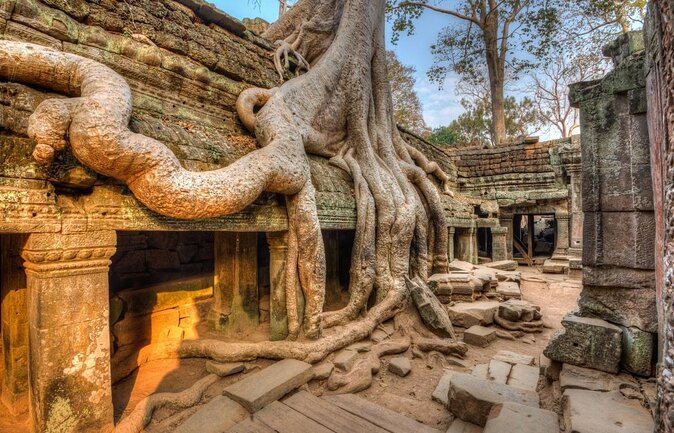
Stop 4: Ta Prohm and the Tree Roots That Took Over
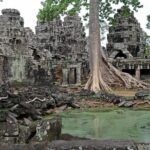
Ta Prohm is the temple where the tree grows on it, and it’s described as one of the most beautiful stops in the area. The roots on top are part of its iconic look, and it’s also noted as a Hollywood movie filming location.
This stop delivers on the emotional side of Angkor. Even if you’ve seen photos, being there changes the scale of the scene—because the roots don’t look like a decorative detail. They look like architecture that decided to grow.
You’ll spend about two hours at Ta Prohm, which is enough time to get the main visuals and still return to details. A guide can also help you interpret what you’re seeing, which makes it feel less like a staged set and more like a living ruin.
Like Bayon, Ta Prohm can tempt you into rushing for the “perfect photo.” The longer time block gives you a better option: take the signature images, then step back and look at stonework and plant interaction without feeling rushed.
Why the Guide Matters So Much Here (Including Local Names)
At Angkor, the stone is the attraction. But the meaning is what makes the day last in your memory.
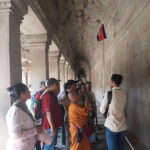
The guide is licensed and English-speaking, and the experience is set up so you get explanations at each stop—history, architecture, and spiritual significance. That turns the carvings into something you can recognize as symbols rather than random decoration.
The guides in the team mentioned include Mr Sann, Silong, and Mony. What stands out in the way people describe their days is that the guides are friendly, and they give context in a practical way—like explaining the history behind Angkor Wat and the kinds of philosophy tied to Buddhist and Hindu elements at other temples.
There’s also a comfort layer: guides keep the day running smoothly. One real example from the experience descriptions is the use of tuk-tuk transport and the habit of arriving on time. Add ice-cold towels and bottled water at stops, and your attention stays on the temples instead of on the logistics.
If you’re visiting for the first time, this guide-first approach is the biggest “why this tour” factor.
Timing Tips: Working Within 7:30 AM to 3:30 PM
The available operating window is 7:30 AM to 3:30 PM. Timing is described as flexible based on your schedule, which is great, but it also means you’ll want to plan your day around daylight and the heat.
If you’re someone who likes early light at Angkor Wat, you’ll likely want to request an earlier start time within that service window. If you prefer a later start and slower energy, that’s also workable because the itinerary is built with long blocks at each temple rather than quick dashes.
For photos and journal notes: Angkor rewards patience. The tour experience itself suggests bringing a camera, and some people may bring a journal. If that’s your style, a guided day with longer stop times is ideal because you’re not always thinking about where to go next.
Who This Private 8-Hour Tour Is Best For
This tour is a good fit if you want:
- A private day with a licensed English-speaking guide
- Time at each major temple rather than quick checkmarks
- A route that balances famous Angkor sites with a more jungle-focused stop like Ta Nei
It’s especially suitable for couples, small groups, and anyone who would rather ask questions than scan maps. If you’re traveling with kids, this private structure can also be a plus because the guide can pace the day.
If you already know the detailed history of every carving and you’re a highly independent traveler, you might feel a guide is optional. But for most people, the guide helps you get more from fewer hours—without adding extra hassle.
Should You Book This 8-Hour Private Guided Tour of Angkor Temples?
I’d book it if you want an organized, private Angkor day that makes the temples easier to understand and easier to enjoy. The combination of a licensed guide, private transport, and refreshment touches like ice-cold towels is exactly what you want when you’re spending hours in the open air.
I’d think twice if you’re trying to minimize extra costs, because temple admission ($37 USD for one ticket), meals, and tips are not included. Also, if you’re hoping for a time far outside the listed service window (7:30 AM–3:30 PM), you’ll want to confirm timing first.
If you’re choosing between only doing Angkor Wat and a rushed loop, this itinerary feels more balanced: you get the big icon, the smiling faces, a jungle temple, and the tree-root spectacle—all in one coherent day.
FAQ
What is the price of this private guided tour in Siem Reap?
The price is $50.00 per person.
How long is the tour?
The tour runs for about 6 to 8 hours.
What temples are included in the itinerary?
The tour visits Angkor Wat, Bayon, Ta Nei, and Ta Prohm.
Is the tour private, and is pickup included?
Yes, it’s private with only your group participating, and pickup is offered.
What’s included, and what’s not included in the cost?
Included are private transportation, a licensed English-speaking guide, drinking water, and VAT 10%. Not included are temple entrance fees (one entrance ticket listed as $37 USD), breakfast, lunch, and tip money.
What are the tour’s operating hours?
Monday to Sunday, the hours are 7:30 AM to 3:30 PM.
Can I cancel for free?
Yes. You can cancel up to 24 hours in advance for a full refund.