REVIEW · SIEM REAP
Traditional Khmer Water Blessing by Monk and Lotus Farm Visit
Book on Viator →Operated by CWE Travel · Bookable on Viator
A monk’s blessing, right in Siem Reap. This 3 to 4 hour small-group tour pairs a traditional Khmer water blessing at Wat Po Banteaychey with a lotus farm visit and a few meaningful stops around town. I really like the way the day is structured so you understand what you’re about to do, not just follow along, and I like that you travel by tuk-tuk at a human pace with cold water and snacks. One possible drawback: the activity requires good weather, and since you’re in temples, you’ll want to be ready for respectful, slightly formal behavior.
The ceremony itself is the star. A monk chants, then holy water is sprinkled or poured over you as you make a wish for good fortune, pleasure, or health. Before that moment, you also visit the Royal Residence area with the spiritual house of Phreah Ang Chek and Phreah Ang Chom, then you stop at Psar Chaa Old Market for fried banana and sweet potato. In a recent group, guides like Hong (who grew up near the lotus farm) and Bo have shared personal, practical context that makes the spiritual parts feel real instead of performative.
In This Review
- Key things I’d look for before you go
- Khmer water blessing at Wat Po Banteaychey: what to expect
- Royal Residence and Phreah Ang Chek/Phreah Ang Chom: a spiritual warm-up
- Psar Chaa Old Market: fried banana and sweet potato as a local rhythm
- Lotus fields and the farm visit: Tonle Sap views with real-world farming
- How the tuk-tuk day flows: pickup, timing, and group size
- Price and value: why $70 can make sense here
- Who should book this Khmer water blessing tour?
- Should you book it?
- FAQ
- How long is the Traditional Khmer Water Blessing by Monk and Lotus Farm Visit?
- Is pickup offered in Siem Reap?
- What transportation is included?
- What’s included in the price?
- Do I need to buy tickets for the major stops?
- What exactly happens during the water blessing?
- Is there time to explore after the blessing?
- How big is the group?
- What if the weather is bad?
- Is there a mobile ticket?
Key things I’d look for before you go
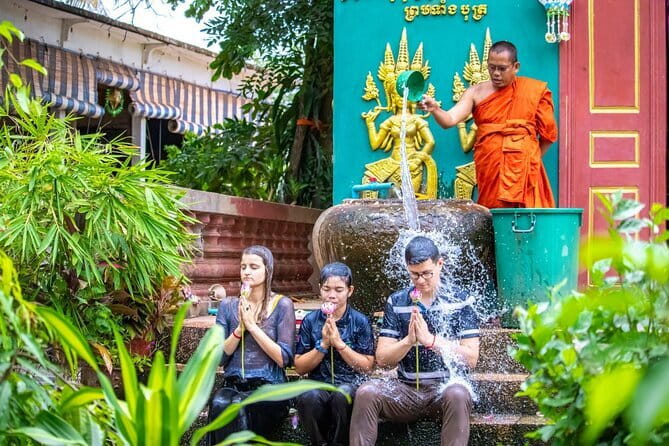
- Monk-led water blessing with chanting and holy water (sprinkled or poured) so you know what’s happening
- Temple context first: you learn Buddhist belief and temple structure before the ritual
- Royal Residence spiritual house visit tied to Phreah Ang Chek and Phreah Ang Chom
- Old Market snack stop with fried banana and sweet potato
- Lotus fields on the way to Tonle Sap plus a lotus farm entrance
- Max 15 people with tuk-tuk transport that keeps the tour from feeling like a bus ride
Khmer water blessing at Wat Po Banteaychey: what to expect
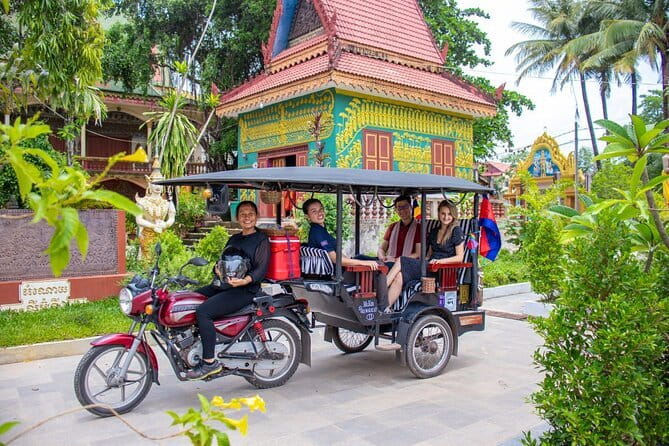
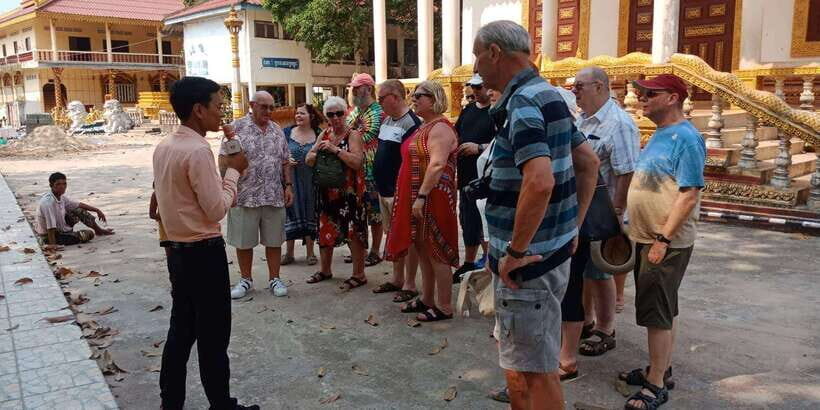
This is the moment the whole trip circles around. At Wat Po Banteaychey, you’ll first get a short, guided lesson on Buddhist belief and how a local temple works. The tour explains the role and structure of the temple and what people typically do there. That matters because the water blessing is not just a photo op. It’s a ritual with specific meaning, and having the background helps you participate calmly.
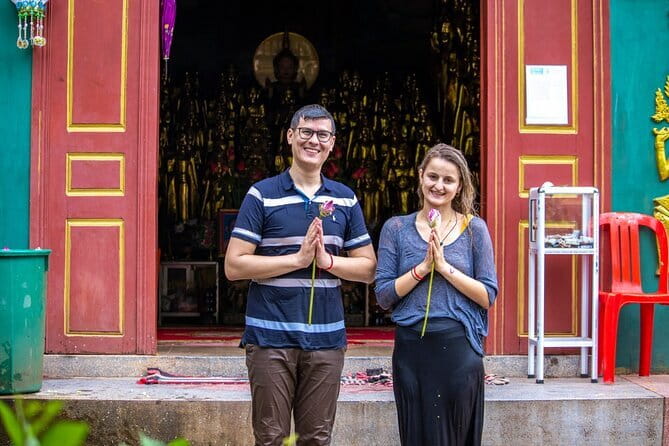
Then the monks take over. You’ll have the unique chance to attend a traditional Khmer water blessing where the monk chants and sprinkles or pours holy water over you. The guide also frames the experience so you can make a wish—good fortune, pleasure, or health—depending on what you want to focus on. If you like rituals that feel intentional, this part delivers.
Practical tip: dress and behave like you’re entering a temple. The tour also notes that after the blessing you’ll change your clothes and then have time to wander the pagoda area. That’s a heads-up that the blessing may get you a bit wet, so plan to wear something you can change out of without stress.
You can also read our reviews of more tours and experiences in Siem Reap.
Royal Residence and Phreah Ang Chek/Phreah Ang Chom: a spiritual warm-up
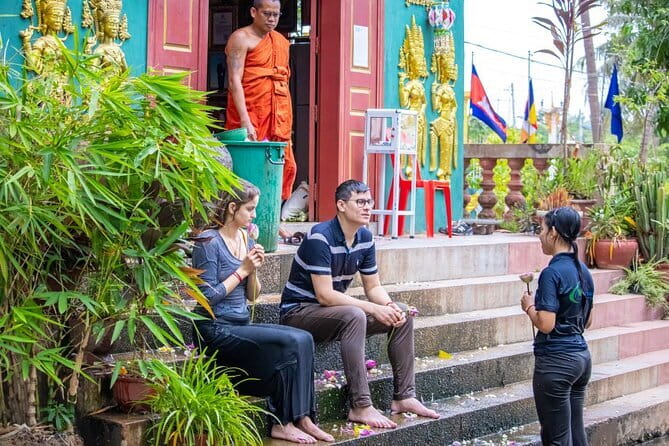
Before the chanting starts, you head to the Royal Residence and its spiritual house called Phreah Ang Chek and Phreah Ang Chom. Your local guide takes you around the site and gives context for what you’re seeing. Even if you only catch parts of the explanation, the visit helps you shift gears from tourist mode into something more respectful and observant.
Why I think this stop is worth your attention: it sets up the mindset for the water blessing. You see how spirituality is integrated into Cambodian life and how sacred spaces are treated with care. It also breaks up the day so you’re not just driving straight to the main event.
Time-wise, it’s about 30 minutes. That’s enough for orientation, not enough to turn it into a long history lecture. If you want lots of deep dives into architecture, you may still want to follow up later on your own—but for a half-day tour, this timing is sensible.
Psar Chaa Old Market: fried banana and sweet potato as a local rhythm
Right after the Royal Residence stop, you get a snack break at Psar Chaa Old Market. The tour includes trying fried banana and sweet potato, and you meet one of the well-known fried banana business owners in Siem Reap town who has been open for more than 20 years.
This stop is small, but it’s a smart one. It gives your brain an easy win while you’re out in the real daily flow of Siem Reap. You also get a taste of how food sellers fit into the city’s routine—another way spirituality shows up here, not only in temples, but in everyday life.
This is also a good moment to ask your guide questions. People behind stalls often know what visitors usually miss, and your guide is there to connect the dots between the snack, the market space, and the culture you’re learning about.
Lotus fields and the farm visit: Tonle Sap views with real-world farming
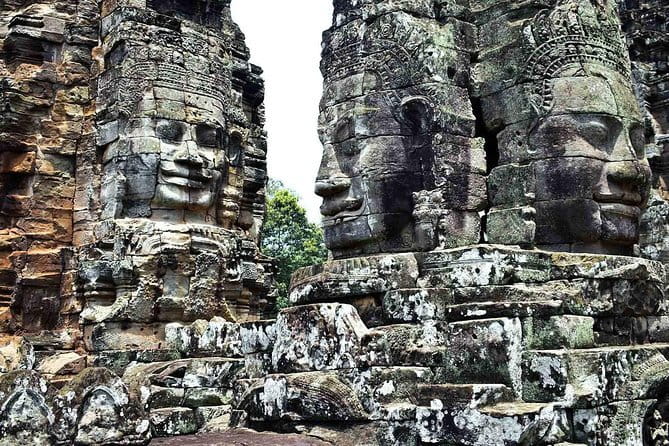
After Psar Chaa, the tour moves toward the lotus farm. On the ride, you’ll already see lotus fields along the road leading toward Tonle Sap Lake. Then you reach the lotus farm for about 30 minutes, with the lotus farm entrance included.
What I like here is that you don’t just see a pretty scene and leave. Your guide explains farming and harvesting, so you understand why lotus is important and what goes into growing it. It also adds a strong contrast to the temple portion of the day. Chanting and holy water in the morning-ish, then agriculture and plant cycles a bit later.
If you’re the type who likes photos, this is where you’ll get them. But if you’d rather keep it grounded, stay focused on the farming explanation and the way lotus fields change the experience of being in Siem Reap.
How the tuk-tuk day flows: pickup, timing, and group size
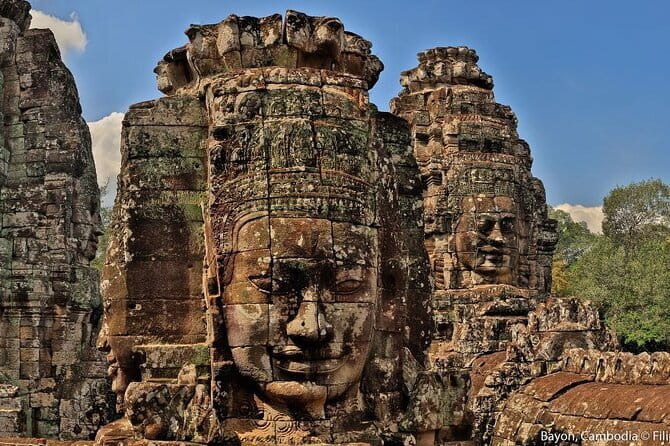
This is built to be easy to fit into your schedule. The tour runs about 3 to 4 hours. Pickup is offered, and the guide and driver wait at your hotel. The exact pickup time depends on where you’re staying, so confirm your time when you receive your booking details.
You ride in a Remork (tuk-tuk), not a big van. In one of the groups guided by Bo, the tuk-tuk pace was specifically called out as peaceful and enjoyable. I agree with that logic. In Siem Reap traffic, a smaller ride can feel less stiff and more local, and it’s usually better for short stops and quick route adjustments.
Group size is capped at 15 travelers. That’s important. It keeps the guide from feeling like a lecturer and makes it more likely you can ask questions during the temple learning parts. It also helps during transitions, like after the blessing when you change your clothes and move to the pagoda area.
Finally, you get a mobile ticket. That’s a convenience when you’re hopping between activities in a city where printed paper can vanish fast.
Price and value: why $70 can make sense here
At $70 for roughly half a day, it’s not the cheapest thing in Siem Reap. But you’re paying for several things you’d otherwise have to stitch together yourself:
- A local English-speaking guide
- Tuk-tuk transportation
- Cold water and local snacks
- Monk offering and donations included
- Admission/entry support for stops like the Royal Residence and the temple, plus the lotus farm entrance
For this kind of ritual, value comes less from the number of tickets and more from the translator-like role of the guide. When the blessing is happening, you want to understand what’s expected, what you can do, and what the symbolism means. That’s hard to recreate on your own without taking time to research etiquette and then hiring the right help last-minute.
If you’re thinking about doing this independently, consider your time cost. You’d need transport, temple access, and someone who can guide you through the meaning of each step. Paying for a guided, coordinated sequence is often cheaper than trying to figure it out while you’re standing in the middle of a real religious space.
Who should book this Khmer water blessing tour?
This tour is a great fit if you want a spiritual experience that includes context, not just participation. If you enjoy meeting local people (like the long-running fried banana vendor) and you like learning how Cambodian beliefs show up in daily routines, you’ll probably enjoy the balance between market life, temple life, and farm life.
It also suits you if you prefer small groups and a relaxed pace. The cap of 15 travelers plus tuk-tuk transport keeps it from feeling like a conveyor belt.
You might want to think twice if:
- You dislike religious rituals or would rather avoid holy-water participation.
- You’re uncomfortable with the idea that you may need to change clothes afterward.
- You travel on a tight schedule where a weather-dependent activity could disrupt your plan.
Should you book it?
If your goal is to experience a traditional Khmer water blessing in Siem Reap with clear explanations and a day that feels more local than packaged, I’d say book it. The best reason is the structure: you learn before you’re blessed, you snack and meet real food sellers between stops, and you end the spiritual chapter with lotus fields and farming.
My only hesitation is weather. Since the tour requires good weather, keep a little flexibility in your itinerary. If you can do that, you’ll get a meaningful half-day that connects temple ritual to everyday Cambodian life.
FAQ
How long is the Traditional Khmer Water Blessing by Monk and Lotus Farm Visit?
It takes about 3 to 4 hours.
Is pickup offered in Siem Reap?
Yes, hotel pickup is offered, and the exact pickup time depends on your location.
What transportation is included?
You travel by Remork (tuk-tuk).
What’s included in the price?
A local English-speaking tour guide, transportation, cold water and local snacks, monk offering and donations, and the lotus farm entrance fee.
Do I need to buy tickets for the major stops?
Your Royal Residence visit and Wat Po Banteaychey stop are included, and the Psar Chaa Old Market snack is included as well. The tour uses a mix of included items and free admission time at certain parts.
What exactly happens during the water blessing?
A monk will chant, and holy water is sprinkled or poured over you. You can make a wish for good fortune, pleasure, or health.
Is there time to explore after the blessing?
Yes. After the blessing, you change your clothes and then have time to wander the pagoda area. Your tour concludes afterward.
How big is the group?
The maximum group size is 15 travelers.
What if the weather is bad?
The experience requires good weather. If it’s canceled due to poor weather, you’ll be offered a different date or a full refund.
Is there a mobile ticket?
Yes, the tour provides a mobile ticket.