REVIEW · SIEM REAP
Siem Reap: Kompong Phluk Floating Village with Transfers
Book on GetYourGuide →Operated by Etrip Asia · Bookable on GetYourGuide
Floating villages feel otherworldly, but practical. A visit to Kompong Phluk shows you the rural side of Cambodia in a way that’s easy to understand: daily routines on stilted homes, fishing and farming, and how everything shifts with the seasons on Tonlé Sap. I love the contrast of calm water cruising and big mangrove trees, and I also love the moment you see families adapting their village life as the water level changes.
One thing to plan for: the day can be a bit uncomfortable if the transfer vehicle is overcrowded, and some parts of the river forest boat portion can cost extra locally. If you prefer a relaxed pace with lots of room to breathe, go in with your expectations set and bring water and patience for the road.
In This Review
- Key things I think you’ll notice fast
- Why Kompong Phluk feels real on day one
- From Siem Reap: the scenic drive plus a quick craft stop
- Entering Tonlé Sap: calm water, mangroves, and grazing cattle
- The mangrove forest boat ticket you should budget for
- Kompong Phluk on foot: stilted life, fishing farms, and routines
- How long is the tour, really?
- Price and value: is $20 (plus a local ticket) worth it?
- Small comfort issues to expect (and how to handle them)
- What to bring for a smoother Kompong Phluk walk
- Who should book this tour, and who might skip it?
- FAQ
- FAQ
- How long is the Kompong Phluk tour from Siem Reap?
- What’s the price, and what’s the extra cost?
- Is hotel pickup and drop-off included?
- What does the tour include for the boat ride?
- Do I need a guide, and what language is used?
- What should I bring and can I smoke?
- Should you book Kompong Phluk with transfers?
Key things I think you’ll notice fast
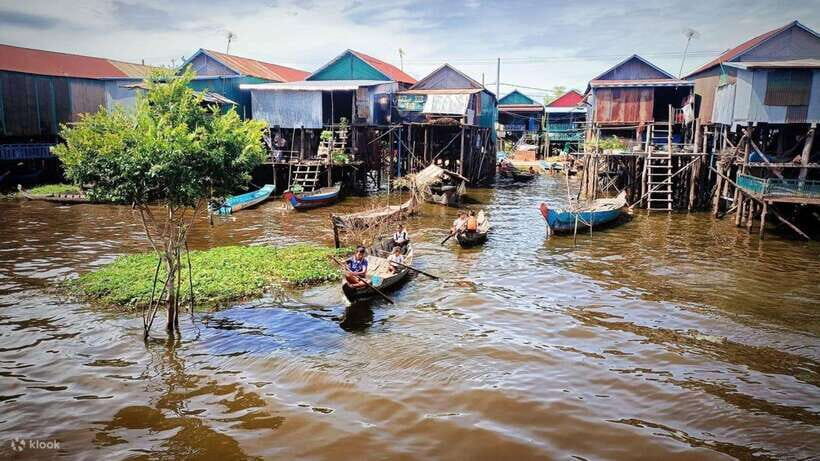
- Tonlé Sap water life: calm boat time where you actually see the mangrove setting, not just pass by it
- Seasonal adaptation: you’ll get a clear explanation of how the stilted village changes with the wet/dry rhythm
- Photo-friendly viewpoints: cattle grazing near waterways and wide views around the lake feel made for pictures
- Village walking with a guide: the best moments come from understanding daily routines, not just snapping photos
- Simple, rural reality: fishing farms, floating markets, and street food give you context for how people live
- One extra ticket to budget: a community local boat ticket for the river forest area is not included
Why Kompong Phluk feels real on day one
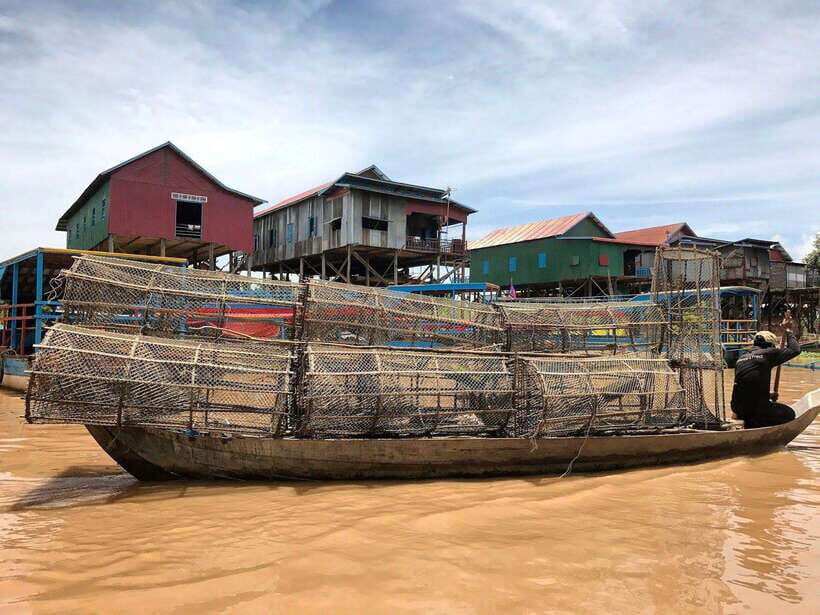
Kompong Phluk is one of those places where the scenery is only half the story. The other half is how people live with the lake instead of trying to fight it. On Tonlé Sap, the water level doesn’t stay put. When it rises, homes and work areas become more connected to the lake. When it drops, the rhythms of fishing and daily travel shift again.
What I like about the tour format is that it tries to teach you what you’re looking at. You’re not just dropped off for a photo walk. You get an English-speaking guide who helps explain daily life, how families use stilted space, and how the village’s design supports changing seasons. That context makes the whole visit click.
Also, this is a rural outing. That matters. You’ll be moving through small villages and rice paddies on the way in, then transitioning to mangrove country on the lake. The day has variety, but it stays grounded in real, local routines.
You can also read our reviews of more tours and experiences in Siem Reap.
From Siem Reap: the scenic drive plus a quick craft stop
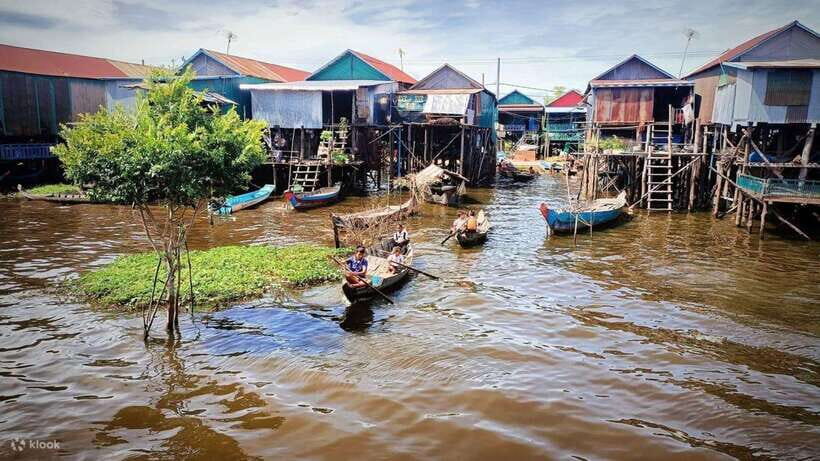
The experience starts with a hotel pickup in Krong Siem Reap and a transfer toward Tonlé Sap. Expect a scenic route through small communities and rice paddies. This part is more than a warm-up. It’s where you start seeing how the landscape supports rural livelihoods: open fields, farming edges, and the slower, less touristy pace that you don’t always get when you stay in town.
You’ll also make a quick stop at Artisans D’Angkor. This is one of those places where you can pick up small souvenirs without it eating your whole day. If you’re interested in Cambodian crafts, you can browse silk accessories and stone carvings. It’s a short break, useful for stretching your legs and grabbing something light before the lake portion.
A practical note: road comfort can vary. One of the tour downsides you may run into is an overcrowded transfer vehicle on the way out to the water. If you’re sensitive to tight seating, try to bring a small layer of comfort (and expect a bit of squeeze).
Entering Tonlé Sap: calm water, mangroves, and grazing cattle
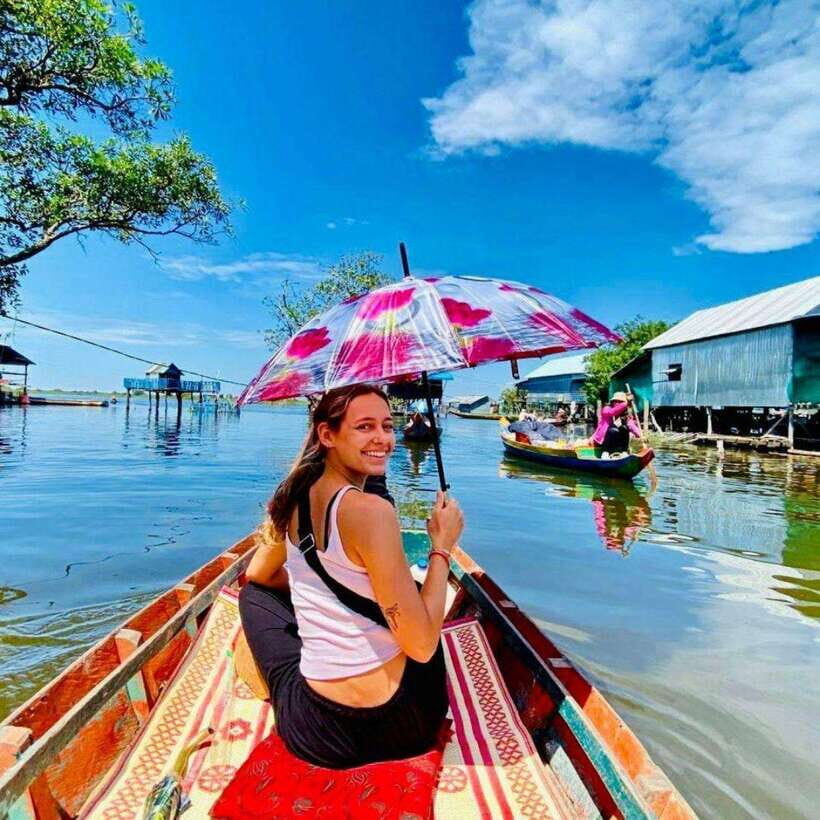
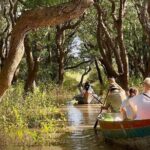
Once you reach the water zone, the tour shifts gears to boat time. You’ll enjoy a boat ride on the calm waters of Tonlé Sap Lake. This is where Kompong Phluk becomes visually “big.” You’ll see large mangrove trees, and you may also spot herds of cattle feeding on grass along the shoreline edges.
That mix—mangrove forest and grazing animals—helps you understand the ecosystem as something living year-round, not just scenery for a boat ride. And since you’re on the lake, you can get photos that look different from typical land tours: wider water views, tree lines, and reflections.
The mangrove forest boat ticket you should budget for
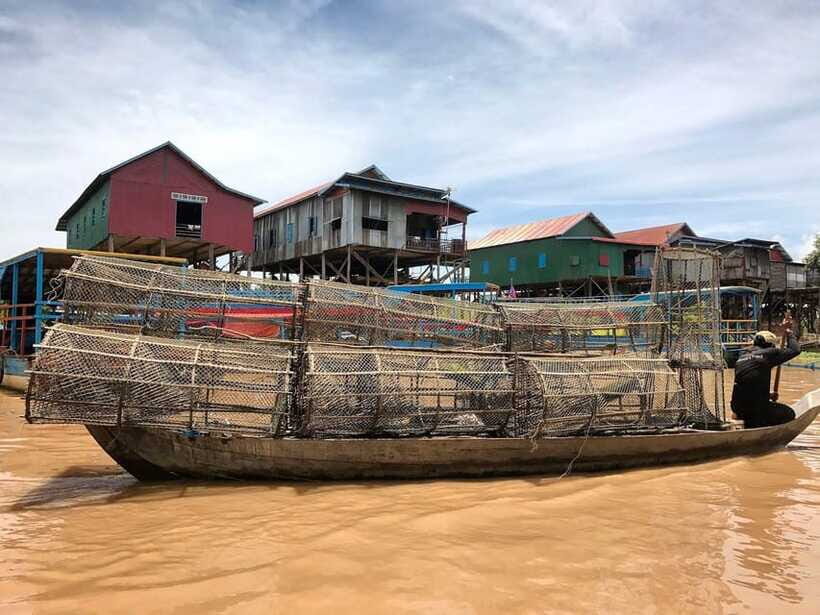
Here’s the key logistics point to get right: the tour includes boat access to Kampong Pluk Village, but it does not include the community local boat ticket for the river forest portion. You’ll pay extra at about $6 per person for the sharing boat trip.
Why does this matter? Because “mangrove forest” can mean different boat routes depending on the day and local operations. If you only plan around the base price, you may be surprised when you reach the point where the local boat arrangement begins. I’d rather you be ready for it than have the day wobble.
So, if you’re doing mental math: you’re paying $20 for the overall half-day experience with transfers and guide help, plus about $6 per person for the local river forest boat ticket if you want that included portion.
Kompong Phluk on foot: stilted life, fishing farms, and routines
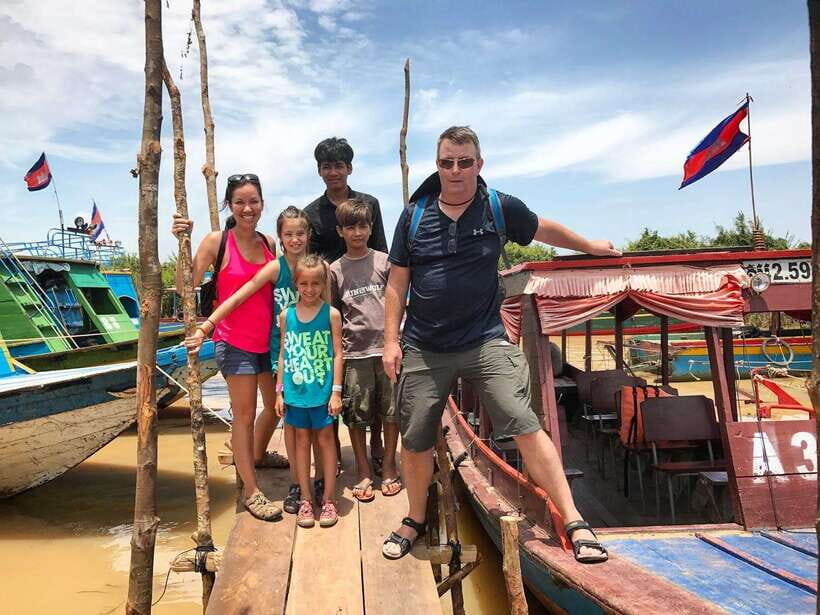
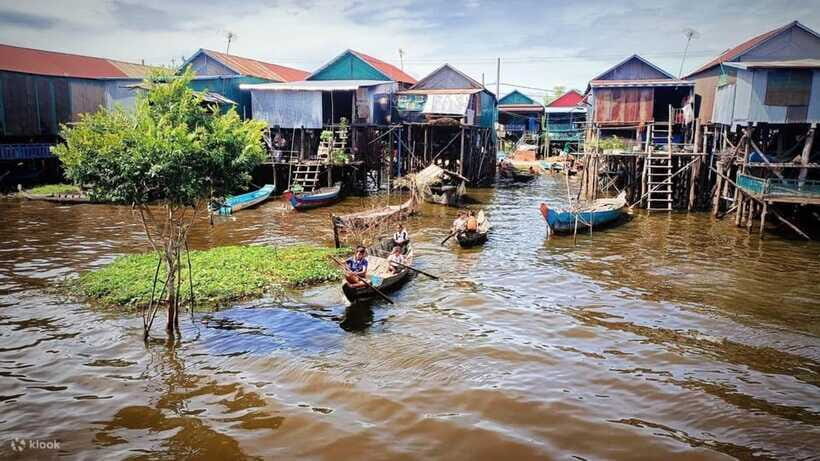
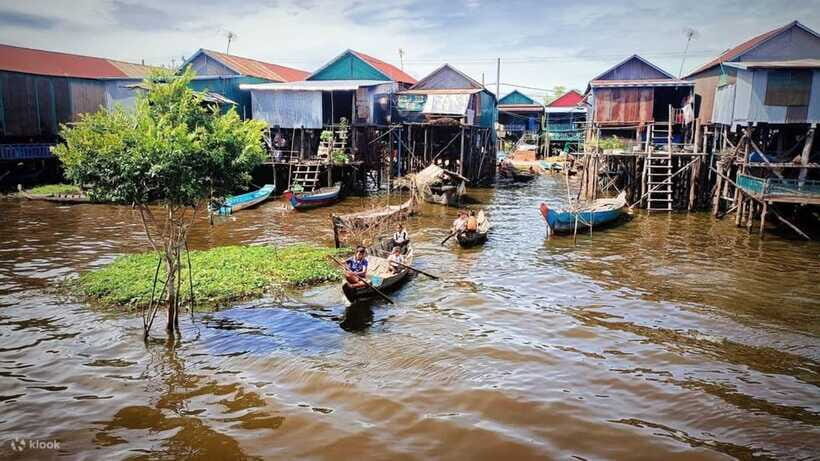
The heart of the day is exploring Kompong Phluk itself. This floating village is home to roughly 3000 fishing people, and you’ll walk through the main area with your guide.
What you’re looking for isn’t just “floating houses.” It’s the systems behind them:
- how families organize day-to-day tasks when water levels change
- what kinds of work happen around the village and fishing areas
- what you can spot on the water surface, including signs of floating markets and fishing farms
Your guide’s job is to help you connect those scenes. When you understand what’s happening—who’s fishing, where work is done, and how people move and store things—the village feels less like a set and more like a place.
You may also have a chance for street food during the walk. That’s a bonus if you enjoy simple local snacks and want a quick taste that fits the setting. Just keep it practical: walk steadily, watch where you step, and don’t expect the same food options you’d find in Siem Reap town.
There’s typically a photo-stop and a sightseeing stretch where you’ll be able to capture the village layout and water views. And sunset timing is part of the experience, which usually makes the light nicer for photos if the sky cooperates.

How long is the tour, really?
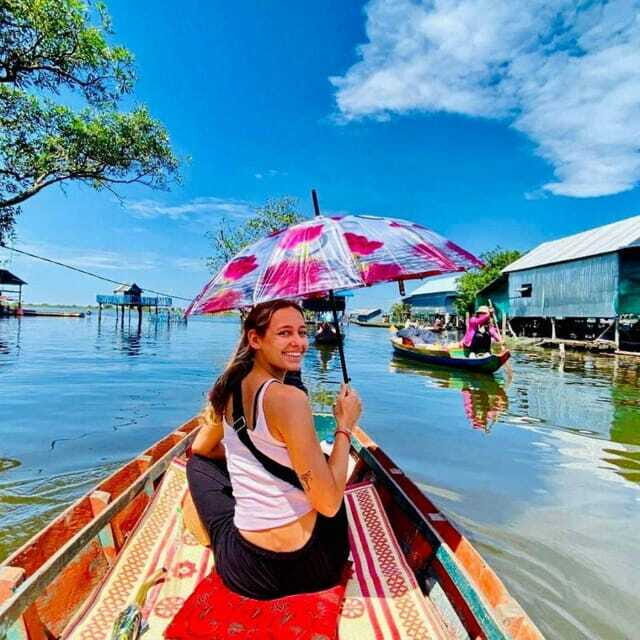
The tour is described as about 4 hours, but the Kompong Phluk segment is often scheduled as a longer block, and the overall day can feel like 4–5 hours once you include pickup, transfers, boat ride time, and walking.
What you should do with this info: don’t schedule a demanding second activity right after. Plan an easy rest of the day after you get back to Krong Siem Reap. This is the kind of tour where you’ll be outside and moving, and you’ll likely want time to decompress.
Also, pace matters. A stilted village walk can involve uneven areas and lots of steps. Comfortable shoes are non-negotiable.
Price and value: is $20 (plus a local ticket) worth it?
At $20 per person, this outing aims to be a straightforward value half-day: you get hotel transfers, an English-speaking guide, bottled drinking water, and cold towel refreshment, plus included boat access to Kampong Pluk Village.
So what are you paying for, in real-life terms?
- You’re paying for a full guided half-day outside the city
- You’re paying for transport to and from the lake area
- You’re paying for boat time and interpretation of what you’re seeing
The main “extra” is the community local boat ticket for the river forest portion (about $6 per person, sharing boat trip). That’s not the same as a random add-on fee. It’s tied to how the river forest access works locally. Still, it affects your final budget.
When is this good value? When you want context more than souvenirs, and when you’re okay with the fact that this is rural life, not a theme-park version of Cambodia. If you’re the type who loves learning how people live and you like photography with substance, this price starts to look very fair.
When might it feel less like value? If you mainly want a long boat adventure through the mangrove forest and you didn’t realize the river forest part is an extra local ticket. Plan for that and you’ll feel better about the spend.
Small comfort issues to expect (and how to handle them)
I’ll be honest: the day can have some rough edges. One concern that can pop up is transfer comfort. If the vehicle is overcrowded, the ride to the lake can feel uncomfortable before you even get to the water.
Another consideration is guide language. The tour is listed as English, but real-world English ability can vary. The big win is that you should still get enough explanations to understand daily life and seasonal changes. If you’re very sensitive to communication gaps, keep questions simple. Ask what the family is doing, what the water level changes mean, and how the village structure adapts.
And remember: smoking isn’t allowed on the tour. That’s good to know if you’re traveling with smokers or if you want to manage expectations for where breaks happen.
What to bring for a smoother Kompong Phluk walk
This is a half-day that rewards prep. Bring:
- Comfortable shoes (you’ll be walking around and likely on uneven surfaces)
- Sun hat and sunscreen (you’re outside and it can get bright)
- Camera (the mangrove scenery and village views are photo-worthy)
- A small water habit (you get bottled water, but you’ll still want to drink at a steady pace)
If you’re prone to motion issues, you might also want to be mindful about boat time. The waters are described as calm, but you’ll still be on a boat and moving around.
Who should book this tour, and who might skip it?
This tour is a great fit if you:
- want a rural Cambodia experience beyond Angkor area highlights
- like guided explanation and not just photo stops
- enjoy boat scenery and learning how Tonlé Sap communities live with seasonal change
- can walk comfortably for a village visit
It’s not suitable for children under 12, so plan accordingly if you’re traveling with a family.
Also consider skipping or choosing another option if you:
- hate cramped transfers and prefer a very comfortable ride the whole time
- strongly want the river forest mangrove boat portion included without extra payment
FAQ
FAQ
How long is the Kompong Phluk tour from Siem Reap?
The duration is listed as 4 hours, though the Kompong Phluk portion can be scheduled longer, so expect the full outing to feel like about half a day (around 4–5 hours).
What’s the price, and what’s the extra cost?
The price is $20 per person. The tour does not include the community local boat ticket for the river forest portion, which is $6 per person (sharing a boat trip).
Is hotel pickup and drop-off included?
Yes. Round-trip transfers to and from your hotel in Krong Siem Reap are included.
What does the tour include for the boat ride?
You get boat access to Kampong Pluk Village. The community local boat ticket for the river forest portion is an extra cost.
Do I need a guide, and what language is used?
Yes, the tour includes an English-speaking guide.
What should I bring and can I smoke?
Bring comfortable shoes, sun hat, camera, and sunscreen. Smoking is not allowed.
Should you book Kompong Phluk with transfers?
If you want an honest, rural Tonlé Sap experience with a guide who explains how life works in the floating village, I think this is worth booking—especially at $20 with transfers, guide, and included boat access to Kampong Pluk Village.
Just go in prepared for two realities: the day may feel a bit cramped during the transfer portion if the vehicle is full, and the river forest boat element costs extra locally. If you plan for those, you’ll spend your time focusing on the best parts: the mangrove scenery, the calm lake boat ride, and the guided walk that turns Kompong Phluk from a photo stop into a place you actually understand.