Morning light hits differently. This private tour strings together Angkor Wat at sunrise plus several standout temples across Angkor Wat and Angkor Thom, all with an official English-speaking guide and a small-group feel.
I especially like the early timing for the best light and calmer mood at Angkor Wat, and I also like the comfort side: air-conditioned vehicle, pickup, drop-off, and cold drinking water along the way. The biggest drawback to consider is simple: you start at 4:30am, and you’ll need to budget for temple entry since the temple pass is not included.
In This Review
- Quick take: what makes this tour work
- Key points to know before you go
- Golden Sunrise timing: why the 4:30am start is the whole point
- What I’d do with that early start
- Price and logistics: what $120 per group actually buys you
- The private-car advantage you’ll feel
- Comfort and pacing: pickup, AC car, and small-group sanity
- Meeting point note
- Angkor Wat at first light: the sunrise that sets the tone
- Things to watch for at Angkor Wat
- Ta Prohm: tree roots, slower walking, and the movie connection
- How to get more out of Ta Prohm
- Banteay Kdei: a quieter temple stop that changes the pace
- Why I think this stop is a value add
- Angkor Thom’s South Gate (Victory Gate): the grand entry mood
- Photo tip for the gate
- Bayon Temple and Baphuon: faces, carvings, and the climb for views
- Baphuon is your finale
- Guide-driven storytelling and photo support (where this tour gets extra points)
- Practical way to use the guide
- Who should book this sunrise private tour?
- Who might want a different plan
- Should you book Golden Sunrise at Angkor Wat Private Guided Tour?
- FAQ
- What time does the tour start?
- How long is the Golden Sunrise at Angkor Wat tour?
- Is pickup and drop-off included?
- Is the temple pass included in the price?
- Are meals included?
- Is there an English-speaking guide?
- What’s included for comfort during the day?
- How big is the group?
- Is free cancellation available?
Quick take: what makes this tour work
You get a full morning-to-afternoon circuit without the stress of figuring out routes or entry timing. The private format (up to 4 people) is ideal if you want your guide to set the pace, answer questions, and keep your day moving at a realistic tempo.
One other practical thing to know: meals and beverages are not included, so plan to eat before you start or bring a plan for lunch on your own.
Key points to know before you go
- 4:30am start means sunrise photos with less crowd pressure
- Private group up to 4 for a quieter, flexible day
- Official English guide helps you understand what you’re seeing as you walk
- Cold water + air-conditioned vehicle keep the early day comfortable
- Main targets plus quieter stops: Ta Prohm, Banteay Kdei, Bayon, and Baphuon
- Temple pass not included, so factor that cost into your budget
Golden Sunrise timing: why the 4:30am start is the whole point
If you only do one Angkor morning, do it before the big rush. This tour starts at 4:30am, which sounds brutal until you’re standing at Angkor Wat as the first light gathers. Sunrise isn’t just a pretty moment here. It’s when the temple atmosphere feels calm and almost cinematic—stone, mist, and the first orange glow all line up before the day gets loud.
You’ll also get a practical benefit: you have time. You’re not rushing past things to chase a checklist. The Angkor Wat portion runs about 3 hours, so you can enjoy the view, walk slowly, and take photos without feeling like you’re in a photo-assembly line.
What I’d do with that early start
I’d set expectations for your body more than your camera. Wear comfortable shoes that can handle uneven ground. Bring a light layer for early temps, since you’re up before you naturally feel ready. And if you’re serious about photos, arrive with a plan for where you want your shots—this tour structure gives you enough time to wait for the light and adjust.
Price and logistics: what $120 per group actually buys you
The price is $120 per group (up to 4 people). That’s a key detail, because you’re not paying per person. In real terms, this can be good value if you’re traveling with someone and want a guide and car without splitting into a larger group.
Included with the price:
- Air-conditioned vehicle
- Official English speaking tour guide
- Cold drinking water
- Hotel pickup and drop-off
- Mobile ticket
Not included:
- Temple pass
- Meals and beverages
So the value math is this: you’re paying for the guide and transport, and you’re handling temple entry and food separately. That’s fairly normal for Angkor tours, but it matters. Make sure you’ve budgeted for the temple pass so you don’t get surprised at the entrance.
The private-car advantage you’ll feel
With a private setup, you spend less time coordinating and more time actually sightseeing. You’re not waiting for other people to catch up, and your guide can keep the day smooth—especially early, when everyone’s half awake and you still need good timing.
Comfort and pacing: pickup, AC car, and small-group sanity
This is a private tour, so it’s only your group. With up to 4 people, you get a more personal rhythm: you can ask questions without yelling over a crowd, and you can take a short breather when your feet say enough.
I like that the tour includes pickup and drop-off, plus an air-conditioned vehicle. Angkor days can go from cool and quiet at sunrise to hot and busy later, and AC makes that transition easier. Add cold drinking water, and you’re not constantly hunting for drinks while your schedule stays tight.
Meeting point note
The meeting point is listed as near public transportation, which is a helpful fallback if you’re trying to coordinate independently. But the big win here is pickup and drop-off, especially when your day starts at 4:30am.
Angkor Wat at first light: the sunrise that sets the tone
Angkor Wat is the headline. You’ll be there early enough for sunrise, and the plan allows about 3 hours total at the site. This isn’t a quick look-and-go stop; it’s long enough to get variety in your experience.
At sunrise, you’re looking for two things:
- The lighting changes every few minutes.
- The mood changes as more people arrive.
A good guide helps you time your walks and photo moments so you’re not only staring at the same angle. The tour also sets you up for practical photography help—one of the most repeated positives from guides associated with this kind of experience is photo assistance. Some groups get a guide known for taking thoughtful photos and helping with photo timing and angles, so you spend less time fiddling and more time enjoying.
Things to watch for at Angkor Wat
You’ll likely want to:
- Keep your movement calm and unhurried, especially early.
- Focus on the big composition shots first, then shift to details after the first wow moment.
- Protect your energy. With an 8 to 9 hour day, the way you start affects how you finish.
The payoff is real: Angkor Wat at sunrise is one of the rare sights where you feel the scale even if you don’t know the Khmer Empire story yet.
Ta Prohm: tree roots, slower walking, and the movie connection
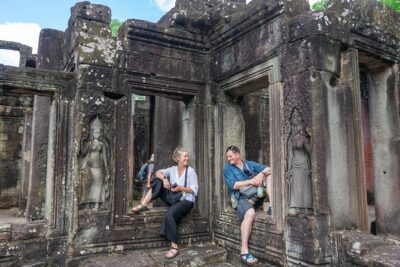
After Angkor Wat, you move to Ta Prohm, about 1 hour 30 minutes. This is the famous one where roots and stone tangle together. The overview notes it’s famously featured in Tomb Raider, and even if you’re not chasing that connection, the vibe is instantly recognizable: parts of the ruin look like the jungle grabbed hold and refused to let go.
Ta Prohm is worth your time because it’s visually layered. You don’t just look forward—you look up, down, and around. Roots form natural frames, and the broken geometry of the temple makes your eye travel.
How to get more out of Ta Prohm
Give yourself permission to walk slower than you think you need. If you rush, you’ll miss the way the roots interact with architectural lines. A guide can also help you interpret what you’re seeing—why certain sections were left in place, and what the setting tells you about how these sites survived over centuries.
In short: this is the stop where your camera likes you back, but only if you slow down.
Banteay Kdei: a quieter temple stop that changes the pace
Next is Banteay Kdei, about 1 hour. It’s described as serene and less-crowded, and that matters because it breaks up the intensity of the more famous stops.
Banteay Kdei’s name—meaning something like Citadel of Chambers or Citadel of Monks’ Cells—already hints at why this place feels different. Instead of pure spectacle, it feels more like a lived-in space carved into stone. Even if you’re not reading every inscription, you can sense the temple’s layout and the way it likely functioned in its time.
Why I think this stop is a value add
If your schedule only included the biggest names, you’d spend your whole day in peak attention mode. Adding Banteay Kdei helps you reset. It gives your mind something new to focus on: structure, atmosphere, and quieter views where you can take photos without constantly sidestepping elbows.
Angkor Thom’s South Gate (Victory Gate): the grand entry mood
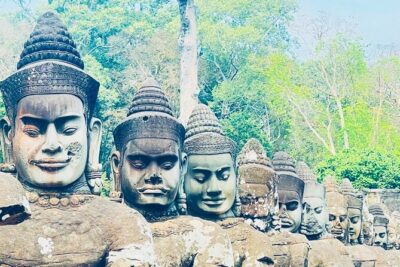
You’ll pass through the Victory Gate (linked with the South Gate of Angkor Thom) for about 30 minutes. This is one of the monumental entrance gates to Angkor Thom, built during the Khmer period.
Gates can be boring on paper. In person, they’re not. A gate is how the city announces itself. Even with only half an hour, you’ll get a sense of scale and the ceremonial feel of arriving into the capital.
Photo tip for the gate
Stand back for one clean wide shot, then step closer to see carvings and the way the gate frames the view beyond. Your guide can help you spot what’s most worth photographing so you don’t spend time photographing the obvious.
Bayon Temple and Baphuon: faces, carvings, and the climb for views
Then comes Bayon Temple, about 1 hour 30 minutes. Bayon is known for its iconic stone faces and intricate carvings. This is where Angkor stops being just grand and starts being personal—because the faces read like they’re watching you from multiple angles.
The time at Bayon is long enough for two things:
- A first pass where you take in the overall effect.
- A second slower look at carvings and details as your eyes adjust.
After Bayon, you end at Baphuon Temple, about 1 hour, which is known as the Tower of Bronze. The big practical highlight here: there’s a climb to the top, and reaching the upper level rewards you with panoramic views.
Baphuon is your finale
Treat Baphuon like the finish line. If you’ve got energy, the climb is worth it because the view turns the whole day into context: you start seeing how the temples sit within their broader area, and how the Angkor complex feels like a designed city rather than random ruins.
Also, your guide can help you decide when to pause and when to keep moving, which matters because you’re wrapping up a long day.
Guide-driven storytelling and photo support (where this tour gets extra points)
This tour leans hard on the guide experience. You get an official English-speaking guide, and the tone you want for Angkor is not just facts—it’s story, context, and pacing.
One guide name that shows up in the supplied information is Dara, praised for story telling, history made understandable, patience, and being accommodating. Groups also mention photo timing and photo help, including the guide taking good pictures and offering photo opportunities.
You don’t need to be an Angkor nerd to enjoy this part. The real benefit is that you stop feeling like you’re walking through stone without a map in your head. Even basic context turns what you see into something you can actually follow.
Practical way to use the guide
When you arrive at each temple, ask one simple question:
- What’s the most important thing to notice right now?
- Where should I stand to see the carvings clearly?
If you do that, the day becomes easier, and you’ll remember more.
Who should book this sunrise private tour?
This is a great fit if you:
- Want sunrise at Angkor Wat without dealing with transport and entry hassles
- Prefer a small group (up to 4) and a guide who can adjust pacing
- Like structured days but still want time to breathe and take photos
- Value comfort on a long day (AC vehicle, pickup, drop-off, water)
It’s also a smart choice for couples and small families who want a smoother experience than a larger group tour.
Who might want a different plan
If you hate early mornings, be honest with yourself. A 4:30am start is not optional here. Also, if you’re on a tight food budget and hate figuring out lunch, plan ahead since meals and beverages are not included.
Should you book Golden Sunrise at Angkor Wat Private Guided Tour?
If you can manage the early start, I think this tour is worth it. You’re paying for the combination that makes Angkor feel magical instead of chaotic: private pacing, pickup/AC comfort, an English guide, and a full lineup that covers Angkor Wat, the more cinematic Ta Prohm, a quieter temple break at Banteay Kdei, and the iconic face-and-climb finale at Bayon and Baphuon.
Book it if you want sunrise done properly and you like having a guide help you see the meaning behind the stone. Skip it only if your priority is a late start or if you don’t want to handle the temple pass and meals on your own.
If you want one sunrise circuit that’s structured, small, and guided, this is a solid bet.
FAQ
What time does the tour start?
The start time is 4:30am.
How long is the Golden Sunrise at Angkor Wat tour?
It runs about 8 to 9 hours.
Is pickup and drop-off included?
Yes, hotel pick up & drop off are included.
Is the temple pass included in the price?
No. Temple Pass is not included.
Are meals included?
No. Meals and beverages are not included.
Is there an English-speaking guide?
Yes. The tour includes an official English speaking tour guide.
What’s included for comfort during the day?
You get an air-conditioned vehicle and cold drinking water, plus pickup and drop-off.
How big is the group?
This is a private tour for your group only, up to 4 people, with a price of $120 per group.
Is free cancellation available?
Yes, you can cancel for a full refund if you cancel up to 24 hours in advance of the experience start time.