REVIEW · SIEM REAP
Private one-day tuktuk ‘small tour’ of the oldest Angkor temples
Book on Viator →Operated by Angkor Wat Shared Tours · Bookable on Viator
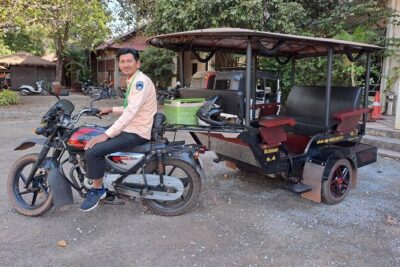
Angkor in one day can feel like a sprint—this tour keeps it fun. I like that it’s a private small-group tuk-tuk plan (up to four people), with hotel pickup and a route built for temple-hopping from Siem Reap. The big draw is that you’re not locked into a bus schedule, so you can start when it suits you and adjust the pace if you want more photos or fewer souvenir stops.
Two things I especially like: first, the ride itself makes long temple days easier, and you get bottled water during the outing. Second, the best drivers bring the route to life with practical local choices, like steering around crowds during busy moments—I’ve heard it described as a smart way to avoid the worst congestion without missing key sights. The main drawback to plan for: Angkor entry is not included, and there’s an optional tour guide add-on (listed at $45 per booking) if you want someone to go into the sites with you rather than just share context on the ride.
In This Review
- Quick highlights (what makes this tour work)
- Private tuk-tuk temple time in Siem Reap: why this format beats a bus
- Cost and value: transport + water + a lot of temple time (but the big pass is extra)
- Your day at Angkor: how the 8–9 hours typically feel
- Stop-by-stop: Angkor Wat to Ta Keo in manageable chunks
- Angkor Wat (about 1 hour)
- Banteay Kdei (about 1 hour)
- Ta Prohm (about 1 hour)
- Ta Keo (about 1 hour)
- Angkor Thom: South Gate energy and Bayon’s faces
- South Gate approach into Angkor Thom (about 1 hour total for this stop segment)
- Bayon at the center (within the Angkor Thom stop)
- Phnom Bakheng: only for the sunset version
- Driver quality: names you’ll see come up, and what they’re doing right
- What to watch for: ticketing and the guide add-on decision
- Who this tuk-tuk small tour suits best
- Should you book this one-day tuk-tuk tour?
- FAQ
- How long is the tuk-tuk tour?
- What’s included in the price?
- What’s not included?
- Does the tour visit Angkor Wat and Ta Prohm?
- Is Phnom Bakheng included?
- Can I cancel for a full refund?
Quick highlights (what makes this tour work)
- Small-group comfort: Private tuk-tuk setup for groups up to four, so the day feels personal, not crowded.
- Hotel pickup and drop-off: If you select it, your day starts and ends smoothly in Siem Reap.
- A tight Angkor “greatest hits” route: Angkor Wat, Banteay Kdei, Ta Prohm, Ta Keo, and Angkor Thom in about 8–9 hours.
- Driver-led practical routing: Some drivers use local knowledge to choose a better path when it’s busy.
- Water included: Bottled water shows up during the day, which matters in Angkor heat and humidity.
- Sunset variant at Phnom Bakheng: Added only for the sunset-style tour option.
Private tuk-tuk temple time in Siem Reap: why this format beats a bus
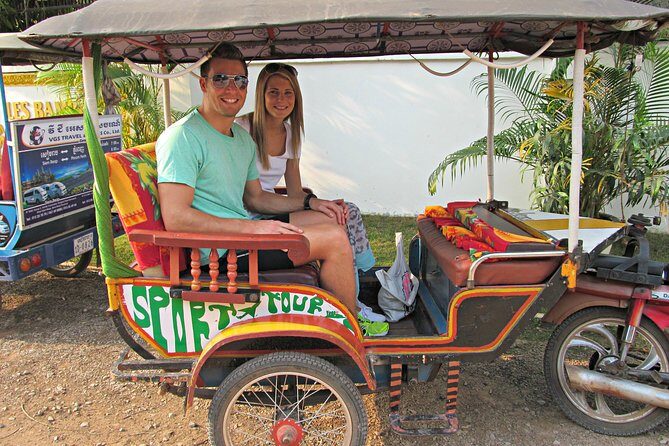
Angkor is famous for a reason, but in a one-day visit the real challenge is time management. This tuk-tuk format helps you keep momentum. You’ll cover several major ruins without spending half your day stuck on set bus routes or losing hours to bottlenecks.
And because it’s private, your driver can keep the timing realistic. Each stop is set for about an hour, which is long enough to see the key parts, take a careful look at stone carvings, and still move on before your patience runs out.
One more plus: the tuk-tuk ride is open and breezy compared with being trapped inside a car. I’ve heard it described as naturally cooling, and some drivers even keep water very cold for the day. That kind of comfort matters when you’re hopping between temples under bright daylight.
You can also read our reviews of more private tours in Siem Reap
Cost and value: transport + water + a lot of temple time (but the big pass is extra)
The price is listed at $23.00 per group (up to 3), and the tour is sold as a private small-group experience. That’s a bargain if you’re thinking in terms of what you’d pay for private transport plus the time you get at each site.
What you need to budget on top of the tour price:
- Angkor entry / Angkor Pass is not included.
- Tour guide is not included (the add-on is listed at $45 per booking).
- The listing also notes all fees and taxes are not included.
Here’s how I’d judge the value. You’re paying for private tuk-tuk transport around Angkor, bottled water, and pickup/drop-off if you choose that option. If you don’t plan on hiring a separate guide for every site, you’re still likely to get useful context from your driver—many of the top-rated experiences mention drivers explaining temple stories in good English. If you want deeper site interpretation inside the ruins, add the tour guide option, because the included service may be more ride-and-visit narration than a full in-site tour.
Also, don’t ignore the group-size wording. The experience is described as customizable for private groups up to four people, while the price line says up to three per group. Before you pay, make sure you’re clear on headcount for your booking.
Your day at Angkor: how the 8–9 hours typically feel
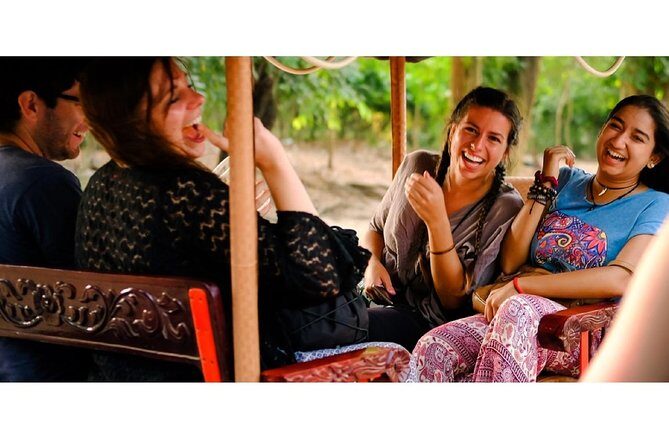
Expect a long but structured day. The stops are spaced so you can see major set pieces without rushing like you’re late for a flight.
A useful mindset: treat this as an Angkor primer and photo route first, then plan a second visit later if you want to slow down for details. With only about an hour per stop, you’ll notice the big architectural ideas fast—moat layouts, towers, causeways, and the way later capitals adapted earlier temple styles.
Also, timing can shift based on what you choose to do at each site. The tour is described as customizable for things like start time and pickup location, so you can aim for earlier hours to reduce crowd pressure and heat. If you’re doing a sunrise-style start, that can mean a very early wake-up—but it often pays off in comfort and calmer viewing.
Stop-by-stop: Angkor Wat to Ta Keo in manageable chunks
Angkor Wat (about 1 hour)
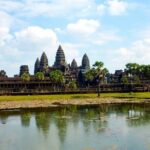
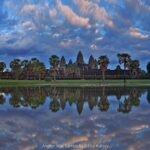
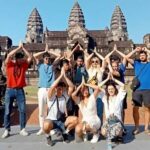
This is the heavyweight. Angkor Wat is the largest religious monument in the world and the famous sunrise temple. Even if you’re not there at dawn, you’ll see why it’s the anchor of every Angkor trip: the sheer scale, the symmetrical layout, and the way the causeways and galleries pull you toward the center.
What’s practical about this stop on a tuk-tuk route: it’s a clean starting point, and your driver can set the tone right away—often with stories and orientation so you know where you’re looking and what you’re seeing.
Banteay Kdei (about 1 hour)
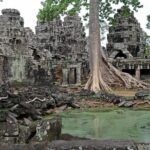
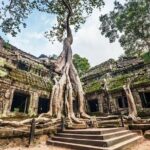
Banteay Kdei is the one that makes you appreciate time and nature. It’s also known as the citadel of monk’s cells, and it’s partially overgrown. The highlight is how roots and trees work their way through stone, creating a kind of accidental sculpture.
This stop is a nice break from the most “iconic” Angkor sites. It’s still important, but it tends to feel more atmospheric and less like a checklist.
Ta Prohm (about 1 hour)
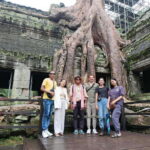
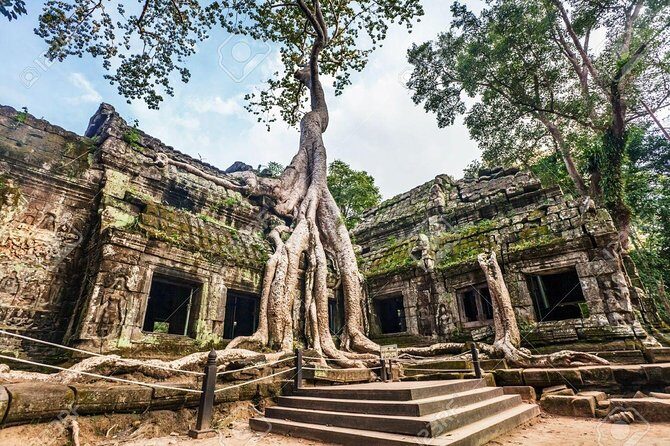
Ta Prohm is the jungle-facing face of Angkor. You’ll see the temple’s ruin swallowed by trees, and it’s also famous because of the film connection people associate with it.
If you only visit one temple where nature feels like a co-star, Ta Prohm is usually the choice. The challenge here is heat and sun—so wear what keeps you steady, and don’t try to sprint through. One good strategy is to start with the main viewpoint areas, then wander through the more shaded corridors.
Ta Keo (about 1 hour)
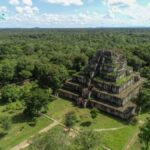
Ta Keo has a different mood because it was never finished. The temple’s square, layered-pyramid shape gives it a dramatic look compared with other Angkor ruins. You’ll likely notice the unfinished feel in the structure and the way the temple reads visually as “in progress.”
Also, Ta Keo gives you variety because it often involves more vertical movement than some other stops. It’s a great change of pace after the flatter feel of parts of Angkor Wat and the sprawling grounds of other sites.
Angkor Thom: South Gate energy and Bayon’s faces
South Gate approach into Angkor Thom (about 1 hour total for this stop segment)
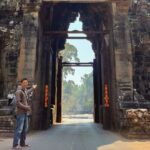
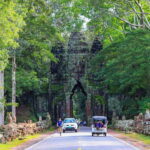
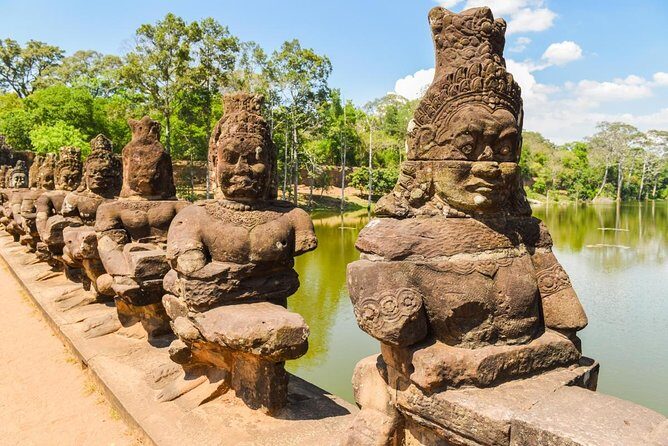
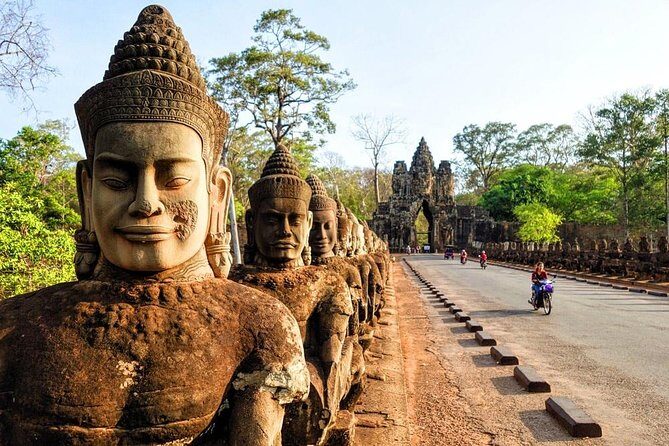
Angkor Thom was the later capital of the Angkor Empire, and it has one of Angkor’s most dramatic entrances. The road into the city is lined with gods and demons locked in an eternal tug-of-war display.
This is where your route really pays off. Getting there by tuk-tuk helps you arrive without turning the whole day into a logistics puzzle. Plus, when you’re walking into a huge gate scene, you get that immediate “I’m entering another era” feeling fast.
Bayon at the center (within the Angkor Thom stop)
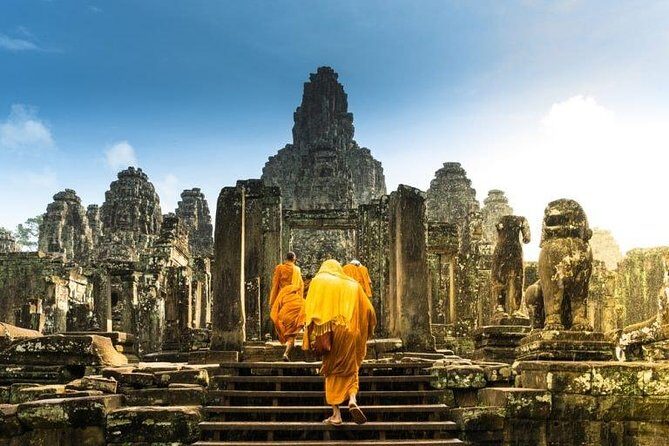
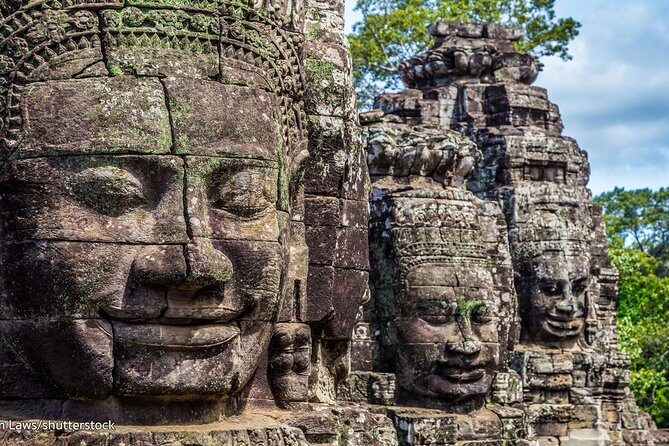
Bayon sits in the middle of Angkor Thom, and it’s the face hub. Expect to spend time looking up and around. The temple design is built for visual impact from multiple angles, so the experience changes as you walk.
If you’re the kind of person who likes to spot details, Bayon rewards slow gazing. If you’re the kind of person who needs a quick win, Bayon still delivers because the defining features are obvious the moment you see them.
Phnom Bakheng: only for the sunset version
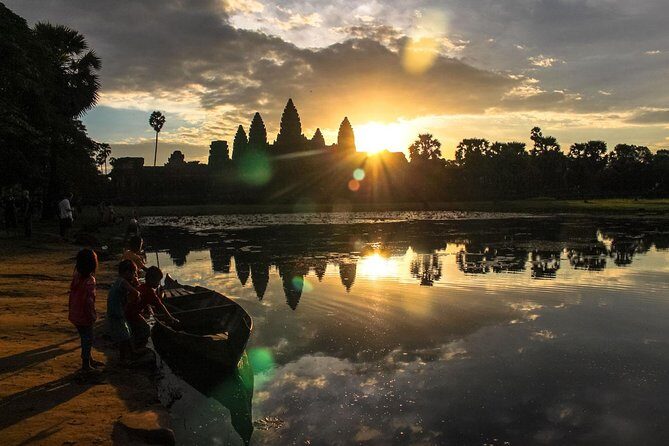
Phnom Bakheng is listed as included only for a sunset tour. It’s a hilltop temple built hundreds of years before Angkor Wat, and it’s known as one of the best places to watch the sunset over Angkor Wat.
This is the kind of add-on that turns a good day into a memorable one. A sunset viewpoint gives you a second way to feel Angkor—less about symmetry and stonework, more about mood, light, and the distant outline of Angkor Wat.
If you’re sensitive to long waits for sunsets, consider how you like to spend time. The payoff can be big, but sunset days often ask for patience.
Driver quality: names you’ll see come up, and what they’re doing right
On this type of day, the “tour” isn’t just the route. It’s the person driving it.
In the high ratings, certain drivers come up again and again: Bros Sa De, Phalla, Polo, Sim, Bong Sim, Lin, and Mr. Phalla. What they share is practical hospitality:
- They’re punctual and get you moving without drama.
- They keep you comfortable—often with bottled water during the day and, in some cases, chilled ice-cold water.
- They give context in clear English so you don’t wander through temples with blank questions.
Here’s my advice: when you meet your driver, ask one simple thing before you start walking—what’s the one viewpoint you don’t want to miss today. You’ll get better value from your limited time at each stop.
What to watch for: ticketing and the guide add-on decision
Two things can change your experience quickly: tickets and how much interpretation you want.
1) Angkor entry is not included.
Plan for the Angkor Pass. If you arrive without your plan for tickets, you lose time fast.
2) A tour guide is not automatically included.
There’s an add-on listed at $45 per booking for a tour guide. If you want someone to provide deeper explanations while you’re inside each site, add it. If you prefer a lighter day with mostly driver narration and lots of freedom to look around, you may be fine without the guide add-on.
Either way, don’t treat this as a “walk into a classroom” tour. It’s built to move efficiently, with the driver helping you make sense of what you’re seeing as you go.
Who this tuk-tuk small tour suits best
This is a great fit if you want:
- A private day that feels flexible rather than bus-routed.
- A structured way to hit major Angkor classics in one swing.
- Good value for money, especially if your group is small and you’d otherwise pay for multiple taxis or a private car.
It’s also a strong choice if you want a driver who can steer you around busy conditions. If you’re visiting during a festival or a peak travel window, route knowledge can noticeably affect your comfort.
If you love extremely detailed archaeology and want extensive in-site commentary at every stop, you may still want to add the tour guide option and consider adding an extra day in Angkor to slow down.
Should you book this one-day tuk-tuk tour?
Yes—if you’re aiming for a smart, efficient Angkor day without turning your trip into a transportation headache. The private tuk-tuk, bottled water, and the tight 8–9 hour route give you real value, especially when you want to see Angkor Wat plus several older, varied temples.
Book it with a clear plan for the Angkor Pass, and decide whether you want the optional tour guide add-on based on how deep you want the explanations to go inside each ruin.
If you want, tell me your travel month and whether you prefer sunrise, sunset, or mid-day heat. I can suggest a practical start-time strategy for this exact route.
FAQ
How long is the tuk-tuk tour?
The tour lasts about 8 to 9 hours.
What’s included in the price?
Bottled water, private tour setup, hotel pickup and drop-off if you select that option, and round-trip private transfer are included.
What’s not included?
Angkor entry fees (including the Angkor Pass) are not included, and a tour guide is not included (the tour guide add-on is listed at $45 per booking).
Does the tour visit Angkor Wat and Ta Prohm?
Yes. Angkor Wat and Ta Prohm are included as stops, along with Banteay Kdei, Ta Keo, and Angkor Thom.
Is Phnom Bakheng included?
Phnom Bakheng is included only in the sunset tour option.
Can I cancel for a full refund?
Free cancellation is available. You can cancel up to 24 hours in advance for a full refund, but changes within 24 hours of the start time are not accepted.