REVIEW · SIEM REAP
Kulen Mountain Beng Mealea and Tonle Sap Tour in Siem Reap
Book on Viator →Operated by BREKSA TRAVEL · Bookable on Viator
Kulen Mountain plus Tonle Sap is a big day. This trip strings together four very different feels: an early climb on Kulen Mountain, limestone-pooled waterfall time, the jungle-taking-over mood of Beng Mealea, and a boat ride into stilt-house life at Kampong Phluk. I especially like the small group size (up to 14) and the professional English-speaking guide-and-driver setup, with hotel pickup/drop-off to keep logistics from eating your day. One thing to consider: it is a long outing and you’ll need to budget extra for several site entrance fees.
You start before the sun gets serious, then you’re on the move all day. The route also hits key spiritual stops tied to the Angkor era—like the reclining Buddhas and the riverbed carvings—so it’s not just scenery. It’s also the kind of day where you’ll walk more than you expect, and you may want swim-ready clothes for the waterfall.
If you’re the type who likes to see the “real Cambodia” beyond the main Angkor circuit, this is a strong fit: rice paddies, wooden houses on stilts, temple climbs, and boat life on the lake. Just keep an eye on what’s included versus what you’ll pay at the sites, and plan your energy like it’s a day hike with added temples.
In This Review
- Key highlights you should care about
- Price and logistics: what $55 really covers
- The 7:30 AM start: how to make it feel worth it
- Stop by stop: what each place gives you (and what to watch for)
- 1) Preah Dak: easing into the countryside feel
- 2) Poeng Ta Kho (amazing cliff): Kulen Mountain’s big Angkor-era moments
- 3) Preah Ang Thom pagoda: an 8-meter reclining Buddha climb
- 4) 1000 Lingas: sacred fertility symbols in the riverbed
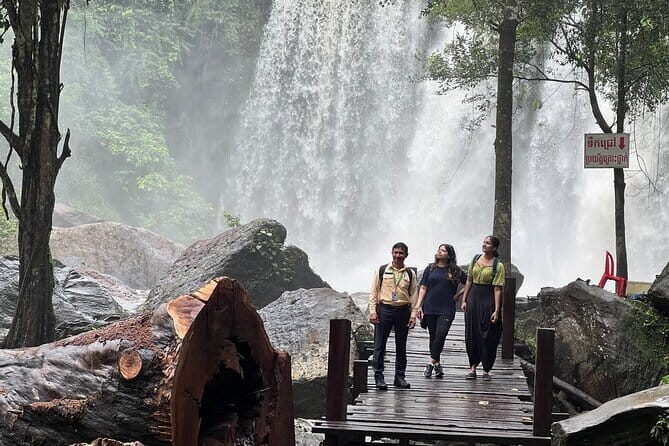
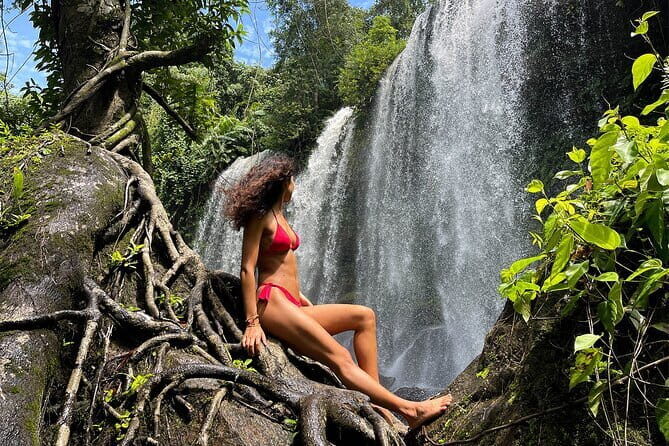
- 5) Phnom Kulen Waterfall: pools, picnic rocks, and that cold-water moment
- 6) Prasat Beng Mealea: when nature reclaims the temple
- 7) Kampong Phluk: Tonle Sap floating village by boat
- The guide and small-group pace: the real quality of the day
- What to bring so the day doesn’t feel hard
- Who this tour is for (and who should pick something else)
- Should you book? My honest take
- FAQ
- What time does the tour start?
- How long is the tour in total?
- Do I get hotel pickup and drop-off?
- Is lunch included, and is there a vegetarian option?
- What does the tour cost, and what’s included in that price?
- Are entrance fees included?
- How much should I budget for entrance fees that are listed?
- Is there a group size limit?
- Is this tour suitable for most travelers?
Key highlights you should care about
- Kulen Mountain viewpoints and a rock-carved reclining Buddha: a climb that turns into a reward-feel panorama.
- Waterfall pools with time to picnic and swim: a nature break, not just photo stops.
- Beng Mealea’s nature-overgrown temple atmosphere: stone, roots, and a very different vibe than Angkor’s polished look.
- Kampong Phluk boat time on the Tonle Sap: stilt-house living and mangrove scenery from the water.
- Small-group pace (max 14): enough structure to see everything without feeling like a cattle line.
- Included picnic lunch plus vegetarian option: one less decision in your packed day.
Price and logistics: what $55 really covers
The tour price is $55 per person, and that’s the easy part. The spend that matters is what’s not included, because a day like this has multiple paid sites.
Here’s what you can clearly plan for from the tour details:
- Beng Mealea: $10 per person (not included)
- Phnom Kulen National Park: $20 per person (not included)
- Kampong Phluk Floating Village: $15 per person (not included)
That’s already $45 in site fees on top of the $55 ticket, putting the total at roughly $100 per person, before any additional admissions that may apply to other marked stops. Some stops are labeled as free in the schedule, and others are marked not included, so the smart move is to treat site fees as part of the real budget.
What you do get for the $55 is practical and important on a full-day drive:
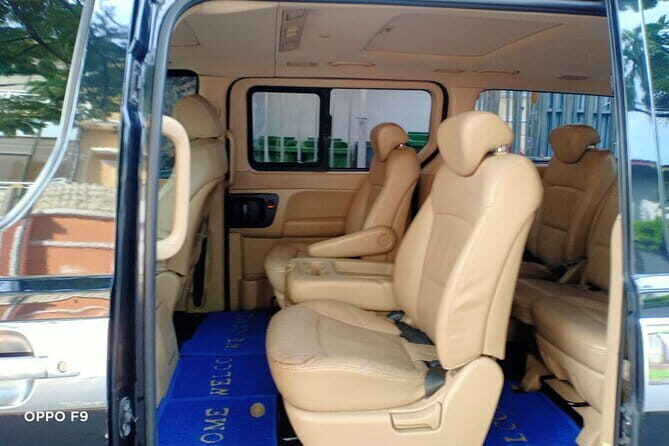
- Hotel pickup and drop-off
- An English-speaking guide
- Towels and bottled water
- A picnic lunch with a vegetarian option
- A mobile ticket (so you’re not juggling paper)
Also, group size is limited to 14, and that tends to make a difference on temple climbs and short photo windows. In a long day, small-group energy is the difference between relaxed and rushed.
You can also read our reviews of more tours and experiences in Siem Reap.
The 7:30 AM start: how to make it feel worth it
Pickup runs between 7:30–8:00 am, and you’re asked to wait in the lobby by 7:30 sharp. That early departure matters because you’ll want daylight for:
- climbing sections on Kulen,
- temple steps,
- and getting to the waterfall and Beng Mealea without the day collapsing into a late-afternoon scramble.
Your return is listed for around 6:30 pm. One note from how the day plays in real life: the itinerary is described as about 10 hours, but the experience can feel closer to a full workday plus extra, so I’d plan for near-total “day-out” mode—good shoes, water awareness, and a willingness to be moving for hours.
Stop by stop: what each place gives you (and what to watch for)
1) Preah Dak: easing into the countryside feel
The morning sets a tone change fast. Before the big climbs, you head into a more everyday Cambodia scene with locals going about morning routines, rice paddies, and the classic wooden houses on stilts.
This stop is short (about 30 minutes), but it’s useful because it gives you context before you start seeing stone monuments tied to the Angkor era. It also helps you psychologically switch from “tourist zone” mode to “field trip with temples” mode.
What to watch for: it’s early and bright. Bring sun protection even if the start feels cool.
2) Poeng Ta Kho (amazing cliff): Kulen Mountain’s big Angkor-era moments
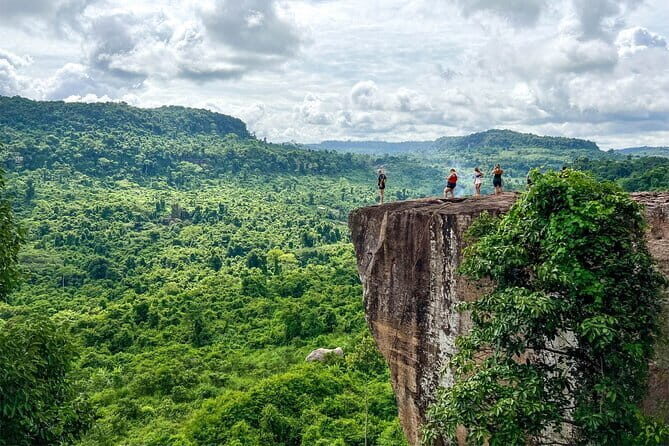
This is where the day turns into a story with a climax. Poeng Ta Kho is described as connected to the birthplace of the Angkor Empire, and then you climb up to Kulen Mountain’s summit for views.
You also see the massive reclining Buddha carved right into the rock. The wording in the itinerary emphasizes “big stuff,” and that matches the feeling you should expect: this isn’t a quick glance from street level. It’s a climb followed by a wow factor.
In the same general zone, another key reclining-Buddha pagoda shows up later, so this stop works like an opening act that primes you for what comes next: spiritual carvings that look engineered to survive centuries, then placed in a mountain setting that makes them feel even more dramatic.
What to watch for: this part includes walking uphill. If you have knee issues, go slow at the start so you don’t pay for it later at Beng Mealea.
3) Preah Ang Thom pagoda: an 8-meter reclining Buddha climb
After Kulen’s summit segment, you head to Preah Ang Thom pagoda for an 8-meter reclining Buddha carved into the mountainside.
The itinerary frames it as a place with a long rhythm of pilgrims making this climb for centuries. Even if you don’t care about the exact dates, the physical act of climbing makes the place make sense. You’ll feel why people would do it: the effort creates a kind of focus.
This stop is listed at 1 hour, and since admission fees aren’t included, you’re relying on the guide to manage timing and access smoothly.
What to watch for: steps. Wear shoes you trust on uneven surfaces.
4) 1000 Lingas: sacred fertility symbols in the riverbed
Next is 1000 Lingas, where there are thousands of sacred fertility symbols carved into the actual riverbed by 11th-century priests. The idea is that flowing water becomes holy water for the Angkor kingdom.
I like this stop because it’s different from the usual temple-tour checklist. Instead of only looking at walls and towers, you’re looking at the ground and the waterline—the relationship between worship and everyday nature.
This is a shorter stop (about 30 minutes), but it can be a memorable one if you take a minute to notice the scale. The “thousands” detail changes the feel from one carving to a whole water-and-stone setting.
What to watch for: you might get splashed or feel damp near the riverbed. I’d keep socks in your mind, and plan how you’ll handle dry changes if you’re sensitive to that.
5) Phnom Kulen Waterfall: pools, picnic rocks, and that cold-water moment
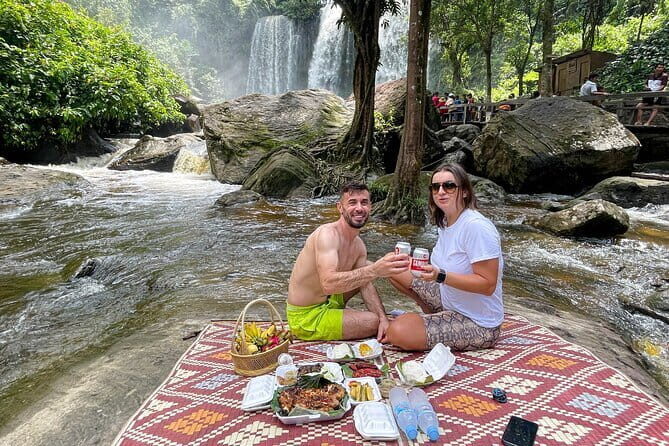
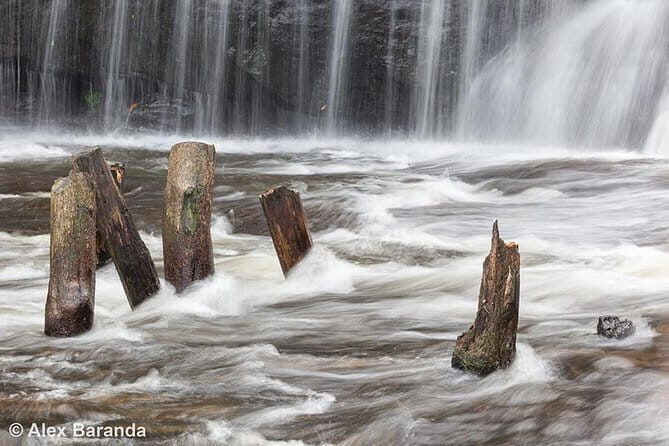
This is where the day shifts from stone and climbs to body-and-nature time. The schedule describes crystal-clear pools fed by mountain water filtered by limestone, plus a picnic spread on smooth rocks with waterfalls as your soundtrack.
Then comes the part people remember: a swim in cold water.
This section is listed at 1 hour 30 minutes, so you get enough time to:
- eat without rushing,
- cool down,
- and decide whether you’re doing the swim.
What to watch for: the water is described as cold, and the schedule implies it’s optional but common. If you’re not a swimmer, just prepare for wet feet and slippery rocks with caution. If you are swimming, I’d come dressed with that in mind—something you can manage quickly, since the day keeps moving after.
One practical plus: towels and water are included during the tour, which can help you recover faster after you get out.
6) Prasat Beng Mealea: when nature reclaims the temple
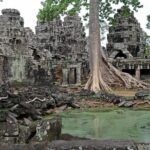
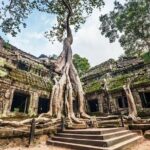
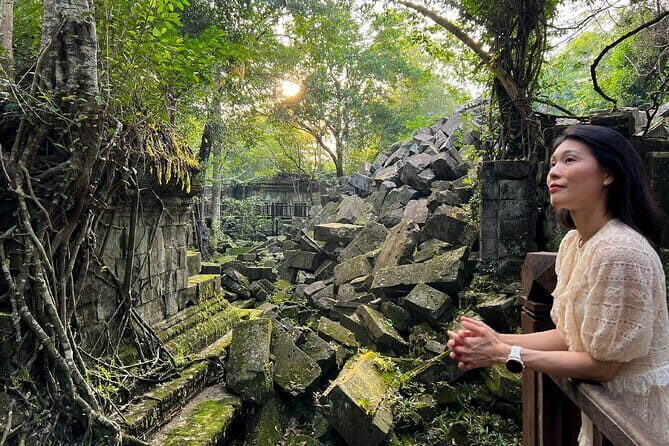
After lunch, you head to Beng Mealea Temple, a 12th-century site described as what Angkor Wat might look like if nature were allowed to reclaim it.
That is exactly the mood you should expect: less “perfectly restored lines” and more “temple-in-the-wild” energy. The itinerary notes it’s wrapped in vegetation, and that changes how you experience the architecture. You’re not only reading carvings; you’re walking through the way plants and stone share space.
This stop is about 1 hour, and admission is not included (Beng Mealea has a listed $10 fee). You’ll want to pace yourself because with overgrown temple settings, you often end up doing more “careful looking” steps than you planned.
What to watch for: uneven stone, roots, and the fact that it’s not flat. Good grip shoes matter more here than almost anywhere else on the day.
7) Kampong Phluk: Tonle Sap floating village by boat
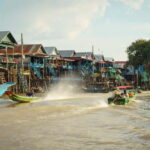
The final big highlight is Kampong Phluk, reached by boat and framed as one of the most fascinating floating village experiences in Cambodia. This is where you see stilt houses, mangrove forests, and families who live their daily lives on the water.
The visit includes a Buddhist stop as part of the village experience, and it’s listed at 1 hour. Entrance is not included, with a clearly stated $15 fee.
I like this stop because it gives you Tonle Sap as a living environment, not a backdrop. You feel the scale of the water and the way the village is adapted around it. Even if your camera roll is already full from temples, boat time resets your attention.
What to watch for: boat rides can be cooler in the shade and windy on open water. Bring a light layer if you run cold.
The guide and small-group pace: the real quality of the day
This tour is rated very strongly overall (a 5/5 rating based on 24 comments), and the pattern behind that kind of score tends to be consistent leadership.
In the comments, you see names like Mony and Jan as guides, plus drivers such as Mr Theara. Even when you don’t get those exact people, the best sign here is the emphasis on comfort and detail—things like keeping you on schedule, explaining what you’re seeing, and making the day feel like one smooth loop instead of separate mini-tours.
A small group also helps. Up to 14 people means:
- fewer crowds at short viewpoints,
- more flexibility if someone needs a slow moment,
- and a better chance the guide can manage questions without a chaotic scramble.
What to bring so the day doesn’t feel hard
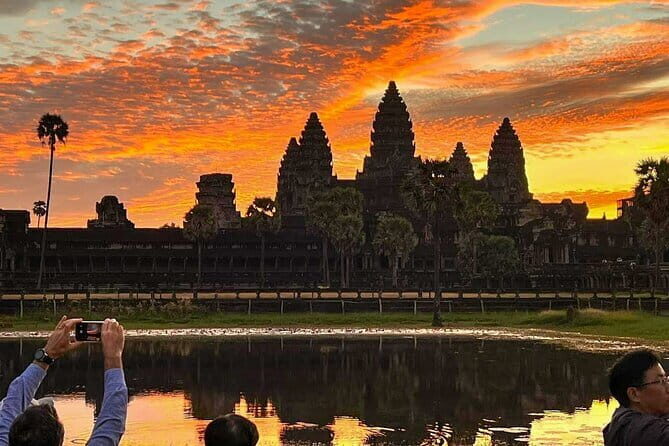
You’re doing temples, climbs, waterfall pools, and a boat ride in one go. Pack like you’re combining a hike and a swim day.
I’d bring:
- Comfortable shoes with real grip
- Sun protection (hat or cap)
- A change plan for after the waterfall swim (even if you only get a little wet)
- Cash for any extra snacks or purchases on route (the tour includes picnic lunch, but extra items can show up, and it never hurts to be ready)
Also, since soft drinks aren’t included, decide if you want to buy them yourself during the day or just stick to water (which is provided).
Who this tour is for (and who should pick something else)
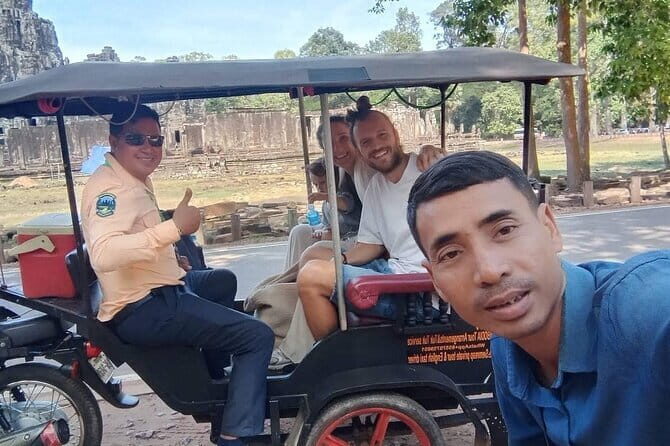
This is a good match if you want a single day that covers:
- Angkor-era spiritual sites on Kulen,
- a proper waterfall break with real pool time,
- a temple that feels swallowed by nature at Beng Mealea,
- and a Tonle Sap village by boat at Kampong Phluk.
It’s less ideal if you hate long days, step-heavy sites, or cold-water swims. This isn’t a sit-in-a-car-and-window-shoots-the-day outing.
If you’re traveling as a couple or solo, the small group setup can feel social without being overwhelming. Families can manage it too, but you should be mindful that you’re mixing climbs with uneven temple ground.
Should you book? My honest take
Book this tour if you like days with momentum and variety. You get a satisfying sweep: mountain climb, reclining Buddha moments, riverbed carvings, waterfall time, and then the Tonle Sap floating village feel—plus a guide and transport that keep you from juggling tickets across the region.
Skip or consider alternatives if you’re on a tight budget and $55 isn’t the whole story for you. When you add the listed site fees, you should expect closer to $100 total per person (at least for the big three entries). Also, if step climbing and a cold swim are not your thing, the day may feel too active.
If you do book, here’s the best way to make it work: start early with energy, wear grippy shoes, and treat the waterfall swim as an optional bonus rather than a must-do. That mindset keeps the day fun even when it’s long.
FAQ
What time does the tour start?
The tour starts at 7:30 am. Pickup is scheduled between 7:30–8:00 am, and you should wait in your hotel lobby by 7:30 sharp.
How long is the tour in total?
The duration is listed as 10 hours (approx.). Plan for a full day and expect it to feel long.
Do I get hotel pickup and drop-off?
Yes. The tour includes hotel pick-up and drop-off.
Is lunch included, and is there a vegetarian option?
Yes. The tour includes a picnic lunch, and there is a vegetarian option available.
What does the tour cost, and what’s included in that price?
The tour costs $55 per person and includes transportation, an English-speaking guide, bottled water and towels, and the picnic lunch. A mobile ticket is also included.
Are entrance fees included?
Not all entrance fees are included. Some stops are marked as free, while others are marked not included.
How much should I budget for entrance fees that are listed?
The tour lists these fees as not included: Beng Mealea ($10), Phnom Kulen National Park ($20), and Kampong Phluk Floating Village ($15). Additional site admissions may apply where marked not included.
Is there a group size limit?
Yes. The maximum group size is 14 travelers.
Is this tour suitable for most travelers?
The tour notes that most travelers can participate. The schedule includes mountain climbs and a waterfall swim, so you should consider your comfort with walking and uneven ground.