REVIEW · SIEM REAP
Koh Ker, Kulen Waterfall and Beng Mealea from Siem Reap
Book on GetYourGuide →Operated by Angkor Day Trip · Bookable on GetYourGuide
You’ll trade Angkor crowds for quieter magic. This full-day circuit mixes Phnom Kulen’s sacred river carvings and reclining Buddha with Koh Ker’s dramatic pyramid climb, then finishes at Beng Mealea’s jungle-thick temple ruins. It’s a long day, but it keeps changing scenes so it never feels repetitive.
I especially like the way the tour is paced: you start early at Kulen for the calm spiritual atmosphere, then you shift gears to rural Koh Ker temple grounds where the countryside views feel wide open. I also like that you get hands-on moments, like walking the riverbed carvings at Thousand Lingas and having a chance to cool off at Kulen Waterfall.
One consideration: the day runs about 10–12 hours, and the entrance fees are on top of the tour price. If you’re not budgeting for Kulen Mountain, Beng Mealea, and Koh Ker temple tickets (and a bit of tipping), you’ll feel it.
In This Review
- Key highlights I’d plan around
- Why Koh Ker, Kulen and Beng Mealea beat a standard Angkor day
- Phnom Kulen: early sacred sites and a waterfall swim break
- The trek and the River of a Thousand Lingas
- Reclining Buddha: massive stone, serious atmosphere
- Kulen Waterfall: swim if conditions are right
- The River of a Thousand Lingas: what makes the carvings worth it
- Koh Ker: climbing Prasat Thom and hunting the quiet temples
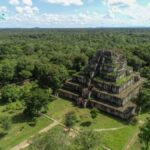
- Prasat Thom: a seven-tier pyramid you actually climb
- The side temples: Prasat Pram and Prasat Neang Khmau
- Lunch near Koh Ker: a local break that matters
- Beng Mealea: jungle temple ruins that feel like you walked into the past
- Walking routes, fallen stones, and hidden corners
- The natural re-claiming effect
- Getting there from Siem Reap: timing, comfort, and energy management
- Price and value: what the $77 covers, and what you must budget
- What to bring for a smooth day (especially for waterfall and Beng Mealea)
- Who should book this Koh Ker–Kulen–Beng Mealea day trip?
- Should you book it?
- FAQ
- How long is the tour?
- What is the price per person?
- Is pickup and drop-off included?
- What’s included in the tour price?
- What entrance fees are not included?
- Does Beng Mealea accept an Angkor Pass?
- Can I swim at Kulen Waterfall?
- What language is the guide?
Key highlights I’d plan around
- Early start at Phnom Kulen for a more peaceful visit at the sacred sites and waterfall
- River of a Thousand Lingas: carved Hindu symbolism right in the stone riverbed
- Prasat Thom climb at Koh Ker for big countryside views from the pyramid top
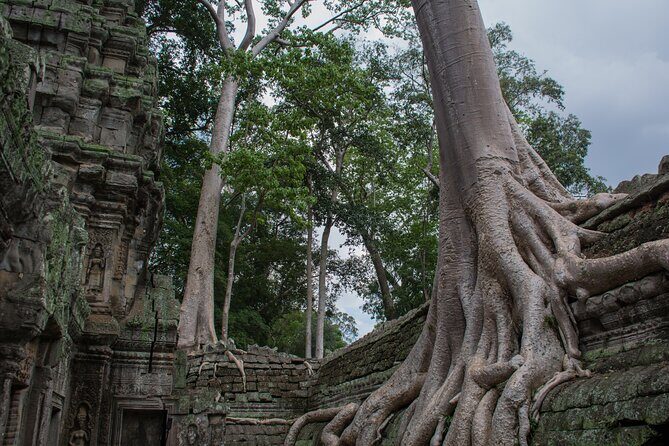
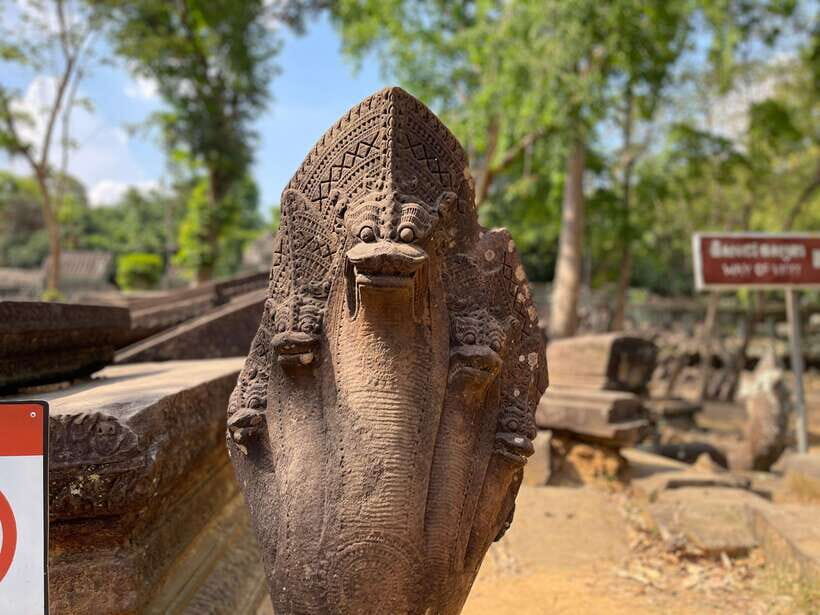
- Prasat Pram tree-root towers and black sandstone structures that look otherworldly
- Beng Mealea’s largely unrestored ruins where nature really takes over
- A/C comfort plus bottled water and towels so the long ride feels less painful
Why Koh Ker, Kulen and Beng Mealea beat a standard Angkor day
From Siem Reap, it’s easy to burn an entire vacation bouncing between the same Angkor-era highlights. This day trip gives you a different flavor of Khmer Cambodia: sacred mountain rituals, a “forgotten” capital with pyramid-temple drama, and a temple complex where vegetation has swallowed the stones.
You’re also covering three distinct types of sightseeing in one go:
- Temple and carving focus at Kulen and Koh Ker
- Water + nature at Kulen Waterfall
- Jungle ruins and walking exploration at Beng Mealea
It’s the kind of itinerary that works best when you’re open to a full day of moving and climbing—but not in a punishing way. The tour is described as suitable for all ages and adventure levels, and the sites are built for walking at your own pace (especially Beng Mealea, where you’ll likely linger for photos).
You can also read our reviews of more tours and experiences in Siem Reap.
Phnom Kulen: early sacred sites and a waterfall swim break
You’ll head out early to Phnom Kulen National Park, Cambodia’s sacred mountain area. The drive plus the morning visit is built around getting there before the crowds—and honestly, that timing matters. These spaces are not just scenic; they’re spiritual and busy in the middle of the day. Morning light also makes the stone details easier to see.
The trek and the River of a Thousand Lingas
Once you’re inside the park, expect a trek through dense forest. The goal is the River of a Thousand Lingas, where carvings are set into the riverbed. This is one of those spots where you stop and look longer than you think you will.
What you’ll want to watch for:
- carved Hindu deity symbols and iconography in the stone
- the way the carvings sit within the natural river shape
- the contrast between man-made stone meaning and the moving water environment
If you like photography, this is your golden hour territory. You’ll likely find angles where the carvings show clearly without the harsh midday sun.
Reclining Buddha: massive stone, serious atmosphere
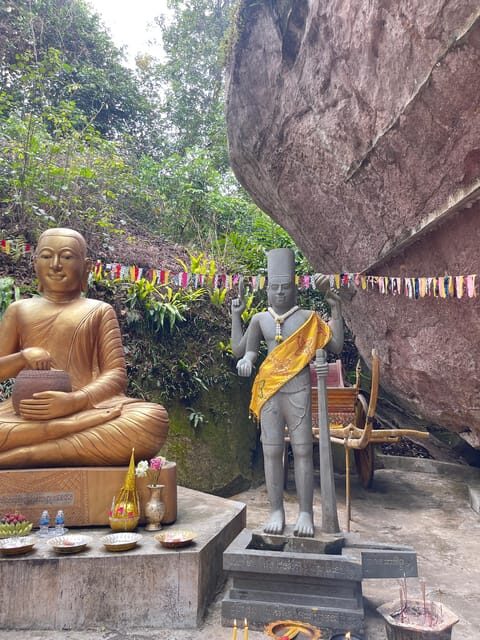
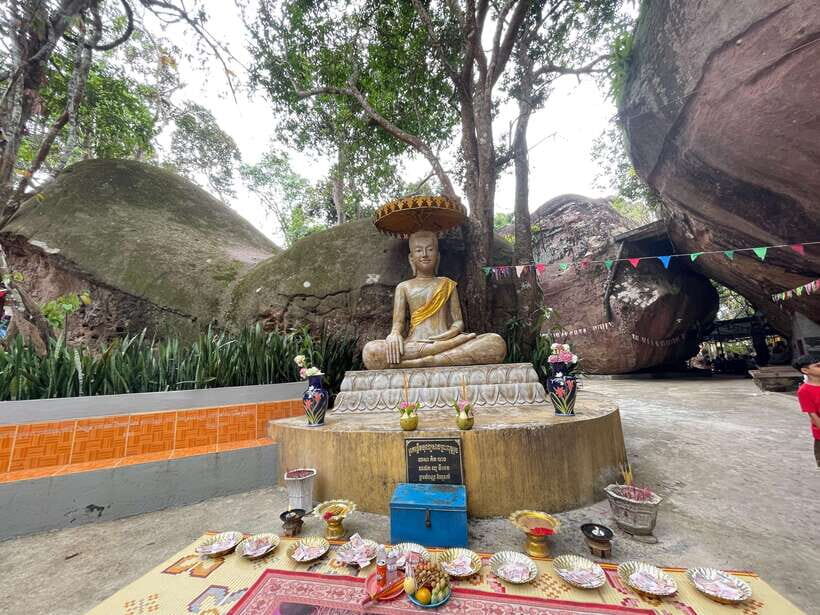
Next is the Reclining Buddha, a huge sandstone statue perched on the mountain. People come here as a pilgrimage site, and you can feel that tone when you arrive.
Practical tip: plan on climbing steps to reach the best viewing areas and allow time for slow looking. This isn’t a “walk past and go” stop. The views from up top are part of why the site works, but the respectful atmosphere is what makes it memorable.
Kulen Waterfall: swim if conditions are right
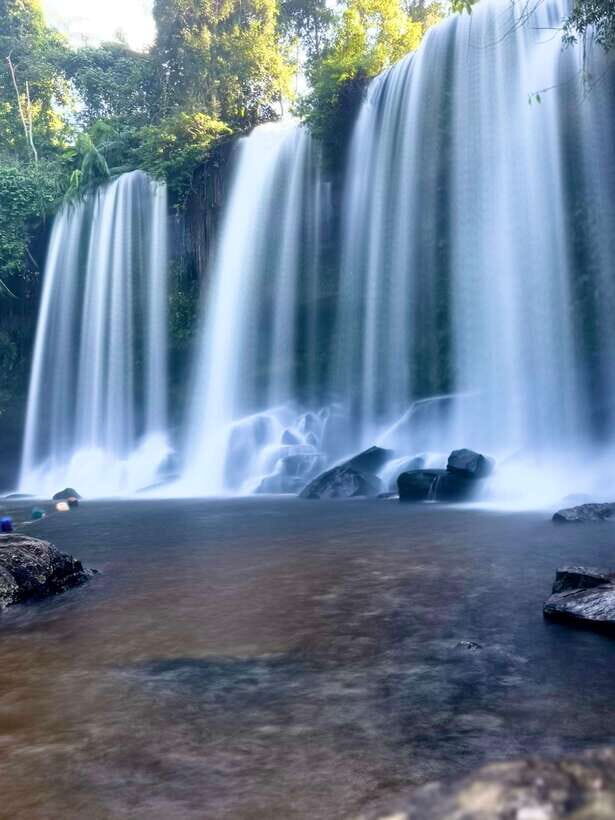
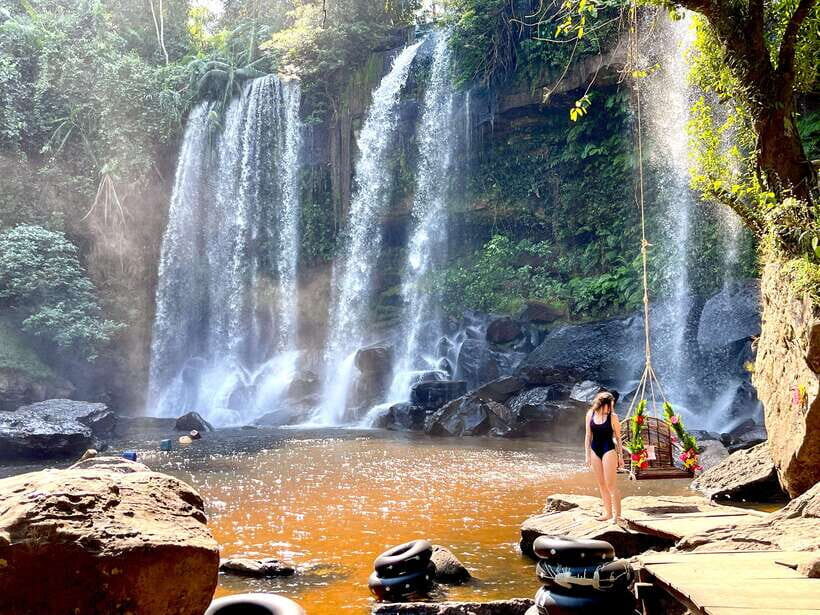
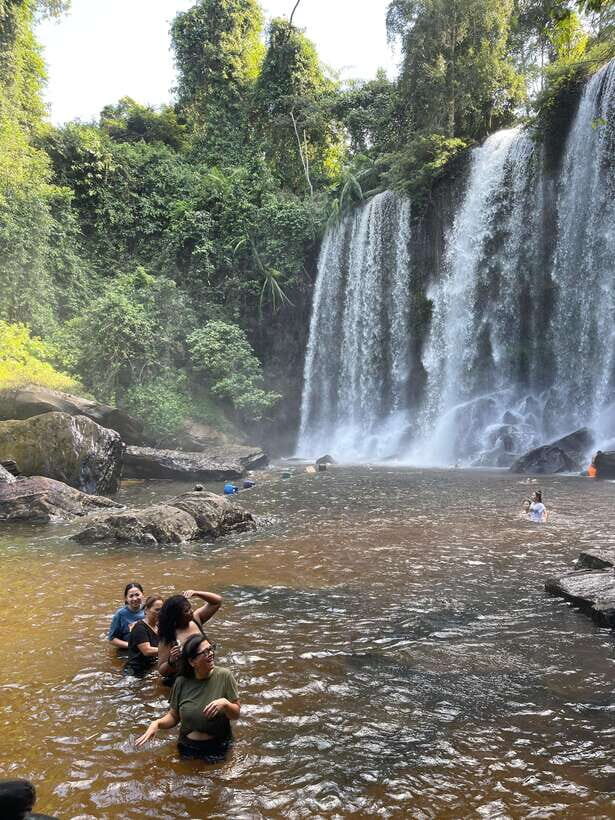
You’ll end the morning at Kulen Waterfall, a two-tier cascade surrounded by lush greenery. The tour description specifically notes you can swim in the cool pools, or relax and enjoy the nature.
I’d treat the waterfall like your reset button:
- swim if the water is inviting and you feel steady on the rock surfaces
- otherwise, just sit and watch the water move between the tiers
- use the time to recharge before the longer travel to Koh Ker
Note on budgeting: Kulen Mountain National Park entrance fee is not included (20$/pax). If your ticket is tied to a specific visit window, you’ll want to arrive ready to handle it smoothly at the site.
The River of a Thousand Lingas: what makes the carvings worth it
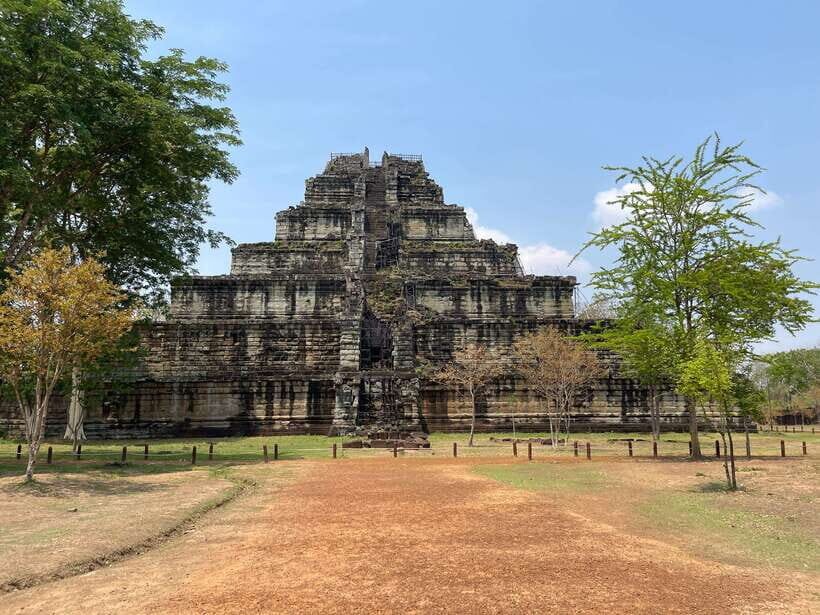
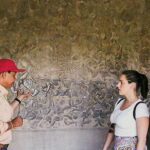
The name sounds poetic, but the real payoff is how the carvings function as a “readable” stone scene. When you’re standing at the riverbed, you’re not just seeing old rock—you’re seeing how symbols were placed into a natural setting.
Here’s what you can do to get more out of the visit:
- take a few minutes to scan slowly along the stone before zooming in with your camera
- watch for patterns that repeat, since the site’s identity is tied to the count and repetition
- don’t rush. This is one of those places where your brain needs time to switch from travel mode to looking mode
I like this stop because it’s less about grand pyramid silhouettes and more about detail. If you enjoy “small discoveries” (carvings, symbols, textures), Thousand Lingas is where the day quietly becomes special.
Koh Ker: climbing Prasat Thom and hunting the quiet temples
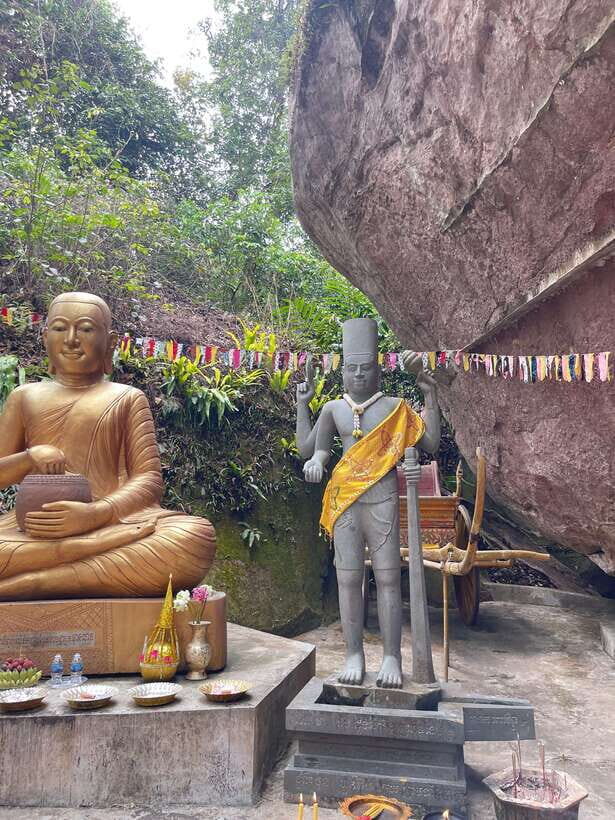
Then comes the big shift: Koh Ker, a 10th-century Khmer capital. The setting feels more rural and spread out, which is a big part of the charm. You’re moving away from the dense tourism energy and into an area where the temples feel like islands in countryside.
Prasat Thom: a seven-tier pyramid you actually climb
Your main anchor here is Prasat Thom, the tower-like pyramid temple. The tour has you climb up for views over the surrounding landscape. This is the classic Koh Ker “wow” moment, because the structure is tall and the view is your reward.
Practical considerations:
- wear shoes with grip because stairs and stone can be uneven
- give yourself time at the top for photos and a slow look in all directions
This climb is also a good change of pace after the forest trek. Your legs work, but in a focused, temple-style way.
The side temples: Prasat Pram and Prasat Neang Khmau
After Prasat Thom, you’ll keep exploring lesser-known structures that are easy to miss if you only stop at the headline site.
Two standouts:
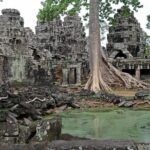
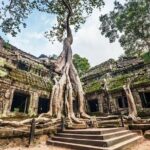
- Prasat Pram, famous for its towers wrapped with tree roots
- Prasat Neang Khmau, known for unique black sandstone structures
What makes these good: they’re visually dramatic without needing restoration gloss. The colors, textures, and the way nature and stone interact feel “real” rather than polished. It’s the kind of place where even a normal pause can turn into a great photo.
Lunch near Koh Ker: a local break that matters
Lunch is included as a traditional Khmer meal at a local restaurant near Koh Ker (1 hour). Since food isn’t included as a separate line item, this included meal is part of your value.
If you care about flavors beyond rice and noodles, this is where you can taste what “local lunch” means in a place far from the main tourist lanes.
Entrance fee note: Koh Ker temple entrance is not included (15$/pax). Budget for it so you’re not doing mental math while you’re trying to enjoy the site.
Beng Mealea: jungle temple ruins that feel like you walked into the past
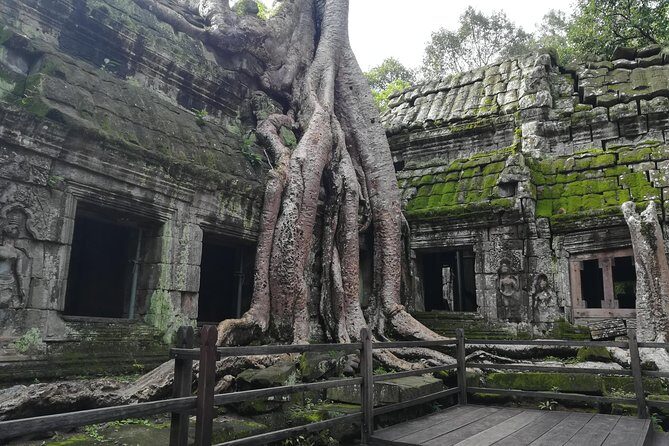
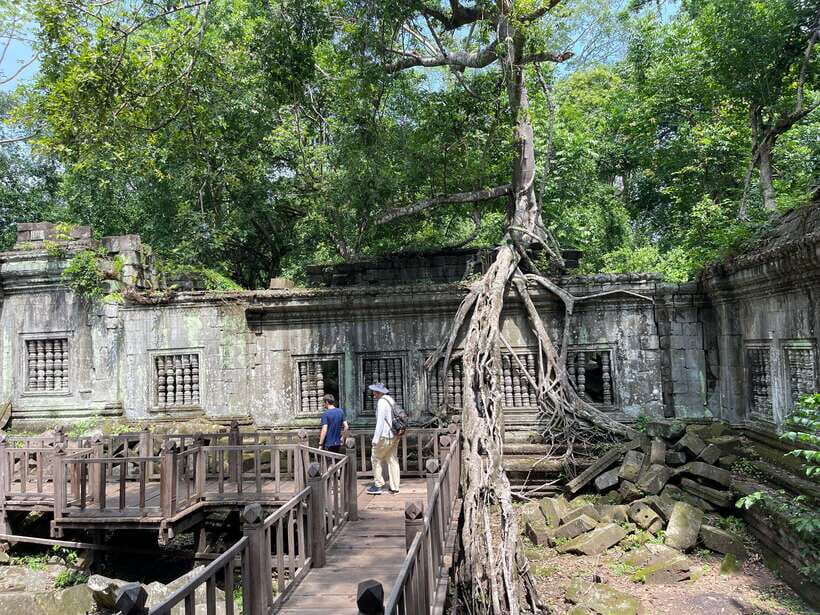
By the afternoon you’ll head to Beng Mealea, a sprawling temple complex built in the early 12th century. This place is described as largely unrestored, with thick vegetation taking over the structures. That combination is the whole point.
Walking routes, fallen stones, and hidden corners
You’ll explore with wooden pathways, and you may also climb through fallen stones to reach different galleries and sanctuaries. That means you’re not just looking from one spot—you’re moving through spaces that are partly collapsed and partly swallowed by plants.
It’s a different style of “temple visit” than the more restored sites:
- you’ll likely spend more time choosing where to step
- you’ll watch for shade, because trees cover a lot of the area
- you’ll get frequent photo moments because there’s almost always a new angle
If you’re the kind of traveler who likes to wander rather than checklist, Beng Mealea is a great match.
The natural re-claiming effect
What I love here is the visual story: how human carvings and building plans become the scaffolding for living growth. You don’t come away thinking about one building alone. You come away thinking about time—how fast nature can turn human construction into ruins you can walk through.
Beng Mealea entrance fee note: Beng Mealea entrance fee is not included (10$/pax) or you can use a valid Angkor Pass. If you already have the pass, ask how it will be applied on the day so you don’t pay twice.
Getting there from Siem Reap: timing, comfort, and energy management
This is a full-day ride. The schedule runs roughly 10–12 hours, with:
- pickup in Krong Siem Reap
- air-conditioned vehicle transport
- a long morning in Phnom Kulen
- midday travel to Koh Ker
- afternoon exploration at Beng Mealea
- return to Siem Reap
Comfort-wise, the included items matter more than you’d think. You’ll have bottled water and towels, and the vehicle is air-conditioned. On a day that includes walking on stone and navigating temple terrain, those small comforts are real value.
Group style: the tour notes that private group is available. One reason I like private options on this kind of itinerary is simple: you can pace yourself across climbs, carvings, and photo stops without feeling pulled along.
Also, the tour includes a professional English-speaking guide. Several guide details show up in the experience descriptions—friendly personality, strong temple knowledge, and the ability to keep the day organized. Some guides are also praised for being strong photographers, which can be useful if you want more than just point-and-shoot temple selfies.
Price and value: what the $77 covers, and what you must budget
The price is $77 per person for a 10–12 hour tour. The included value is solid for the amount you pack into one day:
- free hotel pickup and drop-off
- air-conditioned transportation
- English-speaking guide
- bottled water and towel(s)
- palm cake tasting
- sightseeing as described
- a traditional lunch near Koh Ker is included in the day plan
But here’s the part you should budget for clearly:
- Kulen Mountain National Park entrance fee: 20$/pax
- Beng Mealea entrance fee: 10$/pax (or covered by a valid Angkor Pass)
- Koh Ker temple entrance: 15$/pax
- food and drinks beyond the included lunch
- guide and driver tipping (not included)
If you assume you pay all listed entrances without an Angkor Pass, your day’s “known add-ons” total about $45 per person. That puts your realistic planning number around $122 per person, plus lunch is already handled but snacks/drinks usually aren’t.
My take: this isn’t a bargain tour in the $77-only sense. But it’s also not just a driver dropping you off at three sites. You’re paying for an organized route, an English guide, and the transport effort that makes Koh Ker + Beng Mealea realistic in one day.
What to bring for a smooth day (especially for waterfall and Beng Mealea)
The tour provides water and towels, so you’re not starting from zero. You’ll still want to think about practical wear-and-tear for stone and jungle terrain.
You might consider:
- comfortable walking shoes with grip (temple steps and Beng Mealea stones can be uneven)
- swimwear or something quick-dry if you plan to go into Kulen Waterfall pools
- a small day bag that keeps your camera protected when humidity and mud show up
- sun protection for the open-air climbs at Koh Ker and for the waterfall area
If you’re sensitive to heat and you’re not swimming, plan to take shade breaks at Beng Mealea. The area is covered in vegetation, but the sun will still hit you during travel and temple climbs.
Who should book this Koh Ker–Kulen–Beng Mealea day trip?
This tour makes the most sense if:
- you want to go beyond Angkor with a day that still feels well guided
- you like a mix of sacred sites, carvings, and nature
- you’re okay with a long day and want to maximize one trip window
- you enjoy photography and walking through atmospheric ruins
It’s also a good fit for many ages because the day is built around sightseeing and doesn’t require advanced climbing. That said, if you dislike uneven stone or you don’t enjoy walking on paths that can be broken or muddy, Beng Mealea may feel challenging.
Should you book it?
Yes, if you want a high-impact day with three very different experiences—Thousand Lingas, pyramid temples at Koh Ker, and jungle ruins at Beng Mealea—without the stress of coordinating multiple independent trips.
Book it with this mindset:
- You’re paying for organization and comfort, not just “admission to temples.”
- Do the math on entrance fees (and decide if your Angkor Pass will cover Beng Mealea).
- Start early if you can. The atmosphere at Phnom Kulen is part of the payoff.
FAQ
How long is the tour?
The tour lasts about 10–12 hours.
What is the price per person?
The listed price is $77 per person.
Is pickup and drop-off included?
Yes. The tour includes free pickup and drop-off at city hotels in Krong Siem Reap.
What’s included in the tour price?
It includes bottled water and towel, free pickup/drop-off, a professional English-speaking guide, sightseeing as described, air-conditioned transportation, and a local palm cake tasting. Lunch is also part of the day plan.
What entrance fees are not included?
Kulen Mountain National Park entrance is 20$/pax. Beng Mealea entrance is 10$/pax (or can be covered by a valid Angkor Pass). Koh Ker temple entrance is 15$/pax.
Does Beng Mealea accept an Angkor Pass?
Yes. The Beng Mealea entrance fee is listed as 10$/pax or covered with a valid Angkor Pass.
Can I swim at Kulen Waterfall?
The tour description says you can swim in the cool pools, or relax if you prefer.
What language is the guide?
The tour is offered with an English-speaking guide.