Big temple days, done smart.
This four-day Angkor-focused tour is built for people who want fewer crowds and better stories, not just photos. You’ll have an English-speaking guide (often named as Sa or Praim Hear) who connects Khmer temple design to Hindu and Buddhist meaning, while the schedule is managed to keep you away from the worst crush.
I especially love the way this route mixes the big names with the quieter ones. You get sunset at Angkor Wat and a full day plan that also includes Banteay Srei’s fine stonework, Beng Mealea’s “lost temple” feeling, and Tonlé Sap life at Kompong Phluk. One thing to plan for: entrance tickets and meals aren’t included, so you’ll budget extra beyond the tour price.
In This Review
- Key highlights to know before you go
- Why this Angkor-temple-and-country combo works
- Morning circuit inside Angkor: Bayon to Angkor Wat and sunset
- South Gate of Angkor Thom and Bayon Temple
- Ta Prohm: the tree-and-stone “jungle temple”
- Banteay Kdei: Jayavarman VII’s late-12th-century temple
- Angkor Wat: the main event (and the sunset payoff)
- Kbal Spean and Banteay Srei: carvings, pink stone, and small-time drama
- Kbal Spean: the river of 1,000 lingas
- Banteay Srei: the jewel in Angkorian art
- Eastern Mebon and Neak Pean: temple geometry in motion
- Preah Khan: the big monastic complex
- Beng Mealea’s lost-temple mood and the Roluos trio
- Prasat Beng Mealea: the lost temple feel
- Roluos Temples: Bakong, Lolei, and Preah Ko
- Kompong Phluk on Tonlé Sap: seeing Cambodia as more than stone
- Kompong Phluk: Tonlé Sap and everyday life
- Angkor National Museum: Buddha statues and relics in one gallery
- Artisans Angkor: craft time with a local NGO
- Price and what you really get for $202.57
- Guide-led temple understanding: what matters when you’re tired
- Practical tips so the days feel easier
- Should you book this 4-day Angkor Wat and Siem Reap lifestyle tour?
- FAQ
- What time does the tour start?
- Is pickup offered?
- Is this tour private?
- Are entrance tickets included?
- Are meals included?
- What does the tour include for comfort?
- Does the tour use a mobile ticket?
- Can I cancel and get a full refund?
Key highlights to know before you go
- English guide storytelling: Hindu and Buddhist themes explained in clear, human terms
- Crowd-smart scheduling: the guide tries to adjust timing to avoid peak visitor moments
- Temple variety in 4 days: from Angkor Wat and Angkor Thom to Banteay Srei and Preah Khan
- Beng Mealea’s explorer vibe: a more remote Angkor site that feels less staged
- Tonlé Sap reality check: Kompong Phluk gives context for everyday Cambodian life
- Comfort touches: air-conditioned vehicle plus cold water and cold towels
Why this Angkor-temple-and-country combo works
Angkor can feel like a blur: gates, towers, faces, stone, repeat. The value of this tour is that it doesn’t just throw you from site to site. It gives you time to slow down, understand what you’re seeing, and then see how daily life connects to the region.
The pacing also matters. You start early (the tour begins at 8:30 am), which helps you get better light and often fewer people. And you’re not stuck commuting between far-flung places by yourself. An air-conditioned vehicle handles the longer drives, and you get cold water and a cold towel when the day gets hot.
Another practical win: it’s a private tour, meaning your group is your group. That’s huge at Angkor, where the “follow the herd” vibe can get old fast. You’ll still be in a famous area, but your guide can keep things organized.
You can also read our reviews of more tours and experiences in Siem Reap.
Morning circuit inside Angkor: Bayon to Angkor Wat and sunset
Day 1 is the heavy-hitter day, but it’s structured in a way that makes the temples feel like a connected story.
South Gate of Angkor Thom and Bayon Temple
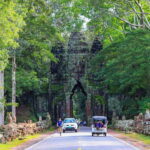
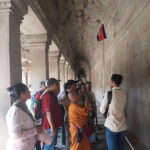
You begin at the South Gate of Angkor Thom, then step into Bayon Temple. This is where the famous stone faces take over. Bayon originally had 54 towers and 216 faces of Avalokesvara. Standing close, it’s not just a pretty design—it’s a visual reminder that Khmer kings wanted you to feel watched, guided, and judged, all at once.
You’ll get about 2 hours here, which is enough time to wander without feeling rushed. It’s also a good start because the temple layout gives you a strong sense of scale early in the day.
Ta Prohm: the tree-and-stone “jungle temple”
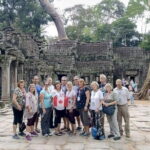
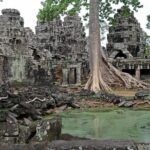
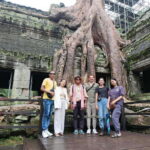
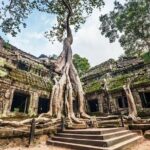
Next comes Ta Prohm, often called the jungle temple or tree temple because of the huge roots gripping the ruins. This stop is about 2 hours, and it’s a very different mood from Bayon. Bayon feels ceremonial and formal. Ta Prohm feels like time won a slow argument against stone.
Tip: Ta Prohm is popular, so expect some crowding. Still, a guide helps you focus on details instead of just standing there waiting for the perfect shot.
Banteay Kdei: Jayavarman VII’s late-12th-century temple
Then you move to Banteay Kdei, built in the late 12th century by King Jayavarman VII. This temple takes patience. It’s less famous than Angkor Wat, but that’s exactly why it works. You see more texture, more quiet corners, and less of the “single-file tourist” energy.
You’ll spend about 1 hour here. It’s a good breather between the biggest sights.
Angkor Wat: the main event (and the sunset payoff)
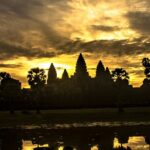
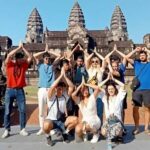
Finally, you reach Angkor Wat, one of Southeast Asia’s most important archaeological sites. It was built in the early 12th century by King Suryavarman II and dedicated to Vishnu. You’ll have about 3 hours for this stop.
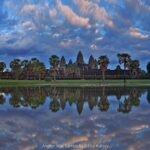
The best part is the plan for sunset over Angkor Wat and surrounding temples. Golden hour changes everything—stone details pop, and the complex stops looking like a museum and starts looking like a living place again.
A thought to keep in mind: Angkor Wat days are physically demanding. Even with a guide managing the schedule, you’ll be walking on uneven surfaces.
Kbal Spean and Banteay Srei: carvings, pink stone, and small-time drama
Day 2 turns the volume down and the meaning up.
Kbal Spean: the river of 1,000 lingas
You start with Kbal Spean Waterfall and the river of 1,000 lingas. This is one of those Angkor-adjacent places that feels more local than “theme park famous.” Under the water, there are carvings tied to Hindu gods—specifically Vishnu and Brahma.
You’ll likely have around 4 hours at this stop, so plan for a full morning block. The time matters here: you want space to find viewpoints, take breaks, and not rush through carvings that you’ll miss if you speed.
Banteay Srei: the jewel in Angkorian art
Then comes Banteay Srei, about an hour from Siem Reap by drive. It’s famous for a reason: the temple is carved from pinkish stone, and it’s considered the jewel in the crown of Angkorian art. You’ll spend about 2 hours.
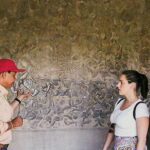
What I like about Banteay Srei is the feeling that the details were made for close viewing. It’s the kind of place where a good guide turns “cool carvings” into “I get why they look like that.”
Eastern Mebon and Neak Pean: temple geometry in motion
Back toward the Angkor area, you visit:
- Eastern Mebon (about 1 hour), a temple-mountain-like structure
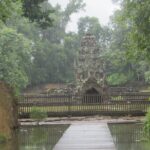
- Neak Pean (about 1 hour), rising in three levels with five brick towers, located on an artificial island in the middle of the last baray (ancient water reservoir)
Neak Pean’s theme is balance and symbolic water. You’ll feel the design logic once you’re there and your guide points out the layout.
Preah Khan: the big monastic complex
Your day ends with Preah Khan, described as a huge and highly explorative monastic complex. It’s about 1 hour.
This is where Angkor starts to feel less like one “royal masterpiece” and more like an entire world—temples as institutions, not just landmarks.
Beng Mealea’s lost-temple mood and the Roluos trio
Day 3 is for people who want Angkor without the constant spotlight.
Prasat Beng Mealea: the lost temple feel
You head to Beng Mealea, about 70 kilometers northeast of Siem Reap. It’s called the lost temple of Angkor for a reason: it feels more secluded and more wild. You get an “explorer” vibe, with ruins that don’t look smoothed into perfect postcard angles.
You’ll spend about 4 hours here. That time helps because Beng Mealea is the kind of site where you’ll keep noticing new angles the longer you wander.
Roluos Temples: Bakong, Lolei, and Preah Ko
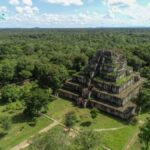
After that, you visit the Roluos group: Bakong, Lolei, and Preah Ko. They’re close together—about 11 kilometers (6.8 miles) southeast of Siem Reap—and cover around a three-kilometer area.
You’ll have about 3 hours. This is a nice contrast day: Beng Mealea gives you the rough-and-remote feeling, while Roluos gives you clearer structure and an easier sense of what each temple is trying to do.
Kompong Phluk on Tonlé Sap: seeing Cambodia as more than stone
Day 4 is a palate cleanser. You still stay in the Angkor orbit, but you leave the temple complex vibe behind.
Kompong Phluk: Tonlé Sap and everyday life
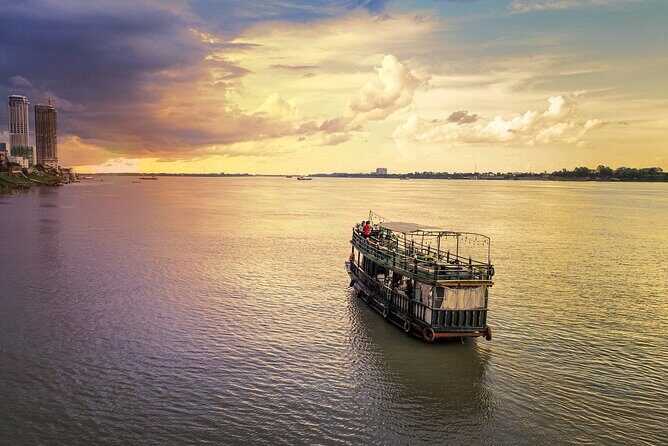
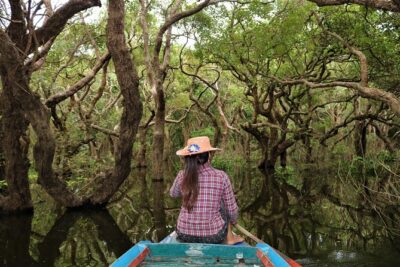
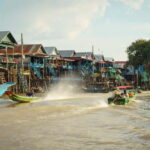
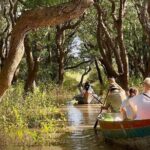
You go to Kompong Phluk, on the Tonlé Sap lake—noted as the biggest fresh water lake in Southeast Asia. The drive is about 45 minutes from Siem Reap.
You’ll spend around 4 hours, and the goal here is practical: get an insight into real Cambodian life rather than only historical monuments. A place like this helps you understand why the region’s water systems, agriculture, and community patterns mattered to rulers and continue to matter now.
Angkor National Museum: Buddha statues and relics in one gallery
Then you visit the Angkor National Museum for about 1 hour. It’s described as having one of the most immense collections of Buddha statues and relics, all presented in one gallery. This stop is valuable because it gives context for the religious shifts and artistic styles you’ve been seeing in temple carvings.
Artisans Angkor: craft time with a local NGO
Finally, you stop at Artisan D’Angkor (Artisans Angkor), a local NGO working to improve life for disadvantaged Cambodians from rural areas. You’ll enter their workshop and get to craft your own stone carving.
This is the kind of finish that makes the whole trip feel more personal. Temples are one thing. Making something with your hands is another.
Price and what you really get for $202.57
The tour price is $202.57 per person for approximately 4 days. That’s not just “transport to temples.” You’re paying for:
- An English-speaking guide
- Air-conditioned vehicle
- Cold water and cold towel
- A private format for your group
- A schedule designed to reduce worst crowd timing
- Mobile ticket support (so you’re not always juggling paper)
But you should budget for the big two add-ons:
- Entrance tickets are not included
- Meals are not included
That’s common for Angkor tours, but it changes value. If you eat cheaply and plan your temple budget ahead of time, the tour can feel like a smart deal. If you want full board included, you may feel surprised by the extra spend. Either way, knowing the split early keeps you from doing mental math while your group is already waiting outside in the heat.
Guide-led temple understanding: what matters when you’re tired
The best tours aren’t only about the sites—they’re about the explanations that help you “see” what’s in front of you.
Here, the guide’s job is to connect temple design to meaning, and to share historical facts and anecdotes in plain language. The temple themes you’ll hear about include both Hindu and Buddhist history. That matters at places like Bayon (Avalokesvara faces), Kbal Spean (Vishnu and Brahma carvings), and Preah Khan (monastic complex).
I also like that the guide tries to manage the schedule to avoid crowds “as much as possible.” At Angkor, that’s the difference between a satisfying walk and a stressful queue.
And yes, these days can feel intense. You’re out from morning into evening across multiple major sites. The car rides and cold towel help, but you’ll want to pace yourself.
Practical tips so the days feel easier
A few things make a huge difference on this kind of tour:
- Plan for sun and walking. Angkor stone heats up fast, and you’ll be moving between temples daily.
- Bring a hat and sunscreen. Even if the car has AC, you’ll still be out in open areas.
- Dress respectfully at temples. You’ll be visiting Hindu-Buddhist sites, so cover shoulders and knees.
- Keep cash for entrances and meals. Entrance fees and food aren’t included, and you don’t want to scramble mid-day.
- Use the downtime. When the group is at a stop for 1 to 4 hours, it’s okay to sit for a few minutes. That’s when the details start making sense.
If you want photos, aim for early morning light at the big sites and late-day light for Angkor Wat sunset. Your guide’s crowd timing plan will help you catch better angles too.
Should you book this 4-day Angkor Wat and Siem Reap lifestyle tour?
Book it if you want:
- A guide-led Angkor experience that explains what you’re seeing
- A balance of famous temples plus quieter, more “wandering” sites like Beng Mealea
- A real look at Cambodia beyond temples with Kompong Phluk on Tonlé Sap
- A private setup with pickup and comfort touches like cold water and cold towels
Skip it (or at least shop carefully) if you strongly prefer:
- Meals and all entrance fees to be included in one price
- Low-walking days with minimal movement between multiple stops
If you’re the type who likes to understand a place, not just check boxes, this itinerary is a strong match. You’ll come away with a better sense of how the temples, water, religion, and daily life connect across the region.
FAQ
What time does the tour start?
The tour start time is listed as 8:30 am.
Is pickup offered?
Yes, pickup is offered.
Is this tour private?
Yes. It’s described as private, with only your group participating.
Are entrance tickets included?
No. All entrance ticket fees are not included.
Are meals included?
No. Meals (breakfast, lunch, and dinner) are not included.
What does the tour include for comfort?
You get an air-conditioned vehicle, plus cold water and a cold towel.
Does the tour use a mobile ticket?
Yes, mobile ticket is listed as a feature.
Can I cancel and get a full refund?
Yes, free cancellation is available. You can cancel up to 24 hours in advance for a full refund.