A morning in Phnom Penh can hit hard. This private City Highlights and the Killing Fields tour is a smart mix of famous sights and heavy history, guided end-to-end by Sam Ang, a licensed English-speaker who explains what you’re seeing in plain language. You’ll start early at 8:00am to beat heat and crowds, then move across town with private transport.
I love the way the tour pairs iconic landmarks like the Royal Palace with real-world context at Tuol Sleng (S21) and Choeung Ek. I also like that it’s genuinely convenient: hotel pickup and drop-off, bottled water, and a guide who keeps the day organized. One consideration: the Genocide Museum (Tuol Sleng) and the Killing Fields (Choeung Ek) are not suitable for most children, and they’re emotionally intense for anyone.
This is one of those tours where you don’t just check boxes. You get a guided path through Phnom Penh’s most important places—then a calmer finish at markets and Wat Phnom. If you’re sensitive to graphic, grim stories, plan your day around this tour and bring the right mindset (and water, especially since it’s outdoors).
In This Review
- Key highlights worth your attention
- A 7-hour Phnom Penh loop with Sam Ang at the helm
- Royal Palace and Independence Monument: from riverside power to modern identity
- Tuol Sleng (S21) Genocide Museum: prison history with guided clarity
- Choeung Ek Killing Fields: how the story lands after the prison
- Central Market (Phsar Thmei) and Wat Phnom: a needed reset for your head
- Dress code rules you’ll want to know before you go
- Timing, heat, and what a smooth private day feels like
- How much is $100 really worth in Phnom Penh?
- Who should book this tour (and who should rethink it)
- Should you book City Highlights and the Killing Fields tour?
- FAQ
- What’s the duration of the tour?
- Is pickup included?
- Where does the tour start and end?
- What’s included in the price?
- What’s not included?
- Is this tour private?
- Is the tour suitable for children?
- Is there a dress code for the sites?
Key highlights worth your attention
- Sam Ang’s storytelling: a licensed English-speaking guide who connects what you see to Cambodia’s lived reality
- Early 8:00am start: less heat, fewer crowds, and smoother site transitions
- Tuol Sleng (S21) + Choeung Ek: two key stops that explain how the Khmer Rouge prison system worked and what happened afterward
- A balanced itinerary: temples and palace mornings, then a reset at Central Market and Wat Phnom
- Private logistics that matter: hotel pickup/drop-off and private transport for a smoother day than public buses
A 7-hour Phnom Penh loop with Sam Ang at the helm
If Phnom Penh is on your list, you’ll quickly realize it’s not only about pretty temples. It’s also about understanding how Cambodia got to where it is today—and this tour tackles that head-on. The whole day runs about 7 hours, moving steadily from riverside grandeur to prison history, then back into the everyday pulse of the city.
What makes this experience work is the human layer. You’re not just following signs and plaques. Your guide is Sam Ang, a Khmer local who’s licensed and speaks English. His job here isn’t to overwhelm you with details—it’s to give you context as you walk from one place to the next, so the meaning lands in the right order.
You’ll also feel the pace is designed for a real day, not a rushed checklist. The schedule includes short and longer stops, plus a market and temple finish that lets your brain switch gears after the heavy stuff.
One more practical win: this is a private tour, so it’s just your group in the vehicle. That means you can ask questions without waiting your turn, and you’re not forced into someone else’s pace.
You can also read our reviews of more city tours in Phnom Penh
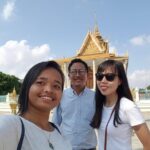
Royal Palace and Independence Monument: from riverside power to modern identity
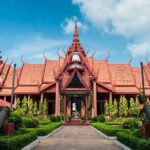
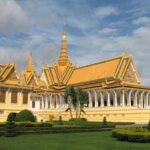
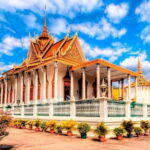
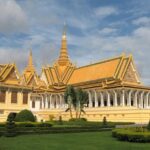
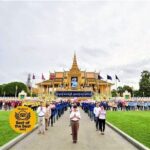
The first major stop is the Royal Palace, on the riverside and filled with ornate, colorful buildings with golden roofs and towering spires. Even if you’ve seen royal architecture elsewhere, this one feels distinct because it’s designed to communicate status—scale, materials, and symmetry all do their job.
Expect about 1 hour here. Admission isn’t included, so you’ll want to budget extra for tickets. The upside is that you’re not stuck wandering. With a guide, you’re more likely to understand what you’re looking at—why certain spaces matter, how the palace fits into Phnom Penh’s layout, and how it connects to Cambodia’s story of rule and identity.
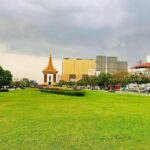
Right after the palace, you get a quick breather at the Independence Monument. It’s a free stop, and it takes about 15 minutes. The monument was built in 1958 to commemorate Cambodia’s independence in 1953 from its colonial past under France.
This short stop is more than a photo stop. It works as a mental reset between the palace and the history ahead. You’re shifting from symbolism of monarchy to symbolism of nationhood, and you can feel how Phnom Penh tries to hold multiple layers of meaning in the same skyline.
Tuol Sleng (S21) Genocide Museum: prison history with guided clarity
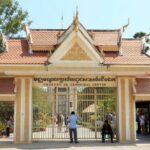
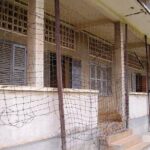
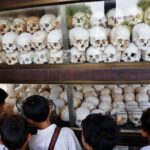
Then the tour turns serious at Tuol Sleng Genocide Museum, also known as S21. This is a former secondary school that the Khmer Rouge turned into Security Prison 2. The site records the Cambodian genocide committed from 1975 to 1979.
You should expect about 1 hour 30 minutes at S21. Admission isn’t included. But the main value here isn’t the ticket—it’s the guided explanation that helps you make sense of what you’re seeing. Prison museums can be overwhelming, especially if you’re unsure where to look or what the images and rooms are trying to communicate. A good guide helps you follow the logic of the place.
Here’s the part to plan for: the subject is grim. The tour doesn’t sugarcoat it, and it’s not for everyone on an emotional level. If you’re traveling with anyone who’s sensitive to graphic details or who gets overwhelmed easily, this is where you should slow down mentally before you arrive.
One small detail that makes a difference: your guide’s tone matters. Based on what I found most helpful in this style of tour, a guide who can explain the purpose of each space helps you avoid the feeling of being lost. Sam’s approach stands out for making the history understandable, and that’s important when the topic is heavy.
Also: this isn’t a short “pass through.” It takes time to absorb the reality of what happened here, and the extra guided time lets you stay grounded.
Choeung Ek Killing Fields: how the story lands after the prison
After S21, you head to the Choeung Ek Genocidal Center, commonly called the Killing Fields. The tour frames this as sites around Cambodia where, altogether, about 1.3 million people were killed and buried under the Khmer Rouge leadership, including Prime Minister Pol Pot.
You’ll spend about 1 hour 30 minutes here. Admission isn’t included. Unlike S21—which is about a transformed school and a prison system—Choeung Ek is about what followed: the scale of death, the aftermath, and the way memorials keep memory alive.
This stop is emotionally heavier than most people expect, and it can also be physically hard if you’re sensitive to heat outdoors. You’ll likely be walking and standing in open spaces. If you’re the type who handles history by asking lots of questions, bring that energy. A guide can help you understand what the memorials represent without turning it into a confusing lecture.
The best part of having S21 and Choeung Ek in the same day is the connection you feel between them. You don’t just see two separate tragic sites. You understand them as linked chapters of the same system and timeline. That connection is the difference between a sad visit and a meaningful one.
And yes, the day becomes a lot. The tour’s later stops at the market and temple are not random. They function like a controlled return to normal life.
Central Market (Phsar Thmei) and Wat Phnom: a needed reset for your head
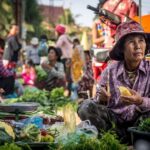
Once you’ve processed the heavy history, you get a chance to breathe at Central Market (Phsar Thmei). This takes about 45 minutes and admission is free.
Central Market is an art deco building shaped like a cross with a central dome. The four wings are filled with stalls, including jewelry and coins—though honestly, the main value for you is that it feels like Phnom Penh in everyday motion. It’s where you can slow down, shop if you want, and watch local life continue after everything you just saw.
If you’re doing this tour as part of a longer Cambodia trip, this market stop helps your brain put the day’s events back into context: Phnom Penh is not only monuments and memorials. It’s also commerce, craft, and routine.
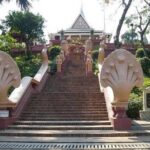
Then you end with Wat Phnom, a Buddhist temple on a man-made hill covered with trees on the north side of the city. You’ll spend about 1 hour. Admission isn’t included, but the pay-off is tranquility. This is the kind of place that helps your body exhale after a hard morning.
Two practical notes. First, the temple and palace stops have a clothing requirement. Second, check how your comfort level changes after S21 and Choeung Ek—sitting, shade, and pace matter here.

Dress code rules you’ll want to know before you go
This tour includes palace and temple visits, and those sites have rules you should follow. The guidance is simple but strict: at temples, religious sites, and the Royal Palace, you need your shoulders, back, and legs above the knee covered.
Plan for that. Bring light layers that are easy to move in, and avoid anything too short or sleeveless. If you forget, you might end up dealing with borrowing or buying something on the spot, and that can steal time you’d rather spend on the tour.
This matters even more because the day starts at 8:00am, and you’re out moving between locations. You want clothes that keep you comfortable in real Cambodian conditions without breaking the rules.
Timing, heat, and what a smooth private day feels like
The itinerary is built around a big practical idea: start early. You begin at 8:00am at the Independence Monument area on Norodom Blvd, and the day is planned to beat the crowds and the heat of the sun.
That early start is more than a convenience. It changes how you experience the day. Walking through palace grounds and temple spaces is easier when you’re not already exhausted. And when you reach the heavier sites, you’re less likely to feel physically drained before you’re emotionally ready.
Private transport also keeps friction low. You’re not juggling buses or trying to figure out transfers while your brain is already working hard. Your tour includes private transportation and hotel pickup and drop-off, which means you can start and finish without turning the day into logistics.
Included with the experience is bottled water and a small souvenir. Those extras are small, but in Phnom Penh’s heat they matter. They also help you avoid the “I forgot my water” problem that can throw off a whole day.
How much is $100 really worth in Phnom Penh?
At $100 per person, this isn’t a budget “hop-on-hop-off” style tour. But it’s also not priced like a luxury retreat. In my view, the value comes from the combination of three things you usually have to pay for separately:
- A private, English-speaking guide (Sam Ang)
You’re getting context at major sites that can be hard to interpret on your own.
- Hotel pickup and drop-off + private transport
That’s real time and stress savings, especially with an itinerary that moves around the city.
- A full day structure
You’re going from Royal Palace and independence symbolism to S21 and Killing Fields, then back to Central Market and Wat Phnom.
Admission tickets are not included at some stops, like the Royal Palace and the genocide-related sites. So your total out-of-pocket will be higher than $100 when you add tickets and any personal purchases at the market.
Still, for many visitors, the private guide part is what justifies the price. If you’ve ever visited a prison museum or memorial and wished you understood what you were looking at, you’ll feel why guided time is money well spent here.
Also, this tour has strong demand—often booked about 54 days in advance—so if you’re set on a particular date, don’t wait until the last minute.
Who should book this tour (and who should rethink it)
This tour is a good fit for solo travelers, groups, and families, but with one major caveat: the Genocide Museum and Killing Fields are not suitable for most children.
So if you’re traveling with kids, be honest about their emotional readiness and maturity for this kind of content. If you’re unsure, it may be safer to choose a lighter city highlights option that avoids the prison and killing fields.
On the other hand, if you’re an adult traveler—or older teens—and you want a guided, structured visit to Phnom Penh’s most important sites, this works. The day is long enough to be meaningful, and the private setup makes it easier to keep questions focused rather than getting overwhelmed by the crowd.
It also helps if you care about understanding the “why,” not only the “what.” This tour is built for that.
Should you book City Highlights and the Killing Fields tour?
Book it if you want a one-day plan that connects Phnom Penh’s major landmarks with its most difficult, historically important reality—and you’re comfortable handling serious subject matter. The early start, private transport, and guided pacing with Sam Ang make it feel manageable even when the content isn’t.
Skip or modify your plan if you’re traveling with younger kids, or if you know this kind of history will hit you too hard right now. In that case, consider focusing on palace, monument, market, and Wat Phnom only.
If you do book, go in with a simple strategy: wear the right clothes for temples and the palace, bring water, and give yourself permission to feel what you feel. This is not a casual sightseeing day. It’s an informed day.
FAQ
What’s the duration of the tour?
The tour lasts about 7 hours.
Is pickup included?
Yes. The tour offers hotel pickup and drop-off, plus private transportation.
Where does the tour start and end?
It starts at Independence Monument (Norodom Blvd, 41) and ends back at the meeting point.
What’s included in the price?
Included items are bottled water, a private English-speaking tour guide, private transportation, hotel pickup/drop-off, and a small souvenir.
What’s not included?
Admission tickets are not included for stops such as the Royal Palace and the genocide-related sites. Lunch, snacks, and drinks are also not included.
Is this tour private?
Yes. It’s a private tour/activity, meaning only your group participates.
Is the tour suitable for children?
The Genocide Museum and Killing Fields are not suitable for most children.
Is there a dress code for the sites?
Yes. At temples, religious sites, and the Royal Palace, you should have shoulders, back, and legs above the knee covered.