REVIEW · SIEM REAP
Angkor Wat Tour by Tuk-Tuk with English Speaking Driver
Book on GetYourGuide →Operated by Angkor Pro Travel · Bookable on GetYourGuide
Early morning temple light makes the day.
This Angkor Wat tuk-tuk tour is interesting because it’s built for timing and taste, not a factory schedule: you can tailor your start, pick-up, and how long you spend at each stop, and aim for the best sunrise position. I like that you get a private tuk-tuk with an English-speaking Cambodian driver, and I also like the option to work your day around sunrise or sunset without extra charge. One drawback to keep in mind: your temple pass isn’t included, and the tour listing says a guide for inside the temples may not be part of every package.
The day is also structured in a way that makes sense for first-timers and repeat visitors. You’ll hit Angkor Wat, then Angkor Thom’s big centerpiece at Bayon, then Ta Prohm, with later stops that range from unfinished pyramids to places where tree roots are part of the scenery. If you already visited Angkor before, I think this is the sort of outing where you can slow down and soak it in rather than just ticking boxes.
Finally, expect a handoff that works well in real life: your driver can explain and answer questions as you move between sites, but you won’t automatically have someone guiding inside every temple. If you want deep, inside-the-walls interpretation, you’ll want to confirm whether your chosen package includes an English-speaking tour guide for the temple interiors.
In This Review
- Key Things That Make This Tour Worth Your Time
- Private Tuk-Tuk Value: What You Really Get
- Pickup in Siem Reap: How the Day Starts Smoothly
- Angkor Wat at Sunrise: Timing and Views That Matter
- Angkor Thom and Bayon: The Faces You Can’t Stop Looking At
- Ta Prohm: Where the Jungle Changes the Temple
- Ta Som and Banteay Kdei: Different Temple Moods in a Small Window
- Ta Som
- Banteay Kdei
- Pre Rup and Sunset: The Best Way to Close the Day
- Two Route Styles: Main Circuit or a Further-Out Loop
- Option 1: Main circuit with famous centers
- Option 2: Further-out temples and Bakheang Mountain sunset
- Price and Tickets: The Budget Reality Check
- The Driver vs. Inside Guidance: What to Expect at Each Stop
- Who This Tuk-Tuk Tour Fits Best
- Quick Decision Guide: Should You Book This Tour
- FAQ
- What does the tour include?
- How long is the Angkor Wat tuk-tuk tour?
- Do I need to buy an entry ticket for Angkor?
- Is food included?
- Does the driver guide inside the temples?
- Can I choose a sunrise or sunset plan?
Key Things That Make This Tour Worth Your Time
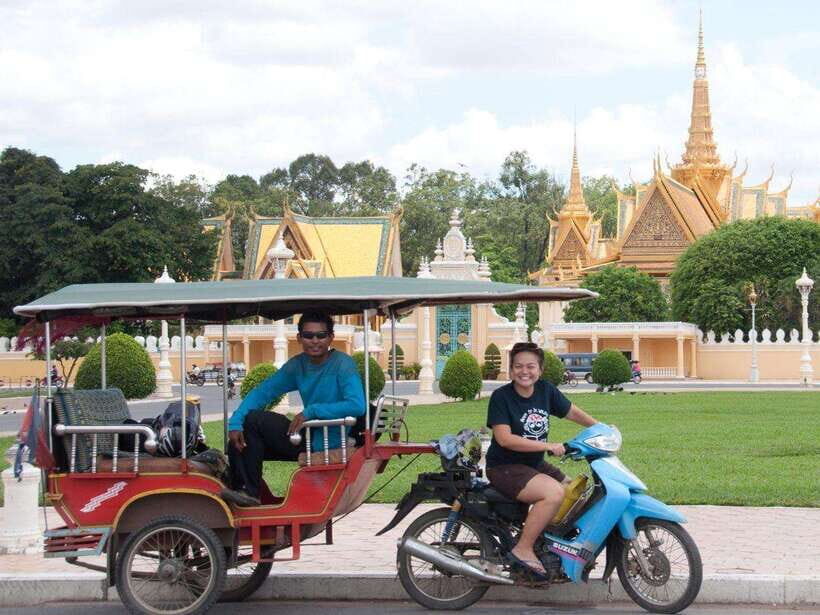
- Flexible routing and timing, so you can choose your sunrise/sunset plan and your pace
- English-speaking driver who’s comfortable answering questions at each stop
- Big hitters in the Angkor Wat complex, with smart sequencing through Angkor Thom and Bayon
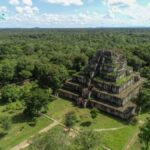
- Ta Prohm and the jungle takeover, plus other styles like the unfinished pyramid at Ta Keo
- Two route styles (main circuit or a longer loop with sunset from Bakheang Mountain)
- A built-in option to finish where you want, including dropping you back at your hotel or another spot
Private Tuk-Tuk Value: What You Really Get
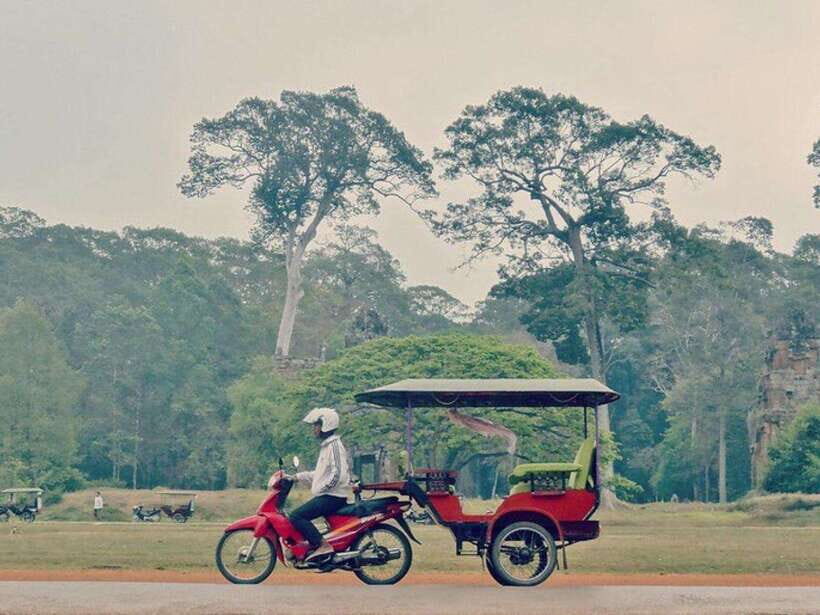
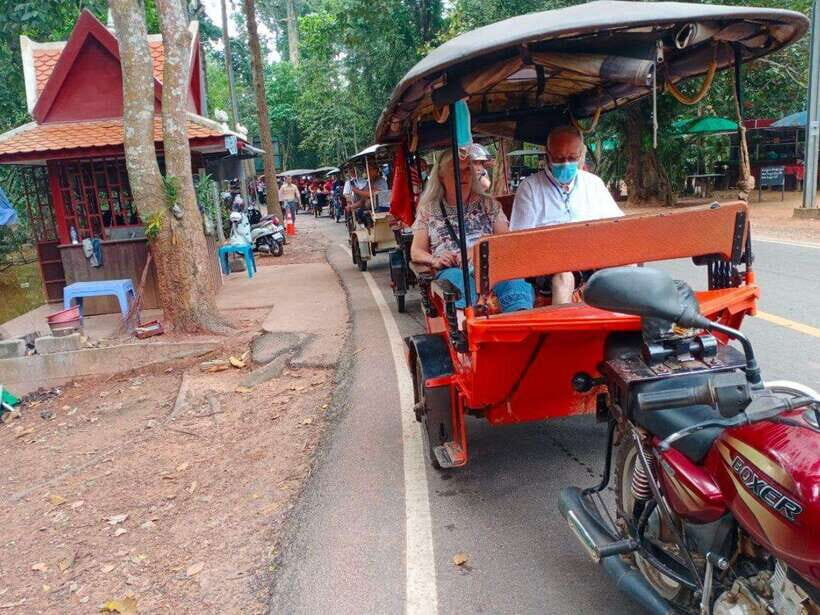
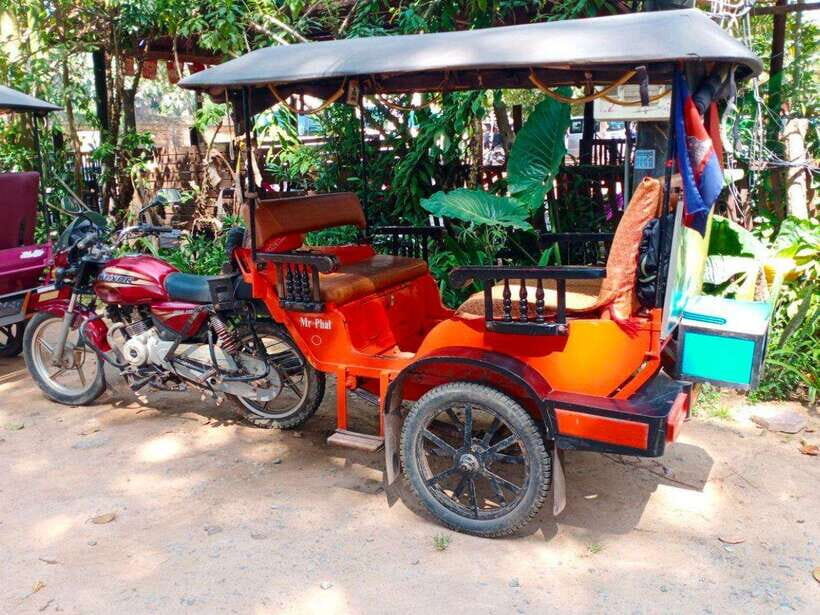
For $15 per person, this tour’s value isn’t just that you see famous temples. The real win is control. You’re not stuck with a rigid bus tour where you’re shepherded from one viewpoint to the next. Instead, you get round-trip private transfers, hotel pickup and drop-off, and your driver can adjust the plan so the day fits you.
The tour is listed as private with a tuk-tuk, and it also notes a small-group limit of up to 15. In practice, that usually means you’re getting the benefit of a tuk-tuk’s flexibility while still staying within a manageable group size. That matters at Angkor because crowds and photo lines can change minute to minute, especially around sunrise.
Also, they provide chilled bottled water, which sounds small until you’re walking temples in the heat and humidity. You’ll also want the ability to pause when something catches your eye—this tour is set up for that by offering a customizable itinerary and a finish time that works for you.
One thing I’d plan around: this is a day outdoors with several temple transitions. Even if you start at an ideal time for sunrise, you’re still covering multiple sites. Think about what kind of day you want: a long, relaxed temple morning or a more efficient hit-and-go route.
You can also read our reviews of more tours and experiences in Siem Reap


Pickup in Siem Reap: How the Day Starts Smoothly
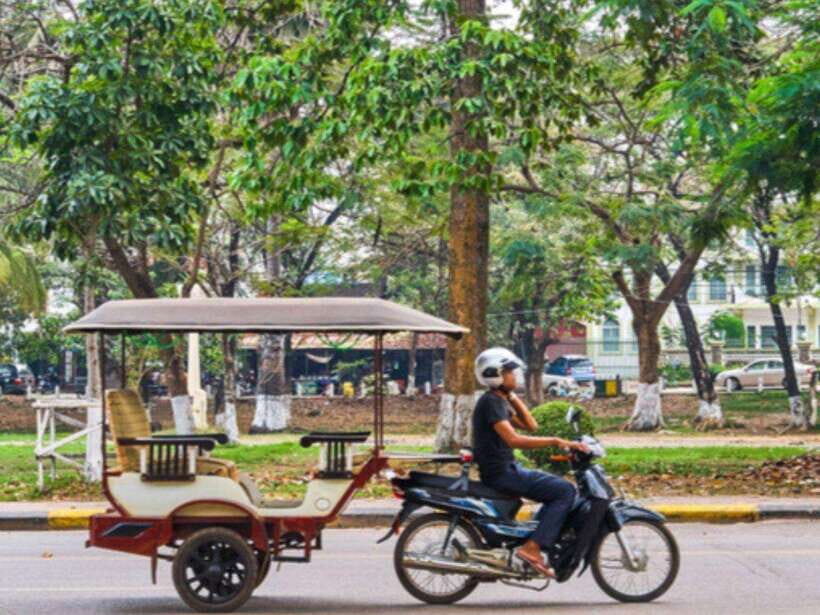
Pickup is included, and the exact time depends on where your hotel is located. You’ll start from Krong Siem Reap, and you’ll ride a tuk-tuk for about 30 minutes before you begin temple time.
That first half hour is more than transportation. It’s where you can get your bearings, and it’s also where your English-speaking driver can help you understand what you’ll see next. If you’re doing sunrise, this early travel time becomes part of the “mission”: you’re not sprinting to the parking area at the last second.
If you care about timing—especially sunrise—this matters. Sunrise at Angkor rewards patience. You want to arrive early enough to be in the right viewing area and not spend the best light hunting for a spot.
Angkor Wat at Sunrise: Timing and Views That Matter
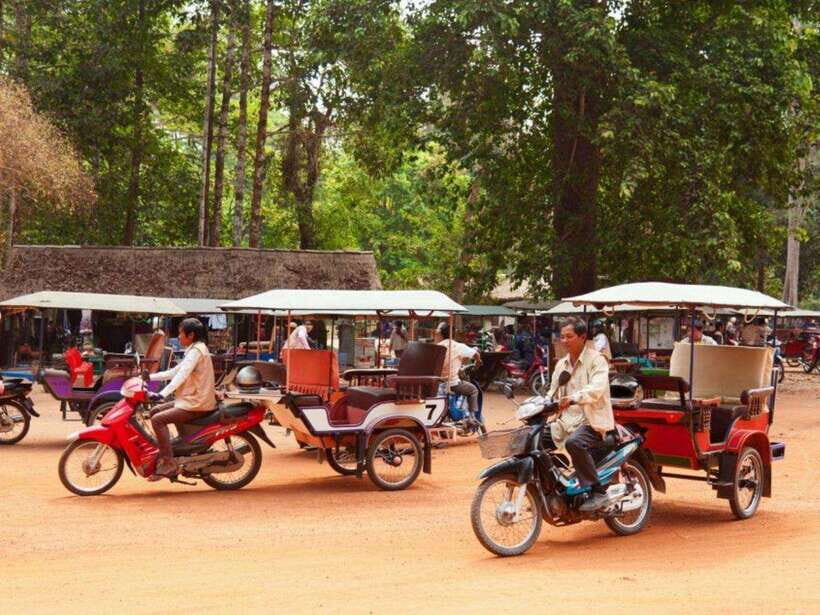
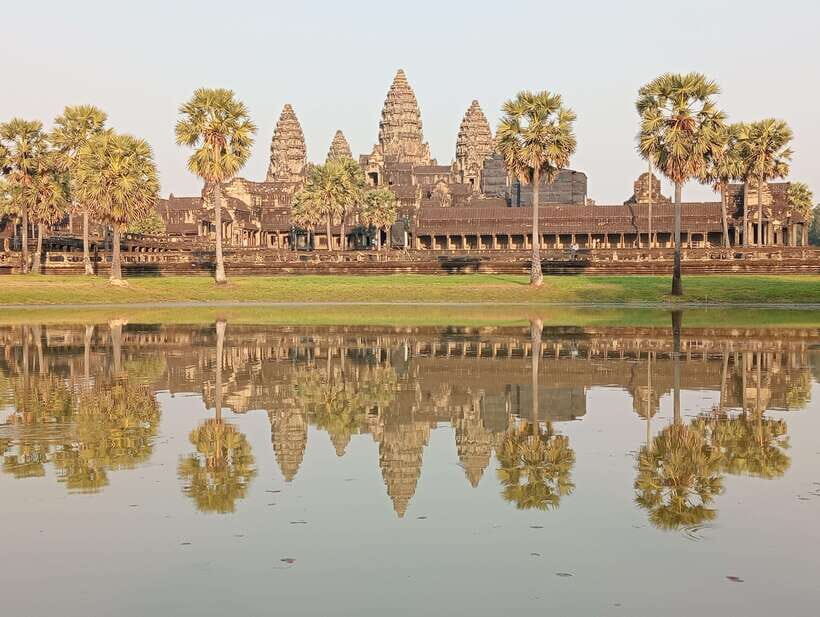
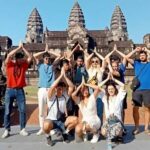
Angkor Wat is the headline, and this tour treats it that way. You’ll spend about 2 hours at Angkor Wat, with sightseeing and a guided experience.
What makes this stop work well is the explicit focus on timing. The highlight calls out arriving at the perfect position and time for a world-famous sunrise. That’s not just a marketing line. In real life, the difference between arriving too late and arriving at the right moment can change your photos, your atmosphere, and even how long you have before crowds thicken.
At Angkor Wat, you’ll also get the feel of a place designed to be experienced in layers—causeway approaches, courtyards, and the visual rhythm of carved stone. The tour framing emphasizes Hindu and Buddhist art, so it’s not just about the architecture. You’re being pointed toward the cultural story expressed through the carvings and religious themes.
A practical consideration: the tour listing says your driver won’t be the on-site guide inside the temples. So if you’re hoping for a close explanation of symbolism, histories behind specific carvings, or meaning of particular iconography, you’ll want to choose a package that includes an English-speaking tour guide for inside the temples (if that option is available to you).
Angkor Thom and Bayon: The Faces You Can’t Stop Looking At
Next up is Angkor Thom, with about 1 hour for visits, sightseeing, and a guided component.
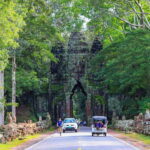
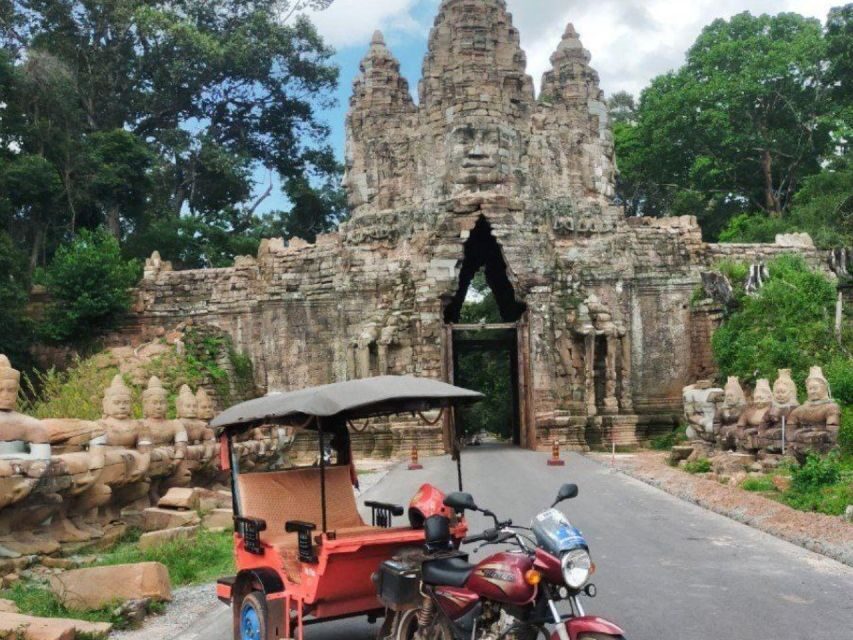
Angkor Thom is less famous than Angkor Wat, but it’s huge in ambition and scale. The real star here is Bayon, described as being lined with countless carved faces that look out from the jungle forests around it. Even if you’ve seen pictures, standing inside the atmosphere of Bayon is a different deal—the expressions and repetition create a visual intensity that photographs don’t quite match.
This is also a good segment of the day for your attention to slow down. Bayon isn’t a checklist site; it’s a site you feel. You’ll want a minute to step back, look at the overall layout, then return to the detail work on the faces and surrounding carvings.
The one “watch out” point: with only about an hour here, it’s easy to feel slightly rushed if you’re the type who reads every carving. If that’s you, use the tour’s flexibility. Ask your driver to let you spend a little more time here, especially if you’re getting extra time on the back end.
Ta Prohm: Where the Jungle Changes the Temple
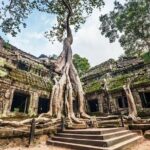
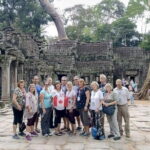
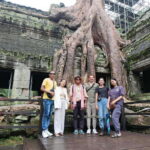
After Angkor Thom, you’ll visit Ta Prohm for about 1 hour. Ta Prohm is one of the famous visitor favorites for a reason: it’s partially retaken by the jungle, so the ruin looks less like a site of stone and more like a conversation between architecture and nature.
This stop is valuable because it breaks the “everything is perfect and clean” expectation. In many world heritage sites, the most visible story is the human one—construction, design, and restoration. Here, the visible story includes decay, growth, and the way living roots can shape what you see.
If you’re into photography, Ta Prohm is where you’ll likely spend more time than you expected, because the shadows, framed trees, and textures create visual variety. If you’re traveling in a smaller group and you can choose where you stop, you’ll have a better shot at finding calmer corners.
The tour’s structure also helps you avoid fatigue stacking. Ta Prohm lands at a point where your day is already moving, but you still have enough energy left to walk around, look up, and pause.

Ta Som and Banteay Kdei: Different Temple Moods in a Small Window
After Ta Prohm, the itinerary continues to additional temple sites that have their own “mood.”
Ta Som
You’ll visit Ta Som for about 30 minutes. It’s described as overgrown and part of the temple city experience, and in the overall framing, it’s a quieter follow-up to the bigger set pieces. Because time here is shorter, it works best if you treat it like a refresh stop: look closely, take a few photos, and then move on.
Banteay Kdei
Next is Banteay Kdei, also about 30 minutes. It’s known as the citadel of monks’ cells, and it’s partially overgrown with towering trees. A specific highlight to look for is the cotton tree roots weaving through ruined walls—one of those sights where your brain keeps trying to categorize what you’re seeing. Stone and roots at the same angle, same structure, creating a pattern.
These shorter stops are, in many ways, the secret strength of the tour. If you spend too long at only the headline temples, you miss the variety of styles across Angkor. This schedule gives you the contrast: grand and iconic, then jungle-held, then root-and-stone detail.
If you find yourself loving one of these places, you can use the tour’s flexibility to add time. Since this is private tuk-tuk based, you’re not locked to a bus departure time in the way you might be on a larger group tour.
Pre Rup and Sunset: The Best Way to Close the Day
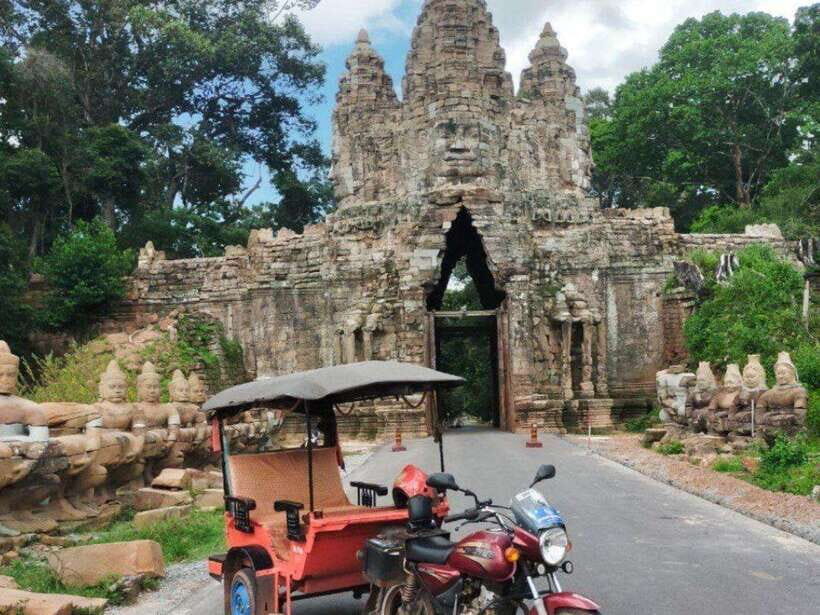
The day finishes with Pre Rup for about 1 hour, including a guided visit and sunset time.
Pre Rup is positioned as a dramatic end to the circuit, and sunset here is part of the experience. The key is that your day is paced so you arrive at the later site when light is changing and the temples start to look different again.
This last hour is also where the tour’s flexibility can really pay off. If sunrise was your priority, you may still want sunset at the end to reflect and cool down without feeling like you’re missing the magic light. If sunset was your priority, Pre Rup becomes your finale.
You’ll also appreciate that the tour is designed to end when it works for you. You can request to be dropped off where you choose, or go straight back to your hotel and rest.
Two Route Styles: Main Circuit or a Further-Out Loop
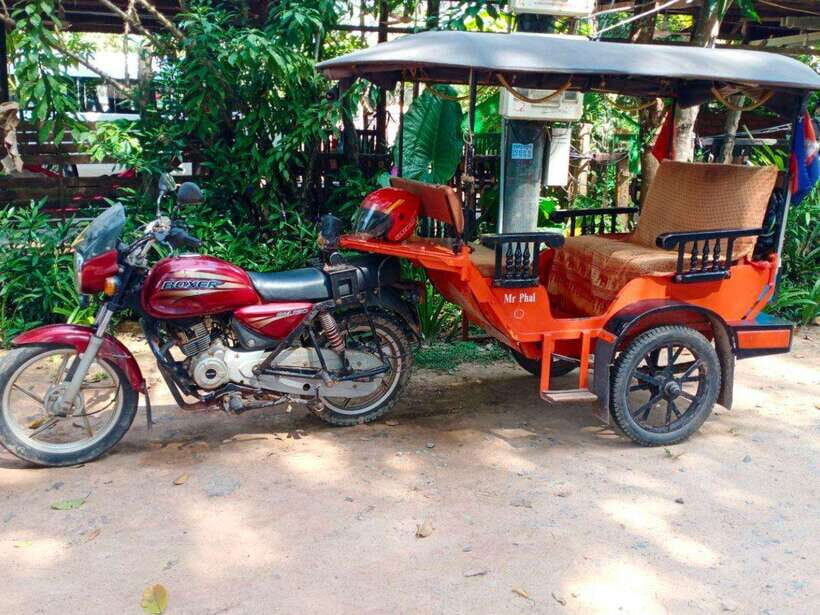
The tour offers options for how you route the day.
Option 1: Main circuit with famous centers
This approach focuses on the most recognizable and largest temples, plus “hidden treasures.” It includes Angkor Wat, Angkor Thom and Bayon, Ta Prohm, and other stops described in the highlight list like Ta Keo (unfinished pyramid style) and Banteay Kdei (root-woven walls). It’s also explicitly framed for sunrise with the goal of arriving at the right position and time.
Option 2: Further-out temples and Bakheang Mountain sunset
A different loop focuses on additional sites: Pre Rup, East Mebon, Ta Som, Neak Pean (an island shrine), and Preah Khan (built in the 12th century for King Jayavarman VII to honor his father). This option also includes watching sunset from Bakheang Mountain.
If you’re unsure, here’s the simple way to choose: if it’s your first time and you want the greatest hits, pick the main circuit. If you want more off-the-main-grid feel and extra temples in the schedule, consider the longer loop.
Also note the listing says you can visit Sunrise or Sunset with an optional tour without extra charge. So you should be able to align your light preference with your energy level.
Price and Tickets: The Budget Reality Check

At $15 per person, this tour is priced like good value—assuming you plan for what’s not included.
Not included:
- Angkor Archaeological Park entry ticket
- Food and soft drinks
- A guide for inside the temples (unless your selected package includes it)
Included:
- Private tour and tuk-tuk
- Round-trip private transfer
- Hotel pickup and drop-off
- English-speaking driver
- Chilled bottled water
- English speaking tour guide if your selected package
Here’s how I think about the value: this price buys you transportation, logistics, and time control. Your big extra cost is the temple pass, which you should purchase through the official site at https://www.angkorenterprise.gov.kh/. Once you account for the pass, you’re paying mainly for a smooth day that helps you see a lot without wasting hours getting oriented.
Food is on you. That’s normal for a 7-hour temple day, but it matters for comfort. You’ll want to decide in advance whether you’ll eat near your hotel before pickup or plan something simple afterward.
The Driver vs. Inside Guidance: What to Expect at Each Stop
One of the most important practical details is how information is delivered.
Your English-speaking Cambodian driver can answer questions and add context at each stop. But the listing also states your driver won’t be the guide for within the temples.
That means your experience will depend on whether you choose a package that includes an English-speaking tour guide for the temple interiors. If you do, you’ll likely get clearer interpretation while you’re walking through courtyards and galleries.
If you don’t, you can still have a great day, but you should adjust expectations: you’ll understand the “where” and “what” through driver explanations, and you’ll enjoy the architecture and atmosphere on your own.
For many people, that’s a good match. For others—especially if you love symbolism and want someone to point out meaning in carving details—you’ll want the inside guide option.
Who This Tuk-Tuk Tour Fits Best
This is a great fit if:
- You want flexibility in start time, route, and finish point
- You care about sunrise or sunset timing at a top-tier viewing spot
- You’d rather move by tuk-tuk than fight through transfers all day
- You like a mix of iconic temples and more “different texture” sites like root-covered ruins
It can be a good choice even if you’ve already visited once. One review highlighted the value of doing it again just to soak it in, rather than rushing to see everything. If that’s your situation, this tour’s flexible pacing can turn a second visit into a calmer, more personal experience.
Quick Decision Guide: Should You Book This Tour
I’d book this tour if you want a temple day that feels organized but not rigid, with English support and control over timing. The combination of private tuk-tuk logistics, sunrise/sunset planning, and a route that covers both big names and more distinctive ruins is strong value for the price.
I’d think twice if you’re the type who wants a fully guided experience inside every temple with deep interpretation included by default. In that case, confirm the package that covers inside guidance, and budget for the temple pass so there are no surprises.
If you’re balancing time, money, and the desire to see Angkor without the stress of figuring out everything yourself, this is a sensible way to do it.
FAQ
What does the tour include?
It includes a private tour with tuk-tuk, round-trip private transfer, hotel pickup and drop-off, an English-speaking driver, chilled bottled water, and an English speaking tour guide if your selected package includes one.
How long is the Angkor Wat tuk-tuk tour?
The duration is listed as 7 hours.
Do I need to buy an entry ticket for Angkor?
Yes. Angkor Archaeological Park entry ticket is not included. The official purchase link is https://www.angkorenterprise.gov.kh/
Is food included?
No. Food and soft drinks are not included.
Does the driver guide inside the temples?
The listing says the driver won’t be a guide for within the temples. A guide for inside the temples is listed as not included, unless you selected a package that includes an English speaking tour guide.
Can I choose a sunrise or sunset plan?
Yes. The tour highlights say you can visit sunrise or sunset, with an optional tour included without extra charge.