REVIEW · SIEM REAP
Siem Reap: Tonle Sap, Kampong Phluk & Floating Village Tour
Book on GetYourGuide →Operated by Angkor Wat Combine Tours · Bookable on GetYourGuide
A floating village feels real fast. This 6-hour Tonlé Sap trip into Kampong Phluk shows how daily life changes with the seasons, right down to the stilt houses that rise and fall with the water. I especially love the chance to see stilt houses and chat with people living around the lake, plus the guide’s on-the-ground explanations at each stop.
I also like the boat time. Even with the included big-boat ride, the mangrove/river swamps feel calm and dramatic, and the optional small-boat canoe segment (when you’re offered it) can bring you closer to the floating edges. One thing to consider: water levels change by season, so what you can walk to or how much is actually floating can vary.
In This Review
- Key takeaways before you go
- Why Kampong Phluk Feels More Honest Than a Standard Day Trip
- Getting There: The Morning Pickup and the One-Hour Ride
- Kampong Phluk: Stilt Houses, Community Life, and the Waterline View
- What you’ll notice as the guide talks
- Wat Kampong Phluk Pagoda: A Photo Stop That Adds Context
- Kampong Phluk Primary School: The Stop That Sticks With You
- Restaurant and Bamboo Bar: A Scenic Rest Stop With Community Connection
- Mangrove Swamp Boat Tour and Optional Small Boat/Canoe Segment
- Big boat included vs small boat optional
- Sunset Over Tonlé Sap: Why the End of the Day Is the Best Part
- Timing, Season, and Weather: What Can Change Your Day
- Price and Value: About $17 for a Full Half-Day of Real Life
- Who This Tour Suits Best (And When to Skip It)
- How to Prepare So You Enjoy Every Part
- Should You Book the Siem Reap Tonlé Sap and Kampong Phluk Tour?
- FAQ
- How much does this tour cost?
- How long is the tour?
- Where does pickup happen?
- Is the pickup time guaranteed?
- What boat rides are included?
- Is entrance fee included?
- What should I bring?
- What should I wear or how should I act?
- Is the tour affected by weather?
- Is it wheelchair accessible?
Key takeaways before you go
- Seasonal Tonlé Sap reality: dry-season visits may mean more walking and less true “floating village” view
- Stilt-house everyday life: you’ll see how homes adapt when the lake rises
- School and pagoda stops: more than photos, you get context for how the community works
- Mangrove boat time: a quieter, greener side of Tonlé Sap than the village docks
- Sunset finale on the lake: your best light and best atmosphere come at the end
Why Kampong Phluk Feels More Honest Than a Standard Day Trip
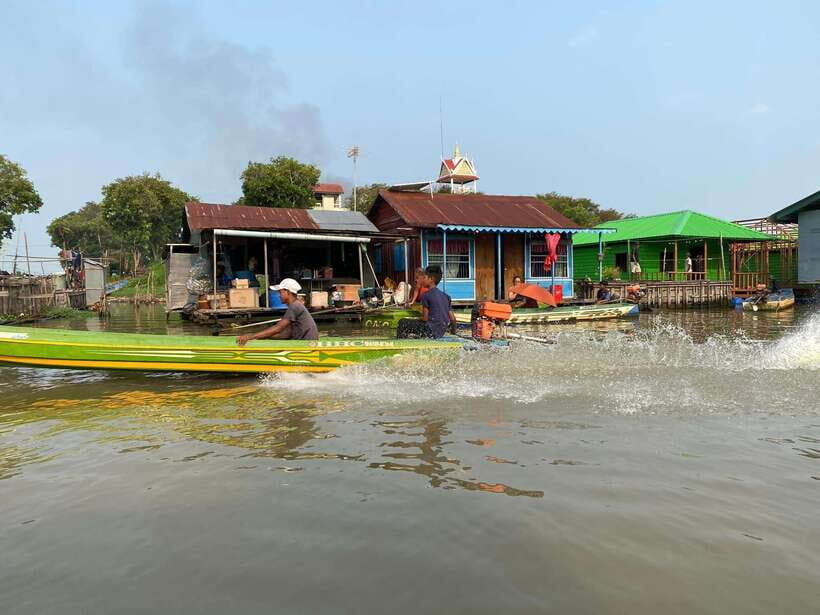
Tonlé Sap is one of Cambodia’s most important living systems. On land, you can tour temples all day and still feel like you missed the “how people actually live” part. Kampong Phluk and the floating village area land you in that second category.
What makes this trip worthwhile is not just the scenery. It’s the seasonality. The Tonlé Sap ecosystem rises and falls in a way that shapes jobs, school commutes, and even which paths are usable. When your guide points out how people travel by boat when the water is high, it stops being trivia and starts feeling like a real rhythm of life.
You’ll also get a guided visit structure instead of a free-for-all. That matters in villages like this, where respect and timing are part of the experience. If your guide is someone like Nan (a name that shows up often with excellent feedback), you’re likely to get clear explanations and a steady pace through each stop. Other English-speaking guides mentioned include Jack and Phu, so it’s worth asking who you’ll have when you confirm your booking.
You can also read our reviews of more tours and experiences in Siem Reap.
Getting There: The Morning Pickup and the One-Hour Ride
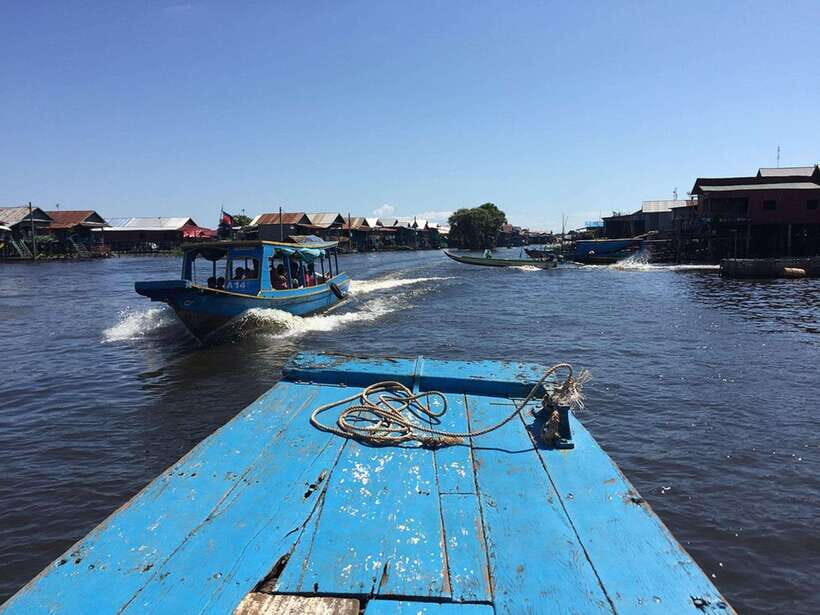
The tour starts with hotel pickup in Siem Reap city, usually somewhere between 7:20am and 8:30am. Expect the exact timing to be confirmed by message the day before, and plan for pickup about 50 minutes before departure.
Then you’re on a minibus/coach ride of about one hour toward the lake area. The practical value here is that you’re not improvising. You get dropped back near your hotel after the tour, so you don’t have to negotiate transport at the end—especially important when you’re riding for hours and then trying to catch sunset.
A small realism note: vehicles can be basic. Some feedback points to older bus conditions, which is annoying if you hate heat and rattles. For me, this kind of day trip is still worth it because the payoff is on the water, not in the seat.
Kampong Phluk: Stilt Houses, Community Life, and the Waterline View
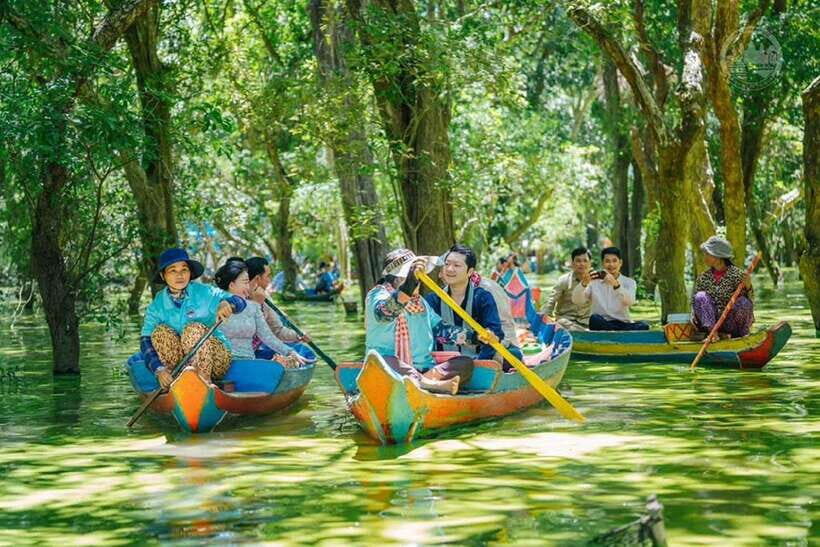
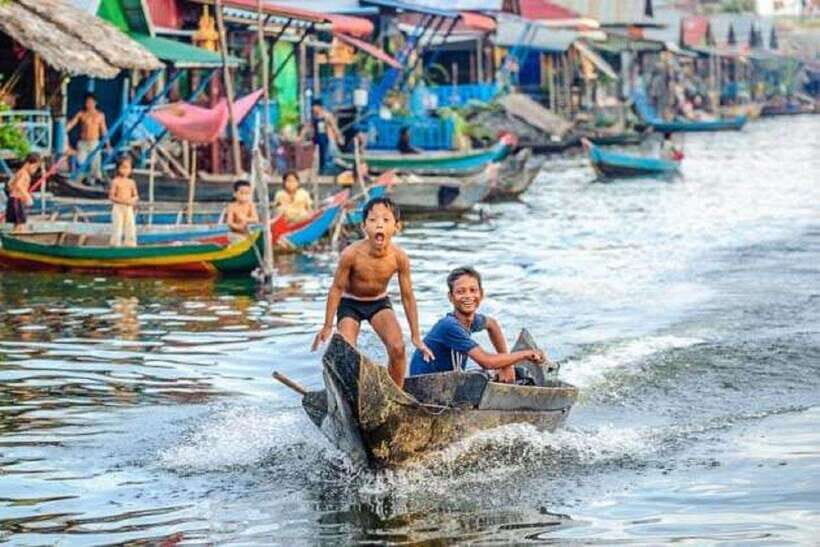
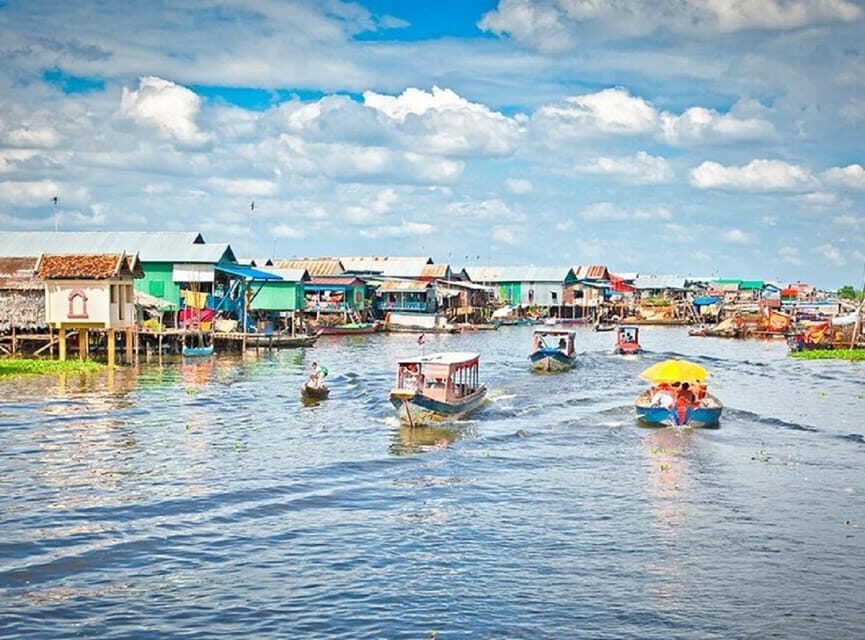
When you reach Kampong Phluk, you’ll do a guided look at the floating village area. This is where you get the visual hook: houses built on long posts and platforms that stay usable as water levels rise.
On a low-water day, you may even be able to walk around parts of the village. That can make the place feel more accessible and intimate—you see surfaces, textures, and daily habits up close. On a higher-water day, you’ll likely shift more of the movement to boats, which can make the whole setting feel more like a true floating neighborhood.
This is also where the interaction tends to be most meaningful. The program is designed so you can meet and talk with villagers, not just pass by for photos. You’ll want to keep your behavior respectful: modest dress, ask before photographing, and treat this as someone’s home, not a zoo exhibit.
What you’ll notice as the guide talks
- how families handle seasonal water changes
- how daily routines differ between dry and wet periods
- why the village’s layout makes sense when the lake rises
Wat Kampong Phluk Pagoda: A Photo Stop That Adds Context
Next comes Wat Kampong Phluk. The visit includes time for photos, a guided visit, and explanations.
Why this matters: Cambodia’s village life isn’t separated into boxes. Religious sites often sit at the center of community identity, and seeing a pagoda inside the village environment helps you understand that connection. It also breaks the day up nicely after the more “out in the water” views.
Keep in mind that this area operates on local customs. Dress modestly and move at a calm pace. If you want the “best photos,” you’ll get them, but don’t rush the moment.
Kampong Phluk Primary School: The Stop That Sticks With You
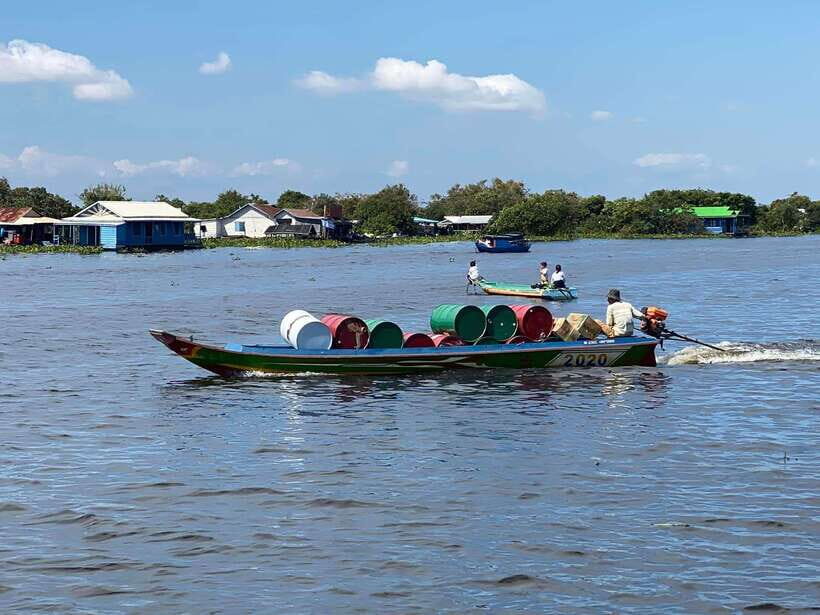
The tour then includes a stop at Kampong Phluk Primary School. There’s usually photo time, a visit, and guided context (especially helpful if you like learning how schools function beyond the usual tourist framing).
If you’re a teacher, parent, or just the kind of person who thinks education is the real long-term story, this stop often feels personal. Even when the visit is brief, you get a reminder that this community is living, working, and learning right where the lake feeds and reshapes everything.
Practical advice: keep expectations realistic. You may be there at a time when you can observe rather than participate. Follow your guide’s lead on what is appropriate, and avoid turning the kids into background scenery.
Restaurant and Bamboo Bar: A Scenic Rest Stop With Community Connection
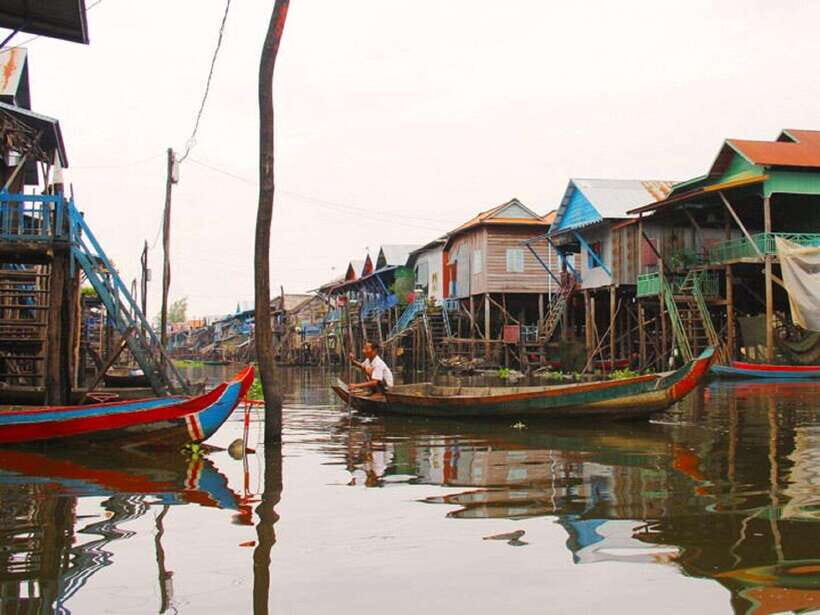
You’ll also stop at Samros Kampong Phluk Restaurant & Bamboo Bar. Expect it to be a photo stop with guided explanation and some time in the area.
This isn’t a fancy, resort-style break. Think of it as a chance to reset, use facilities if available, and re-orient yourself before the mangrove boat segment and sunset portion.
It’s also an example of how the village’s lake life supports small local businesses. Even if you don’t buy much, the stop can help you connect the scenery to everyday economics.
Bring some cash. The tour includes drinking water, but spending on the spot is sometimes the easiest way to keep things moving smoothly later.
Mangrove Swamp Boat Tour and Optional Small Boat/Canoe Segment
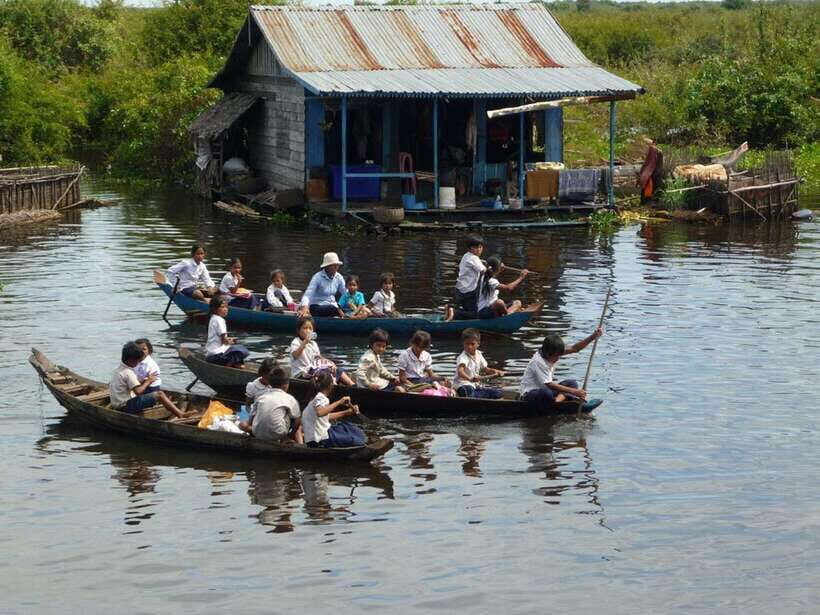
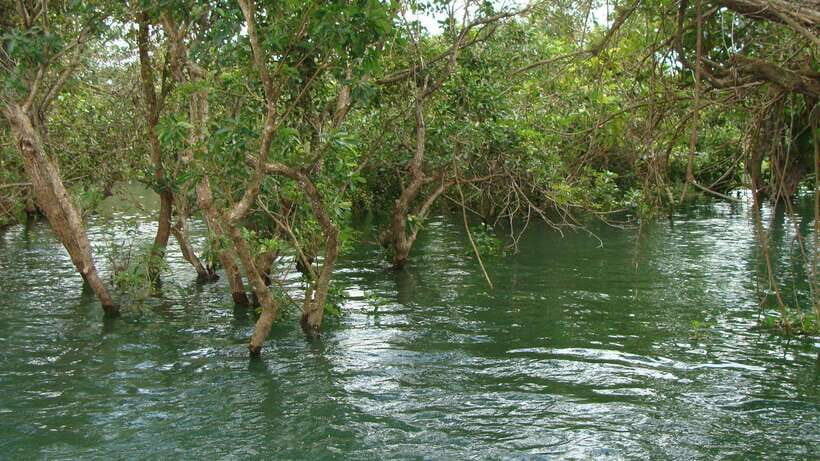
This is one of the most memorable parts of the day. After the village and pagoda/school stops, you head into the Tonlé Sap river mangrove swamp boat area for sightseeing and a guided ride. Sunset is typically built into this segment as well, which is great because it keeps your energy up and your schedule tight.
Big boat included vs small boat optional
The tour includes the big boat, while the small boat is not included. In practice, that means you may be offered an optional extra ride—often a shorter, closer-up canoe/row-boat experience run by local women.
Some feedback includes adds like around $5.50 and others closer to $11 for these small-boat segments. Prices can vary, so don’t assume. The key point is this: if they offer it, it’s usually the part that gets you closer to the mangrove feel and the “sunken forest” vibe.
Is it worth it? For most people, yes, because it changes your angle. The village big-boat view shows the overall pattern. The small boat option is more about feeling the waterway and seeing how narrow the channels really are.
Sunset Over Tonlé Sap: Why the End of the Day Is the Best Part
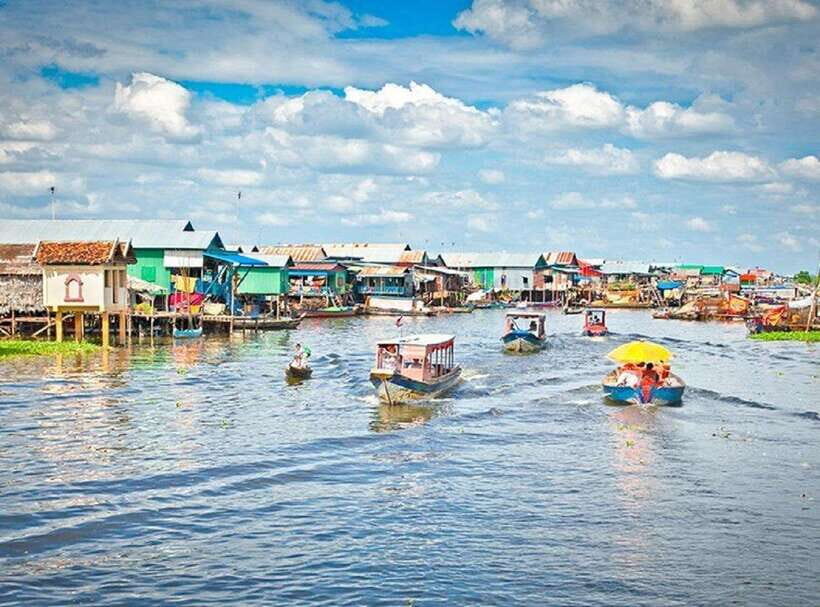
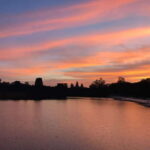
The tour ends with a sunset experience over Tonlé Sap, viewed from your boat.
Sunset here hits differently than temple sunset. You’re not watching lights on stone. You’re watching water reflections, changing color across the lake, and a sky that seems to stretch forever over the floating life.
In low-water or dry-season timing, sunset still works because the lake remains the star. And when the light hits stilt houses and distant platforms, you get the kind of atmosphere that makes the whole day feel connected instead of like separate stops.
If you’re the type who likes good photos, this is where you should focus your effort. Earlier stops are informative. Sunset is emotional.
Timing, Season, and Weather: What Can Change Your Day
This trip runs in most weather conditions, and you’re advised to bring a raincoat during the rainy season. That’s the right mindset. If it’s raining, the experience doesn’t automatically become ruined—it just becomes more about staying comfortable and keeping your timing flexible.
The bigger variable isn’t rain. It’s the seasonal water level. In the dry season, the “floating” portion may look different, and you may walk more instead of riding between stilt zones. In wet season, the village appears more dramatically above and around the water.
So if you want the classic floating-village look, timing matters. If you visit when the water is lower, don’t assume you missed out. You’ll see stilt life in a different phase, and that can actually be interesting.
Price and Value: About $17 for a Full Half-Day of Real Life
At $17 per person for about 6 hours, this is good value if your goal is to understand Tonlé Sap village life without spending a day bouncing between far-flung activities.
What you get for the price:
- pickup and drop-off within Siem Reap city
- a professional English-speaking guide
- entrance fees
- big boat ride and transportation
- drinking water
The “small boat” add-on is the main extra cost you should expect. Some people see it as worth it because it brings you closer to the mangrove and channel experience. If you skip it, you can still have a strong day because the big boat and sunset are included.
Bottom line: this is the kind of tour where paying extra for one optional segment can turn it from informative to memorable. But you can also do it without the add-on and still feel you got your money’s worth.
Who This Tour Suits Best (And When to Skip It)
This tour is a great fit if you:
- want a real-community day trip (stilt houses, school, pagoda)
- like nature scenery that’s not just dry land viewpoints
- want sunset on Tonlé Sap without planning logistics yourself
It may be less ideal if you have limited mobility. The tour is not wheelchair accessible due to boat access and uneven surfaces, and boarding can be tricky. Even fit travelers sometimes find boat steps and transfers awkward, especially in rougher docks.
Also note the guideline that it’s not suitable for people over 95 years.
If you’re traveling with kids, this can work well because it’s visual and guided, but keep an eye on sun and heat. You’ll be outdoors.
How to Prepare So You Enjoy Every Part
Bring:
- sunglasses
- a sun hat
- cash
Also bring a raincoat if you’re going during wet-season months.
Dress for village respect. Loose, modest clothing is easiest for temples and school-area visits. And because you’ll be on boats, wear footwear that can handle docks and possible wet surfaces.
For the small-boat option, cash is useful because it’s not included. Even if you think you’ll pass, it’s good to keep options open.
Should You Book the Siem Reap Tonlé Sap and Kampong Phluk Tour?
If you’re choosing between a quick photo circuit and a guided day that explains how people live with the lake, I think you should book this.
Book it if you want:
- stilt houses and village life that changes with the seasons
- a guided school and pagoda visit with context
- mangrove boat time and a real sunset finish
Skip it if:
- your mobility is limited and boat boarding is a serious concern
- you only want a guaranteed high-water floating-village look (because seasonal water levels change what you’ll see)
- you dislike basic transport conditions
If you book, do yourself a favor: arrive with an open mind about seasonality, keep your interactions respectful, and consider the optional small-boat canoe segment if offered. That’s often the part that turns the day into a story you’ll keep telling.
FAQ
How much does this tour cost?
The price is $17 per person.
How long is the tour?
The duration is 6 hours.
Where does pickup happen?
Pickup is included within Siem Reap city, with pickup from Krong Siem Reap. Pickup time is approximately between 7:20am and 8:30am.
Is the pickup time guaranteed?
Pickup time is approximate, and the exact pickup time is confirmed by message about one day before the tour.
What boat rides are included?
You get a big boat trip as part of the tour. A small boat ride is not included.
Is entrance fee included?
Yes, entrance fees are included.
What should I bring?
Bring sunglasses, a sun hat, and cash.
What should I wear or how should I act?
Dress modestly and respect local customs, since the floating village is a real local community.
Is the tour affected by weather?
The tour operates in most weather conditions, and during rainy season you should bring a raincoat.
Is it wheelchair accessible?
No. It is not wheelchair accessible due to boat access and uneven surfaces.