REVIEW · PHNOM PENH
S-21 Prison and Killing Fields
Book on Viator →Operated by Angkor T.K Travel & Tours · Bookable on Viator
Genocide is the topic, but the tour is guided with care. This half-day Phnom Penh outing connects Killing Fields at Choeung Ek with S-21 at Tuol Sleng, so the story of Cambodia’s Khmer Rouge years makes more sense than it does from a book.
I love the hotel pickup and air-conditioned private transport—it’s a simple way to start your morning without logistics stress. I also like how guides Kim and Smiley handled the heavy material with tact and empathy, which matters a lot when the subject is truly harrowing.
One consideration: the tour price doesn’t cover site entry or audio, so you’ll want to budget a little extra on the ground and accept a slower emotional pace.
In This Review
- Key things to know before you go
- Why Choeung Ek and Tuol Sleng belong together in Phnom Penh
- Price and what you really get for $100
- The 8:00 am plan: pickup, private transport, and pacing
- Choeung Ek Genocidal Center: what 90 minutes is for
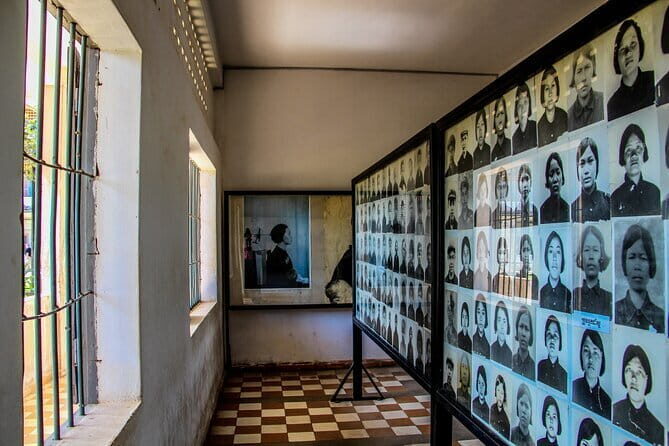
- Tuol Sleng S-21: turning a school into a security prison
- Refreshments, cold towels, and the small comforts that help
- Why the English guide’s approach is a deal-breaker (in a good way)
- Who should book this S-21 and Killing Fields tour
- What about the rest of Phnom Penh on the same day?
- Should you book it or skip it?
- FAQ
- What time does the tour start?
- How long is the tour?
- What are the two main places visited?
- Are entrance fees included in the $100 price?
- Do I get audio during the visit?
- Is pickup from my hotel included?
- What’s included besides the guide?
- Is this tour private?
- Can I cancel for a full refund?
Key things to know before you go
- Two sites in one clear timeline: Choeung Ek first, then S-21, so you follow the Khmer Rouge system from killing to detention and torture.
- Smaller comforts included: you get a refreshment drink and a cold towel for the roughly three-hour stretch.
- Predictable extra costs: Killing Fields entry is $3 per person, Tuol Sleng entry is $5 per person, and audio isn’t included.
- English guide focused on respect: praised for dealing with sensitive topics with tact and empathy.
- Private by default: only your group participates, which usually helps the pace feel more personal.
- Morning start: it begins at 8:00 am, with pickup and private transportation from your area.
Why Choeung Ek and Tuol Sleng belong together in Phnom Penh
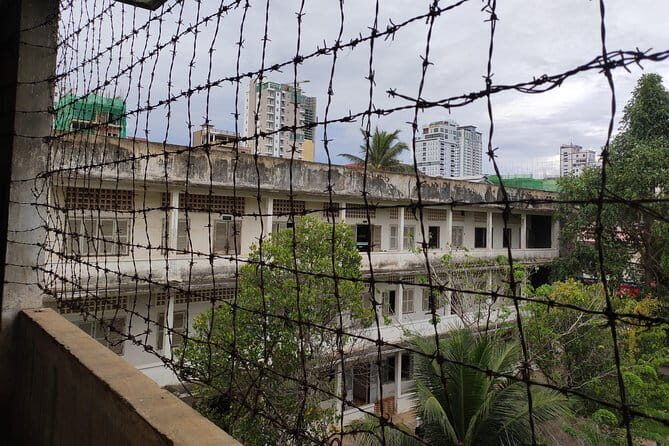
If you’re coming to Cambodia for more than temples and markets, you’ll run into the same question fast: how did this country go through years so brutal that it still shapes daily life today? A visit to Choeung Ek and Tuol Sleng on the same half day gives you that bridge. One place shows the end result—mass death at the killing fields—while the other shows the machinery behind it: a former school transformed into Security Prison S-21.
The tour’s value is not that it rushes you through two major sites. It’s that your guide connects them. At Choeung Ek, you learn about what happened between 1975 and 1978, when the site became the final resting place for over 17,000 men, women, children, and infants. Then, at Tuol Sleng, you see how the Khmer Rouge built a detention and torture system that fed arrests onward—where prisoners were repeatedly tortured and coerced into naming family members and close associates.
And yes, this tour is confronting. But the best version of it is also structured, factual, and respectful. That’s the balance you’re paying for.
You can also read our reviews of more tours and experiences in Phnom Penh.

Price and what you really get for $100
The advertised price is $100 for a half-day tour of about three hours. What you get included is meaningful for this kind of visit: an English-speaking guide, private air-conditioned transportation, and even a refreshment drink plus a cold towel.
Then there are the parts not included. You’ll pay entrance fees separately: $3 per person for the Killing Fields (Choeung Ek) and $5 per person for Tuol Sleng (S-21). Audio is also not included at either site. If you want narration beyond the guide, plan for that extra cost.
So is $100 good value? For Phnom Penh, it’s decent if you want the “one guide, two sites, no waiting around” setup. You’re paying for the human explanation—your guide’s context—plus private transport and comfort. If you tried to do it on your own, you’d still be paying those entrance fees, and you’d likely lose some of the clarity that turns a painful place into a coherent lesson.
Also keep an eye on the small-money details: the experience offers group discounts and uses a mobile ticket. That can reduce admin headaches if you’re traveling with friends.
The 8:00 am plan: pickup, private transport, and pacing
This tour starts at 8:00 am, and pickup is offered. The day is set up as a straight shot: you leave your hotel area, ride to Choeung Ek, spend focused time at each site, then head to Tuol Sleng after.
The driving time matters because it shapes the mood of the visit. Killing Fields are about 16 km south of Phnom Penh, so you’re not just hopping a few blocks. The private vehicle and air conditioning help you arrive with your head clear enough to take in what you’re about to learn.
Duration is listed at about three hours, with roughly 1 hour 30 minutes at each stop. That’s a real advantage. Too many tours squeeze one site so hard that the guide can only skim. Here you get enough time for your guide to explain what you’re seeing, not just point and move on.
One more practical note: it’s private—only your group participates. That’s useful on serious tours. Fewer people talking over the moment usually means the guide can keep a steady, respectful pace.
Choeung Ek Genocidal Center: what 90 minutes is for
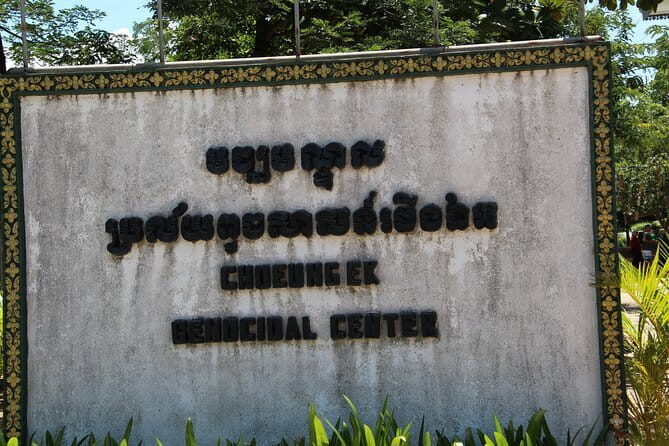
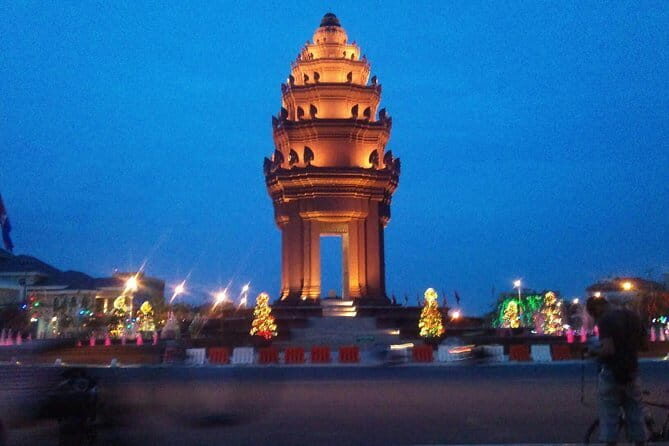
Choeung Ek is the first stop, and it’s the one that hits with a physical sense of scale. You’re taken about 16 km south of Phnom Penh, then your guide leads a detailed visit to the fields. The key facts your guide frames are stark: between 1975 and 1978, the site became the final resting place for over 17,000 men, women, children, and infants.
That number isn’t just trivia. It’s the anchor for how your brain processes the rest. Without context, a field can feel like a place you walk through. With the numbers and timeline explained, you begin to understand it as part of an organized system, not a random tragedy.
What you’ll likely notice is how the tour keeps the experience grounded in what happened. The guide’s role is crucial here—especially in a place that can feel overwhelming fast. In the feedback, guides like Kim and Smiley are specifically praised for tact and empathy, which is what you want when you’re confronting death at the scale described here.
One drawback of this stop: it can be hard to know what to do with the emotions. The tour doesn’t pretend to make it easy. If you’re the type who needs a lighter day, this may be more than you bargained for.
Tuol Sleng S-21: turning a school into a security prison
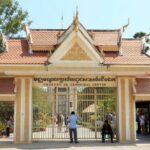
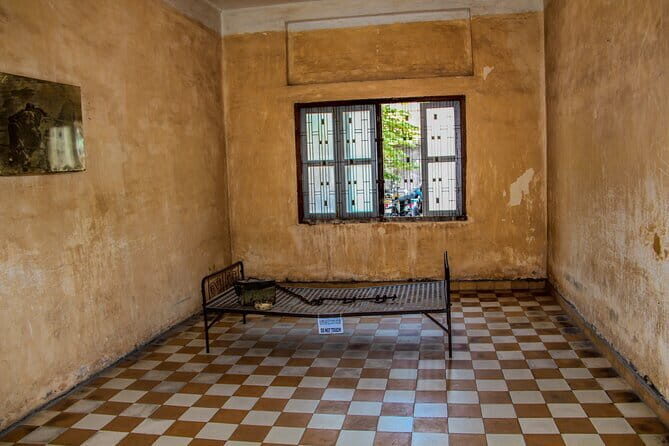
After Choeung Ek, you head to Tuol Sleng Genocide Museum, also known as S-21 or Security Prison. This is where the tour’s logic really clicks: Choeung Ek explains the outcome; S-21 explains the process.
Here’s the timeline your guide helps you understand. In 1975, Tuol Svay Prey High School was taken over by Pol Pot’s security forces and turned into a prison called Security Prison (S-21). It quickly became the largest detention and torture center in the country. Your visit is designed around the harrowing truths of how prisoners were treated.
The most important part of the explanation is the chain of consequences. Prisoners were repeatedly tortured and coerced into naming family members and close associates. Those names led to more arrests, more arrivals at S-21, more torture, and ultimately killing. When your guide lays that out, it stops being “horrible stories from the past.” It becomes a system—one that required people to do terrible work in order to keep it going.
You’ll spend about 1 hour 30 minutes here. The time matters because S-21 isn’t one room. It’s an experience of documentation, detention, and method. A short stop turns it into a blur. A longer guided visit gives you a chance to absorb the theme your guide is presenting: how control, fear, and forced testimony were used to expand the Khmer Rouge’s reach.
One thing to keep in mind as you go: this is not a museum designed for casual browsing. It’s a place built to confront what happened. Your guide’s respectful tone helps you stay present without turning the visit into a performance.


Refreshments, cold towels, and the small comforts that help
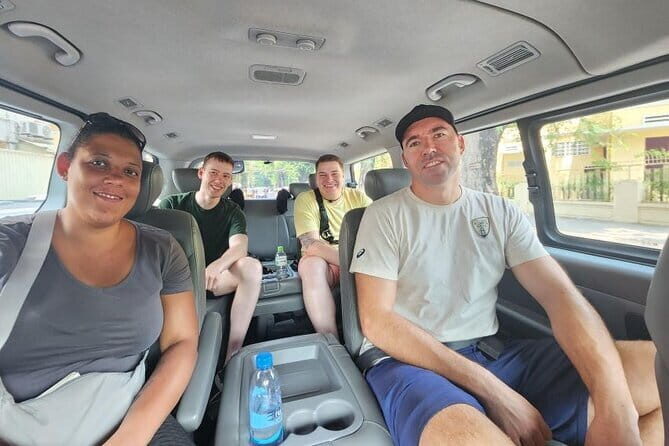
It’s easy to underestimate comfort on tough tours. This one includes a refreshment drink and a cold towel, plus an air-conditioned vehicle. That matters because you’re doing two emotionally intense stops back-to-back, with a morning start at 8:00 am.
These touches don’t make the subject lighter, but they keep you functional. When you’re walking through difficult material, fatigue can get in the way of listening. A cold towel and a drink give you a way to reset, so you can keep focusing on what your guide is explaining rather than feeling drained.
And because the tour is private, you’re not managing a group’s constant stops for water breaks. That helps the rhythm stay steady.
Why the English guide’s approach is a deal-breaker (in a good way)
In reviews, the standout praise is consistent: the guides approach sensitive material with tact and empathy, and their English is strong enough to explain complicated details without turning the subject into a dry lecture.
Kim and Smiley are named for exactly this. The difference you’ll feel on-site is practical: the guide isn’t just reading facts. They’re translating what you’re seeing into human meaning—without sensationalism.
That’s also why this tour earns a reputation as a must-do for understanding Cambodian history. For many people, it’s hard to grasp how the Khmer Rouge years shaped Cambodia as a society. A respectful guide makes the gap smaller between what happened and what it meant.
One more note that shows up in feedback: some tours include a moment of meeting two remaining survivors of S-21. If your schedule allows for an encounter like that, it can change the whole feel of the day. It shifts the experience from archives into living memory. Even if that’s not guaranteed, the fact that it’s mentioned tells you the tour operator understands how to treat the topic with gravity.
Who should book this S-21 and Killing Fields tour
This is a strong fit if you want a guided explanation with clear time at both sites, and if you want your day shaped around history rather than on-the-fly decisions.
It’s also a good match if you like structured visiting: pickup, transport, guide-led time at Choeung Ek for about 90 minutes, then S-21 for another 90 minutes. The flow supports learning.
The tour is described as suitable for most travelers, and it’s private for your group. So if you’re traveling with friends or family, it’s easier to keep questions and pacing under control.
Who should think twice? If you know you struggle with dark, confronting history, you might want a different Phnom Penh day. This tour is designed to teach you what happened during Khmer Rouge control from 1975 to 1979, when estimates suggest 2 to 4 million Cambodians died. You’ll hear those realities directly.
What about the rest of Phnom Penh on the same day?
The tour itself focuses tightly on Choeung Ek and Tuol Sleng, so you’re not pairing it with the Royal Palace or Silver Pagoda. Still, it can help you plan the rest of your trip.
The information provided notes that the Silver Pagoda and the Royal Palace may close without prior notice while the King is in residence, though the National Museum and Silver Pagoda are open every day. In other words, if you’re trying to stack major sights after your tour, plan to be flexible.
A half-day tour gives you time for a lighter evening meal and reflection. That’s not a tip about food—it’s just a practical rhythm. Your brain will process this day for hours afterward.
Should you book it or skip it?
Book this tour if you want a respectful, English-guided way to understand how the Khmer Rouge system worked, using two key sites that connect the story from detention to mass death. The private transport, air-conditioned ride, and the guide-led structure are built for a serious topic, not a quick checklist.
I’d skip it only if you know you can’t handle confronting historical material. This experience isn’t meant to be comfortable, and that’s the point. You come here to learn, to remember, and to understand.
FAQ
What time does the tour start?
It starts at 8:00 am.
How long is the tour?
The duration is approximately 3 hours.
What are the two main places visited?
You visit the Choeung Ek Killing Fields (Choeung Ek Genocidal Center) and Tuol Sleng Prison (Tuol Sleng Genocide Museum / S-21).
Are entrance fees included in the $100 price?
No. Killing Fields entrance is $3 per person, and Tuol Sleng entrance is $5 per person. Audio is also not included.
Do I get audio during the visit?
Audio at Killing Fields and Tuol Sleng is not included.
Is pickup from my hotel included?
Pickup is offered and is included in the experience.
What’s included besides the guide?
You get an English-speaking guide, refreshment drink and cold towel, and an air-conditioned vehicle.
Is this tour private?
Yes, it’s private. Only your group will participate.
Can I cancel for a full refund?
Free cancellation is available. You can cancel up to 24 hours in advance for a full refund. Canceling less than 24 hours before the start time won’t be refunded.