REVIEW · SIEM REAP
Private Angkor Wat Tour from Siem Reap
Book on Viator →Operated by Siem Reap Excursion Tour · Bookable on Viator
Angkor Wat in one day is a good kind of overload. This private full-day tour from Siem Reap is built for first-timers who want the big UNESCO sites without figuring out transport or timing on your own. I like the hotel pickup and drop-off convenience, and I also like having a private guide who can explain what you’re seeing as you go.
The main thing to keep in mind is the day is long and outdoors. Angkor is hot, humid, and full of steps, so you’ll want to pace yourself and lean on the breaks and the cold towels.
In This Review
- Key points worth planning around
- How the day starts in Siem Reap (and why it matters)
- Angkor Wat: the main symbol and what to look for
- Angkor Thom south gate: demons, gods, and the naga
- Terrace of the Elephants and Terrace of the Leper King: royal power in your line of sight
- Bayon and Banteay Kdei: what changes once you leave the main crown jewels
- Ta Prohm: the overgrown temple that changes your sense of scale
- Lunch and downtime: plan for food that’s not included
- Heat, steps, and comfort during an 8-hour temple circuit
- Price and value: what $67.50 covers, and what to add
- The guide makes or breaks the Angkor day
- Who this private tour suits best (and who might want something else)
- Should you book this Angkor Wat private tour?
- FAQ
- How long is the Private Angkor Wat Tour from Siem Reap?
- What time does the tour start?
- Does the tour include hotel pickup and drop-off?
- Is this tour private or shared with other groups?
- What’s included in the price?
- Are entrance fees included for Angkor Wat and the Angkor complex?
- Is lunch included?
- Is there a ticket type mentioned for this tour?
- What is the child rate rule?
- Is cancellation free if I change my mind?
Key points worth planning around
- Private guide + private car means no waiting around and less stress moving between sites
- Angkor Wat plus Angkor Thom gives you the core story of the Khmer era in one circuit
- Terrace of the Elephants and Terrace of the Leper King add viewpoint time with real royal context
- Ta Prohm is included, with that overgrown, eerie feel that photos look like they should be myths
- Water and cold towels help you handle the heat during temple-to-temple walking
- Entrance fees are extra, so budget about $37 for the day pass before you go
How the day starts in Siem Reap (and why it matters)
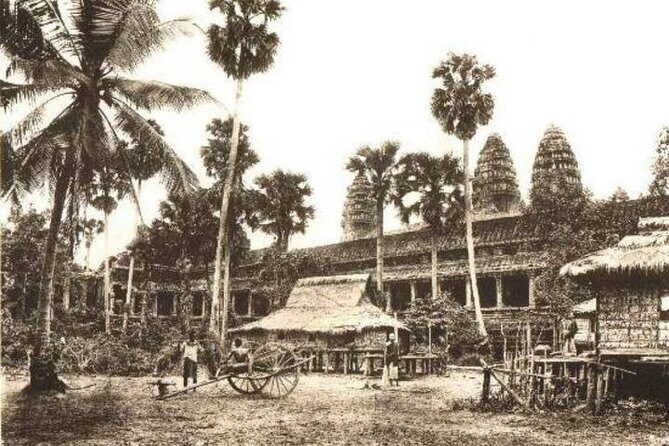
This tour is scheduled for an 8:00 am start, with hotel/port pickup and drop-off. You’re traveling in a private air-conditioned vehicle, which is a big deal here. Temperatures can climb fast, and the drive time between temple zones adds up.
The included bottled water and cold towel are not a small perk. They’re the difference between pushing through dry heat and actually enjoying the stops. Several guide-and-driver combos on this kind of day focus on the same goal: keep you comfortable enough to appreciate the temples instead of just surviving them.
You also get a mobile ticket. That can simplify things on the spot, especially when your guide is helping you get in smoothly.
You can also read our reviews of more private tours in Siem Reap
Angkor Wat: the main symbol and what to look for
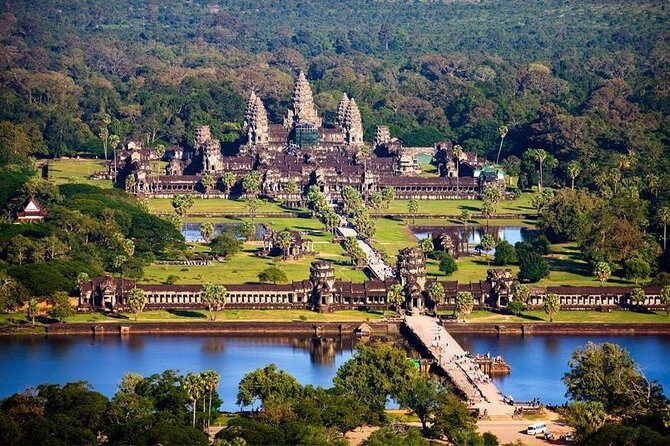
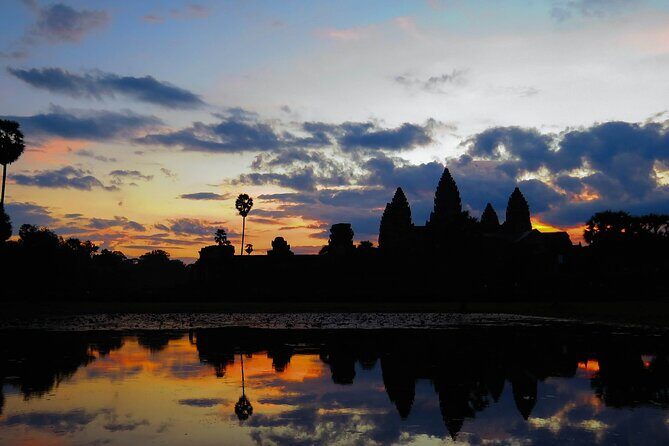
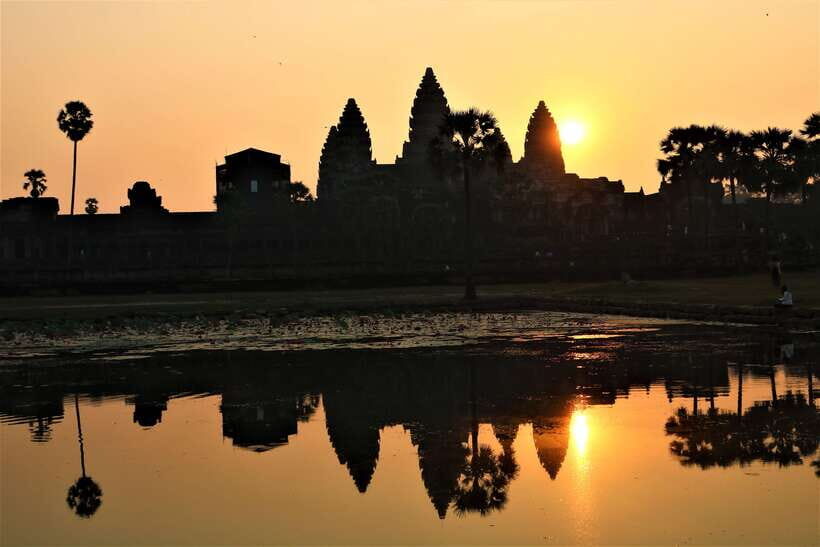
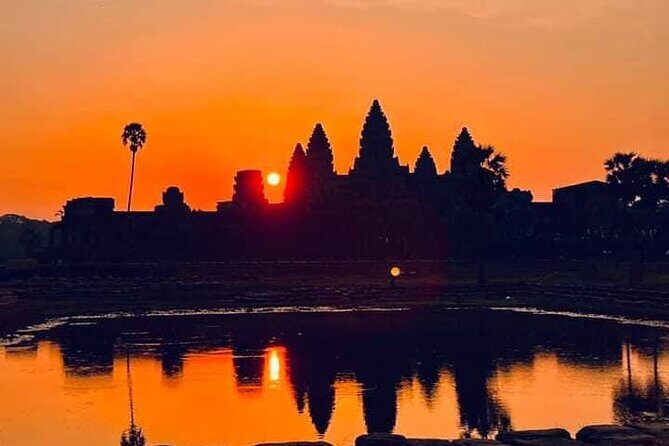
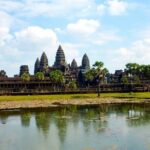
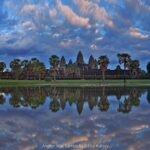
Angkor Wat is the world-famous centerpiece, and this tour gives you time to take it in properly. You’ll visit Angkor Wat and the larger Angkor complex area, described as a vast religious monument spanning about 155 square miles (400 sq km). That scale matters because it explains why a tour like this works best as a curated route rather than a wander-everywhere free-for-all.
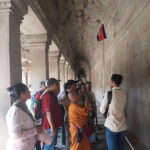
At Angkor Wat, you’ll see traditional Khmer designs, unique sculptures, and intricate carvings tied to ancient shrines. Here’s the practical way to enjoy it: don’t rush straight to the most photographed angles. Stand where you can see the overall layout first, then let your guide point out details in the carvings and shrine areas.
If you get a guide like Sim, Chen, Che, Hour, or Sao Vicheth, that attention to details is often the highlight. People mention clear explanations, patience with questions, and strong photo help. That combination makes Angkor Wat feel less like a checklist and more like a place you understand.
Angkor Thom south gate: demons, gods, and the naga
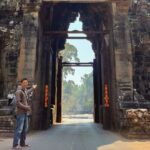
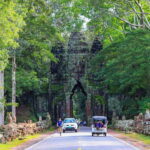
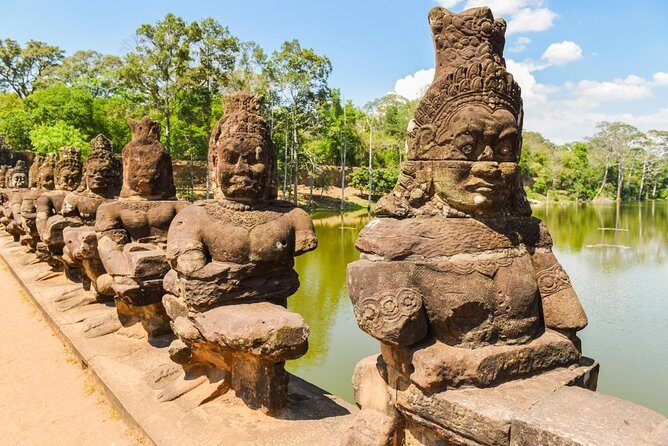
After Angkor Wat, the tour moves to Angkor Thom, the last-known capital of the Khmer Empire. You enter through the massive south gates, where you’ll see lines of statues of demons and gods holding giant naga figures. It’s dramatic, and it’s also a shortcut to understanding the Khmer visual language—this empire loved symbolism, and it put that symbolism on the gates you would pass through every day.
This is a good moment to slow down. The south gate is a natural photo magnet, but it also sets the tone. Your guide can connect the gate’s imagery to the broader spiritual and political world behind the stones.
If you’re traveling with kids, this part often plays well. Guides tend to keep the stories lively, and the gate imagery gives you an easy visual hook.
Terrace of the Elephants and Terrace of the Leper King: royal power in your line of sight
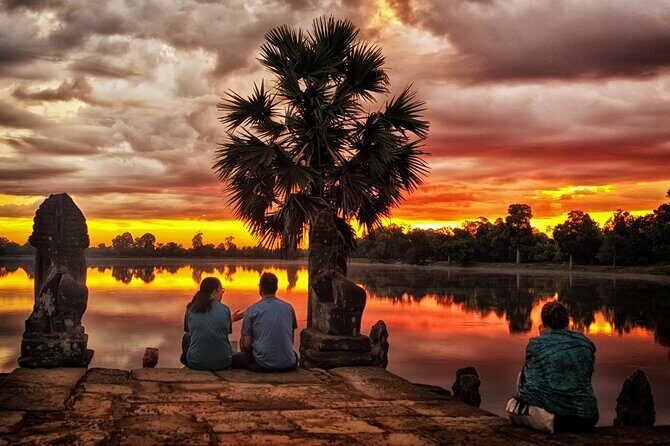
Two of the most memorable stops are the Terrace of the Elephants and the Terrace of the Leper King. These aren’t just scenic platforms. They’re described as a viewing platform and a royal cremation site used by Angkor King Jayavarman VII.
That royal context helps the terraces land differently. Instead of treating them as viewpoints you sprint through, you can think of them as spaces tied to ceremony and authority. You’ll likely take photos from here too, but the bigger win is understanding why these spots mattered.
If you’re sensitive to heat, this is also one of the best places to pause. Terraces give you room to rest while still seeing important architecture and keeping the day moving.
Bayon and Banteay Kdei: what changes once you leave the main crown jewels
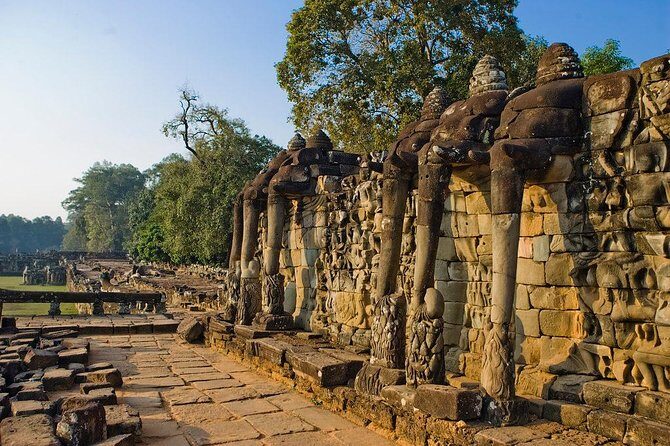
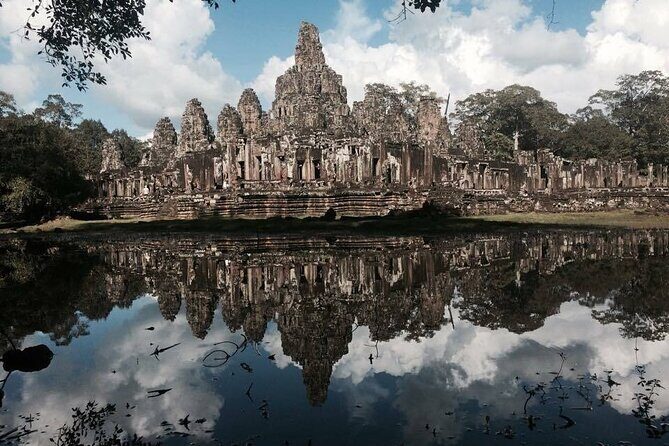
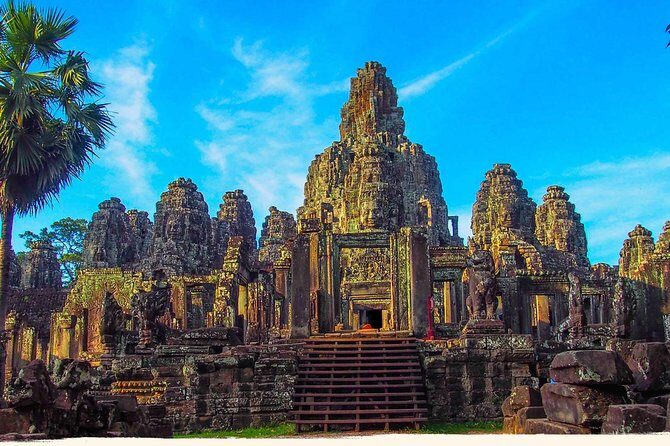
Next up: Bayon and Banteay Kdei. Bayon is described as featuring distinctive stone structures influenced by Baroque-inspired Khmer architecture. That phrasing is your clue to how Bayon feels. It’s not just walls and symmetry. It’s shapes and structure that feel dense, layered, and intentional.
Banteay Kdei is then described as a historic temple stop. In a day like this, the value is that you’re seeing more than one style of Khmer temple building. Angkor Wat is the headline, Angkor Thom is the dramatic entrance story, and Bayon plus Banteay Kdei show how varied the architecture can be across the broader complex.
Practical tip: if your feet are feeling it, ask your guide to identify the easiest walking paths between structures. Private guides can often adjust the pacing so you still see the key areas without turning the day into a footrace.
Ta Prohm: the overgrown temple that changes your sense of scale
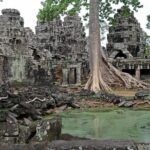
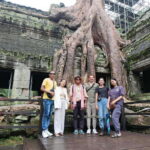
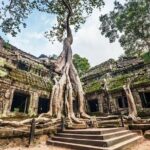
Ta Prohm is included, described as an eerie overgrown temple. This is where Angkor starts to feel less like a museum and more like a living story. Trees and roots create an atmosphere that makes the stones feel reclaimed by nature, even if the site is carefully preserved.
It’s also a strong photo stop. Several people mention guides who love photography and know where to stand for angles. If you care about getting usable pictures (not just more images), you’ll probably appreciate a guide who helps with timing and positioning.
One honest consideration: Ta Prohm still means steps and uneven surfaces, plus the humidity. The tour helps by providing water and cold towels during transfers, but you’ll want to wear shoes with grip and be ready for slow walking.
Lunch and downtime: plan for food that’s not included
Lunch is part of the day, but food and drink are not included in the tour price. That means you should treat lunch as a separate budget item.
The good news is that the tour includes a break for lunch, and guides often steer you to an actual place rather than leaving you to hunt. In the feedback, people mention a lunch spot overlooking a lake and even water lilies in the view. That kind of break can make the afternoon feel lighter, especially after more walking in the midday heat.
My advice: hydrate before and after lunch. If you’re prone to getting wiped out in hot weather, use the restaurant time to cool down fully, not just eat quickly.
Heat, steps, and comfort during an 8-hour temple circuit
This is the part most people underestimate. An 8-hour tour at Angkor is not gentle. You’ll be outside, dealing with humidity, and you’ll climb and descend steps across multiple temples.
The tour’s comfort inclusions are real and useful: bottled water and cold towels, plus air-conditioning in the car between temple legs. People repeatedly mention feeling refreshed when they return to the vehicle. That refresh time helps you keep enjoying the sites instead of dragging through.
You can also use the private format to your advantage. If you need shaded breaks, or if you move more slowly, you’re not forced into the pace of a larger group. Just tell your guide what your limits are early in the day, and they can help you plan rest stops without cutting the core sights.
Price and value: what $67.50 covers, and what to add
The listed price is $67.50 per person for a private full-day tour, booked on average about 64 days in advance. For that money, you’re getting hotel pickup and drop-off, a private car and driver, and a private English-speaking guide. You’re also getting bottled water and cold towels, plus the air-conditioned vehicle.
Then there’s the cost you should add before you decide: entrance fees to the Angkor complex are not included, and the day pass is approximately $37. So your practical total for the main sites often starts around $100+ per person, before lunch.
Is that worth it? For most people, yes—especially if it’s your first time at Angkor and you want someone to translate the symbolism, guide you between the big areas, and help you pace the day in the heat. Private transport also saves time. You’re not negotiating routes, and you’re not spending energy on logistics.
If you’re traveling with a small group, check whether group discounts apply to your booking. Even a modest discount can make the private format feel like a smarter deal than you’d expect.
The guide makes or breaks the Angkor day
The strongest recurring theme is the guide effect. Names that come up include Sim, Chen, Che, Hour, and Sao Vicheth. People highlight a few common strengths: clear storytelling, patience with questions, and photo help that actually makes the day easier.
English is a key factor, though. One piece of advice I’d take seriously is to confirm your guide’s English ability before booking. Accents can be tough even with a private guide, and you want explanations you can follow easily—especially when you’re hearing about symbols like demons, gods, naga imagery, and Khmer architectural styles.
Another consideration: there can sometimes be added stops where you’re expected to spend money. If you don’t want that, say so calmly at the start. A private guide should be able to respect your preferences, and it keeps the day focused on temples instead of shopping.
Who this private tour suits best (and who might want something else)
This private Angkor Wat tour is ideal if:
- You have about one day and want the major sites handled in a single plan
- You want hotel pickup and air-conditioned comfort between stops
- You care about understanding what you’re seeing, not just taking photos
- You’re traveling with kids and want a guide who can keep things moving and fun
It may be less ideal if:
- You want lots of free time to roam slowly on your own
- You’re extremely sensitive to heat and long days, since it’s still an 8-hour route with steps
- You prefer a strict itinerary with zero flexibility, since private guiding often includes real-time adjustments
Should you book this Angkor Wat private tour?
If this is your first visit to Angkor, I’d book it—mostly because the private format turns a huge, confusing complex into a guided, understandable day. The combination of hotel pickup, air-conditioned transport, water and cold towels, plus a private guide makes the experience feel manageable.
Book it with eyes open about the two extras you’ll pay on top: the Angkor day pass (about $37) and lunch. And if English clarity matters a lot to you, ask directly when you confirm your guide.
If you want Angkor Wat plus the surrounding highlights like Angkor Thom, Ta Prohm, Bayon, and Banteay Kdei, in one confident plan, this private day is a strong choice.
FAQ
How long is the Private Angkor Wat Tour from Siem Reap?
It runs about 8 hours.
What time does the tour start?
The start time is 8:00 am.
Does the tour include hotel pickup and drop-off?
Yes. Hotel/port pickup and drop-off are included.
Is this tour private or shared with other groups?
It is a private tour/activity. Only your group will participate.
What’s included in the price?
Included are bottled water/cold towel, private car and driver, private English speaking guide, private transportation, and an air-conditioned vehicle.
Are entrance fees included for Angkor Wat and the Angkor complex?
No. Entrance fees are not included, and the day pass is approximately USD 37.
Is lunch included?
Food and drink are not included. There is a lunch break during the tour, but you’ll pay separately.
Is there a ticket type mentioned for this tour?
Yes, it includes a mobile ticket.
What is the child rate rule?
A child rate applies only when sharing with 2 paying adults.
Is cancellation free if I change my mind?
Yes, free cancellation is available up to 24 hours in advance for a full refund.