REVIEW · PHNOM PENH
Half-Day Tour of the Killing Field and S21
Book on Viator →Operated by The Killing Field and S21 Genocide Tour · Bookable on Viator
Trauma has a location. And this tour visits the sites. You’ll head to Choeung Ek (Killing Fields) and then to Tuol Sleng S21, both tied to the Khmer Rouge era, with an English-speaking guide who helps the details land in plain language. I like that the experience is built around two focused stops (about two hours each) and that guides such as Visal and Sum are singled out for clear explanations and strong communication.
The best part is the human scale of what you see and how it’s explained—mass graves at Choeung Ek, and the classroom-turned-prison reality of S21. One thing to consider: this is emotionally heavy. If you’re expecting a light sightseeing day, this isn’t it, and you’ll also need to plan for entrance fees not included.
In This Review
- Key Highlights You’ll Feel Fast
- Phnom Penh’s Killing Fields + S21: Why This Half-Day Works
- Getting Picked Up in Phnom Penh (and Not Stressing the Day)
- Choeung Ek Genocidal Center: Seeing the Execution Site Up Close
- Tuol Sleng Genocide Museum (S21): When a School Becomes a Prison
- The Role of the English Guide: Clear Storytelling Makes It Bearable
- Price and Value: Is $19.20 Worth It?
- Timing, Duration, and What a 4-Hour Day Feels Like
- Small Group Size: The Difference Between Crowds and Care
- Tickets, Mobile Access, and Entry-Day Reality
- What to Bring (and How to Prepare Emotionally)
- Should You Book This Killing Fields and S21 Tour?
- FAQ
- How long is the Half-Day Tour of the Killing Field and S21?
- Is pickup included?
- Where does the tour meet?
- What stops are included?
- Are entrance fees included?
- What’s included in the price besides the guide?
- Do I need to buy a paper ticket?
- What group size should I expect?
- Can most people participate?
- What is the cancellation policy?
Key Highlights You’ll Feel Fast
- Hotel pickup plus a smooth, safe ride to sites about 17 km south of Phnom Penh
- Two major stops, about two hours each, so you don’t feel rushed
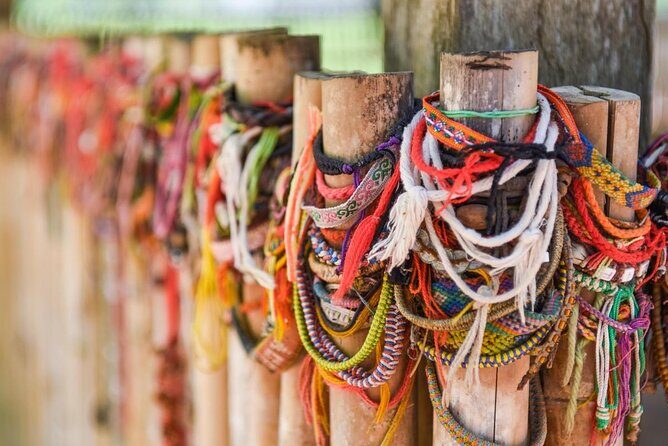
- Choeung Ek details you can actually picture: a former orchard/Chinese cemetery turned execution site
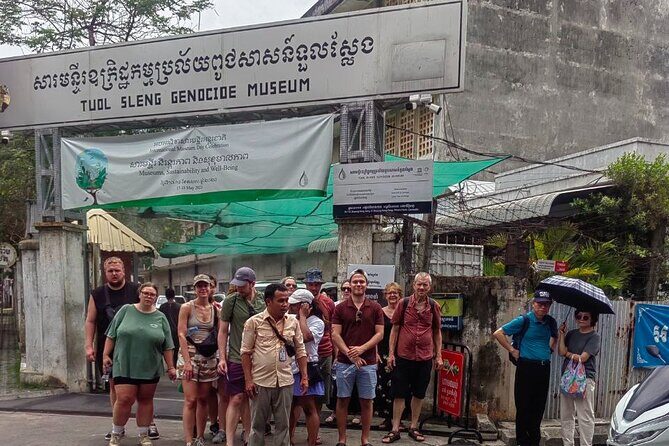
- S21’s prison layout and purpose: a former school used as Security Prison 21
- Small-group feel with a maximum of 15 travelers
- Guides who explain with care, including names like Visal and Sum mentioned in past tours
Phnom Penh’s Killing Fields + S21: Why This Half-Day Works
This is one of those Cambodia experiences where the history is impossible to keep abstract. In roughly four hours, you’ll move between Choeung Ek and Tuol Sleng S21, seeing two different angles on the same system of terror.
I like that the format is tight. You’re not trying to cover a dozen stops; instead, you get enough time to sit with what you’re shown and understand the story behind it. The tour runs about 4 hours, with time split across both locations (each listed as about two hours).
It’s also good value for the structure you get. For around $19.20 per person, you’re paying for an English-speaking guide, a professional driver, and included water and a snack. And because it’s a guided visit, you’re less likely to miss context on what can otherwise feel like a blur of memorials and photos.
You can also read our reviews of more tours and experiences in Phnom Penh
Getting Picked Up in Phnom Penh (and Not Stressing the Day)
Your day starts with pickup offered from your hotel, with the tour ending back at the starting meeting point. The stated meeting point is Grand River Sports Bar (178 Corner Sisovat quay, Riverside Path, Phnom Penh 120201), and the tour notes that it’s near public transportation—useful if you’re planning around timing.
Logistics are where small delays can cause big stress on half-day tours. Here, the plan is simple: you’re driven to Choeung Ek first, then to Tuol Sleng S21, then you’re back. The tour runs with a maximum of 15 travelers, which generally keeps things from turning into a giant shuffle.
One practical tip: keep your phone accessible. The tour provider has used WhatsApp in at least one pickup coordination situation, so staying reachable helps you avoid last-minute confusion. Also, be ready a little early—just enough to settle your mind before you head out.
Choeung Ek Genocidal Center: Seeing the Execution Site Up Close
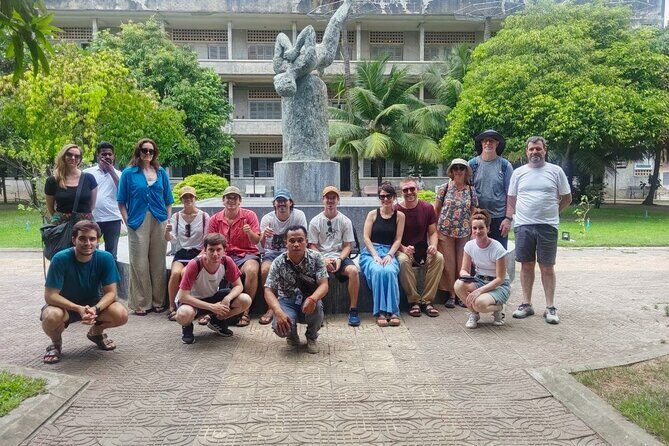
Choeung Ek is the best-known Killing Fields site. It sits about 17 km south of Phnom Penh city center, and the location itself carries layered meaning: once an orchard and a Chinese cemetery, it was transformed under the Khmer Rouge into mass execution grounds.
The tour notes put the Khmer Rouge’s killing window between 1975 and 1979, with victims killed there in the thousands and a wider system that affected far more people across Cambodia. You’ll also hear about the discovery of mass graves after the fall of the Khmer Rouge regime, including 8,895 bodies found at Choeung Ek. That number matters because it turns the idea of scale into something you can grasp, even though your brain will still push back.
At this stop, plan to move slowly. You’re likely to see memorials and displays that make it clear this wasn’t random violence—it was organized terror. The experience can feel very stark, so I find it helps to let the guide set the pace and avoid rushing ahead just to get through it.
What you’ll like here: this stop gives the clearest sense of place. You’re not only learning history; you’re standing at a specific location where executions happened. With a good English-speaking guide, the site’s purpose becomes easier to understand without turning the day into a memorization quiz.
What to consider: it’s outdoors and reflective, which means the emotional impact builds as you walk. It can also be difficult if you’re sensitive to graphic subject matter. You can’t really “opt out” of the seriousness here—so if you’re visiting with someone who has trouble with heavy history, discuss that ahead of time.
Tuol Sleng Genocide Museum (S21): When a School Becomes a Prison
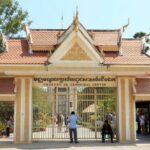
After Choeung Ek, you’ll head to Tuol Sleng Genocide Museum, commonly called S21. This site is especially chilling because it was once a school—listed as a former secondary school used as Security Prison 21 by the Khmer Rouge from 1975 until 1979.
The tour details explain how the Khmer Rouge adapted the buildings. For the prisoners processed through the system, they converted the complex into detention and interrogation space. The notes mention that five buildings were turned into prison and interrogation centers around March or April 1976, and that the school was originally tied to the name Tuol Svay Pray High School, associated with a royal ancestor of King Norodom Sihanouk.
Why S21 is so important is that it focuses on the machinery of persecution. Choeung Ek is about where people were killed; S21 is about how the system filtered, detained, and processed people before they were sent elsewhere. The guide’s job here is crucial: the museum’s layout can be factual and intense, so clear narration helps you connect the details into a coherent timeline.
What you’ll like here: the museum format makes history feel immediate. Seeing how a place of learning became a tool for control and interrogation is a powerful lesson in how quickly normal life can be twisted.
What to consider: S21 can feel overwhelming. If you need breaks, use the time your guide gives you to pause rather than pushing yourself to “finish fast.” And because entrance fees aren’t included, you’ll want to keep that in mind so you’re not scrambling at the door.
The Role of the English Guide: Clear Storytelling Makes It Bearable
A guided visit is not just “nice to have” at sites like this. The tour includes a professional English-speaking guide, and that can be the difference between getting lost in names and dates versus understanding the bigger picture.
Past tours describe guides like Visal and Sum as especially strong at explaining Cambodia’s story in a way that’s understandable. That matters because you’re dealing with a dense chapter of history where many concepts overlap: the Khmer Rouge, leadership decisions, detention, execution sites, and the aftermath.
A good guide also helps you pace the emotional load. You’ll likely be surrounded by permanent reminders—photographs, evidence, and explanations—and a thoughtful narration style makes it easier to absorb what you’re seeing without shutting down.
And I’ll say this plainly: when you pay for a guide here, you’re paying for translation of pain into meaning. The time is set up for that.



Price and Value: Is $19.20 Worth It?
At about $19.20 per person, this is budget-friendly for a guided half-day that includes pickup, a professional driver, water, and a snack. Most of the cost is essentially being spent on getting you out to two specific sites and providing a guide who can tie the details together.
The trade-off is the part you should plan for upfront: entrance fees are not included for both Tuol Sleng and Choeung Ek. That means your real total will be a bit higher than the headline price once you add tickets. If you want zero surprises, check ticket costs before you go and carry payment options that work for you.
Still, the overall value is strong. You’re not paying just for transportation—you’re paying for interpretation and timing. And you get a small group cap (maximum 15), which typically helps the guide keep an eye on questions and pacing.
Timing, Duration, and What a 4-Hour Day Feels Like
This tour runs for about 4 hours. The structure is simple: you’ll spend around two hours at Choeung Ek and two hours at Tuol Sleng S21 (both listed as about two hours each).
In practice, that’s long enough to feel like you’re not sprinting—but short enough that you’ll want to protect your energy. Wear comfortable shoes. Bring a light layer if it’s warm and you don’t know your comfort level inside buildings. And drink the water provided early; don’t wait until you feel worn out.
Because the day is heavy, I also suggest you avoid stacking other major activities afterward. Even with a snack, your mind will feel busy after S21.
Small Group Size: The Difference Between Crowds and Care
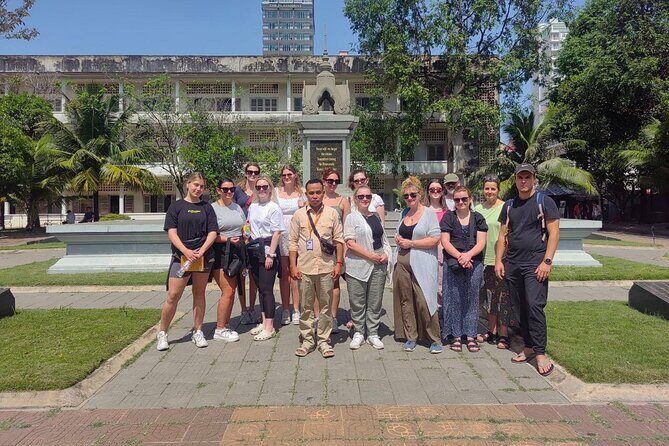
A maximum of 15 travelers is the kind of group size where a guide can still manage flow. You’re not likely to be swallowed by a tour megabus situation where you only catch half the explanation.
Small groups tend to help at memorial sites because you can ask questions and get answers in context. That’s valuable when the history is complex and the site details are specific.
This is also where the included water and snack make sense. You’ll be walking and standing, and the day isn’t long enough to justify a big meal. A small refresh helps you focus.
Tickets, Mobile Access, and Entry-Day Reality
The tour includes a mobile ticket, and confirmation is received at booking time. That’s helpful because it reduces paperwork and speeds up your entry process.
Just remember: the tour notes explicitly say entrance fees are not included. So your plan needs to include the ticket cost for both stops. If you’re the kind of traveler who likes to avoid any last-minute hassle, you’ll feel calmer arriving knowing you’re prepared.
What to Bring (and How to Prepare Emotionally)
This is a history tour, but it’s also a day of remembrance. The tour description points to the Khmer Rouge’s execution system from 1975 to 1979, and the sites are built around evidence and memorialization. So even with a great guide, the day is dark.
Here’s what helps most:
- Comfortable walking shoes and a hat if it’s sunny
- A small amount of cash or payment access for entrance fees you’ll need
- A bottle of water habit—especially because it’s often hot in Phnom Penh
If you’re traveling with family or friends, talk about expectations early. Agree on a pace. Decide in advance whether you’ll sit down briefly if either of you feels overwhelmed.
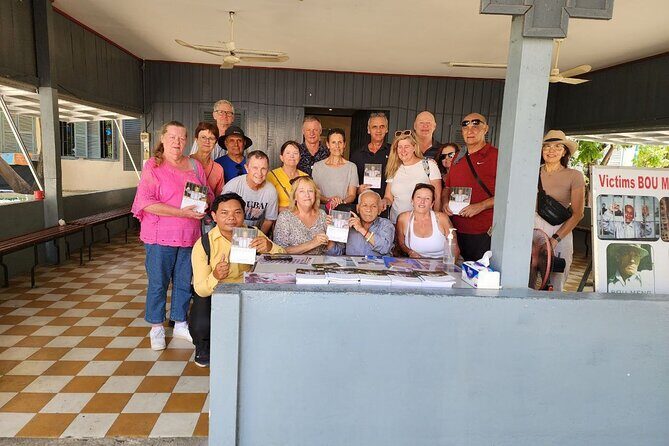
One more detail that came up in past experiences: at S21, there may be opportunities to meet survivor-authored materials, including signed book copies. If that interests you, having some payment ready can make a difference.
Should You Book This Killing Fields and S21 Tour?
Yes—if you want the clearest, most direct way to understand Cambodia’s recent history while you’re in Phnom Penh. This tour hits the two anchor sites that explain how the Khmer Rouge system worked: detention and interrogation at S21, then execution at Choeung Ek.
Book it if you:
- Want an English-speaking guide to explain the context
- Prefer a focused half-day over a long day of stops
- Value structure, small groups, and transportation you don’t have to arrange
Skip (or reconsider) if:
- You’re not ready for an emotionally heavy experience
- You hate paying tickets on-site and need everything included upfront
If you do book, do one smart thing: be on time for pickup and keep your phone handy. This tour is thoughtfully organized, but half-day tours punish late starts.
FAQ
How long is the Half-Day Tour of the Killing Field and S21?
The tour runs about 4 hours.
Is pickup included?
Yes. Pickup from your hotel is offered, and the tour ends back at the meeting point.
Where does the tour meet?
The meeting point is Grand River Sports Bar, 178 Corner Sisovat quay, Riverside Path, Phnom Penh 120201, Cambodia.
What stops are included?
The tour includes two stops: Choeung Ek Genocidal Center and Tuol Sleng Genocide Museum (S21).
Are entrance fees included?
No. Entrance fees for both Tuol Sleng Genocide Museum and Choeung Ek Genocidal Center are not included.
What’s included in the price besides the guide?
The tour includes a professional English-speaking tour guide, a professional driver, clean and safe transportation, and water and a snack.
Do I need to buy a paper ticket?
No. The tour offers a mobile ticket.
What group size should I expect?
The tour has a maximum of 15 travelers.
Can most people participate?
The tour notes that most travelers can participate.
What is the cancellation policy?
You can cancel for a full refund up to 24 hours in advance of the experience start time. If you cancel less than 24 hours before, the amount paid will not be refunded.