REVIEW · BATTAMBANG
Exploring Battambang History (Walking Tour)
Book on Viator →Operated by The Adventure Bike · Bookable on Viator
Battambang’s past is written on every corner. This guided Battambang history walk connects French colonial architecture with the darker chapters of Cambodia’s modern history, from Khmer Rouge to civil war. I especially like the hotel pickup/drop-off that saves time, and the English-speaking guide who makes the stories feel real instead of like a list. The only drawback: it’s a fast-moving few hours, so you’ll scratch the surface on each site rather than linger deeply.
You start at 7:30 am, when the streets are calmer and the light is better for photos. Expect a small group (up to 15), bottled water, and stops where the ticket cost won’t slow you down because admissions are listed as free.
This tour is a strong choice if you want context for what you’re seeing—markets, old houses, power symbols, religious influence—without having to piece the meaning together yourself.
In This Review
- Key points worth knowing
- Getting oriented in Battambang before the heat hits
- French colonial blocks: Central Market and the 300 Houses
- Power symbols and wartime memory: White Elephant, Naga Peace, Governor House
- Chinese temple influence: spotting how faith traveled
- Money and trade: Indochina Bank and Battambang’s trading role
- The guide experience: clear English, fast stories, good pacing
- What to bring, and how to make the route more enjoyable
- Value check: $25 for guided context and free admissions
- Should you book this Battambang history walking tour?
- FAQ
- How long is the Battambang history walking tour?
- What does the tour cost?
- What time does the tour start?
- Is hotel pickup and drop-off included?
- What’s included in the price?
- Is there an admission ticket cost?
- How big is the group?
- What should I bring?
- Can I get a refund if I cancel?
Key points worth knowing
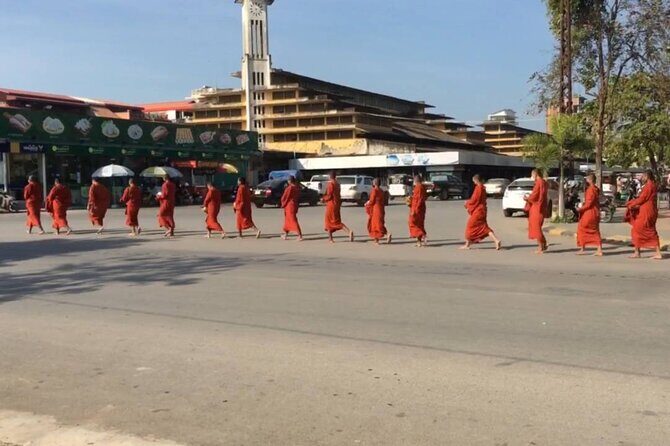
- Hotel pickup and drop-off from Battambang hotels makes the morning easy
- English-speaking guides like Sothea, Sothai, and Reaksa are praised for clear storytelling
- French colonial-to-recent history links architecture to major eras: colonial, Khmer Rouge, civil war
- Religions show up in the route, including Hinduism, Buddhism, Christian, and Muslim influences
- Admission is free for the included stops, and you get bottled water
Getting oriented in Battambang before the heat hits
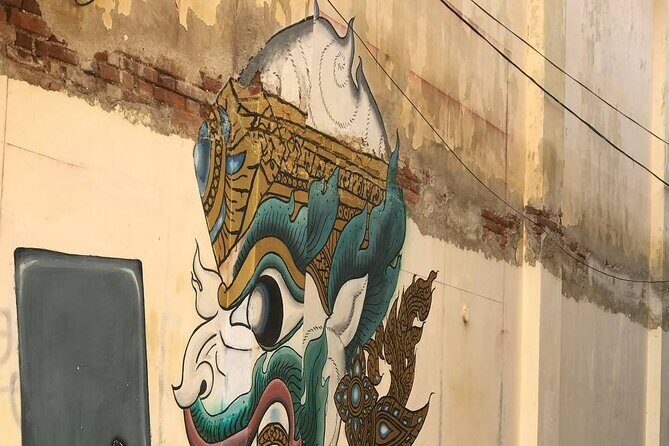
A history walk works best when you get your bearings early, and this one starts at 7:30 am. That timing matters in Battambang because morning is when the city feels most walkable and the photo light is kinder on pale stone, old façades, and painted surfaces. You’ll also save energy by not starting mid-day.
You’ll be with a local English-speaking guide, and that’s the difference between passively seeing buildings and actually understanding why people used them, feared them, worshiped in the area, or traded around them. The route is designed to take you through the parts of Battambang tied to its identity as a trading center—often described as the rice bowl of Cambodia—so the stories aren’t only political. They also explain daily life and how the city functioned.
One practical plus: the tour includes bottled water, and the company lists flexible/sport clothes and sun protection on the packing tips. Bring a camera. You’ll want it for the mix of market architecture, old houses, and monuments with names that carry meaning.
You can also read our reviews of more walking tours in Battambang

French colonial blocks: Central Market and the 300 Houses
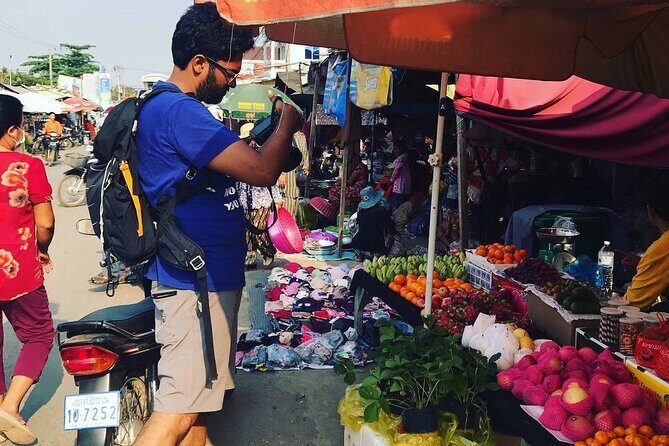
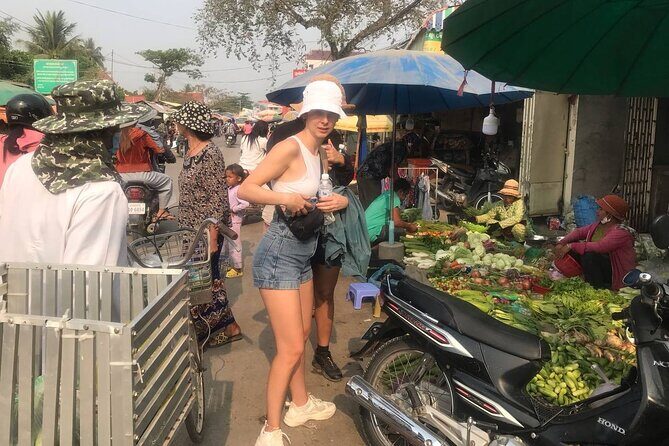
If you like “read the building, then read the story,” this is your section. The route begins with the Central Market, described as French style. Even if you don’t know French colonial architecture by name, you’ll recognize it through the feel: proportions, street rhythm, and the way markets become social hubs.
From there, you move to the 300 House, built during the French colonial period. The number sounds like a detail you’d gloss over. With a guide, it becomes a starting point to talk about how the city was shaped—who lived where, and why certain layouts mattered when Battambang was attracting trade.
A good history walk doesn’t just say this happened; it helps you connect what you see to how people lived. That’s why the guide’s role is so important here. You’ll also get a chance to notice older structures and, in at least some stops, painted wall details and colonial-era façades that make the city look like a timeline rather than a collection of landmarks.
Potential consideration: because you’re moving through multiple stops in a few hours, you may need to choose your pace. If you want to stare at every detail, slow down for a moment—then catch up. Don’t try to photograph everything at once.
Power symbols and wartime memory: White Elephant, Naga Peace, Governor House
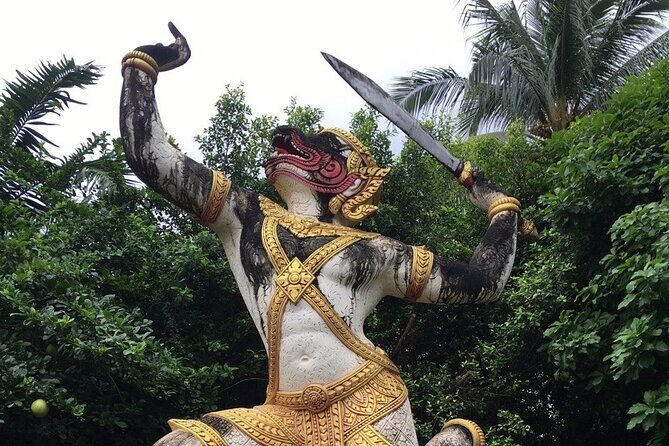
Next comes the part of the route that can feel heavy, even if you’re traveling lightheartedly. Battambang history includes eras that left scars on both the landscape and the way people talk about the past. The tour frames these chapters with specific sites and symbols.
You’ll see the White Elephant, tied to the period when Thailand controlled the region. It’s the kind of monument that forces a question: how do power and identity get displayed in stone and symbol? Your guide’s job is to explain why this matters, not just what it looks like.
Then there’s Naga Peace, described as No more war in Cambodia. It’s a different tone from the colonial and war chapters—more like a public statement that tries to close an era. In Cambodia, symbols like this often blend religion, cultural storytelling, and political reality, so it’s worth paying attention to what your guide connects it to.
The hardest stop is likely the Governor House, described as a very bad time in Battambang history. This is where a guide really earns their fee. You’ll want context for what you’re seeing and what it represented during conflict. Without that, the site can look like just another old building. With context, it becomes a memory device—something the city carries forward.
Chinese temple influence: spotting how faith traveled
Battambang has long been shaped by trade routes, and one visible result is religious influence you can recognize with your eyes. The tour includes the Chinese Temple, with an emphasis on how Chinese religion influenced the local culture.
This stop helps you understand something important: religion here isn’t only about worship inside a compound. It shows up in language, community patterns, and how neighborhoods formed around traders and visitors. A guide can also point out the little cues you might otherwise miss—style choices, where devotional space sits, and how these buildings fit into the surrounding street life.
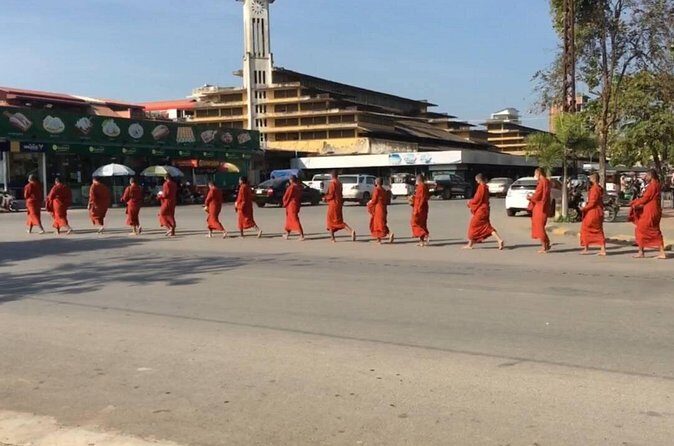
In a short morning, this stop may be the one that feels most like a living place rather than a museum. Even if the building itself is quiet, it’s connected to the routines of people who still pass through the area.
If you’re the type who likes photo stops, this is a good place to slow down. Temple exteriors and details tend to reward careful framing—especially with the morning timing.
Money and trade: Indochina Bank and Battambang’s trading role
A city’s history isn’t only political battles and colonial dates. It’s also money—who controlled it, how it moved, and why trade mattered. That’s why the route includes Indochina Bank, explained as how the money run.
This stop is useful because it puts the city’s grand eras into a practical frame. You’re not just learning names of periods; you’re learning why those periods mattered to everyday people. When a market is described as French style and an old house is linked to colonial construction, it makes sense. Then the bank stop ties it together: commerce needed infrastructure, and infrastructure needed control.
If you’ve come to Battambang for food, rice fields, or the relaxed vibe, this part helps you connect the calm to the engine that created it: trade. The guide’s narration can also help you understand the city as a hub rather than a stopover.
Tip for your photos: banks and institutional buildings can look a bit flat when shot straight on. If you can, step to an angle and include a bit of street context so you can see how the building sits in real life, not just as a standalone monument.





The guide experience: clear English, fast stories, good pacing
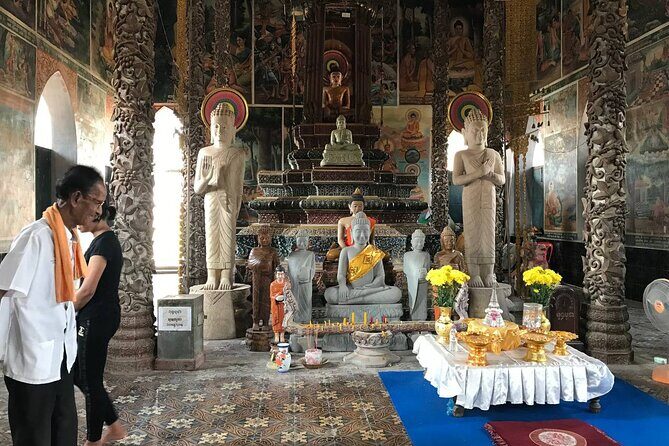
The quality of a history walk lives and dies on the guide, and the pattern in the guide feedback is consistent: people remember the clarity of English and the energy behind the explanations. Names that show up in guide credits include Sothea, Sothai, and Reaksa. In the feedback I’m using to judge the experience, they’re praised for being friendly and for bringing real passion to the material—so you’re not stuck reading a signboard while wondering what it means.
You’ll also appreciate the pace if you’re short on time. The experience is listed as 3 to 4 hours, and that’s about right for getting a structured overview without turning the day into a marathon. Your guide should give enough background at each stop so you don’t need to research on the spot.
Still, be realistic. In a short route through colonial sites, wartime memory points, religious landmarks, and financial history, you won’t get to deeply analyze every period. Think of this as a guided map. After this, you’ll know what you want to re-visit on your own, and you’ll have better questions when you talk to people.
What to bring, and how to make the route more enjoyable

This is a morning-oriented tour, so your comfort matters. The packing suggestions are simple and smart: bring a camera, wear flexible clothes or sport clothes, and don’t skip sun lotion and sunglasses.
I’d also add one practical habit that helps on photo-heavy history routes: charge your phone/camera and take a few test shots early. If you wait until the best monument, you’ll waste time adjusting settings.
Because you’ll be out and about for about 3–4 hours, bring a light layer if mornings feel cool to you, and carry a small amount of cash just in case you want a snack or drink later. The tour includes bottled water, but personal expenses are not included.
If you’re sensitive to heat or uneven sidewalks, plan to take breaks during transitions. A good guide will build in pauses for explanation and photos, but you’ll still want a little flexibility in your own pace.
Value check: $25 for guided context and free admissions
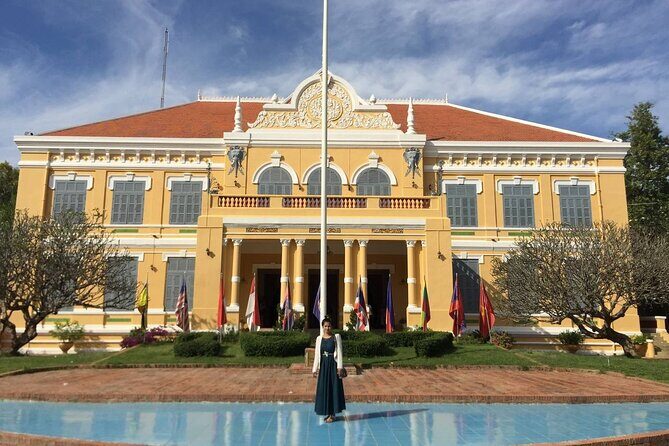
At $25 per person, the value comes from what’s bundled. You’re paying for more than movement through town. You get a local English-speaking guide, bottled water, and all fees and taxes. And admissions are listed as free, so you’re not surprised by extra ticket costs at each stop.
For context-based tours, pricing like this can be a sweet spot if you care about understanding the “why” behind what you see. Without a guide, you could walk between sites on your own. You’d still see the market, old houses, and monuments. But you might miss how the tour links them across major eras—French colonial, Khmer Rouge, civil war—and how it connects religion and culture in one coherent route.
Group size helps, too. With a maximum of 15 travelers, you’re more likely to get clearer answers and not feel like you’re being herded along.
One more note: the tour is described with hotel pickup/drop-off in Battambang hotels. That cuts down friction, especially if you’re trying to fit history into a short itinerary.
Should you book this Battambang history walking tour?
Book it if you want a guided, story-driven way to understand Battambang’s major eras without doing hours of research first. It’s especially worth it if you care about the relationship between architecture and history: why the market looks French style, what the 300 House represents, and how monuments like White Elephant, Naga Peace, and the Governor House fit into the bigger timeline.
Skip (or add extra time on your own) if you prefer slow museum-style visits. This is designed for an efficient morning overview, not lingering at one site for long.
If you’re traveling with limited time and want your photos to come with meaning—not just pretty views—this is a solid choice. Pack sun protection, bring your camera, and let the guide stitch the city together in your head.
FAQ
How long is the Battambang history walking tour?
It’s listed as about 3 to 4 hours.
What does the tour cost?
The price is $25.00 per person.
What time does the tour start?
The start time is 7:30 am.
Is hotel pickup and drop-off included?
Yes. Hassle-free hotel pickup and drop-off from Battambang hotels are included.
What’s included in the price?
A local English-speaking guide, bottled water, and all fees and taxes are included.
Is there an admission ticket cost?
Admission is listed as free for the experience.
How big is the group?
The tour has a maximum of 15 travelers.
What should I bring?
Bring a camera and wear flexible clothes or sport clothes. Sun lotion and sunglasses are also recommended.
Can I get a refund if I cancel?
Yes. Free cancellation is available up to 24 hours in advance for a full refund.