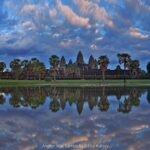
Sunrise or sunset at Angkor feels like a living show. A private tuk-tuk day lets you hit the highlights without being yanked along by a big group, and it’s a great way to do Angkor Wat and the nearby temples at your own rhythm. Think classic Khmer stone, crowds that thin out when you time it right, and that low-angle light that makes everything look carved yesterday.
What I like most is the human touch. You get an English-speaking driver plus temple information, and that combo matters when you’re trying to read bas-reliefs, understand what you’re seeing, and keep your day flowing smoothly. And yes, the included cool bottled water is a small comfort that helps a lot.
One consideration before you book: plan your Angkor entry ticket and check the pickup details carefully. Admission tickets are not included, food and drinks are not included, and the info around pickup is a bit mixed—so confirm what’s actually happening for your start time, especially if you’re doing sunrise.
In This Review
- Key things to know before you go
- Why a tuk-tuk day works so well for Angkor
- Sunrise vs sunset: the light changes everything
- Angkor Wat: start with the big statement (about 3 hours)
- Ta Prohm: where nature performs in the background (about 2 hours)
- Ta Keo: the sandstone milestone (about 40 minutes)
- Bayon Temple: faces, bas-reliefs, and everyday scenes (about 2 hours)
- Angkor Thom South Gate: quick and dramatic (about 15 minutes)
- Private pace and that tuk-tuk advantage
- Price and value: what $32 really covers
- Logistics that can save your sunrise (or keep your sunset calm)
- Who should book this tour?
- Should you book? My call
- FAQ
- FAQ
- Is the Angkor Archaeological Park entry ticket included?
- Do I get a professional tour guide?
- Is hotel pickup included?
- What does the tour cost include?
- What’s the total duration of the tour?
- Is the tour private or group-based?
Key things to know before you go
- Private tuk-tuk pacing: You can slow down, pause for photos, and reorder your priorities more than on a bus tour.
- English-speaking driver + temple information: It’s not presented as a full guide package, but you’ll get helpful context.
- Smart temple mix in one day: Angkor Wat, Ta Prohm, Ta Keo, Bayon, and Angkor Thom’s South Gate in a logical route.
- Sunrise or sunset option: The same temples feel totally different when the light changes.
- Cooling down matters: Cool bottled water is included, and you’ll be walking on uneven stone and steps.
- Tickets and food aren’t included: You’ll want to sort entry and snacks so you’re not scrambling mid-day.
Why a tuk-tuk day works so well for Angkor
Angkor is huge. Even when you stay “close,” it still means movement, waiting, and walking. A tuk-tuk tour shines here because it gives you mobility without the stress of riding in a packed vehicle for every single stop.
You’re also less trapped by a fixed group schedule. On this kind of private setup, you can spend an extra 10 minutes looking at the carvings, then move on when you’re ready. That matters at Angkor Wat, Bayon, and Ta Prohm—places where you’ll naturally want to linger.
Another quiet perk: the ride itself helps you understand the layout. The moment you bounce between temples and gates, you start seeing Angkor less like a checklist and more like one connected “city” of stone and stories.
You can also read our reviews of more evening experiences in Siem Reap

Sunrise vs sunset: the light changes everything
This experience is built around sunrise or sunset versions. That choice isn’t just about the sky—it changes how the temples feel.
Sunrise tends to mean cooler air and a calmer start. The stone looks softer, details stand out, and Angkor Wat’s symmetry gets that dramatic early glow. If you’re sensitive to heat, sunrise can also be more comfortable for the walking parts.
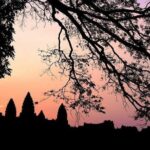
Sunset is the flip side. Later in the day, you’ll likely have warmer temperatures, but you get that end-of-day golden light that makes the sandstone and laterite tones pop. It can be a great fit if you want a slower morning in Siem Reap and then a “cinematic” finale.
Whichever you pick, dress smart. The temples can mean stairs and uneven ground, and the sun (or early chill) can change fast.
Angkor Wat: start with the big statement (about 3 hours)
Angkor Wat is the headline for a reason. It’s the world’s largest religious structure, spread across about 400 acres (160 hectares), and it’s considered a high point of Khmer architecture. On a half-day temple plan, it deserves the time because it’s not just one view—it’s layers of courtyards, causeways, and carved surfaces.
With about 3 hours, you have enough time to do more than the quick walk-by. This is where you’ll notice how the design guides your eye. The angles, the symmetry, and the way the complex funnels you toward key viewpoints make more sense once you’re not rushing.
Two practical notes. First, Angkor Wat admission isn’t included, so bring your entry plans. Second, go in expecting both crowds and stillness. Early or late versions can help with crowd flow, but you’ll still share the space—so build in patience.
Ta Prohm: where nature performs in the background (about 2 hours)
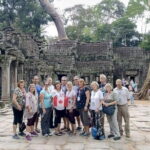
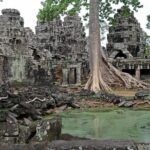
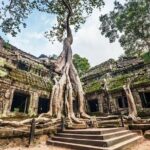
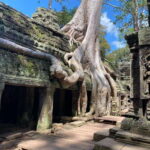
Ta Prohm is the temple where stone and roots share the job. Built in the late 12th century, it was originally known as Rajavihara, the Monastery of the King. Today, the big draw is the way nature reclaims sections of the site, turning parts of the ruins into a living scene.
With about 2 hours, you can do it justice. This isn’t a “stand at one spot” temple. You’ll want to walk the paths, look up, then circle back to understand how the trees interact with doorways and platforms.
What I like about Ta Prohm in a tuk-tuk day is the contrast. After Angkor Wat’s precise order, Ta Prohm feels wilder and more emotional. The carvings and structural details are still there—but the visual drama comes from the way the jungle edits the scene.
Ta Keo: the sandstone milestone (about 40 minutes)
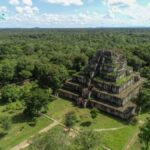
Ta Keo is shorter on the schedule—around 40 minutes—but it’s a smart stop. It’s known as the first temple built entirely in sandstone, and that “all-sandstone” approach makes it a milestone in Khmer construction.
Why 40 minutes works: this is the kind of site where you can get the main idea quickly—scale, material, and the way the temple sits and rises—without turning it into an all-day detour. You’ll still have time to notice stone blocks and structure, and you won’t feel rushed if you keep your eyes up.
This stop is also a useful “breather.” If you’ve already put in time at Angkor Wat and you’re heading into Bayon afterward, Ta Keo gives your body a chance to reset while your brain continues learning.
You can also read our reviews of more tours and experiences in Siem Reap

Bayon Temple: faces, bas-reliefs, and everyday scenes (about 2 hours)
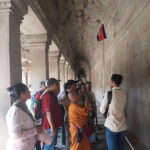
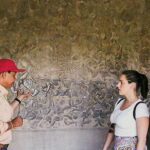
Bayon is where the Angkor story gets personal. It’s important for a couple reasons: it served as a Buddhist temple built by the Angkor (Khmer) Empire, and its bas-reliefs depict not just ceremonial moments, but also events like battles and scenes from everyday life.
With about 2 hours, you can actually look. That time budget matters because Bayon can feel like “too much” if you rush. The face towers are the obvious hook, but the carvings reward patience. You’ll get more out of Bayon when you slow down enough to pick a relief panel and follow it.
If you’re doing a sunrise or sunset version, Bayon can look especially striking as the light glances across raised details. Even if it’s not the “first photo you take,” it’s often the stop that sticks in your memory later.
Angkor Thom South Gate: quick and dramatic (about 15 minutes)
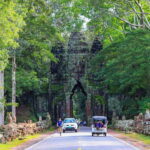
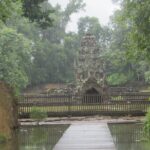
The South Gate at Angkor Thom is famous for scale. You see it as you approach along the causeway, and the sheer size of the entry sets your imagination racing.
This part is only about 15 minutes, so treat it like a palate cleanser and a transition. You’re not meant to “live” here; you’re meant to recognize the moment: the feeling of arriving at a major threshold in an ancient city.
It also helps you connect the dots. After experiencing the main temple complexes, the gate gives you a sense of movement—how people would have entered, processed, and transitioned between spaces.
Private pace and that tuk-tuk advantage
A private tuk-tuk tour is about control. You’re not waiting for someone to stop for souvenirs, you’re not losing time because a bus schedule says now. Instead, you move between stops on a road-and-temple rhythm that feels more local than “tour machine.”
The driver is also part of the value. This experience includes an English-speaking driver and temple information, which means you can ask questions on the fly. Even if you focus mostly on photos, having someone explain what you’re looking at can turn a quick look into a remembered visit.
You’ll also be in a private group, meaning only your group participates. That’s a real advantage at Angkor, where the biggest frustration is often not the temples—it’s how crowded the experience can feel.
Price and value: what $32 really covers
At $32 for roughly an 8-hour day, this is priced for value. The big question is always the same: what’s included versus what you’ll pay separately.
What’s included:
- Private tuk-tuk experience
- Hotel pickup & drop-off (listed as included, but still worth confirming)
- English-speaking driver + temple information
- Cool bottled water
- Mobile ticket
What’s not included:
- Angkor Archaeological Park entry ticket
- Food and beverage
- A tours guide (you’re relying on the driver’s support and provided temple information)
So the “true cost” depends on your entry ticket plan and whether you budget for snacks or a meal. But the core day is well priced because the transportation, driver time, and key comfort items are part of the package.
My take: if you already know you’ll get entry tickets and you’re comfortable handling food on your own, this can be a strong deal. If you expect everything to be bundled, you’ll want to do a bit of planning first.
Logistics that can save your sunrise (or keep your sunset calm)
A day like this runs on timing. And with sunrise tours, that makes confirmation extra important.
Here’s what to double-check before the day starts:
- Pickup reality: the info you see may say pickup is included, yet some descriptions warn pickup may not be part of your plan. Confirm the exact pickup point and time.
- Entry ticket: admission isn’t included, so make sure you have your Angkor Archaeological Park ticket handled before you arrive.
- Food: no meal is included. If you’re doing sunrise, you may want a plan for breakfast before you begin and snacks to bridge the gaps.
- Comfort: moderate physical fitness is recommended, since temples mean walking, stairs, and uneven stone.
One more smart move: if you’re assigned a driver named Chuon, Choun, Choung, or Chour Sin (names like these show up in driver experiences), be ready to ask questions. People have liked the way these drivers can be patient and helpful with temple guidance, and it can make the day feel less like a ride and more like a guided visit without the formality.
Who should book this tour?
Book it if you want:
- A private day with flexible pacing
- An Angkor route that hits major sites without wasting time
- English support and on-the-spot temple context
- A cost-conscious way to do multiple temples in one day
It may not be your best match if:
- You need a full dedicated licensed guide on every stop (a tours guide is not included)
- You want food bundled into the price
- You’re very sensitive to schedule changes and don’t want to think about timing and pickup details
This tour fits couples, small families, and anyone who prefers “guide-as-needed” over “listen to a script.” It also works well if you’ve never ridden in a tuk-tuk and want an easy first try.
Should you book? My call
I’d book this if you’re going in with a plan for entry tickets and you confirm pickup clearly. For the money, it’s a practical way to see the core Angkor highlights—Angkor Wat, Ta Prohm, Ta Keo, Bayon, plus the South Gate—without turning your day into a stressful sprint.
The only reason to hesitate is logistics. Pickup details can be confusing in the written info, and sunrise plans are only as good as the first connection you make. If you verify your pickup time, have entry tickets handled, and pack for temple walking, this can be a smooth, memorable Angkor day.
FAQ
FAQ
Is the Angkor Archaeological Park entry ticket included?
No. The Angkor entry ticket is not included in this tour price, so you’ll need to arrange it separately.
Do I get a professional tour guide?
A tours guide is not included. You do get temple information and an English-speaking driver to help you along, but it’s not listed as a full guide service.
Is hotel pickup included?
The details provided include hotel pick up & drop-off, but the overview also says pickup is not included. Confirm the pickup arrangement directly so you know what to expect for your start time.
What does the tour cost include?
The price includes a private tuk-tuk tour, an English-speaking driver, cool bottled water, temple information, and a mobile ticket.
What’s the total duration of the tour?
It’s listed as about 8 hours.
Is the tour private or group-based?
It’s a private tour/activity. Only your group will participate.