REVIEW · BATTAMBANG
Cultural Cycling Tour – half day (8:00-11:30)
Book on Viator →Operated by First Cycling Tour · Bookable on Viator
You can feel local life moving at bike speed. This half-day cultural ride in Battambang is built around hands-on food production, taught by a real Khmer guide who talks through the process and helps you connect what you see to everyday Khmer life. I love the food stops (rice paper discs, prahok fermentation, and Kralan sampling) because they show how snacks and staples actually get made. I also like the small group size (up to 10) with a relaxed pace that makes conversation easy, even if you’re not a hard-core cyclist. One thing to consider: this tour depends on good weather and involves some riding, so bring sun protection and plan your comfort level.
What makes this tour work is the mix of food crafts and cultural landmarks. You start with Wat Samrong Knong, then roll to the Khmer Prahok Market to see fish fermenting, and finish with Ek Phnom where you watch traditional rice wine and other treats being produced. Guides may include English-speaking locals you’ll recognize from past tours, like Paov or Sothea, and the team behind the operation includes Raksa and Soy Raksa.
If you want a short morning that feels practical, not staged, this is a strong pick at $16—especially because the tour wraps in tastings, a bicycle, bottled water, and key admission fees.
In This Review
- Key highlights worth your time
- Why this Battambang bike tour is such a smart way to eat
- The morning schedule: 8:00 to 11:30, but with a relaxed rhythm
- Stop 1: Wat Samrong Knong and why this pagoda matters
- Stop 2: Khmer Prahok Market and the reality of fermented fish
- Stop 3: Ek Phnom and the food-making you can taste
- The ride between stops: getting closer to artisans (not just passing streets)
- What you actually eat and drink: Kralan, rice wine, banana chips, and more
- Kralan tasting (the standout stop)
- Rice wine and banana chips
- Rice paper discs and spring-roll prep energy
- Included snacks and bottled water
- Price and value: $16 for a guided food loop, not a quick taxi ride
- Cycling comfort, tuk-tuk backup, and who should go
- Guide factor: what makes Paov and Sothea-style tours feel different
- Should you book this Cultural Cycling Tour? (My honest take)
- FAQ
- How long is the Cultural Cycling Tour in Battambang?
- What does the $16 price include?
- Are admission tickets included?
- Is pickup available?
- What if I want to ride but I’m not able to?
- What should I bring since sunscreen and sunglasses aren’t included?
Key highlights worth your time
- Khmer guide as interpreter so you’re not just looking, you’re understanding what you’re seeing
- Wat Samrong Knong + food production stops in one tight half-day loop
- Kralan tasting: sticky rice, black bean, coconut milk, and a little salt cooked in a bamboo tube over charcoal
- Khmer Prahok Market visit to see fermented fish jars used for Khmer prahok
- Small group cap of 10 plus pickup options for an easy start
- Tuk-tuk backup if you can’t ride (instead of forcing the bike)
Why this Battambang bike tour is such a smart way to eat
Battambang has plenty of temples you can visit on your own. What you might miss without a guide is the work behind everyday Khmer food—how artisans turn basic ingredients into products that show up in homes and roadside stalls.
This tour leans hard into that angle. You’re not just hearing about food; you’re watching it happen and then tasting it. The guide translates and helps you ask better questions. When a local explains why rice paper discs are made a certain way, or what fermenting fish changes for flavor, your brain locks onto real details instead of vague descriptions.
That’s why I like that the experience includes bottled water and multiple tastings. You can cycle, stop, watch, and taste without constantly re-planning your day.
You can also read our reviews of more tours and experiences in Battambang.
The morning schedule: 8:00 to 11:30, but with a relaxed rhythm
The tour runs from 8:00 to 11:30, and it’s about 4 hours total. That timing matters in Battambang because mornings are often your best window for comfortable biking and active markets before the heat builds.
You’ll get pickup offered, and the group size is capped at 10, which helps you move together without feeling rushed. The pace is designed for most people to participate, not just athletes. One practical perk: the company notes that if your group has trouble cycling, they’ll include a tuk-tuk for the tour so you’re not left out.
If you’re thinking about doing this alongside other plans later in the day, this format is friendly. You’re done before lunch turns into a full-time event.
Stop 1: Wat Samrong Knong and why this pagoda matters
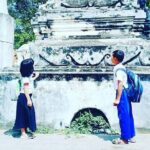
Your first cultural anchor is Wat Samrong Knong. The tour notes it as the oldest pagoda in Battambang, and it’s connected to the Killing Fields. The admission ticket is included, and you’ll spend around 20 minutes here.
What you’ll likely appreciate most is the short, focused visit. This isn’t a long temple sit. It’s enough time to orient yourself, understand why the site is remembered, and then continue while the morning is still fresh.
Practical tip: dress for temples—shoulders and knees covered. Even if you don’t stay long, you’ll be moving between stops.
Stop 2: Khmer Prahok Market and the reality of fermented fish
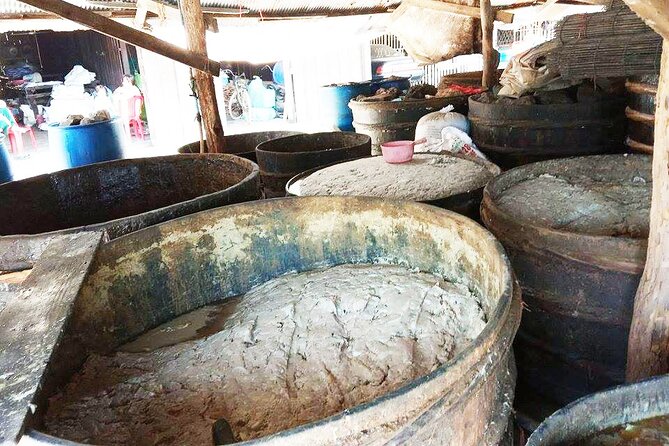
Next comes Khmer Prahok Market, where you witness the process of fish fermenting in jars for the making of Khmer prahok. Entry is free here, and the stop is about 20 minutes.
Fermentation sounds simple until you see it up close. In Cambodia, prahok is one of those flavors you notice everywhere once you start paying attention. This stop gives you the key context: it’s not some mysterious magic sauce—it’s a production process using jars and time.
This is also where a guide earns their keep. A Khmer interpreter can help you connect the smell you might notice to the role it plays in Khmer cooking. And because you’re on a tour, you’re less likely to feel awkward just standing around while artisans work.
Note: this stop is short. If you’re sensitive to strong food smells, go in with the understanding that prahok fermentation is part of the point, not a side detail.
Stop 3: Ek Phnom and the food-making you can taste
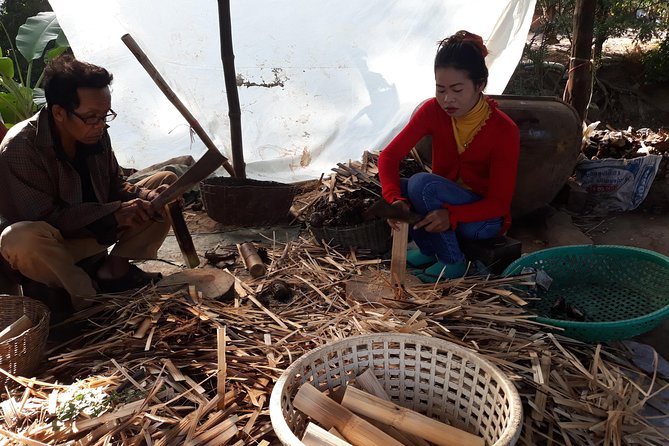
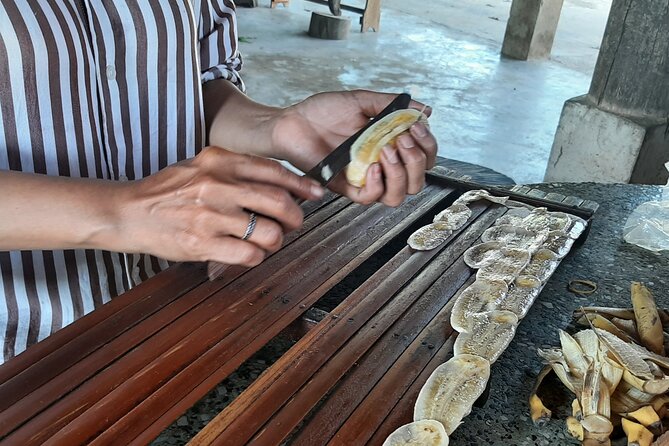
Ek Phnom is your longest stop, at about 1 hour. Here you’ll see traditional production of rice wine, rice paper, and dried banana chips. Admission is included.
This is where your tour shifts from observing to sampling in a more direct way. The guide helps you follow the chain: ingredients become processed foods, and those processed foods become the snacks and flavors you’ll see on tables and roadside stands.
If you’re the type who likes food photos, you’ll also find plenty to document here—but don’t only shoot. Watch how artisans handle their materials. Rice paper isn’t just a product; it’s a method.

The ride between stops: getting closer to artisans (not just passing streets)
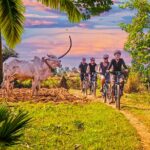
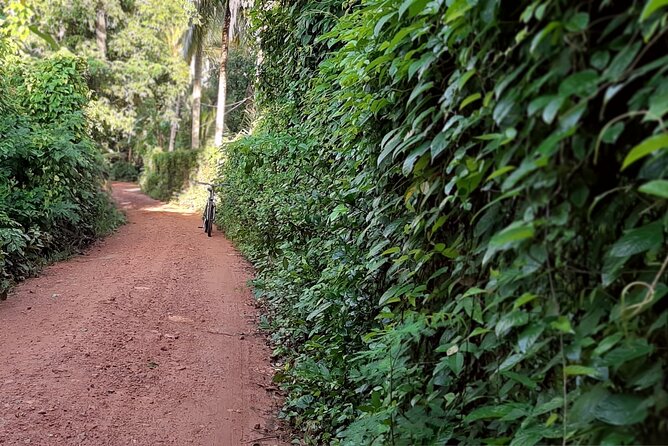
The biking portion matters more than you might expect. One of the strongest features of this tour is that your route takes you past places where local women work—referred to as Ming, meaning aunts—and it connects you to everyday food production at street level.
You’ll see rice paper discs being made, and the guide helps you understand what you’re looking at. That’s a big difference from jumping straight into a restaurant. When you connect the process to what you later eat, the whole experience feels more coherent.
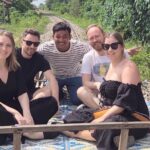
Also, cycling makes the experience feel human. People notice you differently than they do a bus. You’ll likely get a few chances to talk with artisans through your guide, which is exactly the kind of interaction that makes cultural travel feel real.
What you actually eat and drink: Kralan, rice wine, banana chips, and more
Food here is not random snacking. It’s targeted tastings tied to what you’ve just seen.
Kralan tasting (the standout stop)
At Samrong Knong, you’ll sample Kralan—sticky rice with black bean and coconut milk, plus a little salt, cooked in a bamboo tube over charcoal. The bamboo cooking method gives it a distinct feel and aroma, and it’s one of those dishes that’s hard to replicate on your own without local know-how.
When you taste it, you’ll understand why it’s common: it’s comforting, filling, and deeply Khmer in style.
Rice wine and banana chips
At the roadside, you’ll also try rice wine and banana chips as part of the experience. These are smaller tastings, but they add variety—sweet, savory, and fermented flavors in one morning.
Rice paper discs and spring-roll prep energy
You’ll witness rice paper disc making, and that connects to the wider Khmer snack world, including the spring-roll wrapping role those discs play. You may not spend your whole hour as a spring-roll assembly line, but you’ll come away with a better sense of how these products move from hands to meals.
Included snacks and bottled water
The tour includes bottled water and snacks tasting from artisans you visit. That’s good value because you’re not paying extra at each stop just to stay fueled.
Price and value: $16 for a guided food loop, not a quick taxi ride
At $16, this is priced like a budget-friendly cultural morning—but you’re getting more than “just a bike.”
What you’re paying for:
- Local experienced guide (with interpretation)
- Use of a bicycle
- Bottled water
- Snacks tastings of the traditional products you see made
- All fees and taxes
- Some included admission tickets (Wat Samrong Knong and Ek Phnom)
You also get the practical extras that help the day run smoothly: pickup offered and a mobile ticket.
Is it perfect value for everyone? If you hate food smells, you may find the prahok market stop less enjoyable. If you’re expecting a workout, you might feel the ride is more leisurely than you hoped. But as a cost-to-experience ratio—especially for travelers who want local food craft context—this is very hard to beat.
Cycling comfort, tuk-tuk backup, and who should go
This tour is built for most travelers. If you want to ride but your group has limitations, the operator says they’ll include a tuk-tuk as an alternative. That’s a big deal in places where the heat and uneven roads can affect comfort.
Still, come prepared:
- Use suncream since it’s listed as not included.
- Bring sunglasses if you’ll need them.
- Wear clothing that you’re comfortable biking in, but that still works for temple areas.
Small-group tours work best when you can tolerate the fact that you’ll sometimes slow down for viewing. The upside is you’re not stuck in a huge crowd, and you get real time with the guide.
Guide factor: what makes Paov and Sothea-style tours feel different
The names Paov and Sothea show up in past experiences associated with this company, and that hints at the main strength: the guides can handle both culture and conversation.
From the guide-driven format, you can expect:
- Clear explanations of what you’re seeing (not just a list of stops)
- Friendly, interactive communication that keeps you comfortable
- Context about Cambodian history and everyday life connected to the sites and food
When a guide can translate both language and meaning, you stop treating food as random samples and start treating it as culture you can taste.
Should you book this Cultural Cycling Tour? (My honest take)
Book this if:
- You want a short morning in Battambang that mixes temple context + food production.
- You like food that has an origin story—rice paper, prahok, banana chips, and dishes like Kralan.
- You prefer a small group and a guide who interprets what artisans are doing.
- You’re okay with a calm pace and want a relaxed way to get around.
Skip or rethink if:
- You strongly dislike strong fermented-food smells (the prahok market is part of the experience).
- You’re not comfortable riding at all and don’t want the option of partial tuk-tuk support.
One more practical check: this experience requires good weather. If the day turns rainy or too hot, you may be offered another date or a refund, so keep your schedule flexible if you can.
If your goal is to understand Battambang through what people make and eat, this half-day ride is a smart use of time—and it gives you stories that won’t fade after lunch.
FAQ
How long is the Cultural Cycling Tour in Battambang?
It runs from 8:00 to 11:30 and is about 4 hours total.
What does the $16 price include?
The tour includes a local experienced guide, bottled water, snacks tasting of traditional food products made by artisans you visit, use of a bicycle, and all fees and taxes.
Are admission tickets included?
Admission is included for Wat Samrong Knong and Ek Phnom. The Khmer Prahok Market visit is free.
Is pickup available?
Yes, pickup is offered, and the tour uses a mobile ticket.
What if I want to ride but I’m not able to?
The tour notes that if your group wants to bike but has problems with riding, they will include a tuk-tuk during the tour.
What should I bring since sunscreen and sunglasses aren’t included?
Bring what you’ll need for sun and comfort, especially sunscreen and sunglasses if you use them, since they are not included.