That early-morning bike hum is magic.
This Angkor Region & Rainforest Bike Tour lets you skip the worst of the crowd shuffle by taking hidden trails off the main tourist paths, then pairing it with five classic temple stops. I like that you do not have to hunt down gear on your own, because a quality mountain bike and helmet are included, and the ride feels like a real adventure rather than a bus day. The main thing to consider is the temple pass is not included, so budget $37 for a one-day entry on top of the tour price.
You start early, roll out through rainforest trails, and arrive at the temples with less stress and more energy. Guides like Bo Bo and his team run the day with a professional, practical vibe, and the bikes are kept in good shape. One drawback: you still need to plan your clothes for temple rules, because shorts/skirts above the knees and bare shoulders are prohibited in sacred areas.
In This Review
- Key Things I’d Plan Around
- Cycling Into Angkor Without the Usual Gridlock
- Price and What You Actually Get for $50
- Your Morning Start: Time, Meeting Point, and Group Size
- Bikes, Helmets, and Rainforest Trail Reality
- Stop-by-Stop: Angkor Wat and the Angkor Thom Gates
- Angkor Wat
- South Gate of Angkor Thom
- Climb on the protection wall and Prasat Chrung viewpoint
- West gate and North gate of Angkor Thom
- Bayon: 54 towers and 216 faces
- Jungle-Covered Preah Khan and Ta Nei’s Unpolished Feel
- Preah Khan (covered by jungle)
- Tanei (Ta Nei), an ancient hospital
- Ta Prohm: The Temple You Usually See by Road
- Lunch, Coconut Water, and Keeping Your Energy Up
- Temple Pass, Dress Code, and How Not to Get Stuck
- Who This Tour Suits Best (and Who Might Skip)
- The Real Value: Less Queue Time, More Actual Seeing
- Should You Book This Angkor Bike Tour?
- FAQ
- What is the duration of the Angkor Region & Rainforest Bike Tour?
- Where do I meet for the tour?
- What time does the tour start?
- Is the temple pass included in the price?
- Does the tour include a bike and helmet?
- Is lunch included?
- Is hotel pick-up and drop-off included?
- How many people are in the group?
- What should I wear to visit the temples?
Key Things I’d Plan Around
- Hidden trails that cut down on crowds so your day feels more like discovery than sightseeing traffic.
- TREK mountain bike + helmet included, so you travel light and ride confidently.
- Five major temple visits: Angkor Wat, Bayon, Preah Khan, Ta Nei, and Ta Prohm.
- Rainforest riding is real life, including muddy trail days when the weather turns.
- Lunch plus coconut water and drinking water included, so you’re not hunting for snacks mid-ride.
- Small group size (max 10) for easier pacing and fewer bottlenecks.
Cycling Into Angkor Without the Usual Gridlock
If you’ve ever done Angkor by tuk-tuk or bus, you know the pattern: arrive, queue a bit, squeeze a photo, move on. This tour changes the rhythm. You ride first, using smaller paths and off-the-beaten-route trails, so you get that sense of leaving the main crowd stream behind.
The best part is how the bike ride and temple visits work together. You’re not just biking to temples; you’re biking through the surrounding world heritage area, including rainforest trail sections that keep the day feeling alive. It also means your temples time can feel calmer because you’re arriving as part of a moving plan rather than as a pile of groups all hitting the same spot together.
You can also read our reviews of more cycling tours in Siem Reap
Price and What You Actually Get for $50
The tour price is $50 per person for about 8 hours. That’s a fair value for Siem Reap when you look at what’s included: an English-speaking guide, a premium TREK mountain bike, a helmet, lunch, coconut water, and pure drinking water.
Here’s the trade-off: temple entry is extra. The temple pass costs $37 for one-day entry and is not included in the $50. So your all-in cost is more like $87, plus any local transport you may need to reach the meeting point (because hotel pick-up and drop-off are not included).
Still, I think this is good value if you’d otherwise spend money and time renting a bike, arranging a driver, and buying snacks. The included lunch and drinks also make a real difference on a long, active morning.
Your Morning Start: Time, Meeting Point, and Group Size
You meet at Angkor Cycling Tour, Taphul Rd, Krong Siem Reap 17252 and start at 7:30 am. The tour runs about 8 hours and ends back at the same meeting point.
What you’ll feel right away is the group size. There’s a max of 10 travelers, which matters more than people expect at Angkor. Smaller groups move differently. You don’t spend as much time waiting for the whole pack to regroup after a stop, and you’re less likely to get stuck behind shoulder-to-shoulder crowds.
Also, there’s a mobile ticket, and you’ll receive confirmation at booking time. Just make sure you keep your info handy the day of your ride.
Bikes, Helmets, and Rainforest Trail Reality
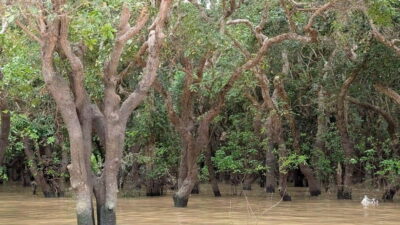
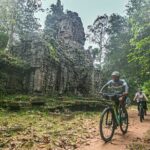
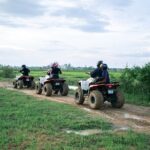
This is a mountain bike day, and it’s not a gentle promenade. You’ll be taking rainforest trails and side routes, and that means uneven ground and, at times, mud. One review described a rainy, muddy day with great trail riding, which is exactly what I’d expect here: the jungle area doesn’t care about your schedule.
Good news: the bike and helmet are included, and they’re described as well maintained. That’s huge. If you’re used to renting the cheapest bike possible, this difference shows up in comfort and control, especially when the path gets slick.
One practical note: you must advise passenger heights at booking. That’s to make the bike fit work. Bike fit matters for safety and comfort, especially when you’re riding for hours and then walking temple steps.
Stop-by-Stop: Angkor Wat and the Angkor Thom Gates
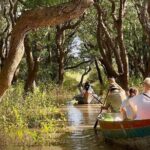
The ride starts with an adventurous push through rainforest trails and natural paths, leading you toward key Angkor area sites. It’s a smart way to begin, because you’re building momentum before you start climbing and exploring stone.
Then you hit the big hitters:
Angkor Wat
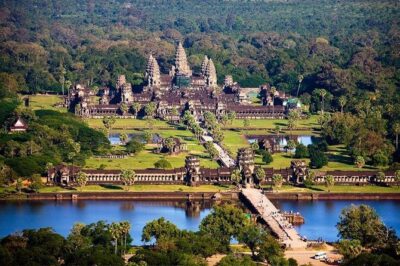
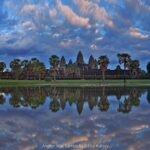
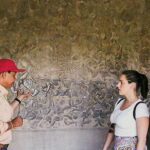
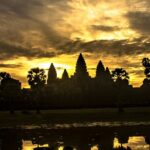
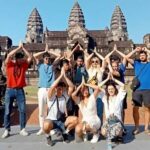
Angkor Wat is the obvious star, and it’s included here as one of the five temple visits. The value in doing it on a bike tour is timing and pace. You’re not just parked there waiting for a tour group photo moment. You get to shift from riding energy to temple visiting energy in a smoother flow.
South Gate of Angkor Thom
Next you pass through the South gate of Angkor Thom, described as the most appealing defensive wall area of Angkor Thom. That matters because it helps you understand the layout of the complex beyond a single postcard view.
Climb on the protection wall and Prasat Chrung viewpoint
You’ll also climb and venture on the protection wall to see a view at Prasat Chrung. This is the kind of moment that makes biking feel worth it. You’re earning a viewpoint with actual movement, not just walking from one main entrance to the next.
West gate and North gate of Angkor Thom
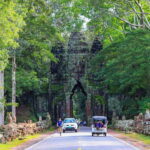
You round out the Angkor Thom circuit by visiting the West gate and North gate. Doing multiple gates in one day helps you see the temple city as a system, not a random collection of structures.
Bayon: 54 towers and 216 faces
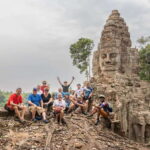
Bayon is next, known for its 54 towers and 216 smiling faces. If you’ve only seen Bayon from one angle in a crowd, this kind of structured route helps you appreciate how the temple sits and how your viewpoint shifts as you move through the area.
Jungle-Covered Preah Khan and Ta Nei’s Unpolished Feel
After Angkor Thom and Bayon, the tone changes. This part of the day leans more toward the overgrown, less-polished side of Angkor.
Preah Khan (covered by jungle)
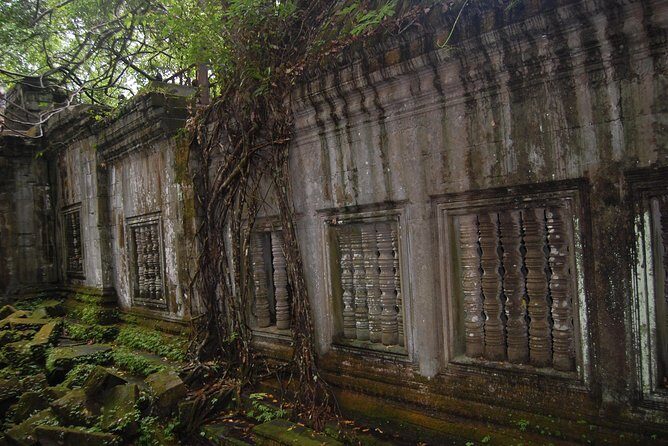
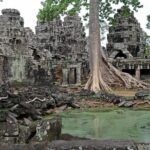
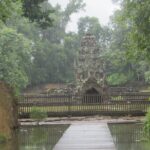
Preah Khan is described as a temple covered by jungle. That detail matters because it changes how the site feels in person. You’re in a temple space that doesn’t look like it’s been “cleaned up” for visitor flow. You’ll likely feel the difference immediately as the air and visuals shift from open temple geometry to shaded greenery.
Tanei (Ta Nei), an ancient hospital
Ta Nei is listed as an ancient hospital. The tour description also notes it feels untouched by archaeologists and embraced by its surroundings. That combination is a big part of why this tour earns strong reviews. Even if you love Angkor Wat, you’ll often remember the places that feel more raw and less processed.
I’d treat this as a slower stop. If you rush it, you’ll miss why it’s included. Take a few extra minutes looking around and noticing how the setting shapes the stones.
Ta Prohm: The Temple You Usually See by Road
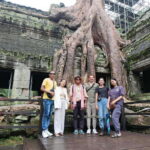
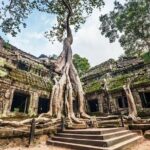
Ta Prohm is included as the final temple stop. The tour framing here still keeps it in the same spirit as the rest of the day: you’re arriving as part of a route that includes rainforest riding and side trails, not just driving straight in.
Even without adding extra expectations, Ta Prohm tends to be a temple where the surroundings do a lot of the work. Since this day is already about moving away from the biggest crowds, Ta Prohm fits naturally at the point when you want something that feels atmospheric rather than purely monumental.
Practical tip: bring your camera gear and extra patience. Temples like these are popular, and you’ll still want to plan for occasional waiting around photo spots, even when the ride helps.
Lunch, Coconut Water, and Keeping Your Energy Up
One of the easiest wins on this tour is that lunch is included, along with refreshing coconut water and pure drinking water.
That matters because you’re doing a full morning and most of the day in active mode. If lunch were extra, you’d burn time searching and you might end up eating too late (or not enough) before you start temple walking. Here, you can keep the day moving.
I also like the coconut water detail. It’s not just a soft drink replacement. It’s a light, refreshing hydration option that feels suited to a humid, outdoor ride.
Temple Pass, Dress Code, and How Not to Get Stuck
This tour does not include the temple pass, and the entry fee is $37 for one-day entry. You’ll want to arrange that so you’re not scrambling at the last minute.
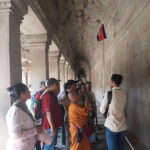
Also: Angkor is an active spiritual site. The rules are clear—clothing that reveals too much is prohibited in sacred palaces. Shorts/skirts above the knees and bare shoulders are not allowed. Respectful dress is strongly encouraged.
If you’re the kind of traveler who packs for comfort first, this is the moment to adjust. Plan to wear something that covers knees and shoulders, even if it’s hot. You don’t want a great day to get interrupted by a simple clothing mismatch.
The tour recommends bringing a camera, sunglasses, and sunscreen, which is exactly what I’d suggest for a morning that starts at 7:30 am and includes outdoor riding.
Who This Tour Suits Best (and Who Might Skip)
I’d put this tour at the top of your list if you:
- want an Angkor day that feels more active and less crowded
- like riding a bike through real paths instead of just getting from A to B
- value included gear, lunch, and drinks
- prefer a smaller group (max 10) for a smoother flow
You might think twice if:
- you hate muddy conditions and rain trail riding (because rainforest trails can get wet)
- you don’t want to arrange a temple pass separately
- you need hotel pick-up and drop-off (it doesn’t include it)
It’s also worth noting that most travelers can participate, but bike tours always have some physical demands due to riding and temple walking.
The Real Value: Less Queue Time, More Actual Seeing
The headline promise is clear: zoom past queues and crowds using hidden trails. In practice, that’s not just a marketing line. When you combine off-main paths, a small group, and a structured temple route, you spend less of your day waiting and more of it looking.
I also like the “gear handled” angle. When a tour provides a maintained TREK mountain bike and helmet, you’re not stuck negotiating equipment quality at the last minute. And when the day includes lunch and water, it’s easier to keep your body on track.
In short, this isn’t just a way to tick off temples. It’s a way to experience Angkor as a lived-in region, with rainforest trail riding and temple stops that feel connected instead of chopped into separate activities.
Should You Book This Angkor Bike Tour?
I’d book it if your goal is to see Angkor with less crowd stress and more sense of movement. The included bike, helmet, lunch, and drinks make it feel practical, not just scenic. The rainforest trail component is the hook that turns a temple checklist into a day you’ll talk about.
I’d double-check one thing first: the temple pass. Since entry is extra, make sure you’re comfortable adding $37 to the $50 tour price. If you’re good with that—and you’re happy to ride through possibly muddy trails—this tour is a strong pick for a first-time or repeat Angkor visit.
FAQ
What is the duration of the Angkor Region & Rainforest Bike Tour?
It runs for about 8 hours.
Where do I meet for the tour?
The meeting point is Angkor Cycling Tour, Taphul Rd, Krong Siem Reap 17252, Cambodia.
What time does the tour start?
The start time is 7:30 am.
Is the temple pass included in the price?
No. The temple pass is not included, and it costs $37 for one-day entry.
Does the tour include a bike and helmet?
Yes. A premium TREK mountain bike and a helmet are included.
Is lunch included?
Yes. Lunch is included, along with coconut water and pure drinking water.
Is hotel pick-up and drop-off included?
No. Hotel pick-up and drop-off are not included, and the tour ends back at the meeting point.
How many people are in the group?
The tour has a maximum of 10 travelers.
What should I wear to visit the temples?
Angkor is a sacred site. Shorts or skirts above the knees and bare shoulders are prohibited in sacred palaces, so respectful clothing that covers shoulders and knees is strongly encouraged.