Sunrise at Angkor Wat feels like a reset. I like that this tour is built around the Angkor Wat sunrise moment, then keeps you moving between big sites without the mental load of finding your way. I also really like the private historian guide and photographer setup, which helps you understand what you’re seeing instead of just snapping photos. One thing to keep in mind: if your guide turns history into a quick checklist, the experience can feel rushed, which one earlier guest flagged.
This is a 5:00 am start with hotel pickup, done in an AC SUV or minivan, and paced for a full day of temple watching (about 7 to 9 hours). You’ll be walking and climbing at times, and the dress code is real: shoulders and knees covered, plus walking shoes. Bring sunscreen and mosquito repellent, because you’ll still be outside before the heat fully turns on.
In This Review
- Key things to know before you go
- Why a 5:00 am private tour is worth it
- What you get included: pickup, AC comfort, and a real guide
- Angkor Wat sunrise: the main event, done the low-stress way
- Bayon Temple and the Buddha faces people travel for
- Ta Prohm: when the jungle really takes the ruins back
- Angkor Thom South Gate: the short photo stop that can still matter
- Baphuon and the less-crowded climb energy
- Terrace of the Elephants: 25 minutes that pays off
- Price and value: $100 per group plus $37 per person tickets
- Pacing, comfort, and who this tour suits best
- Should you book this Angkor Wat Sunrise, Bayon & Ta Prohm private tour?
- FAQ
- What time does the tour start?
- How long is the Siem Reap private day tour?
- Is admission to Angkor included in the tour price?
- What’s included in the tour?
- What should I wear for the temples?
- Is this tour private?
Key things to know before you go
- 5:00 am departure means you’re there before the crowds really swell, especially for Angkor Wat sunrise
- Professional historian guide and photographer helps you see more than postcards
- Private pacing across major temples reduces stress compared to bouncing around on your own
- Angkor Park admission is extra at $37 per person, so budget for it up front
- Dress code and walking shoes matter for smooth entry and comfort
- You get short, intentional photo time at Angkor Thom South Gate, not just a drive-by
Why a 5:00 am private tour is worth it
If you’re new to Angkor, the early start is the best kind of effort. Angkor Wat looks good anytime, but sunrise gives you softer light and a calmer feeling, when you can actually take in the carvings and the atmosphere.
What I like about this format is that it’s not just early for the sake of early. You’re taken to the right place at the right time, then you keep going to Bayon and Ta Prohm the same day. You avoid the usual first-timer trap: spending half your vacation figuring out transport, tickets, and routes, then arriving late and tired.
This tour is also private in the practical sense. You’re only with your group, so you can expect less waiting around and more flexibility if your guide is pacing for questions and photos. That matters at Angkor, where small breaks can mean the difference between good light and glare.
What you get included: pickup, AC comfort, and a real guide
This isn’t a bare-bones transfer. Included in the price are hotel pickup and drop-off, gasoline, and parking/toll costs. You travel in an air-conditioned SUV or minivan with a local guide/driver, plus a professional historian guide and photographer.
That combination is the value. The driver gets you between temple areas without losing time. The historian guide helps you connect the dots: who built what, what changed over time, and what the main visual symbols are supposed to mean. The photographer component is also a plus because sunrise and temple photo angles can be tricky when you’re holding a phone and trying not to trip over your own feet in the dark.
You also get cold water and wipes. It’s a small thing, but on a day that starts before breakfast, it helps you stay functional through the long morning.
Angkor Wat sunrise: the main event, done the low-stress way
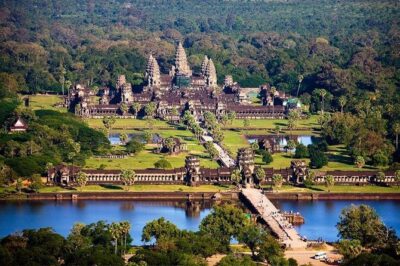
Angkor Wat is the headline for a reason. It’s the largest Hindu temple in the world, and sunrise gives it a serious, almost cinematic feeling. On this tour, you’ll spend about 3 hours here, with admission to the park not included.
Here’s what to expect when you arrive early:
- You’ll have time to see the first light, then still linger after the main crowd thickens
- You’ll be able to move at a human pace without constantly checking maps or catching the next ride
- The guide can point out details you’d otherwise miss, like the temple’s design logic and how it fits together
Dress smart for sunrise and early mornings. You need formal attire for holy sites, meaning shoulders and knees covered. Bring walking shoes because the temple areas involve uneven steps and stone paths. Also, sunrise can feel chilly at first, but it won’t stay that way long.
One practical note: sunrise at Angkor tends to attract people who just want the big shot. If your guide is strong, they’ll keep you from rushing through the meaningful parts. This is where the earlier criticism about a dull, low-insight guide can sting. If you want history, make it clear you want context, not just motion.
Bayon Temple and the Buddha faces people travel for
After Angkor Wat, the tour heads to Bayon Temple for about 1 hour. This is the famous zone where the smiling faces show up again and again across the towers.
Bayon is a different vibe from Angkor Wat. Angkor Wat feels monumental and symmetrical. Bayon feels more intense and more human, because the faces keep appearing as you move around and look up.
With a historian guide, you’re not just looking at expressions. You’re learning what the temple’s imagery is tied to and how the carvings relate to the site’s identity. That kind of interpretation can turn Bayon from I saw the faces into I understand why the faces are the point.
The main consideration here is pacing. Bayon is close enough to enjoy, but it can still feel rushed if the guide is trying to stay on a strict clock. If you’re the type who likes asking questions, this is one of the best stops to slow down a bit.
Ta Prohm: when the jungle really takes the ruins back
Next up is Ta Prohm, where you spend about 2 hours. It’s known as the tomb raider temple because the jungle growth and big roots wrapping the stone look dramatic on camera and in real life.
Ta Prohm works for two different types of travelers:
- If you love ruins, you’ll like how the site looks partly preserved and partly reclaimed
- If you love photography, you’ll appreciate the framing created by trees and roots
The big win on a guided tour is timing and orientation. You don’t just walk in circles. You’re guided through the right areas so you can see how the vegetation interacts with the architecture, instead of spending your time hunting for the most famous angles.
The other advantage: after sunrise at Angkor Wat, you’re not stuck with a stressful plan for getting to the next site. You move there smoothly and keep the day flowing.
Angkor Thom South Gate: the short photo stop that can still matter
You’ll stop at Angkor Thom South Gate for about 10 minutes for great photo shots. That’s short, and it has to be treated as short. The mistake is expecting this stop to feel like a full temple visit.
Instead, treat it like a fast pit stop with a purpose:
- Get your photos quickly, from a couple angles
- Listen for the guide’s pointers so you know what you’re looking at
- Don’t waste the time standing around wondering where to go
When the rest of the day is long, these short stops are actually a benefit. They keep energy up and reduce fatigue. They’re best when you show up ready with your camera settings and you know you only have a brief window.
Baphuon and the less-crowded climb energy
Baphuon comes next with about 1 hour at the site. This is described as a beautiful 11th century Hindu temple, with the upside that it’s often a less crowded option. There’s also climbing to the top, which means more views from the upper levels and a better sense of scale around the surrounding area.
One of the most specific details you’ll hear here is about a reclining Buddha carving dated from the 16th century. That kind of cross-period detail is exactly why a historian guide helps. Instead of seeing one era’s style only, you start noticing how later layers get added to older structures.
The practical part: climbing means uneven ground and stairs. Wear shoes with good grip. If you’re moderately fit, you’ll be okay as long as you pace yourself. It’s not a mountain hike, but it’s not a casual stroll either.
Terrace of the Elephants: 25 minutes that pays off
The last stop on the day is the Terrace of the Elephants, where you get about 25 minutes. This is known for elephant sculptures on the wall and references to ancient activities like kick boxing, polo, horse racing, and the kinds of events that happened in the area’s old arena.
This stop is easy to underestimate because it’s shorter than the other temples. But it can be one of the most interesting parts if your guide connects it to how the complex was used, not just what it looked like.
It’s also a good landing pad for the end of the day. After long temple exploring, a more focused site with clear visual carvings lets you finish strong without adding more climbing or confusion.
Price and value: $100 per group plus $37 per person tickets
The tour price is $100.00 per group (up to 12). That pricing structure can be a serious value if you’re traveling with friends or family and can fill the group size.
Here’s a simple way to think about it:
- If you split the group cost among more people, the per-person tour fee drops fast
- Admission to the Angkor Park is not included and costs $37.00 per person
So your total cost per person depends on how many people are in your group, then you add $37 for park admission. Either way, the real question is what you’re buying: not just access, but time saved and interpretation gained.
For first-time visitors, the value is mainly in the combination of early logistics plus an expert guide. You’re paying to remove uncertainty. At Angkor, that’s not fluff. When you’re up at 5:00 am, you want the day to run smoothly and make sense.
Pacing, comfort, and who this tour suits best
This is a long day built around a sunrise start. Expect a mix of waiting, walking, climbing, and photo stops. The tour duration is about 7 to 9 hours, so plan your energy accordingly.
You’ll want moderate physical fitness. You’re not doing a strenuous trek, but you are moving through stone steps and temple stairways. Walking shoes are essential, and you’ll feel it more if you come in wearing sandals or slippery footwear.
For weather: this experience requires good weather. If conditions aren’t right, plans can change, which matters because sunrise is the key moment. Pack for the day you’ll get, not the day you wish for.
This tour is best for:
- First-timers who want a smart introduction to the Angkor Archaeological Park
- People who’d rather spend money on a guide than time figuring routes
- Groups who can take advantage of the per-group pricing
If you’re the type who prefers total DIY freedom and doesn’t care about historical context, you might not feel the same value. But if you want to understand what you’re seeing while staying on schedule, this setup fits.
One last thought from experience with guided travel: guide quality can make or break a day. One earlier review described a disappointing guide who was less engaged and rushed the history. That doesn’t mean every guide is like that, but it does mean you should choose carefully and ask for the kind of commentary you want, especially during Angkor Wat sunrise.
Should you book this Angkor Wat Sunrise, Bayon & Ta Prohm private tour?
I’d book it if you want a structured Angkor day with minimal stress. The big wins are clear: 5:00 am sunrise timing, a historian guide, and a smooth route between major temples. You also get AC transport and small comforts like cold water and wipes, which helps you stay sharp for the long morning.
I’d hesitate only if you’re highly sensitive to guide pacing and depth, because one past guest had a negative experience tied to a dull, rushed approach at the sunrise portion. If that’s your worry, ask questions about how your guide handles interpretation and timing, and don’t be shy about requesting a calmer pace for history.
If you’re traveling with friends or family who can split the per-group cost, this can be strong value. If you’re solo or a couple, the tour fee still works, but you should factor in the $37 per person park admission to get the real total.
In short: this is a smart first Angkor day, especially if you want sunrise to feel meaningful, not chaotic.
FAQ
What time does the tour start?
The tour starts at 5:00 am.
How long is the Siem Reap private day tour?
It runs about 7 to 9 hours.
Is admission to Angkor included in the tour price?
No. Angkor Park admission is not included and costs $37.00 per person.
What’s included in the tour?
Hotel pickup and drop-off, gasoline/parking/tolls, a private tour with a local guide/driver in an AC SUV or minivan, a professional historian guide and photographer, and cold waters and wipes.
What should I wear for the temples?
A formal dress code is required: covers shoulders and knees. Bring walking shoes or sneakers.
Is this tour private?
Yes. It’s a private tour, and only your group will participate. The group size is up to 12 for the listed price.