REVIEW · SIEM REAP
Angkor Zipline Eco-Adventure Canopy Tour
Book on GetYourGuide →Operated by Angkor Zipline · Bookable on GetYourGuide
Flying over Angkor feels oddly peaceful. What makes this canopy tour interesting is that it’s set inside the Angkor Archaeological Park rainforest, so you get that bird-in-the-trees feeling while the temple area stays close by. I also like the pacing and comfort of the small group limit (up to 9), which keeps things moving and reduces the waiting time between platforms.
Before you book, do check the physical limits. The harness rules are strict: max 125 kg, min height 1 meter, and anyone with heart conditions or who can’t climb stairs or walk short distances without assistance can’t zipline (pregnancy is also listed as not suitable).
In This Review
- Why This Canopy Tour Works in the Angkor Area (Not Just Another Zipline)
- Orchid House Check-In: What Happens Before You Fly
- The Safety Brief That Actually Sets Expectations
- Gold Course vs Silver Course: How the Line Count Changes Your Time
- Gold Course (longer)
- Silver Course (shorter)
- Treetop Highlights: Sky Bridges and the Spiderman Moment
- The Abseil Finale and the Jungle Nature Trail Back
- Price and Value: Is $53 a Good Deal?
- What to Wear in Angkor Jungle Heat (and Why People Get Tripped Up)
- Who This Tour Fits Best (and Who Should Skip It)
- Good fit for you if:
- Not suitable if:
- Small Group Energy: The Best Kind of Crowding
- Practical Tips Before You Go (So the Day Goes Smooth)
- Should You Book Angkor Zipline Eco-Adventure Canopy Tour?
- FAQ
- Where does the tour start and how early should I arrive?
- How long is the canopy tour?
- What’s included in the tour?
- Do I need a ticket for Angkor Wat?
- What should I wear, and what’s not allowed?
- What are the height, weight, and health restrictions?
Why This Canopy Tour Works in the Angkor Area (Not Just Another Zipline)
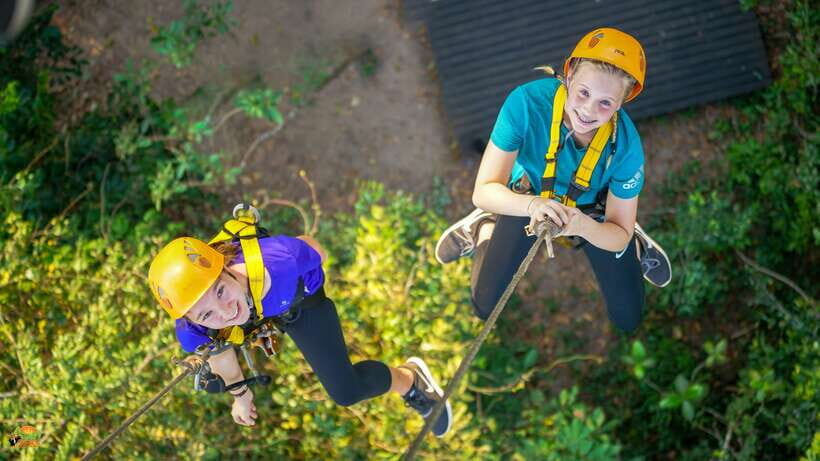
Most zipline tours feel like a single activity slapped onto a day of sightseeing. This one has a different rhythm because it’s happening in the Angkor Archaeological Park rainforest, not far from major temple sights like Angkor Wat and Angkor Thom.
That location changes your experience in two practical ways. First, you’re not just staring at the ground for safety gear. You’re literally moving through a wildlife-in-the-trees environment, with wildlife mentioned as part of the setting. Second, the tour includes more than cables and platforms. You finish with an abseil and a guided nature trail education trek, which makes it feel like part adventure, part outdoors lesson.
Also, the tour is designed around controlled progression: you start with a safety demo, then move through platforms and bridges, and end with the abseil and a short hike back. That structure tends to make the whole thing calmer than the “rush to the first line” style tours.
Orchid House Check-In: What Happens Before You Fly
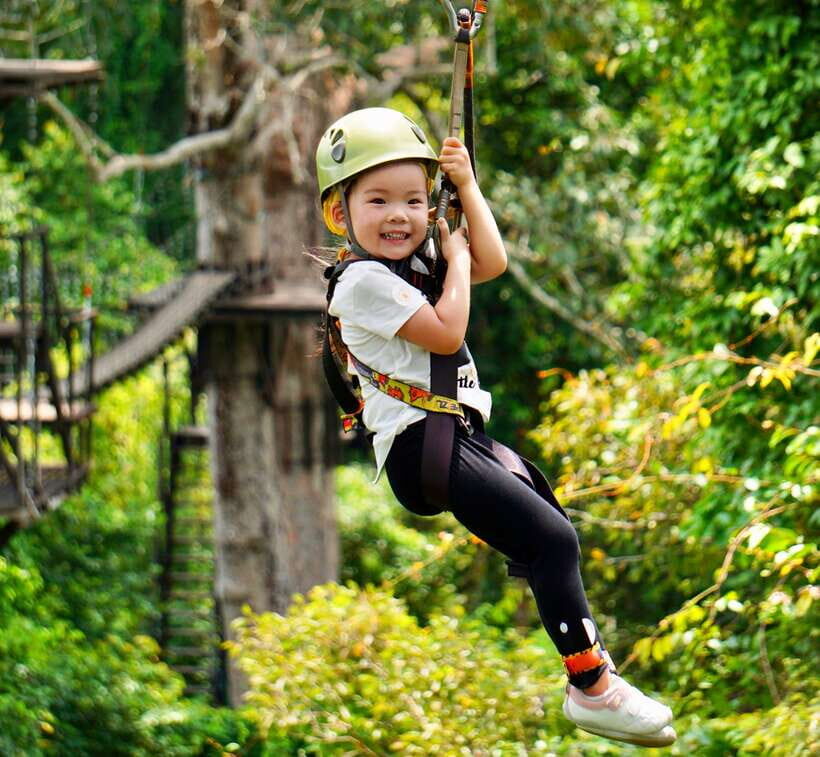
The experience begins at the Operation site called Orchid House. You arrive at least 5 minutes before your reserved start time so you don’t get squeezed between paperwork and harness fitting.
Once you get there, the team greets you and guides you through registration. Then you’re personally fitted with your harness and issued your equipment by the safety rangers. This matters because harness fit isn’t one-size-fits-all, and getting it adjusted correctly helps you feel stable before you step onto the platform.
After gear setup, you move to a safety demonstration platform. This isn’t a quick wave-and-go. Safety rangers demonstrate the rules and the procedure, and the group is brought up to speed on how everything works before you’re paired with trained professionals for the treetop part of the adventure.
You should plan for a short stretch of waiting, even with a small group. The goal is to make sure everyone is ready and correctly fitted—especially with the bridges and the final abseil.
You can also read our reviews of more tours and experiences in Siem Reap.

The Safety Brief That Actually Sets Expectations
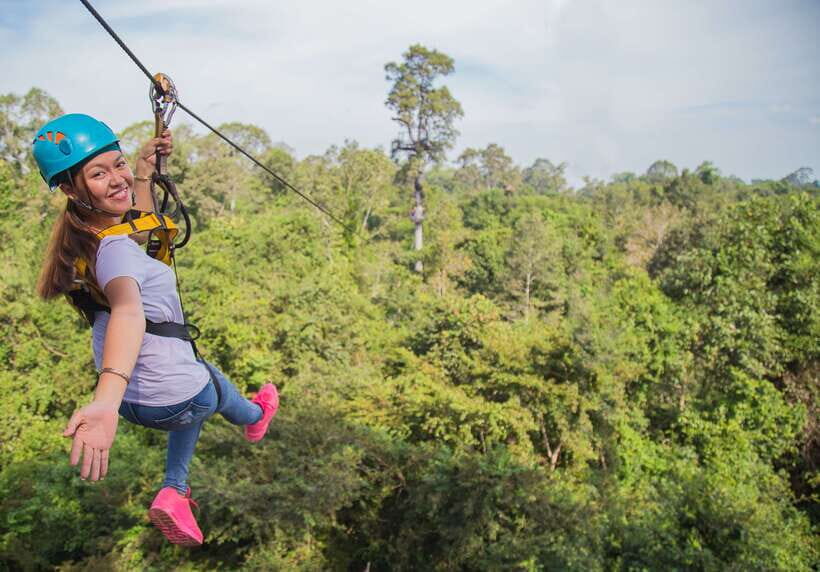
I appreciate that the tour doesn’t treat safety like a formality. You get a real demonstration first, then trained professionals guide you through the treetop route.
You’ll also be told the rules and procedures before you enter the air section. That’s important because the tour includes different elements—single ziplines, super ziplines, multiple sky bridges, and a Spiderman bridge—and each one uses a slightly different body position and mindset.
There’s also a clear helmet requirement while on the zipline. That’s good to hear because it’s one less thing for you to worry about once you’re suited up. And since the tour includes an abseil to the ground at the end, you should expect technique and control to be part of the safety conversation.
If you’re even slightly nervous about heights, this structure helps. You’re not dropped into the hardest-looking section first. You’re taught the system, then you progress.
Gold Course vs Silver Course: How the Line Count Changes Your Time
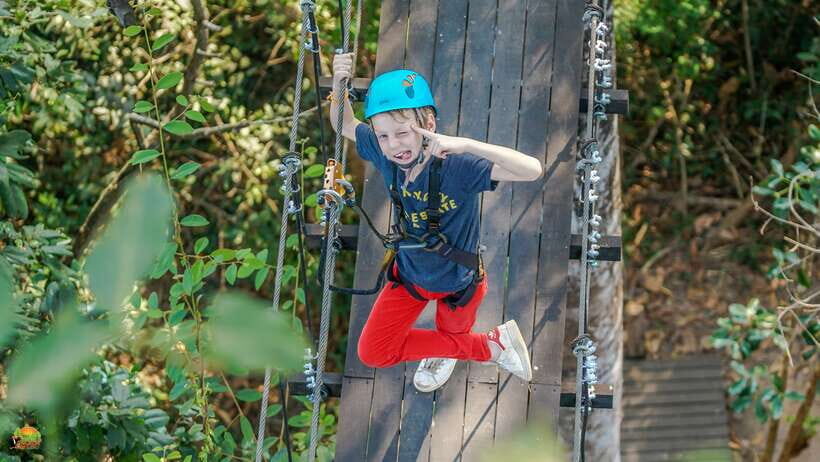
This canopy tour includes two course options: Gold and Silver. Both are built around the same idea—ziplines plus bridges plus an abseil and a return trek—but Gold is the longer, more aerial-heavy experience.
Gold Course (longer)
Gold includes:
- 6 single zip lines
- 2 super zip lines
- 1 double zip line
- 3 sky bridges
- 1 Spiderman bridge
- 1 abseil
- Insurance is included, and safety is prioritized
Silver Course (shorter)
Silver includes:
- 3 single zip lines
- 1 double zip line
- 2 sky bridges
- 1 Spiderman bridge
- 1 abseil
- Insurance is included, and safety is prioritized
So what does that mean for you? If you want more time moving through the treetops—and more of that up-in-the-air momentum—Gold is the obvious pick. If you prefer a shorter route or want something more manageable in overall effort, Silver likely fits better.
Either way, both course versions end with the same big finale: you reach the last platform, then abseil down to the ground, followed by a trek along a nature trail back to Orchid House.
Treetop Highlights: Sky Bridges and the Spiderman Moment
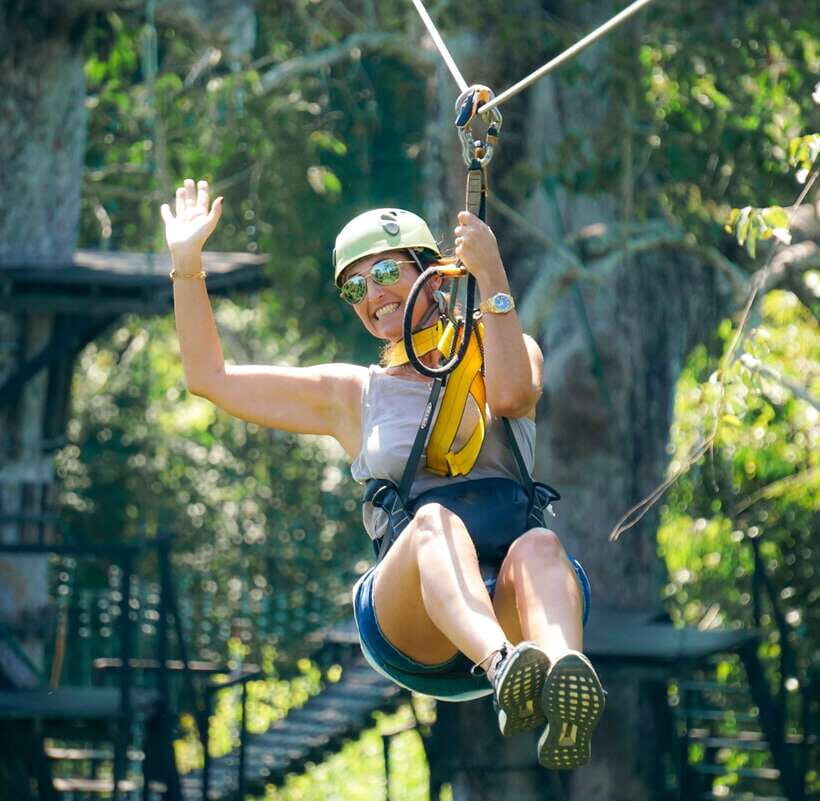
The zipline part is the headline, but for many people, it’s the bridges that linger in memory—because they’re more physical and more interactive than simply flying from point A to point B.
You’ll cross sky bridges during the course. These are designed to keep you moving between cable lines and platforms, and they also break the experience into digestible chunks. Instead of one long, continuous zip, you get brief shifts in scenery and rhythm.
Then there’s the Spiderman bridge. The name gives away the vibe, and the reality is that it demands more balance and confidence than the cable-only segments. If you don’t like being on a narrow crossing, this is the moment where you should slow your breathing, focus on technique, and go step-by-step.
One more detail I like: trained professionals accompany you through the treetop route. The tour isn’t purely self-directed. That reassurance matters on bridges and during transitions, when you’re more likely to rush.
The Abseil Finale and the Jungle Nature Trail Back
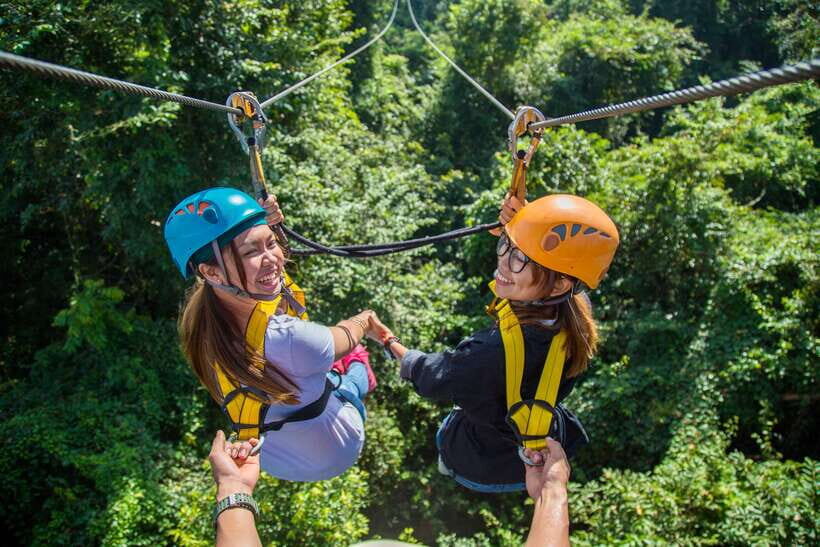
At the end of the last treetop platform, you do the abseil down to the ground. This is a different kind of thrill than zipping through the air. Instead of flying, you control your descent while staying anchored and in the system.
After you’re back on the ground, you don’t just exit. You trek along a nature trail back to the Operation Orchid House, and there’s an educational component. You’ll be moving through the same jungle-adjacent environment where the tour takes place, but at walking speed—often a big mental reset after the adrenaline.
This final segment is also where you catch your breath, review what you’ve learned about the setting, and get your gear back. It turns the whole outing into more than a short rush.
Price and Value: Is $53 a Good Deal?
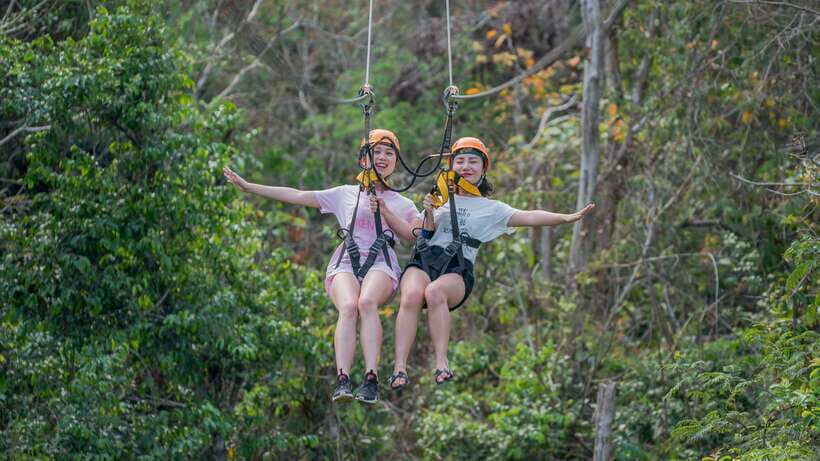
At $53 per person for a 1–2 hour experience, this isn’t a budget add-on. But it also isn’t “just a couple ziplines,” either.
Here’s the value math that matters:
- You’re paying for two types of aerial courses (Gold or Silver) with multiple bridges
- You get a real safety demonstration, harness fitting, and guided treetop movement
- You get an abseil plus a nature trail education trek
- Insurance is included
The key value difference vs the cheaper-sounding alternatives is that this is a full activity package, not simply a few lines and done. One piece of feedback about pricing is basically the same idea: if you only compare the number of zip lines and ignore bridges, abseil, and insurance, it can feel expensive. But when you compare the entire structure, the price-to-time-to-safety ratio looks fair for a regulated canopy adventure.
One practical note: transportation isn’t listed as included. If you’re comparing prices, make sure you’re comparing apples to apples. If transport is added on separately, that affects your final spend.
What to Wear in Angkor Jungle Heat (and Why People Get Tripped Up)
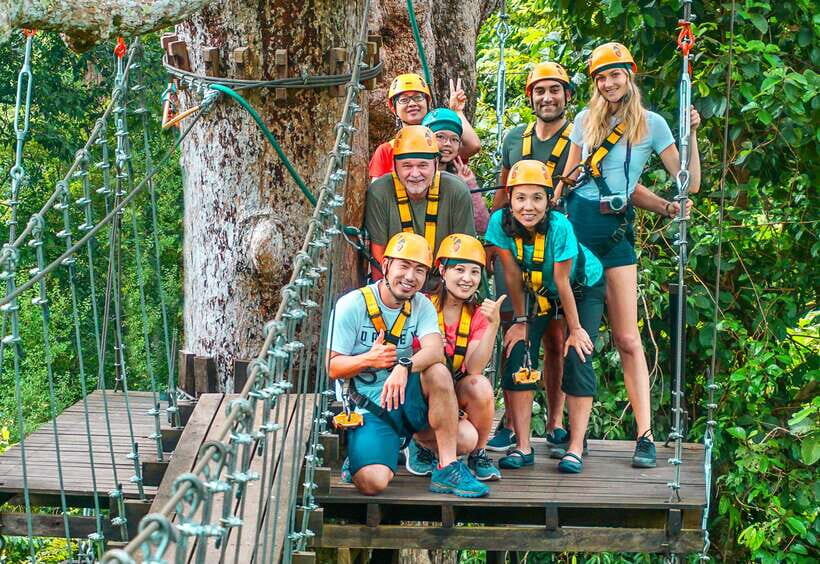
The tour guidance is clear: wear comfortable outdoor clothing, and check the temperature because conditions can swing a lot.
For footwear:
- Flip flops aren’t permitted
- Loose-fitting shoes aren’t permitted
You’ll want shoes that stay secure. Think grip + stability, since you’ll move over bridges and platforms.
You’ll also want to plan for weather. From June to October, bring a raincoat, since it might be raining. This is important because rainforest conditions can change fast, and you’ll still be doing the treetop part.
Because you’re in jungle terrain:
- Use sunscreen, even if it’s cloudy
- Apply insect repellent
And don’t forget the simple gear rule that keeps people safe and on schedule: a helmet must be worn while on the zipline. The tour’s equipment system handles this, but you should be ready to follow instructions quickly.
Last practical rule: no large bags or luggage. If you pack like you’re going on a temple hike all day, you might need to rethink what you bring.
Who This Tour Fits Best (and Who Should Skip It)
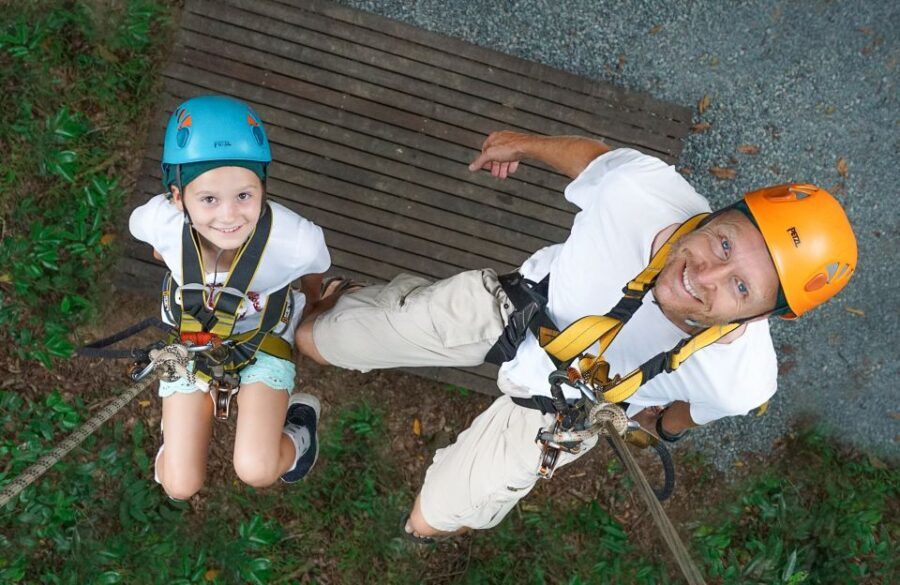
This is an active experience. It uses a harness, includes bridges, and ends with an abseil, plus some walking on the nature trail.
Good fit for you if:
- You’re comfortable with heights and moving through obstacles
- You can walk short distances and climb stairs if needed
- You want a guided adventure that’s more than just sightseeing
Not suitable if:
- You’re pregnant (listed as not suitable)
- You have heart problems or conditions mentioned as a no-go
- You can’t walk or climb stairs without assistance
- You’re outside the limits: under 100 cm tall or over 125 kg
The height and weight limits exist for a reason: harness restrictions. So even if you think you can “probably manage,” the tour still has to follow safety constraints.
Small Group Energy: The Best Kind of Crowding
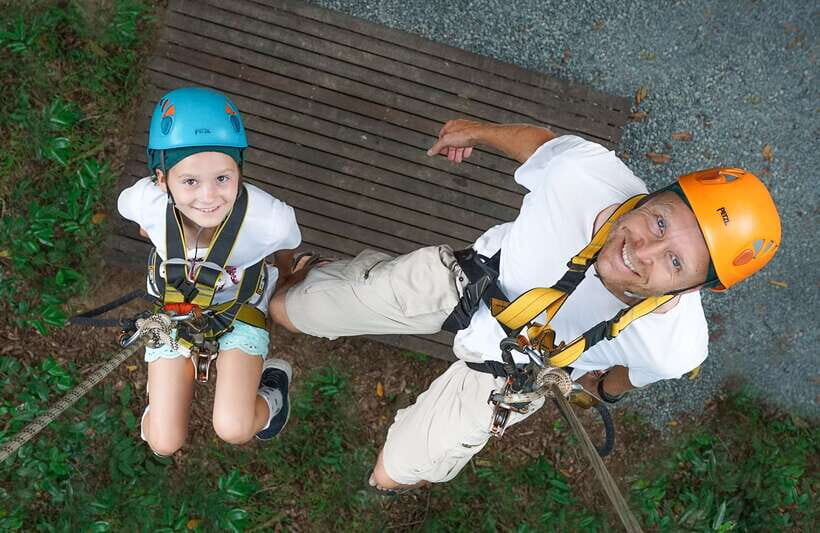
With a small group size capped at 9, you avoid the worst kind of tour crowding. You spend less time stalled in line for your harness, and you get more individual attention during fitting and safety checks.
You’ll also get a live tour guide in Cambodian and English, which helps when it comes to understanding rules fast. This matters most right before you enter the treetops. Clear instructions reduce stress.
One detail I’d call out: the tour includes insurance, and the emphasis on safety is repeated across the structure. That’s not a marketing line you should ignore—when you’re doing bridges and an abseil, insurance and safety systems are part of what makes the experience feel legitimate.
Practical Tips Before You Go (So the Day Goes Smooth)
Here are the things I’d do to make this easy on myself:
- Arrive a bit early—5 minutes before is the minimum guideline at Orchid House.
- Wear secure shoes and comfortable outdoor clothing you can move in.
- Bring sunscreen and insect repellent; jungle time can be sneaky.
- If you’re visiting in June–October, pack a raincoat.
- Don’t bring luggage or large bags.
- If you’re unsure about your ability to climb stairs or walk without assistance, don’t gamble. The tour has specific restrictions.
Also, plan your expectations. This is a physical outdoor adventure in rainforest terrain. If your priority is sitting and taking photos, you might find it too active. If your priority is a memorable change of pace, this is the kind of activity that breaks up a temple-heavy day.
Should You Book Angkor Zipline Eco-Adventure Canopy Tour?
Book it if you want a real canopy adventure near Angkor sights, with a structured safety process, bridges, and a hands-on finale via abseil, plus a jungle return walk with education.
Skip it (or ask more questions first) if you’re outside the physical limits, have a heart condition, or you know stairs and short walks are a problem. Also skip if you hate the idea of balancing on bridges—because the Spiderman bridge is part of both course options.
If your travel goal is to add one authentic outdoor thrill day to your Siem Reap plan, this fits. The $53 price makes sense when you factor in the full course elements, insurance, and the fact that it’s guided from start to finish.
FAQ
Where does the tour start and how early should I arrive?
The meeting point is at the Operation site called Orchid House, with an exact Google Maps location provided by the operator. Plan to arrive at least 5 minutes before your reserved starting time.
How long is the canopy tour?
The experience runs about 1 to 2 hours, depending on the course and timing.
What’s included in the tour?
It includes a zipline course with single and double ziplines, sky bridges (and a Spiderman bridge), plus an abseil to the ground. You also get a nature trail education trek back to Orchid House, along with insurance and a safety-first setup with harness fitting and a safety demonstration.
Do I need a ticket for Angkor Wat?
Yes. A valid Angkor Wat ticket is required.
What should I wear, and what’s not allowed?
Wear comfortable outdoor clothing and a helmet is required while on the zipline. Flip flops and loose-fitting shoes are not permitted. Avoid bringing luggage or large bags.
What are the height, weight, and health restrictions?
Harness restrictions include a minimum height of 1 meter and a maximum weight of 125 kg. It’s not suitable for people with heart conditions, and it’s also listed as not suitable for pregnant women. Anyone unable to climb stairs or walk short distances without assistance cannot zipline.