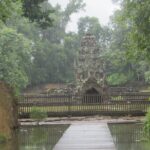
Angkor Wat at sunrise feels like time travel. This small-group tour is built around one practical goal: getting you into the Angkor Archaeological Park early enough to watch the sky change while you’re with an English-speaking guide who can explain what you’re seeing. I like that the group stays small (max 15), so the pace feels human and you’re not just herded. I also like the way the day flows from Angkor Wat into Angkor Thom, Bayon, and Ta Prohm, so you get more than just one big photo stop.
The main thing to consider is the very early start. Pickup can begin between 4:20am and 5:20am, you need a flashlight, and if the sky is cloudy or timing gets pushed, the sunrise moment may feel less dramatic. One possible downside to plan for: after sunrise, there can be a long stretch of waiting before the next temples, so bring patience.
In This Review
- Key Points You’ll Care About
- Sunrise Pickup: Why This Tour Works (Even When You’re Not a Morning Person)
- Angkor Wat Sunrise: Seeing the World’s Most Famous Temple Before the Rush
- Angkor Thom South Gate: The Walls Tell a Whole Story
- Bayon Temple: The 200 Smiling Faces Up Close
- Ta Prohm: Jayavarman VII’s Monastery Complex
- Price and Ticket Reality: What You’re Actually Paying For
- What’s the Day Like, Timing to Walking to Heat?
- Practical Tips: Flashlight, Mosquito Spray, and Dress Rules
- Who This Tour Suits Best (And Who Should Skip It)
- Should You Book This Angkor Wat Sunrise Tour?
- FAQ
- What time does pickup start for this Angkor Wat sunrise tour?
- How many people are in the group?
- Is hotel pickup and drop-off included?
- What does the $39 price include, and what costs extra?
- Do I need to bring a flashlight?
- What should I wear for Angkor in the morning?
- Is this tour suitable for kids?
- What is the cancellation policy?
Key Points You’ll Care About
- Max 15 people keeps the experience from feeling like a cattle line at dawn
- Hotel pickup and drop-off removes the stress of organizing early transportation
- Multi-temple route covers Angkor Wat, Angkor Thom South Gate, Bayon, and Ta Prohm in one day
- Cold bottled water helps on a long morning in the heat that quickly follows sunrise
- What to wear matters: the tour requires trousers or a knee-length skirt/dress, plus you need a flashlight
Sunrise Pickup: Why This Tour Works (Even When You’re Not a Morning Person)
This is one of those tours where the real product is not a temple. It’s the timing. Angkor Wat sunrise is famous, yes—but the bigger value is that arriving early lets you see the place before the busiest crowds and before the day heats up. The tour is scheduled to pick you up between 4:20am and 5:20am, and the start time is listed for 4:30am, so you’ll want to be fully ready before that alarm goes off.
Transportation is handled for you. If you’re traveling with 1–2 people, you’ll go by tuk tuk; with 3 people or more, you’ll use a minivan. Either way, the point is simple: you show up at your hotel, and you don’t have to figure out how to get across town and into the park while it’s still dark.
The tour also promises a small group maximum of 15 travelers, which you’ll feel immediately. With a bigger crowd, sunrise gets chaotic fast. Here, there’s more room for your guide to answer questions as you walk and as you stop.
You can also read our reviews of more tours and experiences in Siem Reap

Angkor Wat Sunrise: Seeing the World’s Most Famous Temple Before the Rush
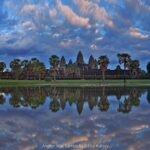
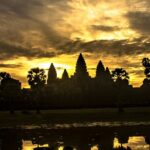
The morning begins at Angkor Archaeological Park with the sunrise setup. You’ll head to the first viewpoint area early, then you pay for entry and settle in to watch the changing light. There’s no guarantee on the sky—on some mornings it’s clear, on others it’s cloudy. Still, even when the sunrise isn’t jaw-dropping, there’s a strong emotional pull to watching the temple emerge from low light while the grounds feel quiet and calm.
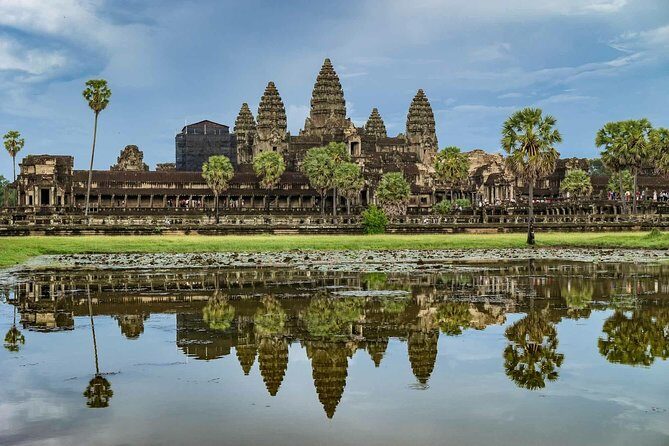
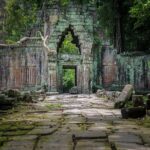
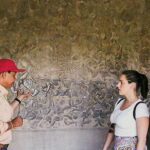
Angkor Wat itself is laid out on a grand scale. It was built between 1113 and 1150 AD and dedicated to Vishnu, the Hindu god of preservation. It’s considered the best preserved of the major temples, and that shows in how sharp the details still feel compared with many other ruins. When you’ve got the guide with you, the walls stop being just walls. You start noticing alignments, the way paths funnel you, and why the temple’s layout feels so intentional.
Here’s what you should expect during the Angkor Wat stop (about 2 hours):
- Time to watch the sunrise or morning light at the right moment
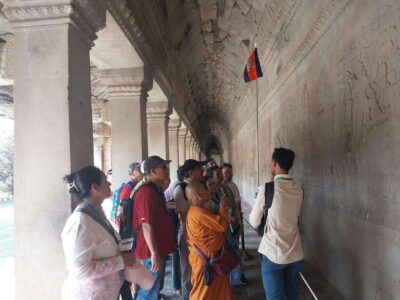
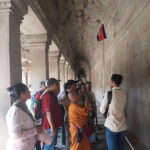
- Guided explanations as you move through the complex
- Enough time for photos without feeling like you’re sprinting from one corner to another
If you’re the type who wants to understand what you’re looking at—not just snap a picture—this is where the tour’s value really shows. You may even meet guides who explain the site with lots of energy. One name that comes up is Nak, described as enthusiastic about sharing temple details.
Angkor Thom South Gate: The Walls Tell a Whole Story
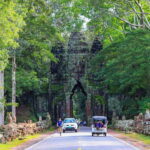
After Angkor Wat, the route shifts to Angkor Thom South Gate. This is one of the great “scale” moments. The outer defenses are massive: walls about 6 meters wide, 8 meters high, and stretching around 13 kilometers in length. That kind of measurement does something to your brain. You can almost feel how protected a royal city had to be.
This stop is scheduled for about 45 minutes, which sounds short—until you realize that at this stage of the day, you’re moving between big structures and you want your energy for what comes next. The south gate also acts like a transition point. It helps you understand the bigger city concept rather than treating each temple like a separate attraction.
A practical tip: don’t rush your photos just because it’s “only 45 minutes.” The gate is a strong backdrop, and you’ll get better shots once you take a moment to stand still and look at the proportions.
Bayon Temple: The 200 Smiling Faces Up Close
Next is Bayon Temple inside Angkor Thom. Bayon is the one people remember: those 200 smiling faces staring out from the towers. The tour gives you about 50 minutes here, which is a good window for both viewing and reading the scene—especially with a guide to help you connect what you see to the temple’s design.
What makes Bayon special in a way that’s useful for your visit:
- You’re looking at a temple that feels more human because of the faces
- You can circle and observe from different angles, and the expressions change with your viewpoint
- The guide can help you notice how the complex is structured, not just how it looks
This is also a spot where sunrise logistics start to matter. If you arrive on time and the group is moving smoothly, you’ll get a calmer experience. If timing has already slipped due to the early start and pickup timing, this kind of temple can feel more crowded. So arriving and maintaining the schedule is part of why small-group format matters.
Ta Prohm: Jayavarman VII’s Monastery Complex
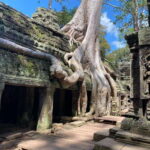
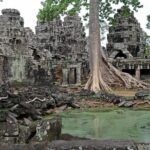
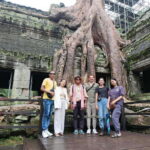
The last major temple stop is Ta Prohm, scheduled for about 1 hour. Ta Prohm is described here as a monastery built by King Jayavarman VII as a residence for his mother and as a school. That’s a different lens than the usual focus on worship. It frames the place as something used for learning and daily life within a religious setting.
With one hour, you won’t see everything in extreme detail. Instead, you’ll want to use this time well:
- Walk slowly enough to catch the main structures
- Pause where your guide points out key parts of the complex
- Take note of how the temple space feels compared with Angkor Wat and Bayon
Ta Prohm is often the most visually memorable temple for many people because of how it appears in modern photos. Even if you’ve seen pictures already, the physical scale and the way the ruins occupy the space can still surprise you—especially after the earlier stops.


Price and Ticket Reality: What You’re Actually Paying For
The tour price is $39 per person, which is a fair deal only if you understand what that number includes—and what it doesn’t.
Included in the tour:
- Hotel pickup and drop-off
- An experienced English-speaking guide
- Transportation (tuk tuk for 1–2 people, minivan for 3+ people)
- Cold bottled water during the tour
Not included:
- National Park Ticket for $37 per person (required)
So your real budget is more like $39 plus the national park ticket. In exchange, you’re getting a guided route with hotel logistics solved, a compact group size, and time-managed stops. For many people, that’s the winning formula: you pay for convenience and interpretation, not just access.
One more value note: the sunrise timing and small-group cap are not “extras.” They’re the reason this route feels easier and more comfortable than self-organizing.
What’s the Day Like, Timing to Walking to Heat?
The full tour runs about 6 to 7 hours. That’s long enough to feel like a real day trip, but not so long that you’re completely cooked by midday. The trade-off is early mornings plus walking.
You’ll also want to plan for the rhythm:
- Early departure in the dark
- Sunrise waiting and temple viewing
- Several temple stops back-to-back
One thing I’d keep in mind: the schedule can be tight. On some days, delays can shift the timing so you might reach key viewpoints with less dramatic sky color than you hoped. And on some mornings, you might find yourself with a long wait after the sunrise segment before the day’s next part gets underway. That doesn’t mean the tour is bad—it just means you should come with patience and a plan to keep yourself comfortable.
Practical Tips: Flashlight, Mosquito Spray, and Dress Rules
This tour comes with clear rules that are easy to ignore—until you’re standing there at dawn.
Bring:
- A flashlight (required)
- Mosquito spray (recommended)
- Comfortable walking shoes
Dress code:
- You must wear trousers or a knee-length skirt/dress
Also aim for:
- Moderate physical fitness because you’ll be walking at multiple temple sites
- A calm mindset. Sunrise is peaceful, but the morning is still work—early and active work
If you’re deciding between this and a more casual Angkor option, these practical requirements are worth weighing. They suggest a tour that takes the morning seriously and expects you to show up ready to move.
Who This Tour Suits Best (And Who Should Skip It)
This tour is best for you if:
- You care about seeing Angkor Wat in the morning light rather than just later
- You want a small group with an English guide who can connect the dots
- You like a route that covers Angkor Thom and Bayon and still ends at Ta Prohm
You might want a different option if:
- You hate early starts and can’t function before sunrise
- You’re expecting a guaranteed spectacular sunrise every single time (the sky can be cloudy)
- You strongly dislike waiting around during transitions
The small-group cap helps a lot, but it doesn’t change the reality that sunrise means early mornings.
Should You Book This Angkor Wat Sunrise Tour?
I think this one is a solid choice if you value timing, guidance, and a focused route. For $39, you’re essentially paying for pickup, transport, an English guide, and a small-group sunrise plan, plus you’ll cover multiple major temples without having to coordinate each stop yourself. The required $37 national park ticket is the one must-factor, so build that into your budget from the start.
If you’re flexible about sunrise conditions, and you pack the basics—flashlight, proper clothing, mosquito spray—you’ll get a smooth, organized day that hits the big highlights in the right order.
FAQ
What time does pickup start for this Angkor Wat sunrise tour?
Pickup is scheduled between 4:20am and 5:20am, with the tour start time listed for 4:30am.
How many people are in the group?
The tour has a maximum of 15 travelers.
Is hotel pickup and drop-off included?
Yes. Hotel pickup and drop-off are included for convenience.
What does the $39 price include, and what costs extra?
The price includes hotel pickup and drop-off, an English-speaking guide, transportation, and cold bottled water. The required National Park Ticket is $37 per person and is not included.
Do I need to bring a flashlight?
Yes. A flashlight is needed for this tour.
What should I wear for Angkor in the morning?
Only trousers or a knee-length skirt/dress is permitted.
Is this tour suitable for kids?
The minimum age is 4 years, and children must be accompanied by an adult.
What is the cancellation policy?
Free cancellation is available. You can cancel up to 24 hours in advance for a full refund. If you cancel less than 24 hours before the start time, the amount paid is not refunded.