REVIEW · ANGKOR WAT
Angkor Temples Highlights Tour: 2 Days with Sunrise
Book on GetYourGuide →Operated by BAYON GUIDES · Bookable on GetYourGuide
Sunrise at Angkor changes your whole tempo. This 2-day highlights tour is built around seeing Angkor Wat at first light, then stacking classic Khmer sights with a Grand Circuit-style route. It’s a simple formula: early starts, guided context, and enough time at key temples to actually look up at what you came for.
I especially like the way this tour leans on a professional English-speaking guide. Names show up in real bookings, like Leang, Sam, Say, Tida, and Steven, and the common thread is clear explanations and smart pacing. The second thing I love is that you’re not trapped in one bubble: you move from big postcard stops into temples with a very different mood, like Ta Prohm and the carving-heavy Banteay Srei.
One consideration: you’re paying for the guide and transportation, but the temple pass isn’t included, and sunrise means very early pickup and crowds. Add in hot-weather reality (some months can feel brutal), and you’ll want to plan for water breaks and slower walking at the right moments.
In This Review
- Key things that make this tour tick
- Why 4:00 AM Pickup Changes the Whole Day
- Angkor Wat at Dawn: Scale, Light, and the Crowd Factor
- Ta Prohm’s Tree Roots and Ta Keo’s Different Energy
- Angkor Thom and Bayon’s Smiling Faces
- Grand Circuit Day 2: Preah Khan, Neak Pean, Ta Som, East Mebon
- Banteay Srei Finale: Pink Sandstone Detail Work
- Beng Mealea: Another Side of Angkor
- Private or Small-Group Transport: Comfort Without the Guesswork
- Price: What $39 Really Covers (and What You Must Add)
- Pacing, Heat, and How Your Guide Can Fix Problems
- Who Should Book This 2-Day Sunrise Highlights Tour?
- Should You Book It?
- FAQ
- What time is pickup for the sunrise tour?
- What temples are included during the 2 days?
- Is the temple pass included in the price?
- Are meals included?
- Do I get an English-speaking guide?
- Can the tour run until sunset?
Key things that make this tour tick
- 4:00 AM pickup for sunrise gives you the best chance at soft light and calmer viewing than mid-morning.
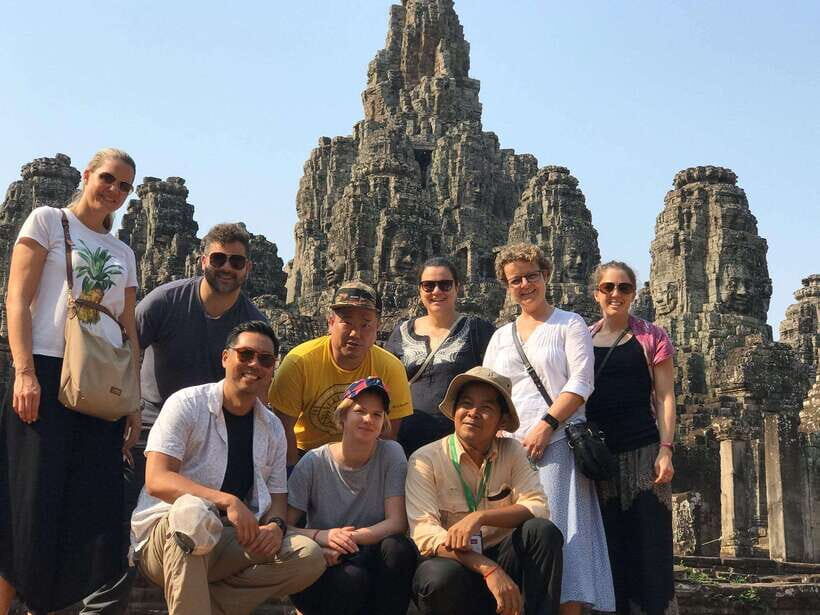
- Angkor Wat + the Angkor core is the anchor: massive scale, Bayon faces, and jungle temple drama.
- Ta Prohm’s tree roots are the “how is this even real?” stop, especially when your guide points out details.
- Grand Circuit temples (like Preah Khan, Neak Pean, Ta Som, and East Mebon) add variety beyond the most famous sites.
- Banteay Srei’s pink sandstone carvings finish the tour on a detail-rich high note.
Why 4:00 AM Pickup Changes the Whole Day
If you’ve ever tried to see Angkor at midday, you already know the problem: the sun is high, the stone looks flat, and everyone else has the same idea. This tour starts earlier—hotel pickup is listed at 4:00 AM on the sunrise-focused day—so you get the first chance at the temple lights turning gold.
You’ll also be less rushed when you arrive. The tour includes drinking water and a cold towel, which sounds small until you’re sweating through your shirt and trying to find the right angle for a photo. This is one of those “practical perks” that actually matters at Angkor.
One more tip: the tour states you can request a sunset extension until late at the temples without extra charge. That’s a big deal if you want golden-hour color but don’t want to pay for a longer guided package. It’s not guaranteed, but it’s worth asking your guide once you’re on the ground.
You can also read our reviews of more tours and experiences in Angkor Wat
Angkor Wat at Dawn: Scale, Light, and the Crowd Factor
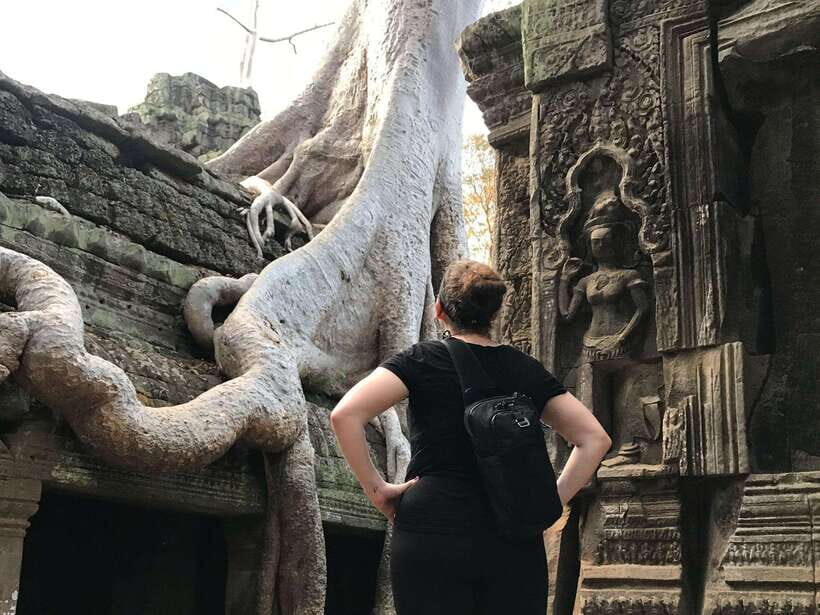
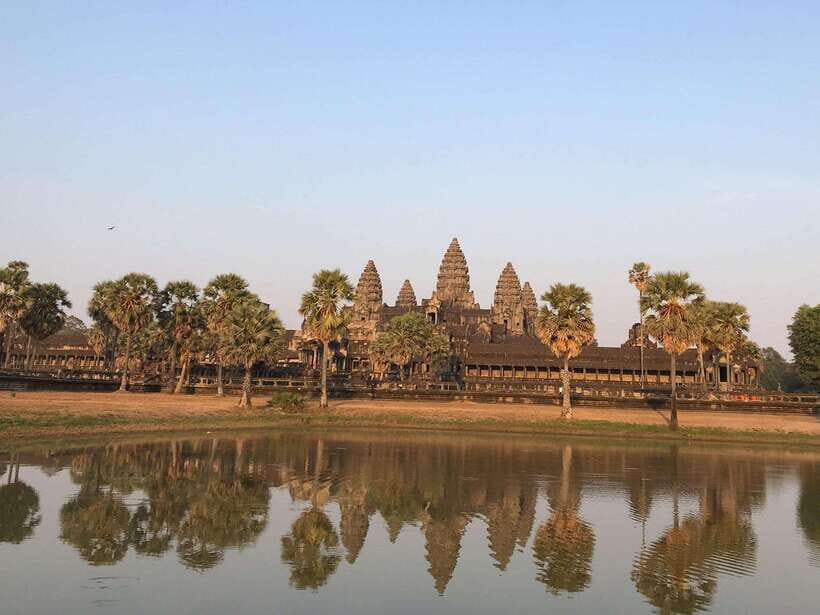
Angkor Wat is the big name for a reason, and the best version of it is usually tied to timing. Here, you get a guided visit that’s listed as 2 hours for Angkor Wat, with sunrise built into the day’s plan. Expect the view to shift as the sky brightens—stone reflections, long shadows, and that “wait, this is real life” feeling when the whole place wakes up.
A guide matters at Angkor Wat because the site is huge. Even when you’re just walking, you’ll want context for what you’re seeing and why it’s arranged that way. That’s exactly what the guide focus is meant to deliver.
Now the caution. Sunrise also means crowds, especially around the main viewpoints. If you hate sharing space or you’re easily annoyed by lines, you might feel the pressure at the busiest angles. A couple of bookings also mention that the sunrise moment was nice but not strictly essential—so if you’re the type who prefers quieter temple time over the crowd choreography, I’d mentally budget for that trade-off before you commit.
Ta Prohm’s Tree Roots and Ta Keo’s Different Energy
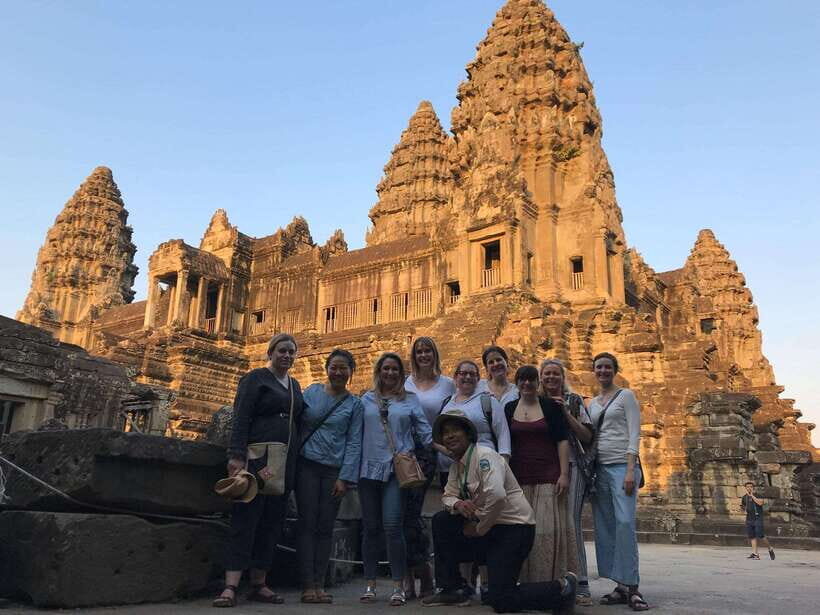
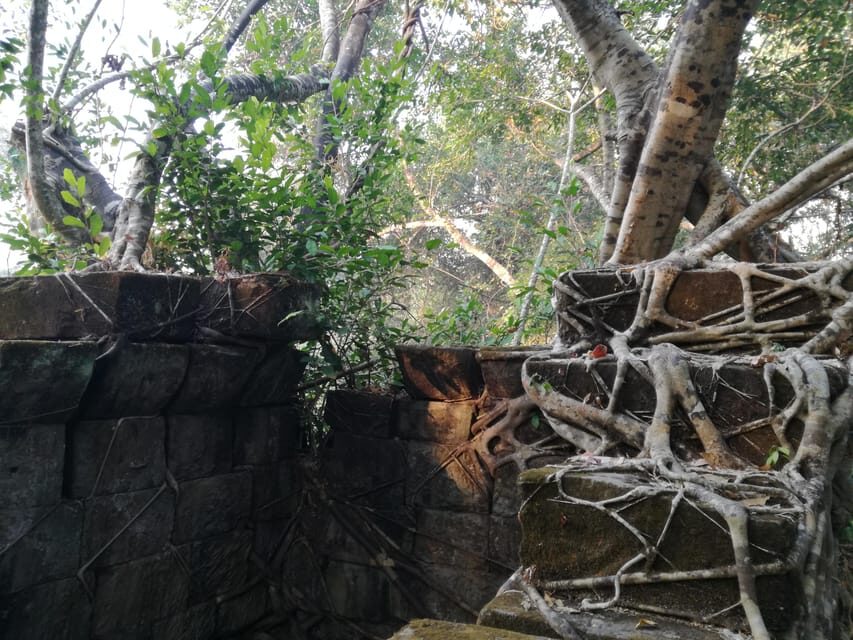
After sunrise, the tour keeps moving through temples that feel totally different from one another. Ta Prohm is one of the most famous “jungle temple” sights, and the tour gives it 1 hour of guided sightseeing. This is the stop where massive tree roots grow over stonework, creating that cinematic ruin look you’ve likely seen in photos—except in person, you start noticing the patterns: how root lines follow edges, how carvings peek out from shadow, and how the light gets trapped in the architecture.
Then there’s Ta Keo, also listed for about 1 hour. Ta Keo tends to feel more austere and structural than Ta Prohm’s tangled atmosphere. The value of including both is that you don’t just get one visual mood all day. You get contrast: one temple that looks like nature taking over, and another that feels more about stone geometry and climbing space (even if you don’t do the steepest parts).
This is where a good guide can save you. In the field, it’s easy to treat temples like photo stops. With a guide, you’re more likely to understand what you’re looking at instead of just walking from one angle to the next. Multiple guide names from real bookings—like Tida and Steve—show up in connection with strong explanations and helpful route choices.
Angkor Thom and Bayon’s Smiling Faces
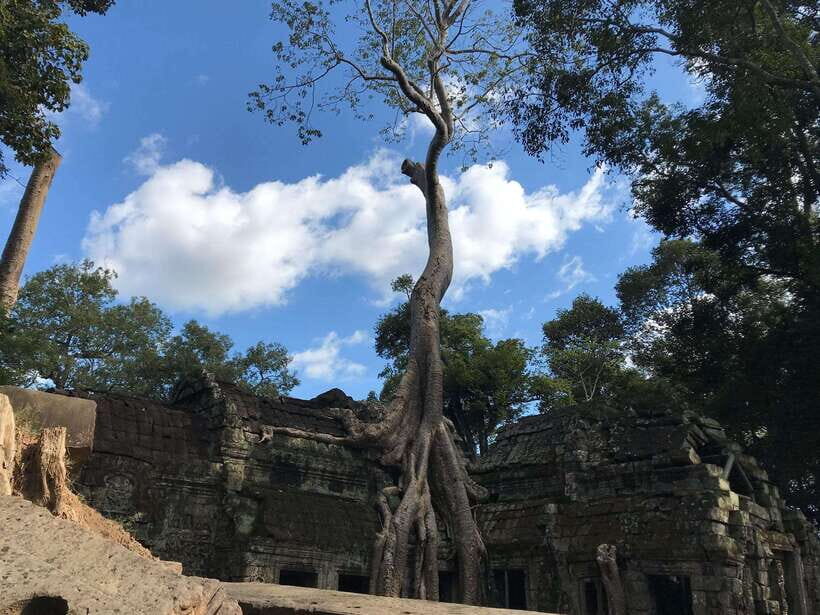
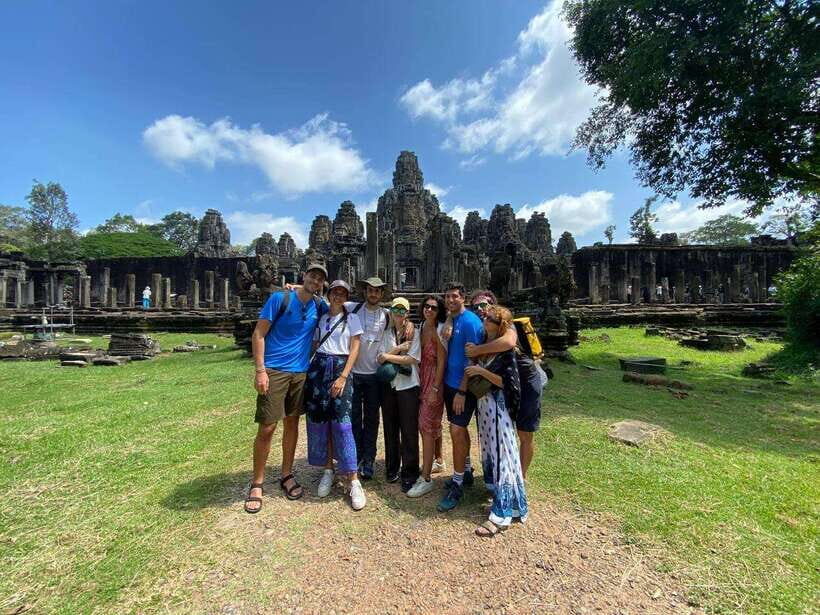
One of the tour’s core strengths is that it doesn’t only chase the famous silhouette. You also get Angkor Thom, including time at Bayon Temple, listed as part of the day’s guided loop.
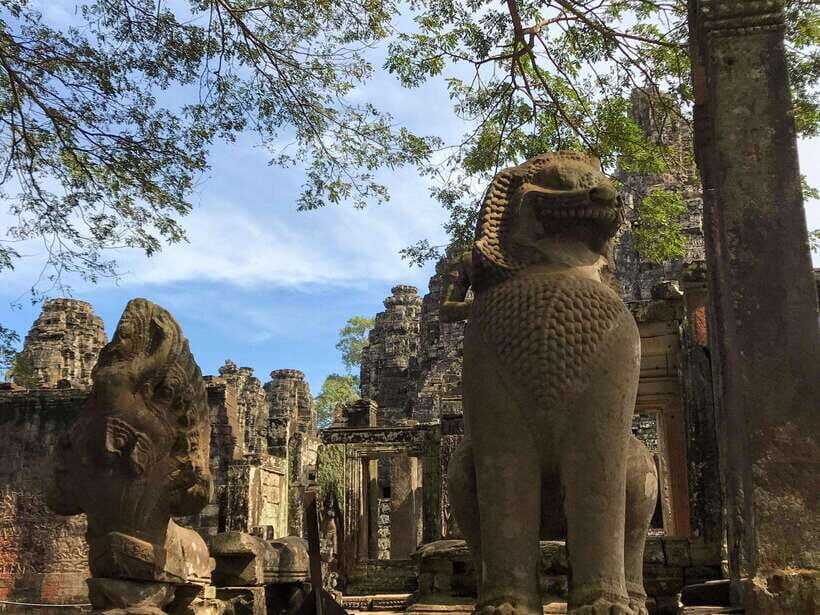
You’ll walk through the grand gates, and the big headliner is Bayon’s stone faces—often described as serene and iconic. The practical advantage here is time and focus: with a guide and a set window (around 1 hour for this area), you get a structured path rather than wandering and guessing what to see next.
I like this part of the experience because it helps you connect the dots. If Angkor Wat feels like a single statement, Angkor Thom feels like a city—something built for daily rule, ritual, and power. When your guide ties the faces and towers back to the Khmer Empire’s story, the site shifts from scenery into understanding.
Grand Circuit Day 2: Preah Khan, Neak Pean, Ta Som, East Mebon
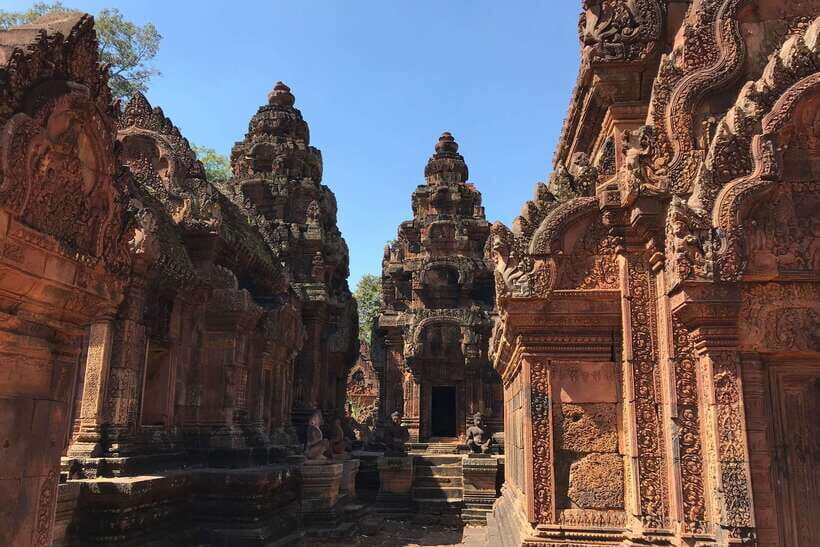
The second day is where the tour broadens out. The tour description spells out a Grand Circuit approach—temples placed along a route that showcases more than just the top two or three stops most people speed through.
You can expect a guided run through temples such as:
- Preah Khan (a sprawling complex with intricate carvings)
- Neak Pean, a temple on an island with spiritual significance
- Ta Som
- East Mebon
What I like about this structure is that it reduces the “temple déjà vu” effect. Even if you’re not a Khmer-stone superfan, spacing out the temples helps your brain absorb each place’s different feel. One booking also mentions how a private setup let the pace improve after an initially fast start at a crowded spot, which is exactly why your guide’s timing choices matter on Day 2.
A quick practical note: this second day can still involve lots of walking and mid-day sun. The tour includes water and cold towels, but your comfort depends on your pace. If you start to feel heat-stressed, slow down early rather than powering through and regretting it later.
You can also read our reviews of more tours and experiences in Angkor Wat
Banteay Srei Finale: Pink Sandstone Detail Work
After the broader circuit temples, the tour ends with Banteay Srei—described as the “Citadel of Women.” This stop is often the detail lover’s reward.
You’ll have about 1 hour of guided sightseeing here. The tour highlights its pink sandstone and intricate carvings, and that’s the key word: intricate. This is not a temple you want to rush through like a checklist item. Even if you only have an hour, a guide can point out the design logic and help you see where to look first.
I also like that the tour frames Banteay Srei as a beauty-focused capstone. After two days of huge stone complexes and heavy foot traffic, a temple known for detailed work can reset your attention. It turns the day from power and scale into craftsmanship.
If you care about photos, ask your guide where the best angles are. One booking mentions guides selecting the best picture spot without being asked, which is exactly the kind of helpful effort that turns a nice temple stop into a truly satisfying one.
Beng Mealea: Another Side of Angkor
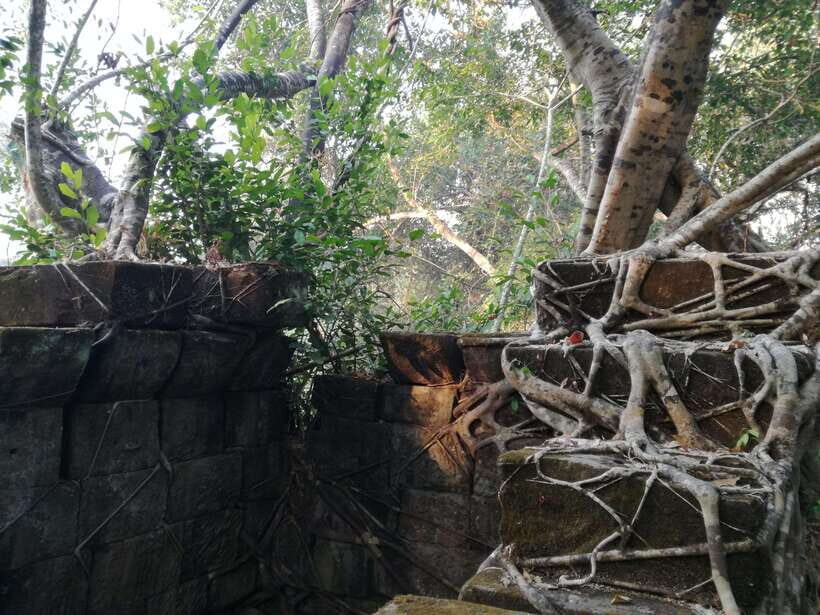
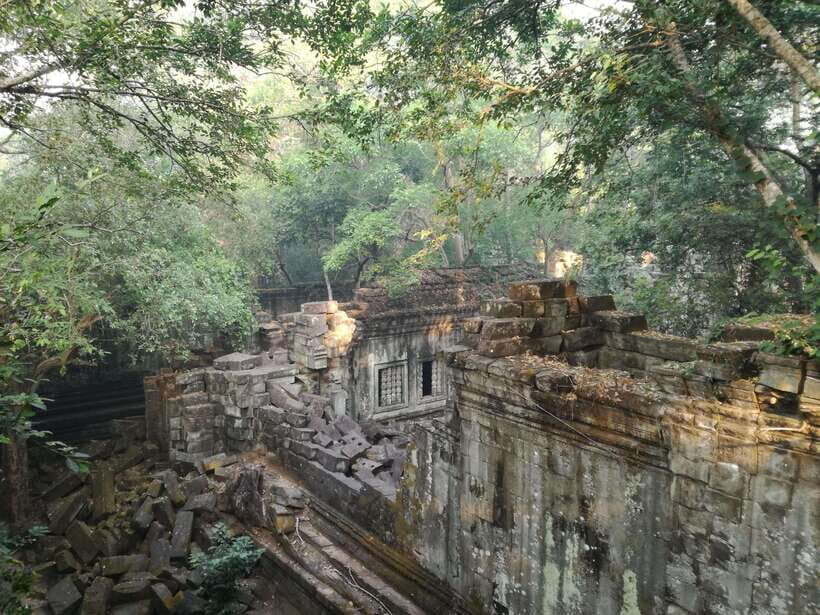
One temple that appears in the schedule is Beng Mealea (listed as a guided stop for about 1 hour). Depending on your day’s exact order, Beng Mealea can feel like the tour’s “different chapter.”
It matters because it breaks the pattern. You’re not only seeing the most polished, most restored-looking Angkor anchors. Instead, you get a contrasting temple experience that changes the vibe of the day and gives you something less predictable than the top icons.
If you like variety, Beng Mealea belongs on your must-see list. If you prefer only the most famous temples, it’s still worth considering because it’s included and helps round out the idea of what the Khmer Empire left behind across the region.
Private or Small-Group Transport: Comfort Without the Guesswork
This tour includes transportation of your choice: either a private air-conditioned car or a small-group bus tour. For Angkor, that’s not a luxury—it’s how you avoid wasting time and energy between stops.
Also pay attention to the pickup details: you’re picked up from the lobby of your hotel in Krong Siem Reap, and you should be ready 5 minutes before the start time. That early schedule can be annoying if your hotel is a long walk from the pickup point, so I’d keep your morning routine simple and avoid counting on last-minute directions.
Some bookings specifically mention how being with a local guide prevented the classic headless-chicken problem—when you’re stuck bouncing around and missing context. With this kind of organized pickup and routing, you spend your limited energy on the temples, not on navigation.
Price: What $39 Really Covers (and What You Must Add)
The tour price is listed as $39 per person for a 2-day experience. That’s the guide-and-transport part of the equation. What’s not included is a 2–3 Day Angkor Temple Pass for USD 62 per person, plus meals.
So what’s the real cost? If you add the pass, you’re looking at about $101 per person before meals. That sounds like more money, but it’s also what gives you access to the sites in the wider Angkor complex area.
Here’s the value logic I’d use: you’re paying for two guided days at multiple temples, plus transportation, plus water and cold towels. If you plan to do Angkor with no guide, you’ll often spend time guessing what matters and when to go. A guide can turn wasted hours into meaningful viewing—especially at Bayon and the more detailed carvings at Banteay Srei.
One more money detail: the tour says you can request an extension until sunset without extra charge. That can be a free upgrade if you want those later lighting effects and you’re okay adding more walking to your day.
Pacing, Heat, and How Your Guide Can Fix Problems
Angkor isn’t just a sightseeing destination. It’s a physical day—sun, stone steps, and long hours walking between sites. One booking even notes that April can be extremely hot, and the person recommended choosing another month if you can. Even if you can’t change dates, the advice is useful: you need a plan for heat.
Here’s how a good guide helps:
- keeping the route moving so you aren’t stuck waiting
- taking you to the best photo viewpoints at the right time
- adjusting the pace if the day is packed or if your group needs a slower rhythm
Real bookings mention guides being flexible, including one case where the guide offered to help with medicine when someone got sick. That’s a reminder that your guide is not just “someone holding a microphone.” They’re managing your day in real time.
If you’re sensitive to heat, build in a mental rule: slow down early. Waiting until you feel wiped out almost always makes the last temples feel like chores.
Who Should Book This 2-Day Sunrise Highlights Tour?
This tour fits best if you want:
- two full days instead of a “hit-and-run” day
- the big anchors (Angkor Wat, Angkor Thom, Ta Prohm) plus additional circuit temples
- an English guide who can explain what you’re seeing, not just point at it
It also works well for families or groups that need flexibility. One booking with children described how they used the private setup to control pacing, including time back in Siem Reap to cool off before restarting later. If your travel style is structured but not rushed, a private or small-group approach is a good match.
If you only want the top temples and you hate early mornings, sunrise may feel like extra effort—so I’d weigh whether you’re the sunrise type. Some people still love it, but the crowd factor is real.
Should You Book It?
Yes, if you’re planning your first (or second) Angkor visit and you want the tour to handle the big decisions: timing, route flow, and guided context. The combo of Angkor Wat at sunrise, Ta Prohm’s jungle roots, Bayon at Angkor Thom, and a finishing day that includes Banteay Srei is a strong way to cover variety without turning it into a chaotic do-it-yourself day.
Don’t book if you:
- can’t handle very early starts
- don’t want to factor in the temple pass cost
- prefer fewer stops and more free time per site
If you do book, one smart move is to ask your guide about pacing and photo timing early in the day. Guides named across bookings—like Leang, Sam, Say, Tida, and Steve—are praised for English clarity and for guiding you to better viewing spots. In Angkor, that kind of help is the difference between seeing temples and actually understanding what you’re seeing.
FAQ
What time is pickup for the sunrise tour?
Hotel pickup for the sunrise experience is listed at 4:00 AM, and you should be ready about 5 minutes before pickup at your hotel lobby in Krong Siem Reap.
What temples are included during the 2 days?
The tour covers Angkor Wat, Ta Prohm, Ta Keo, Angkor Thom (including Bayon Temple), Banteay Srei, and Beng Mealea. The Grand Circuit portion also names Preah Khan, Neak Pean, Ta Som, and East Mebon.
Is the temple pass included in the price?
No. The tour price is $39, and it does not include the Angkor Temple Pass. The pass is listed as USD 62 per person for a 2–3 Day pass.
Are meals included?
No. Meals are listed as not included.
Do I get an English-speaking guide?
Yes. The tour includes a professional English-speaking guide.
Can the tour run until sunset?
Yes. The tour notes that an extension until sunset at the temple can be provided without extra charge upon request.