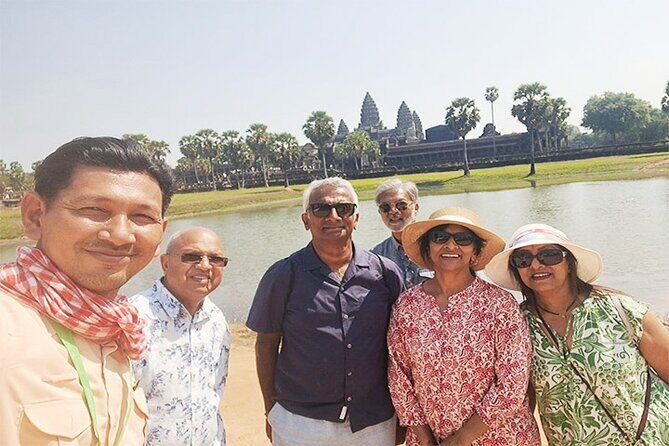
That first sight of Angkor Wat can feel unreal.
This private full-day route is built to help you see the big names without turning your day into a navigation puzzle, with hotel pickup and drop-off, tuk tuk transport, and a local English-speaking guide to connect the dots as you go.
I like the practical structure: you get enough time at the key sites, plus a proper midday pause at Srah Srang for lunch and a breather. You’ll also get snacks and drinks and drinking water through the day, so you’re not stuck hunting for refreshments between temples.
One thing to plan for: park entrance fees aren’t included, so your final day budget will depend on getting those tickets sorted before you arrive.
In This Review
- Key things I’d note before you go
- Private Angkor Wat Day: why this format fits real travelers
- Price and what you’re really buying at $60
- The real win: getting between temples by tuk tuk
- Entering Angkor Wat with a plan (and a guide)
- Angkor Thom and Bayon: city-scale drama without the overwhelm
- Ta Nei Temple: the quick, quiet jungle breather
- Srah Srang lunch break: a reset with real views
- Ta Prohm: the Tomb Raider temple moment (with time to breathe)
- Pacing, comfort, and smart day-of choices
- Who should book this private Angkor Wat tour
- Should you book this private Angkor Wat and Heritage day?
- FAQ
- What does the tour include?
- Does the tour include entrance fees to the temples?
- How long is the tour?
- What temples and sites are included?
- Is hotel pickup and drop-off included?
- How do you travel between stops?
- Is the tour private?
- Is there a ticket or entry method mentioned?
- Can I cancel and get a full refund?
- How do I confirm my booking?
Key things I’d note before you go
- Private guide + full-day pace: you’re not sharing time and attention with strangers.
- Tuk tuk round trip: easy, straightforward movement between stops inside the Angkor area.
- Lunch and refreshments included: you get a real break after the main temples.
- Major sites in one flow: Angkor Wat → Angkor Thom/Bayon → Ta Nei → Srah Srang → Ta Prohm.
- Rest stops built in: the best versions of this tour slow down when your feet need it.
Private Angkor Wat Day: why this format fits real travelers
Angkor Wat is the headline, but what makes this tour work is the way it’s organized around your day. A private setup means your guide can set the tempo, handle questions on the spot, and spend time where your eyes want it most, rather than rushing everyone toward the next photo stop.
The day runs about 7 to 8 hours, with tuk tuk rides connecting the temples. In practice, that time window is long enough to feel like you really saw the complex, but not so long that you’re stuck exhausted at every turn. It’s also hotel-friendly: pickup and drop-off from your Siem Reap hotel means you don’t waste energy coordinating transport before you even begin.
And because this is a private tour/activity, it’s only your group. That matters. Temple days can be loud and crowded on the wrong itinerary, and having control over timing and pacing can make the difference between seeing a site and actually understanding it.
Price and what you’re really buying at $60
At $60, you’re paying for more than a seat on a tuk tuk. This price includes round trip tuk tuk, an English-speaking guide, and drinking water throughout the day. It also includes lunch, plus snacks and drinks with that midday meal.
What’s not included is the big line item many people forget: entrance fees to the Angkor Archaeological Park. So yes, the ticket cost will add on top. The value equation is still usually good because the tour covers the guided plan and the logistics, not just transport.
Here’s a practical way to think about it: if you try to piece this together on your own, you’ll spend time coordinating tuk tuk drivers, figuring out the order of sites, and waiting around while everyone makes decisions. You’re paying this tour to remove that friction, and to get commentary as you walk.
Also note the price can effectively drop if you’re traveling with others and take advantage of group discounts. If you’re coming with friends or family, it can feel like a very efficient way to upgrade a solo day into something better.
The real win: getting between temples by tuk tuk
Inside the Angkor zone, tuk tuk transport is one of those “simple but genius” choices. It keeps you moving without the stress of rides changing mid-day. This tour includes round trip by tuk tuk, which means you’re not negotiating transport from stop to stop while you’re already dealing with temple crowds, sun, and heat.
In a standout review, the rider specifically praised the tuk tuk experience and even called out the driver, Bo, for driving, while the guide handled the explanations. That’s a good reminder of what makes a day like this smooth: not just where you go, but whether the ride feels calm and the stops are timed well.
The other advantage is flexibility. Your guide can move you along at a pace that makes sense, and you’re not locked into a rigid group schedule. If you want more time at a specific relief or want a slower walk through a courtyard, a private format usually makes that easier.
Entering Angkor Wat with a plan (and a guide)
Stop 1: Angkor Wat is where the day centers, and you’ll get about 2 hours here. This is the world’s largest and best-preserved monument, and it’s considered a masterpiece for its composition and balance. Even if you know the headline, the guided approach helps you notice what your eye might otherwise miss: the way structures line up, the careful proportions, and the story told through carvings and reliefs.
Angkor Wat is also one of those sites where you can easily wander in circles if you don’t have a route. Having a guide keeps you oriented. You’re less likely to end up at the wrong viewpoints at the wrong moment, and you’ll spend more time understanding what you’re looking at instead of just collecting random angles for photos.
Important practical note: the admission ticket isn’t included for Angkor Wat on this tour. You’ll need to account for that ticket cost so the day doesn’t feel like an afterthought.
Angkor Thom and Bayon: city-scale drama without the overwhelm
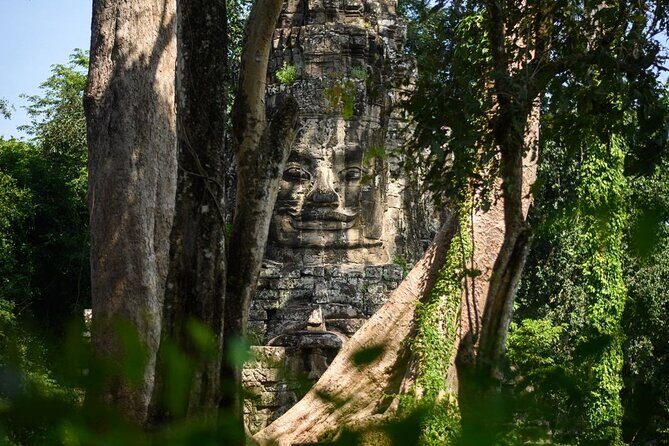
After Angkor Wat, you shift into Stop 2: Angkor Thom for about 1 hour. Angkor Thom was the Khmer Empire’s final and enduring capital, covering a large area (about 9 square kilometers). The reason this stop is worth time is simple: you’re not just visiting one building. You’re moving through a former capital city where different structures from earlier periods connect to the later layout.
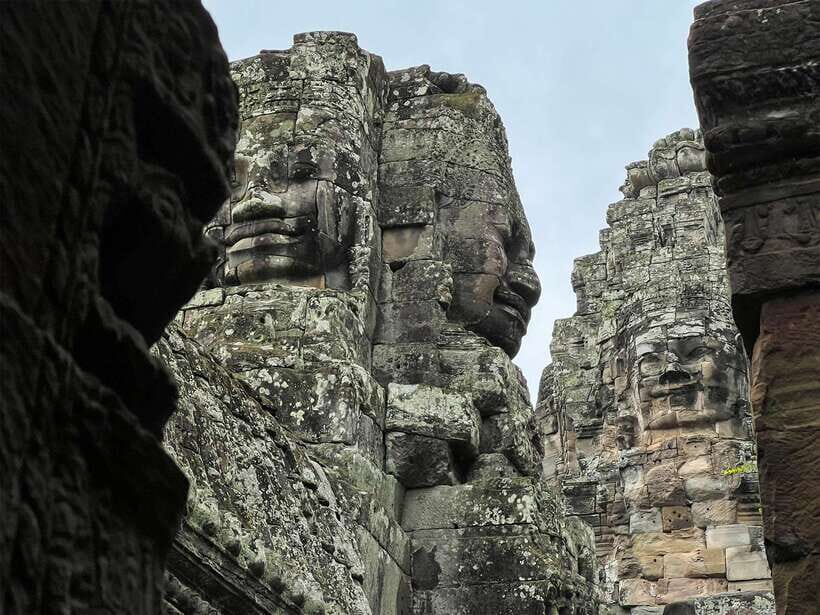
From there, you’ll move to Stop 3: Bayon Temple, also about 1 hour. Bayon is famous for its 54 towers, and that landmark look is easy to recognize even from a distance. A good guide experience here is about helping you read the temple: what these towers represent, how the spaces are arranged, and why this site is so strongly tied to the reign of King Jayavarman VII.
Bayon is often where people either fall in love—or feel overwhelmed by the scale. The value of a guided private flow is that it can slow you down just enough to notice details without turning the visit into a lecture. The guide’s commentary is especially helpful when you’re standing among towers and corridors that can feel similar unless you know what to look for.
As with Angkor Wat, the park admission ticket isn’t included at these stops. Build in time and budget for the entry fee.
Ta Nei Temple: the quick, quiet jungle breather
Stop 4: Ta Nei Temple is short—around 20 minutes—but it’s a smart contrast to the big-city intensity you just experienced. This temple is described as modest, quiet, and secluded in the middle of the jungle, and that change of pace is exactly why it’s in the itinerary.
In a day of stone and crowds, a smaller stop can do two things:
- It gives your brain a break from the constant grandeur.
- It lets you experience temple atmosphere more than temple scale.
Because the visit is only 20 minutes, you’ll want to be ready to look carefully right away. If you take your time here, you’ll actually feel the difference. If you rush, you might miss why this stop is such a good palate cleanser.
Again, entrance fees aren’t included, so make sure you’re covered for park admission.
Srah Srang lunch break: a reset with real views
By the time you reach Stop 5: Srah Srang, you’ve earned a break. This stop includes about 1 hour 30 minutes, and it’s built around lunch plus downtime at the Srah Srang reservoir.
The tour is explicit about the payoff: you’ll relax with a view of the reservoir, and you’ll have a delicious Cambodian lunch. Lunch on a temple day isn’t just about food. It’s when you reset your energy and recalibrate your attention. A longer stop also helps you recover before the final, more visually intense temple.
You’ll also be glad this tour includes snacks and drinks plus drinking water throughout the day. When you’re walking and heat is part of the equation, those small comforts reduce the chance that the last half of your day feels like a slog.
And since admission tickets aren’t included for this part either, the same practical note applies: entrance fees are the add-on you need to factor into your total plan.
Ta Prohm: the Tomb Raider temple moment (with time to breathe)
Stop 6: Ta Prohm Temple is the finale, and you’ll get about 1 hour 30 minutes here. This is widely known as the world-famous ruined temple in the jungle, also called Tomb Raider Temple because it appeared in a film starring Angelina Jolie.
What makes Ta Prohm work in real life is that it’s not just stone. It’s the famous interplay of the ruins with enormous trees, and it tends to slow people down naturally. With 1.5 hours, you can take your time moving through courtyards and viewpoints rather than feeling like you have to sprint to see the best angles.
The guided component matters here too. Ta Prohm can look chaotic if you’re trying to figure it out alone. A good guide helps you understand what you’re seeing as you move from one view to the next, and it helps you avoid spending too much time stuck at a single spot because you’re not sure what’s next.
Like the other temple stops, admission isn’t included, so make sure the park ticket situation is handled.
Pacing, comfort, and smart day-of choices
A full Angkor day is tiring. This itinerary is built to handle that with a few key moments of recovery: the shorter visits like Ta Nei help you avoid total fatigue, and the longer Srah Srang break is where you catch your breath.
I recommend planning your body for heat and walking. Bring practical clothing that covers you comfortably and protects your skin. Sun protection is a must. And even though the tour includes drinking water, you’ll still feel better if you plan your own pace and use breaks when they’re available.
Also, pay attention to the guide’s rhythm. In one excellent experience, the guide Ben/Yen was praised for giving explanations and stopping to rest frequently. That’s the kind of pacing you want on a long temple day. If you feel yourself tiring, say something early. A private guide can usually adjust the pace faster than a group setup can.
Finally, keep your expectations balanced: Angkor is famous for good reason, but it’s still a place you walk through. The more you treat it like a sequence of rooms and viewpoints instead of one giant “photo contest,” the more you’ll enjoy the experience.
Who should book this private Angkor Wat tour
This tour fits best if you want:
- A guided Angkor day focused on the major highlights
- Hotel pickup and drop-off so you don’t manage transport logistics
- A private group so pacing and attention can match your style
- Lunch and drinks included, which makes the day easier to manage
If you like to understand what you’re looking at while you walk, an English-speaking local guide is a big plus. And if you hate the stress of planning the order of sites yourself, this route gives you a clear structure.
It may not be ideal if you prefer doing everything completely on your own without a set plan. Also, if you want longer stays at a single temple to slow down even more, you might find some stops feel brief, especially Ta Nei at 20 minutes.
Should you book this private Angkor Wat and Heritage day?
If you’re aiming for a clean, efficient Angkor highlight day with the right built-in breaks, I think this is a strong choice. The value comes from the combination of private guide, tuk tuk transport, hotel pickup/drop-off, and food and drinks, all wrapped into a day that still leaves space to enjoy what you see.
I’d book it if you:
- Want the major temples in one smooth outing
- Prefer a guided route over self-navigating
- Like the idea of having lunch and water handled for you
I’d think twice if:
- You’re hoping entrance fees are included (they aren’t)
- You want extra time beyond the set stops, especially for Ta Nei
Overall, it’s the kind of tour that helps you see Angkor Wat and the surrounding sites without turning your day into a logistics exercise. If that’s what you want in Siem Reap, this one is worth serious consideration.
FAQ
What does the tour include?
It includes round trip tuk tuk transport, an English-speaking local guide, drinking water throughout the day, and lunch plus snacks and drinks.
Does the tour include entrance fees to the temples?
No. Entrance fees to the Angkor Archaeological Park are not included.
How long is the tour?
It runs about 7 to 8 hours.
What temples and sites are included?
You’ll visit Angkor Wat, Angkor Thom, Bayon Temple, Ta Nei Temple, Srah Srang, and Ta Prohm Temple.
Is hotel pickup and drop-off included?
Yes, pickup and drop-off from your Siem Reap hotel are included.
How do you travel between stops?
You travel by tuk tuk.
Is the tour private?
Yes. It’s private, meaning only your group participates.
Is there a ticket or entry method mentioned?
A mobile ticket is listed as part of the experience.
Can I cancel and get a full refund?
You can cancel up to 24 hours in advance of the experience start time for a full refund.
How do I confirm my booking?
Confirmation is received at the time of booking.