REVIEW · 2-DAY EXPERIENCES
2 Days Temples with Sunrise-Small Group
Book on Viator →Bookable on Viator
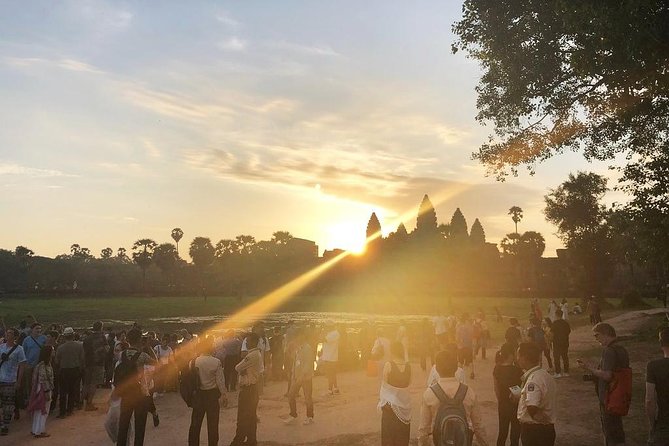
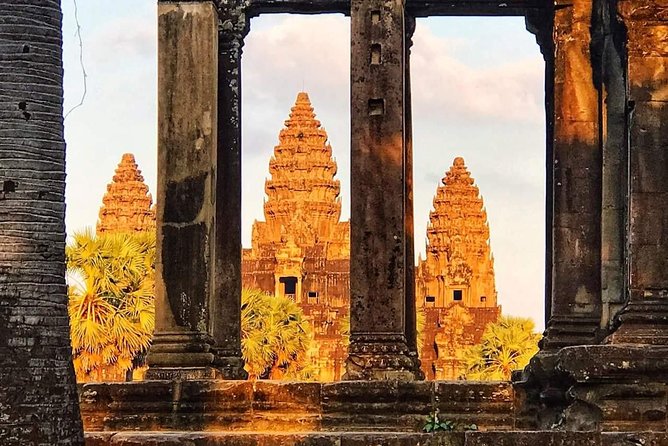
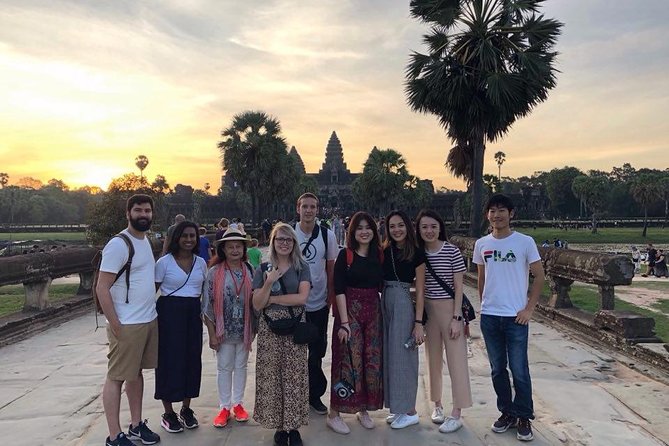
Sunrise temples make Siem Reap feel unreal. This 2-day small-group plan packs the big Angkor highlights plus major temples outside Angkor Thom, all with an English-speaking local guide and an early start designed to help you miss the worst crowd crush. On day two, you head to Angkor Wat at sunrise before the site fully wakes up, so you can watch the stone change color in real time.
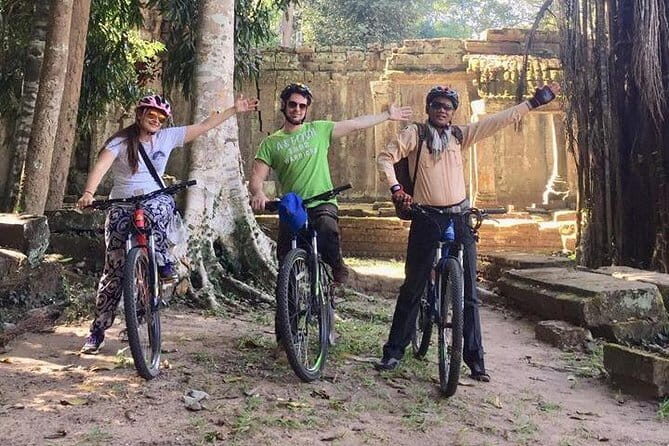
I really like how smoothly the day-to-day pace works. With guide Sok and driver Richard, you get a level of organization that keeps you moving without feeling like you’re sprinting on vacation. I also love the small comfort touches: mineral water, and help between stops (including water and flannel) that makes the heat and dust a little more manageable.
One drawback to think about: the advertised price does not cover the temple pass. You’ll need to pay an additional $62 per person on the day of your activity, and day two starts pre-dawn, so you’ll want a reliable wake-up call and a torch for the sunrise entry.
In This Review
- Key highlights you’ll feel right away
- How This Small-Group Two-Day Plan Fits More Temples Into Less Time
- Price and Temple Pass: The Real Cost at the Gates
- Day 1: Pre Rup’s Hindu Temple Views and a Smooth Start
- Banteay Srei and Preah Khan: Sandstone Detail and Rooted Atmosphere
- Neak Pean and Jayatataka Baray: A Quiet Break From the Main Circuit
- Day 2 at Angkor Wat Before Dawn: Bring a Torch
- Breakfast at Srah Srang and the Angkor Layout Hack
- Ta Prohm, Terrace Stops, and the Bayon Faces
- Your Guide Team: Sok, Richard, and the Comfort Extras That Actually Help
- What to Pack and Wear So You Don’t Feel Rushed
- Who This Tour Suits Best (and Who Should Skip It)
- Should You Book This Two-Day Temples With Sunrise Small Group Tour?
- FAQ
- What’s the group size for this tour?
- What time does the tour start?
- Is hotel pickup and drop-off included?
- Is the temple pass included in the price?
- Are meals included?
- Do I need a torch for sunrise at Angkor Wat?
- What should I wear inside the temples?
- What if the weather is bad?
Key highlights you’ll feel right away
- Small group limit (max 15): better flow, fewer waits, more time at each stop
- Sunrise entry at Angkor Wat: you’ll see the eastern-side approach before the main rush
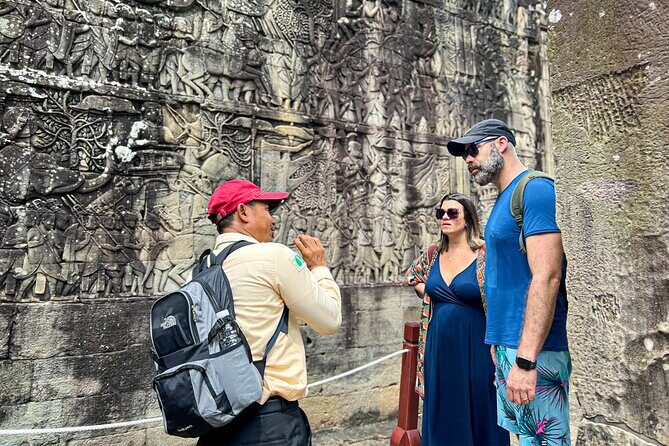
- Expert English guide (Sok): clear explanations that connect temple design to everyday Khmer culture
- Day 1 mix of big and atmospheric sites: from Pre Rup to Preah Khan’s tree-root ruins
- Heat-and-humidity practical support: air-conditioned vehicle, mineral water, and between-stop comfort
How This Small-Group Two-Day Plan Fits More Temples Into Less Time
If you only have a couple days in Siem Reap, this kind of route makes a big difference. Instead of picking just one or two temples per day and feeling behind, you get a tight sequence that covers the most famous Angkor sights and several standout outside-the-core temples.
The small group size matters more than it sounds. With a max of 15 people, it’s easier to keep things organized when walking through ticket zones, restrooms, and temple courtyards. You also tend to get a bit more flexibility when your guide wants to pause, explain, or reposition you for better viewing.
I also like the way the tour uses timing. Day two starts very early for sunrise, and day one stays focused on temples outside Angkor Thom. That reduces the “overlap” feeling where every stop looks like the same stone corridor.
Price and Temple Pass: The Real Cost at the Gates
The tour price is $43 per person, but the real number has a second line item. Temple admission is not included, and you’ll pay $62 per person directly on the day of your activity for the 2–3 day pass option.
So what are you really buying with the $43? You’re paying for the licensed English-speaking guide, hotel pickup and drop-off, an air-conditioned vehicle, and the structured plan that gets you to the right places at the right times. You’re also getting mineral water along the way, which sounds minor until you’re walking under full sun with a camera bag.
If you do the math, the day pass cost can feel like a jump. Still, for most first-time visitors, the pass is unavoidable if you want Angkor Wat, Ta Prohm, and Bayon in a short window. Here, that pass unlocks the heart of Angkor while the tour handles the logistics and guiding.
Meals are not included. That means you’ll plan around breakfast (which is handled on day two) and whatever you choose for the rest of the day.
Day 1: Pre Rup’s Hindu Temple Views and a Smooth Start
Your day begins with pickup from your hotel, then a drive to Pre Rup, a Hindu temple outside Angkor Thom. It’s scheduled for about 30 minutes, so it’s not a slow museum visit. It’s more of a “get the idea, then move on” start that helps you build momentum.
Pre Rup is a good choice for the opening day because it gives you a different temple mood than Angkor Wat. The structure and layout feel more grounded, less grand-scale than the big main temples, but still very Khmer. It’s also the kind of site where your guide’s explanation can quickly make the architecture make sense.
Practical note: since it’s a short stop, you’ll want to have your key questions ready. Ask about what you’re looking at—steps, towers, carvings, and orientation—because you won’t have two hours to wander.
Banteay Srei and Preah Khan: Sandstone Detail and Rooted Atmosphere
After Pre Rup, you head to Banteay Srei, often loved for its intricate stonework. This is a smaller sandstone temple, but the schedule gives it about one hour. That’s a good amount of time to walk the carvings slowly and not just snap photos and rush.
What makes Banteay Srei special here is the guide focus. You’ll learn what to look for in the reliefs, and your brain starts “reading” the stone instead of treating it like decoration. The tour schedule even flags that admission here is free, which is a nice bonus compared with the sites that charge as part of the temple pass.
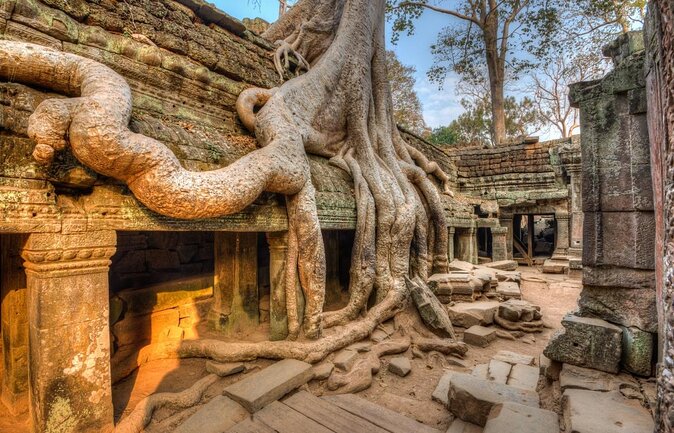
Then you move to Preah Khan, one of the most atmospheric stops on day one. You get about two hours, and the main visual story is the mix of crumbling stone and thick tree roots. This is the kind of temple where silence and shadow are part of the experience. You’ll see why people go quiet when they walk under the living structures grabbing the walls.
Preah Khan is also a good example of why a guided route helps. Without context, you might notice the dramatic roots but miss the broader plan of the complex. With a guide, you get the why behind the what.
Neak Pean and Jayatataka Baray: A Quiet Break From the Main Circuit
The last day-one stop is Neak Pean, described as an artificial island with a Buddhist temple on a circular island in Jayatataka Baray. It’s scheduled for around 50 minutes, and that timing helps you slow down after the more intense, “photo-hungry” temples.
Neak Pean has a different vibe than the big Angkor sites. It feels more reflective, less about towering spectacle and more about sacred space and design. The water setting also changes how light hits the stone, so the photos come out differently than at the dry, open courtyards.
I like that this stop acts like a reset. After hours of walking through dense temple zones, you get a moment where your attention shifts from crowds and signage to stillness and scale.
Day 2 at Angkor Wat Before Dawn: Bring a Torch
Day two is the headline. You’ll have a pre-dawn departure from your hotel for sunrise outside Angkor Wat. Then you’ll enter the temple while it’s still dark, and the schedule specifically recommends you bring a torch.
Yes, it’s a practical request, not a suggestion for dramatic effect. In the darkness, torches help you see your footing and find the angles your guide wants you to stand in. If you hate carrying extra stuff, at least tuck the torch somewhere easy to grab.
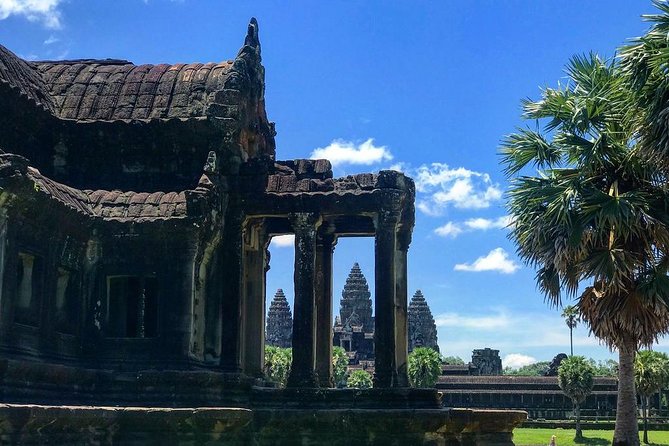
Angkor Wat itself is scheduled for about 2 hours and 5 minutes, and the route focuses on an eastern side approach that’s described as little-visited. That matters because it shapes your experience. You’ll spend early time in a calmer area before the larger visitor flow takes over.
When sunrise hits, it’s not just about views. It’s also about contrast. Stone carvings that looked flat in early light start to gain texture, and the temple’s geometry becomes clearer as the sky brightens.
Breakfast at Srah Srang and the Angkor Layout Hack
After the sunrise portion, the tour includes breakfast at Srah Srang, timed as the day’s next major step. The schedule says breakfast happens at a Khmer local restaurant, with take-away options from your hotel or ordering there depending on your plan.
Srah Srang is also listed as a stop with free admission in the schedule. But the value here is less about the ticket and more about rhythm. You get fuel after sunrise and before the next temple walk, which is smart in a tour that otherwise runs on tight timing.
I also like that breakfast is handled within the tour flow. In Angkor temple days, trying to go off-script for food can turn into a scavenger hunt. Here, you get a defined pause so you can reset before Ta Prohm and the Bayon-area sights.
Ta Prohm, Terrace Stops, and the Bayon Faces
Next comes Ta Prohm, the jungle-enveloped temple that many people recognize even from postcards. It’s scheduled for about one hour, and the tour includes a key detail: Ta Prohm once hosted 2,740 monks. That fact changes the way you look at the spaces. This wasn’t just a dramatic ruin; it was an active religious community.
The main visual at Ta Prohm is the same as always—trees and stone locked together. But the guide angle helps you notice how the structure frames the jungle rather than fighting it. You’ll likely walk away understanding why this temple became the symbol of Angkor’s survival and transformation.
After Ta Prohm, you also pass by the Terrace of the Leper King and the Terrace of the Elephants. The schedule gives this segment about 20 minutes, so treat it as a quick, guided “stop and look” moment. If you love carvings and statues, you’ll get just enough time to notice major details without the day getting too heavy.
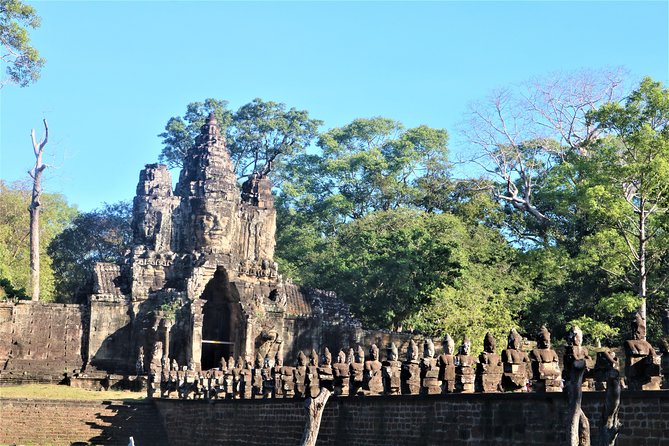
Then you reach Bayon Temple, scheduled for about one hour. Bayon is famous for its central towers covered with more than 200 enormous faces. This is where you feel the scale of the city’s ambition. Instead of one hero temple dominating the skyline, you get a whole field of stone expressions watching over you as you move.
Bayon is also a great end point because it pulls everything together. You’ve seen the Hindu temple phase, the mixed sacred spaces, and the jungle ruins. Bayon delivers a different mood—dense, symbolic, and unmistakably Angkor.
Your Guide Team: Sok, Richard, and the Comfort Extras That Actually Help
One of the most praised parts of this tour is the guiding. Sok is named in the experience feedback, and he’s described as strong on temple knowledge and also observant about what’s around you in the environment. That matters because Angkor isn’t just stone. You’re walking through a landscape of trees, shade, and small details that a good guide points out before you even ask.
The driver experience also gets credit. Richard is specifically mentioned as a great driver, which sounds boring until you remember the roads, the early start, and the heat. When transportation runs smoothly, you arrive less frazzled and you can enjoy the temples instead of coping with stress.
And yes, the little between-stop helps matter. Water and flannel support are the kind of comfort items you don’t think you need—until you’re sweating and suddenly you do. This is one of those tours where the “support stuff” feels intentionally chosen for temple days.
What to Pack and Wear So You Don’t Feel Rushed
Wear comfortable walking shoes. That’s not just generic advice—temple surfaces can be uneven, and you’ll be on your feet for multiple days. If you’re the type who likes nice photos, your shoes will be the real hero.
Dress code is casual, but shoulders and knees must be covered inside temples. Plan clothing that covers without being overly hot. Loose, breathable fabric helps, especially with the early morning chill that turns into full sun later.
Bring a torch for the sunrise portion. If you forget, you’ll still manage, but it can make the early entry portion more awkward than it needs to be. Also request a wake-up call at your hotel so you don’t start day two in a panic.
If your hotel offers breakfast included, the tour suggests asking for a breakfast pack so you can eat after sunrise at Angkor Wat. That’s a small timing tip that can help the day feel smoother.
Who This Tour Suits Best (and Who Should Skip It)
This tour fits you if you want a high-coverage Angkor experience in a short time. It’s also a great choice if you like structure. The route has a clear logic: classic Angkor highlights, plus strong outside-Angkor Thom temples, all paced with rest points.
It’s also ideal if you prefer small-group energy. Max 15 travelers gives you a better chance of hearing the guide and keeping track of where you are in the day.
You might want a different style of tour if you hate early wake-ups. Sunrise at Angkor Wat means pre-dawn movement, a torch, and getting moving before the city is fully awake. You’re not just visiting temples; you’re doing a timed morning mission.
Should You Book This Two-Day Temples With Sunrise Small Group Tour?
I’d book it if you’re visiting Siem Reap for the first time and you want the best-known Angkor moments plus extra major temples in just two days. The sunrise format is a big win, and the small-group pacing makes the route feel manageable.
The one reason to pause is the extra $62 temple pass cost. If that would feel like an unpleasant surprise, double-check your budget before you commit. Also be honest with yourself about the pre-dawn schedule.
If you’re ready to trade sleep for sunrise magic and you want a guide who helps you see more than stone, this tour has the right mix of temples, timing, and practical support.
FAQ
What’s the group size for this tour?
The tour has a maximum of 15 travelers, which helps keep the pace organized and the experience more personal.
What time does the tour start?
The listed start time is 8:00 am. Day two includes a pre-dawn departure for sunrise at Angkor Wat.
Is hotel pickup and drop-off included?
Yes. Hotel pickup and drop-off are included, and you’ll travel in an air-conditioned vehicle.
Is the temple pass included in the price?
No. Temple admission is not included. You’ll pay a $62 per person temple pass on the day of your activity for the 2–3 day pass option.
Are meals included?
Meals are not included. Breakfast is part of the day two plan at Srah Srang via a local Khmer restaurant, with take-away or ordering options described.
Do I need a torch for sunrise at Angkor Wat?
Yes. The tour recommends bringing a torch because you enter Angkor Wat while it’s still dark.
What should I wear inside the temples?
Casual clothing is fine, but shoulders and knees must be covered inside temples.
What if the weather is bad?
This experience requires good weather. If it’s canceled due to poor weather, you’ll be offered a different date or a full refund.