REVIEW · 1-DAY TOURS
1 Day | Angkor Wat Sunrise with Small Tour
Book on Viator →Operated by Hok Cambodia Journeys · Bookable on Viator
Sunrise at Angkor feels like a reset. This Angkor Wat sunrise tour is built around being in the right spot before the light hits—so you can catch those famous colors behind the towers. You also get the bigger story of the site, including how Angkor Wat’s famous orientation ties into ancient astronomical ideas and why equinox light is such a big deal.
I like two things a lot: first, the tour uses a private air-con vehicle with hotel pickup, which matters when you’re leaving early and still need to be human afterward. Second, you get cool water, towels, and local snacks, plus a senior English-speaking guide named Hok, who shows up with clear explanations and a steady, safety-first rhythm.
The main drawback is simple: the Angkor Temple Pass is not included. You’ll pay $37 per person on top of the $66 tour price.
In This Review
- Key things I think you’ll notice quickly
- 4:30 AM Pickup to Angkor Wat: why this timing works
- Angkor Wat sunrise: what you’re really seeing when the sky brightens
- Entering Angkor Wat: more than walking in the door
- Angkor Thom: 30 minutes that still has real impact
- Bayon Temple: the smiling faces and the mix of beliefs
- Ta Prohm: how to enjoy the jungle temple look without rushing
- Hok Cambodia Journeys: why the guide quality matters here
- Price and value: $66 plus the temple pass reality check
- Time on the ground: how the 6 hours usually feel
- Should you book this Angkor Wat sunrise tour?
- FAQ
- Is pickup offered for this tour?
- What time does the tour start?
- How long is the tour?
- What temple stops are included?
- How much time do you spend at each stop?
- Is the Angkor Temple Pass included?
- What is included in the tour price?
- Is admission for the temples included?
- Is it a private tour?
- What happens if weather is poor?
Key things I think you’ll notice quickly
- 4:30 AM start means you’re already moving while the town is still waking up
- Angkor Wat first, then Angkor Thom, Bayon, and Ta Prohm keeps the morning efficient
- Cool water, towels, and snacks help you last through the early hours
- Private group only: just your party rides together
- Hok as your guide: clear history + patient pace, with added attention to safety and comfort
4:30 AM Pickup to Angkor Wat: why this timing works
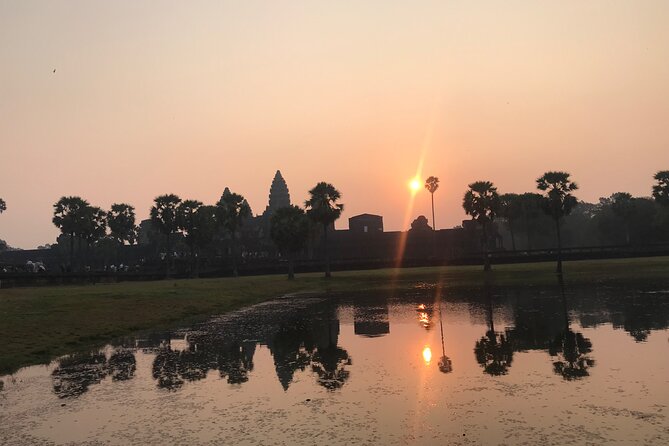
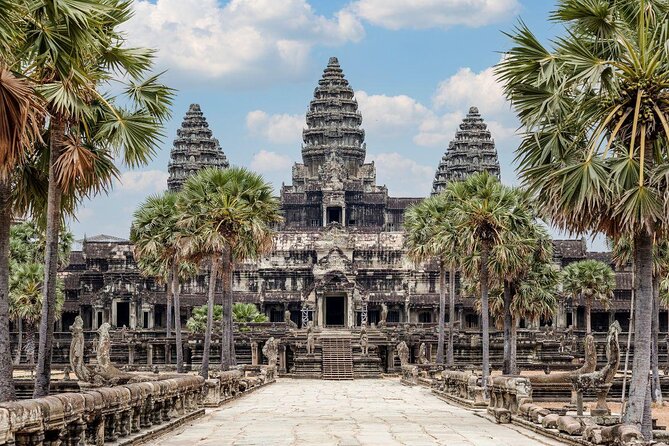
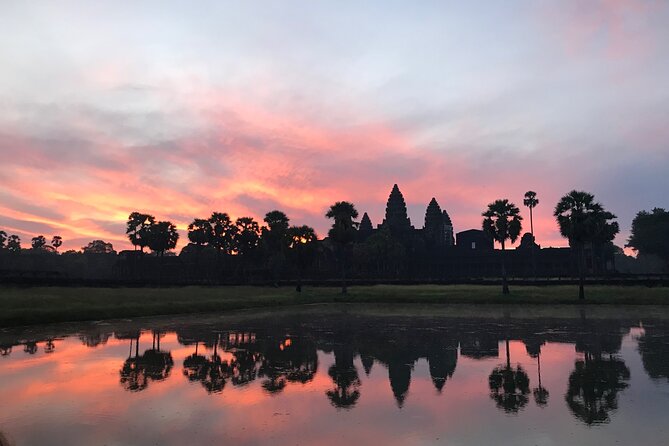
The tour begins at 4:30 AM, and the plan is straightforward: you get picked up from your hotel and head out early enough to reach Angkor Wat before sunrise has fully taken over the sky. That matters here because the highlight is not just seeing Angkor Wat—it’s seeing how it looks when the light changes fast, especially with the temple’s distinctive towers and reflection-pool view.
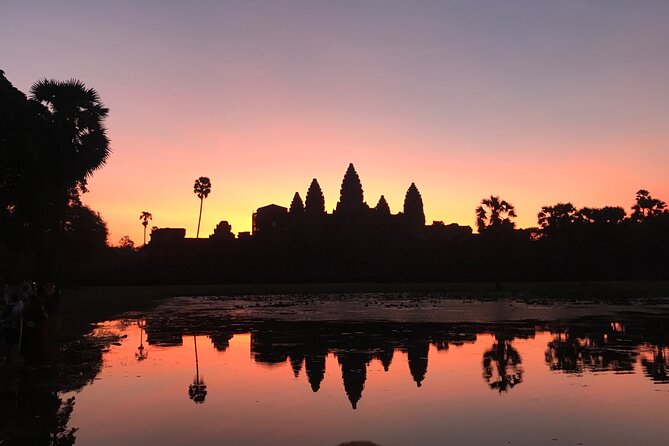
You’re not bouncing around all day to find the best photo moment at random. Instead, the tour is built around taking advantage of a narrow window when the sky turns dramatic and the temple’s silhouette becomes the star. The overview even focuses on positioning in front of the reflection pool, which is exactly where you want to be if you’re chasing that classic sunrise composition.
This is also a tour format that keeps things calm. You’re with a small setup rather than a loud herd, and you’ll have time to look, not just rush. If you’re the type who gets tired when mornings are forced into a sprint, the pacing is one of the reasons this tour gets such strong praise.
Angkor Wat sunrise: what you’re really seeing when the sky brightens
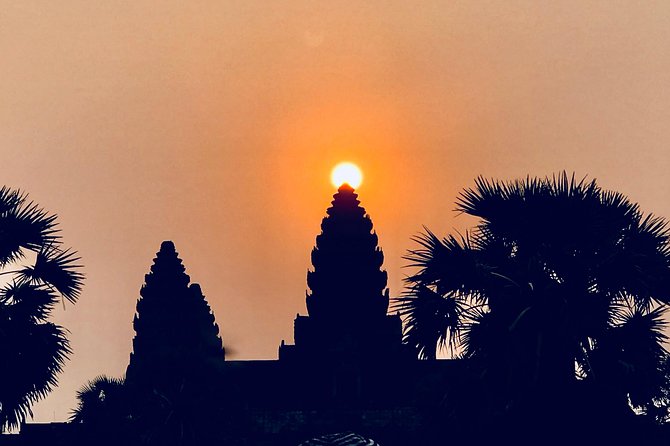
Angkor Wat is famous for being one of the best-preserved major temple complexes at Angkor, and it’s also known for design that lines up with the cardinal points. That geometry isn’t just trivia—it changes how the temple feels in the early light. When the first brightness hits, the towers and the main structures read differently than they do at midday, because the shadows are crisp and the perspective feels sharper.
This tour leans into a specific idea: the equinox sunrise. During the spring and autumn equinoxes, the light behind the temple can create a glow behind the towers that people travel across the world for. In plain terms, you’re going for that “wow” moment when the sky and the architecture seem to agree on where to place your attention.
You’ll get around two hours at Angkor Wat. That’s a good length because it gives you time to:
- arrive and settle before the main moment
- watch the colors shift
- then shift from sunrise watching to temple exploring without feeling like you need to sprint between steps
Also note what’s not included: the temple pass (the Angkor Temple Pass) is separate. Plan your budget so you’re not scrambling later with money and lines in the middle of your morning.
Entering Angkor Wat: more than walking in the door
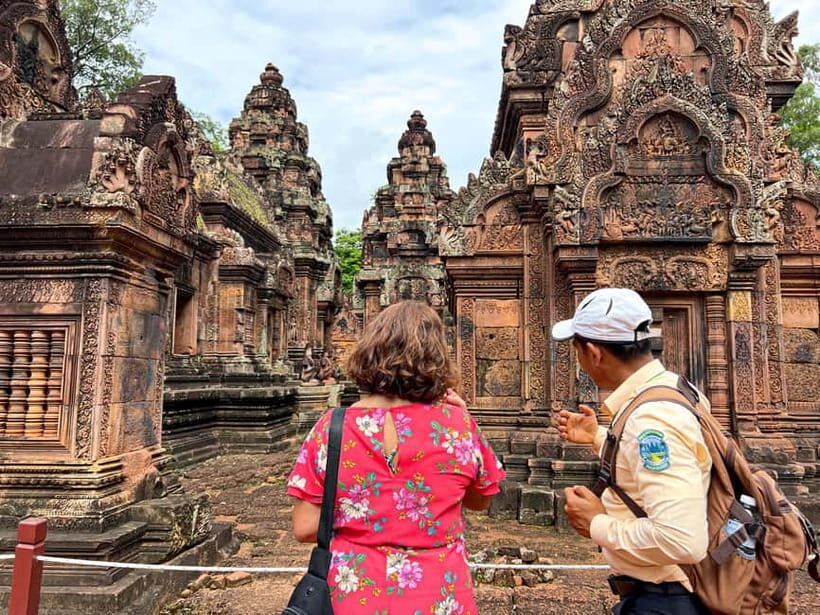
After the sunrise portion, Hok guides you through the main building and around the complex. This is where the tour earns its keep. Angkor Wat can feel like a lot of stone when you’re on your own. With a guide, you start noticing patterns—like the way the layout and axis feel intentional, and how the site reflects older religious influences that shaped its construction.
You don’t have to be a temple expert to enjoy it. The best part is that the guide can translate what you’re looking at into something you can actually hold in your head: what it is, why it matters, and how to connect the big visuals with the smaller details.
And if you care about photography, the tour has an extra advantage. In feedback from past guests, Hok is described as not only a guide, but also a professional photographer. That usually means you’re more likely to get practical tips on angles and pacing—exactly what you want when your time is limited and the light changes quickly.
Angkor Thom: 30 minutes that still has real impact
Next up is Angkor Thom, the fortified capital city of the Khmer Empire. It’s called Great City for a reason: this is where the scale feels urban and political, not just religious.
You’ll spend about 30 minutes here, which is short by museum standards—but it’s also enough time to grasp the layout and then focus on the most important sights. The key draw is that Angkor Thom has monumental gates aligned with cardinal directions, decorated with towering statues representing demons and gods in that cosmic struggle between good and evil.
A gate may sound like a quick stop, but with the right context it becomes a “map in stone.” You start understanding why the city looks the way it does and how people once moved through it with meaning.
Bayon Temple: the smiling faces and the mix of beliefs
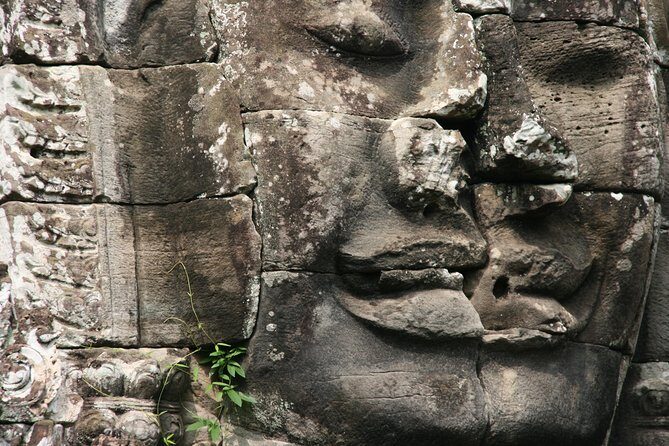
Bayon Temple sits in the heart of Angkor Thom, and this is where the tour’s religious and artistic story becomes visually unforgettable. The Bayon is known for the famous stone faces you see on towers throughout the complex. It’s also described as a masterpiece of King Jayavarman VII, combining Hindu and Buddhist art.
That combination matters because it changes how you interpret the site. Instead of treating temples as single-purpose buildings, you start seeing how rulers shaped religious tolerance and how art traveled across belief systems. The tone in the tour is peace-focused here: King Jayavarman VII is portrayed as ending religious conflicts and allowing Hindu and Buddhist communities to coexist.
You’ll have about 45 minutes at Bayon, which works well. You get time to walk the paths, spot the faces from different angles, and let the place sink in. With a tight schedule, you’ll still move efficiently, but you won’t feel like you’re being dragged through.
Ta Prohm: how to enjoy the jungle temple look without rushing
After Bayon, the tour heads to Ta Prohm, famous for the way nature and stone tangle together. This is the jungle temple people recognize from pop culture, but it’s still worth visiting even if you already know the image. The roots and the trees create a kind of visual drama that feels timeless, because it’s not staged—it’s grown.
Ta Prohm was built under King Jayavarman VII in the late 12th century and is associated with his mother in the temple’s dedication story. You’ll also learn the religious connection tied to Mahayana Buddhism, including the goddess of mercy and wisdom represented in the temple tradition. Even if you’re not into theology, the details help you see that the ruins aren’t random rubble; they connect to a specific purpose and worldview.
You get about one hour here. That’s enough time to:
- appreciate the iconic tree-and-root framing
- walk through key sections without feeling lost
- refocus between your photos so you enjoy the place, not just your camera
One practical note: this stop can be visually intense. If you tend to overstimulate in crowds or heat, take it slow for the first 10 minutes. Let your eyes adjust before you start chasing the perfect shot.
Hok Cambodia Journeys: why the guide quality matters here
The tour’s standout strength is the guide. Hok shows up repeatedly in feedback as patient, kind, and genuinely attentive. People describe him as very informative, but the more important part is how he keeps the day comfortable—checking on well-being, prioritizing safety, and adjusting to the group.
That human side matters a lot on a sunrise tour. Early morning travel is tiring by default, and temple days can be slippery, hot, or just tiring on the legs. A guide who stays on top of the pace can turn a “must-do” into a day you actually remember fondly.
There’s also a practical angle: Hok’s English is described as senior-level and clear, so you’re not stuck guessing what each monument means. You get the bigger story without long, slow speeches. The result feels like you’re getting the essential context at the right moments.
And from the feedback, Hok isn’t just a storyteller—he’s also described as having a photographer’s eye. If you want your images to look intentional rather than accidental, that’s a real advantage.
Price and value: $66 plus the temple pass reality check
At $66 per person, the tour price is positioned as an accessible way to do the major Angkor highlights with a guide and comfortable transport. But the value equation only makes sense if you account for what you still need to pay.
Here’s what’s included:
- Private air-con vehicle
- Senior English-speaking guide
- Cool water and towels
- Local snacks
Here’s what’s not included:
- Angkor Temple Pass at $37 per person
So your likely total is more than the sticker price—by about the pass amount. Still, it can be good value because you’re paying for early transportation, a full guiding service across multiple temple stops, and basic comfort items that help you last through 6 hours without feeling drained.
Also, the tour mentions the possibility of group discounts. If you’re traveling with more than one or two people, it’s worth asking about any discount logic before you lock in.
And one more thing: since it’s a private tour where only your group participates, the cost can feel more reasonable when split among friends or family. Solo travelers will feel the total more, but you’re paying for a calmer experience rather than sharing with strangers.
Time on the ground: how the 6 hours usually feel
The tour runs about 6 hours. The time distribution is roughly:
- Angkor Wat: about 2 hours
- Angkor Thom: about 30 minutes
- Bayon Temple: about 45 minutes
- Ta Prohm: about 1 hour
That adds up to a solid chunk of temple time, with remaining time likely used for travel between sites and the handoff from sunrise viewing to guided walking. The schedule is packed enough to hit the icons, but it’s not so frantic that you get the feeling of being herded.
If you hate rushing, plan to go slower yourself during the moments that matter most to you. For example, at Bayon and Ta Prohm, give yourself time to pause and look around, not just walk straight through.
Should you book this Angkor Wat sunrise tour?
Book it if you want the famous sunrise moment at Angkor Wat with a guide who can explain what you’re seeing while keeping the day comfortable. The early start is the whole point, and the combination of guide-led temple time plus transport and basic refreshment is a strong match for people who want maximum meaning, not just maximum ticking-off.
I’d hesitate if you’re trying to do Angkor on the absolute tightest budget, since the temple pass is an extra $37 per person. You’ll also want to be okay with a 4:30 AM departure. If that’s not your thing, you’ll probably enjoy a later temple schedule more.
FAQ
Is pickup offered for this tour?
Yes. Pickup is offered from your hotel for the 4:30 AM start.
What time does the tour start?
The tour departs at 4:30 AM.
How long is the tour?
It lasts about 6 hours.
What temple stops are included?
You visit Angkor Wat, Angkor Thom, Bayon Temple, and Ta Prohm.
How much time do you spend at each stop?
Angkor Wat is about 2 hours, Angkor Thom about 30 minutes, Bayon Temple about 45 minutes, and Ta Prohm about 1 hour.
Is the Angkor Temple Pass included?
No. The Angkor Temple Pass is not included and costs $37 per person.
What is included in the tour price?
The tour includes a private air-con vehicle, a senior English-speaking guide, cool water and towels, and local snacks.
Is admission for the temples included?
Admission is not included. You’ll need the Angkor Temple Pass.
Is it a private tour?
Yes. Only your group participates.
What happens if weather is poor?
This experience requires good weather. If it’s canceled due to poor weather, you’ll be offered a different date or a full refund.