REVIEW · ANGKOR WAT TOURS
Two-days tour discovering Angkor Wat and Floating Village
Book on Viator →Bookable on Viator
Angkor feels bigger when you have a plan. This two-day tour hits the big-name temples around Siem Reap and then slows down for the Kompong Phluk floating village on Tonle Sap, with an Angkor Wat sunset to close out the first day. I like that the pacing is built around seeing (not wandering) because you get an English-speaking guide, Sen, plus transport between stops. I also like the comfort details: air-conditioning and a cold towel when the heat is doing its thing. One drawback to factor in: entrance tickets and meals are not included, so you’ll need to budget extra once you’re in Cambodia.
Because it’s a private setup for your group, the day doesn’t feel like a frantic stampede. You’re not trying to figure out routes after temple fatigue hits. That said, you should expect a long day of walking and sun exposure, especially on the temple circuits and during the floating village visit.
If you want a solid Angkor overview without the stress of queues, timing, and logistics, this tour makes it easy to say yes. You’ll still get the drama of roots at Ta Prohm and the famous faces of Bayon, but you’ll do it with a guide who can explain what you’re actually looking at, not just point.
In This Review
- Key things I’d prioritize on this Angkor + Floating Village tour
- Two Days That Actually Reduce Headaches in Siem Reap
- Day 1 Schedule: Angkor Thom, Ta Prohm, Banteay Kdei, and Angkor Wat at Sunset
- Bayon Temple and the South Gate of Angkor Thom
- Ta Prohm Temple, the Jungle or Tree Temple
- Banteay Kdei for a Quieter Temple Pace
- Angkor Wat: the Main Event and Sunset Viewing
- Day 2: Kompong Phluk on Tonle Sap, Museum Context, and Stone Carving
- Kompong Phluk Floating Village: stilt houses, floating hospital, fishery
- Angkor National Museum: why it helps before you move on
- Artisans Angkor: try stone carving in a real workshop
- Siem Reap old market: a quick taste of the city between big sights
- Price and What It Means for Value (Especially With Tickets and Meals)
- The Guide Factor: Why Sen’s Style Adds More Than Facts
- Timing, Comfort, and Photo Tips That Won’t Waste Your Day
- Who This Tour Fits Best
- Should You Book This Two-Day Angkor and Floating Village Tour?
- FAQ
- What is the duration of the tour?
- What time does the tour start?
- Is pickup offered?
- What’s included in the price?
- Are entrance tickets included?
- Are meals included?
- Is this tour private?
- Is free cancellation available?
- Should you book this tour?
Key things I’d prioritize on this Angkor + Floating Village tour
- Air-conditioned transport both days, so you spend more time watching and less time sweating through transit
- Sunset at Angkor Wat, a bucket-list moment you’re guided to time well
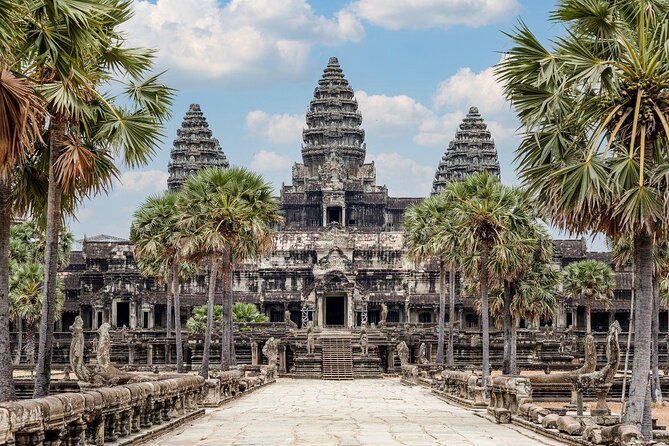
- Temple route that keeps you moving, including Bayon, Ta Prohm, Banteay Kdei, and Angkor Wat
- Kompong Phluk’s stilt houses and floating life, with a look at the floating hospital and fishery
- Angkor National Museum before your last stops, so the ruins make more sense as you go
- Stone carving at Artisans Angkor, where you try your hand in a workshop setting
Two Days That Actually Reduce Headaches in Siem Reap
Starting at 8:30 am, you’ll spend two full days crossing the Angkor area and then heading out to Tonle Sap for Kompong Phluk. The big practical win is that transport is included both days, and it’s in an air-conditioned vehicle. That sounds small until you’re doing temple circuits in the sun and you realize every hour spent arranging rides is an hour you didn’t use for temples.
This tour is designed around focus. Your guide’s job is to manage the “what am I looking at?” part, and your job is to show up ready to walk. You’ll still want comfortable shoes and a hat. Even with the best itinerary, Angkor days are physical days.
The other practical detail I appreciated in the setup: you get cold water and cold towels. In Siem Reap heat, that’s not a luxury, it’s part of keeping your energy up for a late day and for sunset viewing.
Day 1 Schedule: Angkor Thom, Ta Prohm, Banteay Kdei, and Angkor Wat at Sunset
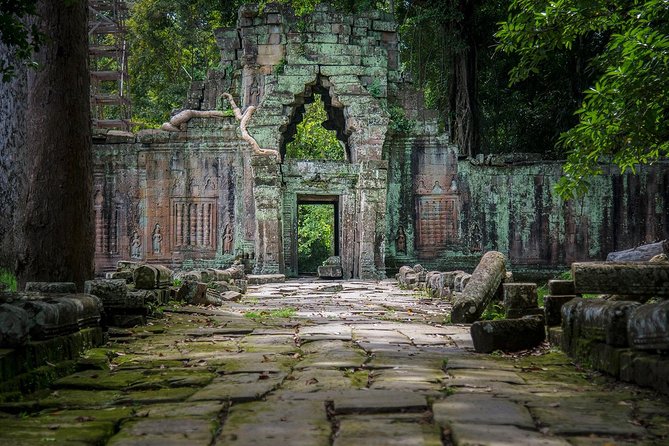
Day 1 is about temples in the Angkor zone, with time at each stop that won’t feel rushed. The day includes four main stops—Bayon Temple (inside Angkor Thom), Ta Prohm, Banteay Kdei, and then Angkor Wat for the longer visit and sunset.
A smart way to think about this day: you’re not just seeing ruins. You’re seeing different styles and moods—city gates and faces at Bayon, jungle-surrounded stone at Ta Prohm, then the more understated feel of Banteay Kdei, before the grandeur payoff at Angkor Wat.
Bayon Temple and the South Gate of Angkor Thom
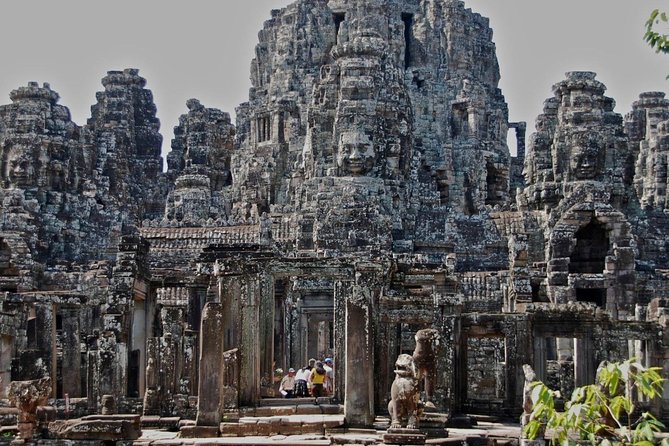
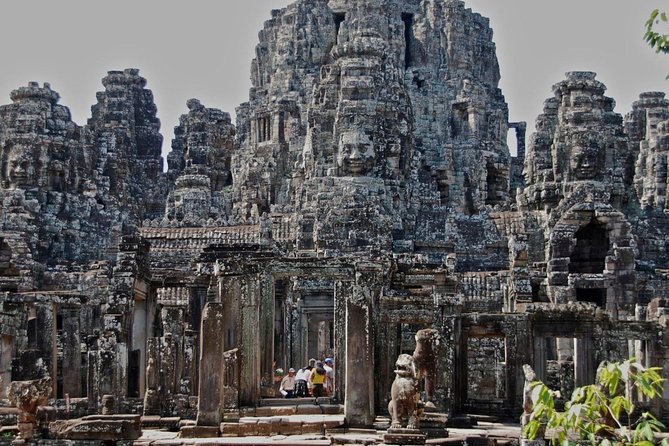
You start at the south gate of Angkor Thom, then move through Angkor Thom itself. Bayon Temple sits inside this ancient city, known for the 54 towers and 216 faces of Avalokiteshvara. That kind of detail sounds like trivia until you’re standing there and the faces look back from every direction.
What I like about this first stop is the way it sets your eye up for the rest of the Angkor complex. When you understand that this wasn’t random stone, but a designed sacred space, the temples stop feeling like individual photos. They start feeling like a connected world.
Possible consideration: Bayon is a busy site in general. Even with a guided flow meant to reduce waiting, you should expect people around you at key viewing points. The upside is that your guide can help you find the angles that still make your photos feel worth the effort.
Ta Prohm Temple, the Jungle or Tree Temple
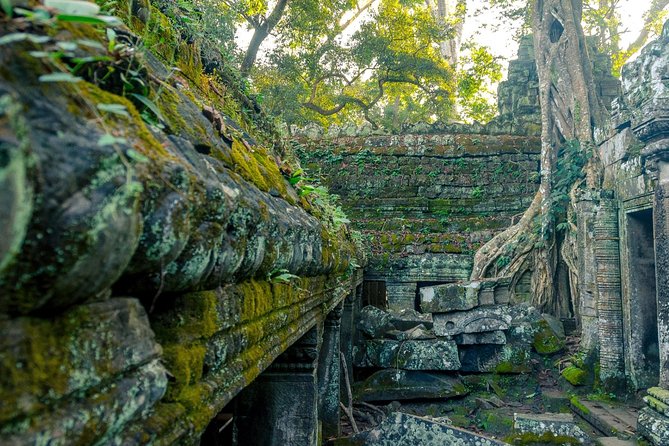
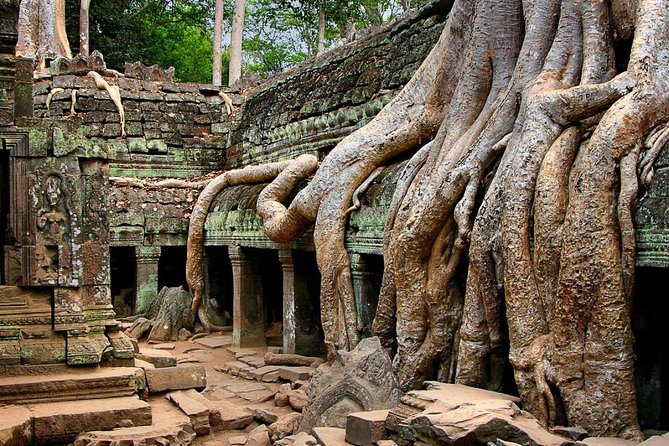
Next is Ta Prohm, famous for the way huge tree roots grip the stone. It’s often described as the jungle temple or tree temple, and once you’re there, you get why. The building looks like it’s being slowly reclaimed, and the contrast between carved stone and living roots is the whole show.
This stop runs about 2 hours, which is about right. You’ll want time to circle, pause for the big views, and catch the details without feeling like you’re being herded. A guide helps here too, because Ta Prohm isn’t just pretty. It’s a case study in how nature and ruins share a space over time.
Possible drawback: Ta Prohm can be visually busy. If you hate crowds or don’t like waiting for a clean shot, tell your guide you want less-congested viewpoints and alternate angles.
Banteay Kdei for a Quieter Temple Pace
Banteay Kdei is the middle of the day, and that matters. You get a shorter visit (about 1 hour), but it can feel like a breather after Ta Prohm’s famous chaos. It was built in the late 12th century under King Jayavarman VII, which gives you a historical anchor for what you’re seeing.
I like Banteay Kdei because it tends to feel more contemplative than the flashiest stops. It’s a chance to take in the layout and not just chase the biggest photo moment.
Angkor Wat: the Main Event and Sunset Viewing
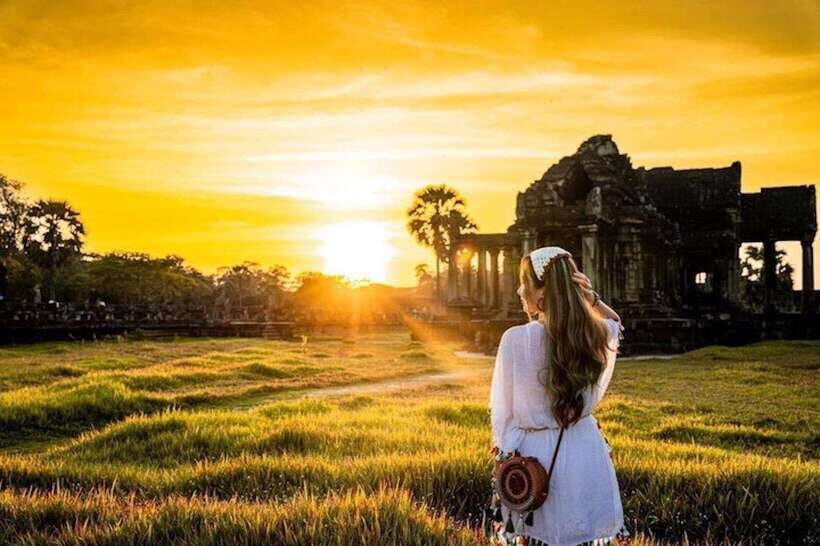
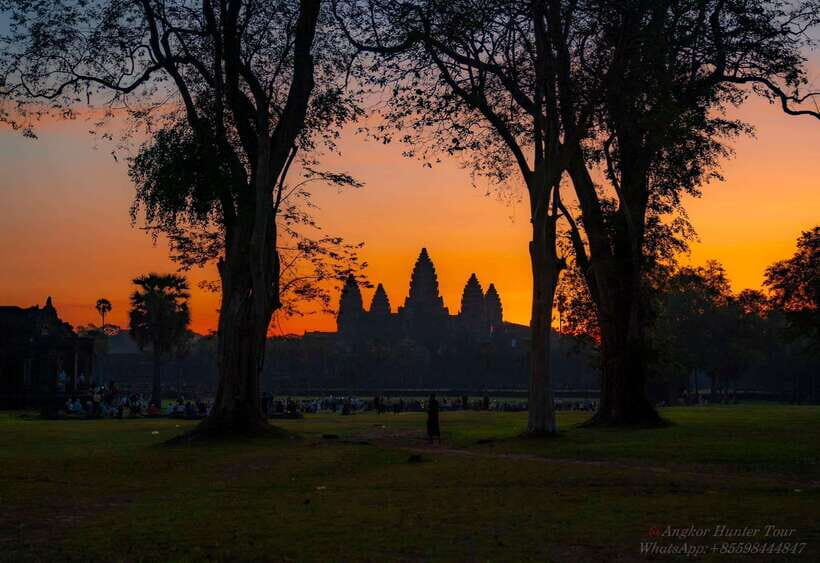
Then you move to Angkor Wat, with about 3 hours on the clock. This is the UNESCO World Heritage Site that most people come to see, and the tour is built to end the day here with sunset.
Sunset at Angkor Wat isn’t just a payoff; it’s a lesson in how light changes meaning. In the evening, stone textures look different, shadows become more dramatic, and the scale feels even larger. A guide’s value here is timing and planning. You’re not wandering around hoping you chose the right platform and the right view.
Practical tip: even if sunset sounds romantic, the area can get hot earlier and crowded as the light turns. Keep water nearby, and wear something you don’t mind getting dusty. Your comfort affects your patience, and your patience affects how much you enjoy the view.
Day 2: Kompong Phluk on Tonle Sap, Museum Context, and Stone Carving
Day 2 shifts from temple stones to living culture on Tonle Sap. It starts with Kompong Phluk, then you go into the Angkor National Museum, and finish with hands-on stone carving at Artisans Angkor. If you also want a feel for old-town life, the overall plan includes a stop at Siem Reap’s old market.
This is the day where the tour becomes more than sightseeing. It connects what you saw in the temples—Khmer art, tools, materials, and faith—with how Cambodians live today.
Kompong Phluk Floating Village: stilt houses, floating hospital, fishery
Kompong Phluk is a traditional Khmer floating village about 30 km from Siem Reap. Your visit runs about 4 hours. You’ll see stilt houses above the water, plus a floating hospital and the fishery and daily lifestyle built around lake life.
Here’s what I find meaningful about this stop: it doesn’t read like a theme park when it’s explained as real work and real community. When you understand that many people depend on the lake year-round, the village stops being a curiosity and becomes a place with routines.
Possible consideration: time here depends on water conditions and daily activity. Your guide can keep you oriented, but you should still dress for sun and bring a light layer if it gets breezy.
Angkor National Museum: why it helps before you move on
After Tonle Sap, you head to the Angkor National Museum for about 1 hour. The museum’s collection includes an extensive set of Buddha statues and relics displayed in one gallery, which helps you build context for what the temples represent beyond architecture.
I like this kind of museum stop because it’s not just a “sit down” break. It gives your eyes a reference point. After spending a day staring at stone faces and carved details, you start noticing artistic choices differently—proportions, motifs, and craftsmanship.
Artisans Angkor: try stone carving in a real workshop
Then it’s time for hands-on fun at Artisans Angkor, an NGO workshop aiming to improve life for disadvantaged Cambodians from rural areas. You’ll enter the workshop and try your hand at carving your own stone piece.
This is one of the best value add-ons on the itinerary because it turns travel into skill for a while. You’re not just looking at art. You’re learning how stone resists and how patience changes the outcome.
Practical tip: wear clothes you don’t mind getting a bit dusty and consider bringing closed-toe shoes even if you’re tempted to wear sandals.
Siem Reap old market: a quick taste of the city between big sights
The tour plan also includes time at Siem Reap’s old market. This is where you can slow down and look at everyday Cambodia—snacks, goods, and local rhythms. It won’t replace the temples, but it balances the trip so it feels like a real place, not just a circuit of monuments.
If you like browsing, this stop can be useful. If you dislike crowds, move with purpose and don’t linger where foot traffic gets tight.
Price and What It Means for Value (Especially With Tickets and Meals)
The tour costs $92 per person for the two-day experience. On paper that can sound either like a steal or like a lot, depending on what’s included. Here’s the honest way to judge it:
You’re getting an English-speaking guide, an air-conditioned vehicle, and cold water and towels, plus transport for both days and a structured route across Angkor and Tonle Sap. Those parts add up fast if you tried to piece together the days yourself, especially with proper timing for sunset at Angkor Wat.
Now the catch: entrance tickets and meals are not included. That means your all-in cost will be higher once you pay for temple entry and plan food. If you’re the type who usually eats big lunches and prefers sit-down dinners, your meal budget matters.
My suggestion: set aside money for tickets and at least a couple of snack stops. You’ll thank yourself when you hit a temple day and realize you don’t want to hunt for food mid-route.
The Guide Factor: Why Sen’s Style Adds More Than Facts
This kind of tour lives or dies on guide quality, because you’re visiting high-demand sites where it’s easy to feel lost. In the reviews, the name Sen comes up for being easy to connect with and for keeping the day positive and upbeat.
What that translates to for you on the ground is simple: you’re less stressed. When someone can explain the meaning behind what you see—like Bayon’s faces or why Ta Prohm looks the way it does—you can spend less energy decoding and more energy experiencing.
Sen also matters for practical flow. Angkor is famous for being crowded at peak moments. A good guide helps you plan your movement so you spend less time stuck waiting and more time actually looking.
Timing, Comfort, and Photo Tips That Won’t Waste Your Day
This is a two-day itinerary, which means you should protect your energy from day one. Start with basics: sunscreen, a hat, and comfortable shoes. If you pack light but smart, the day feels easier.
For temple days:
- Plan for sun and dust even when there’s air-conditioning between stops
- Keep your water where you can reach it fast
- Don’t overpack with big bags; you want free hands for photos
For sunset at Angkor Wat:
- Expect more people as the light changes
- Bring a layer if you get cool at dusk
- Aim to arrive ready, not rushing when the sky starts turning
For Kompong Phluk:
- Expect a more variable feel because it’s tied to lake life
- Dress for heat, but don’t assume it will be calm—water areas can get breezy
Who This Tour Fits Best
I’d say this tour is a great fit if you:
- Want to see major Angkor temples without building a complicated self-drive plan
- Prefer a guide who helps you interpret what you’re seeing
- Like a mix of ruins plus real daily life at Tonle Sap
- Want one memorable sunset moment at Angkor Wat rather than squeezing everything into a single day
- Would enjoy a hands-on stop like stone carving
It might be less ideal if you want total independence and you’re comfortable managing schedules, ticket lines, and transit on your own. Also, because meals aren’t included, if you strongly dislike budgeting for food on day trips, you’ll need to plan ahead.
Should You Book This Two-Day Angkor and Floating Village Tour?
If your goal is a satisfying Angkor overview plus a meaningful visit to lake life, I think this one is worth booking. The value comes from the structure: air-conditioned transport, an English guide (Sen), protected time at the big temples, and a sunset finish at Angkor Wat. The itinerary also doesn’t stop at ruins—it adds Angkor National Museum context, a market look, and stone carving at Artisans Angkor, which makes the whole trip feel less like a checklist.
Book it if you want less stress and more seeing. Skip it only if you’re hoping meals and entrance tickets are magically included, or if you prefer completely unstructured travel.
FAQ
What is the duration of the tour?
It runs for approximately 2 days.
What time does the tour start?
The start time is 8:30 am.
Is pickup offered?
Yes, pickup is offered.
What’s included in the price?
Included are an air-conditioned vehicle, an English tour guide, and cold water and cold towels.
Are entrance tickets included?
No, all entrance ticket fees are not included.
Are meals included?
No, meals (breakfast, lunch, and dinner) are not included.
Is this tour private?
Yes, it is private, and only your group will participate.
Is free cancellation available?
Yes. You can cancel for a full refund up to 24 hours in advance of the experience’s start time.
Should you book this tour?
Yes, if you want a smooth two-day route with transport included, a guided approach to Angkor’s top sites, and a real look at Tonle Sap life at Kompong Phluk. Just budget for entrance tickets and meals, and you’ll likely feel like you got your money’s worth in both comfort and time.