Angkor can feel like a puzzle.
This two-day temples tour turns it into a plan you can follow, with a private group and a guide who adjusts to what you want to see and photograph. I like the mix of temple styles here, so your second day is not just a repeat of Day 1. You also get a route that spreads the big sights with smaller stops, so the day doesn’t blur together.
Two things I especially like: the guides’ flexibility and their comfort with history and religious context. Names you may meet include Borey Hang, Mr Kim, Mr Bunleat, and Kimhoeun, and the common thread is clear communication plus real attention to your pace. One consideration: temple admission tickets are not included, so your total cost depends on buying entry for each site.
Finally, this is built for people with moderate physical fitness, and some stops are compact but require steady walking across uneven temple grounds. If you’re hoping for a fully seated, low-effort day, you may find the pace and terrain a bit much.
In This Review
- Key things to know before you go
- A two-day Angkor plan that keeps the day from melting
- Price and what you really pay for (and what you still need)
- Your guide isn’t just a driver—this is the heart of the tour
- Day 1: Banteay Srei’s pink stone, Preah Khan’s maze, and Khmer temple engineering
- Banteay Srei: the jewel of Angkorian art
- Banteay Samre: same era, different mood
- Preah Khan: a maze of corridors and carvings
- Neak Pean: a small Buddhist temple on an island
- Ta Som: a short stop with big head faces
- Eastern Mebon: a temple that shifted with the waterline
- Pre Rup: a pyramid temple-mountain for a strong final note
- Day 2: Angkor Wat’s scale, Angkor Thom’s city walls, and Ta Prohm’s film-set mood
- Angkor Wat: the largest, built to honor Vishnu
- Phnom Bakheng: five tiers and a blink-and-you’ll-miss-it stop
- Angkor Thom: the Great City and the Bayon core
- Ta Prohm: atmospheric ruins swallowed by trees
- Getting the most out of the itinerary: pacing, walking, and focus
- Who this tour fits best—and who might want a different style
- Should you book this Two Day Angkor Temples Tour?
- FAQ
- Is pickup included on this Angkor temples tour?
- How long is the Two Day Angkor Temples Tour?
- What is included in the price?
- Are admission tickets to the temples included?
- How much does the tour cost per person?
- Is the tour GST included?
- Do I need moderate physical fitness?
- What if the weather is bad?
- Is it a group tour with other people?
Key things to know before you go
- Private-group touring means only your group joins the schedule, not random add-ons.
- Air-conditioned vehicle helps a lot in Siem Reap heat, especially between temples.
- Flexible pivoting: guides actively adjust the route if you’re enjoying a certain style (like Ta Prohm).
- Photo support: you can get practical guidance for photography, including iPhone tips.
- Balanced temple mix: Hindu and Buddhist sites plus quiet, maze-like complexes.
- Admission tickets not included: plan for site entry separately from the tour price.
A two-day Angkor plan that keeps the day from melting
Angkor is huge. The value of this tour is that it gives you structure for two full days without trying to force every single monument into one exhausting sprint. With a route built from stops that average around 30 minutes to about two hours each, you get a rhythm: see something, learn it, take photos, then move on before you burn out.
This also matters because your guide can keep an eye on your energy level and interests. In the feedback, guides like Borey Hang, Mr Kim, Mr Bunleat, and Kimhoeun are repeatedly described as responsive and schedule-friendly. That’s not a small perk in Angkor. The difference between rushing through carvings and actually noticing the details can be one well-timed pause.
And since this is a private tour/activity, you’re not negotiating with a large group about where to stand, how long to linger, or when you need a short break. The tour is priced per person, but you share the experience only with your own party.
Price and what you really pay for (and what you still need)
The listed price is $102.57 per person for the 2-day experience. From the included details, you’re paying for planning, guide time, and transportation via an air-conditioned vehicle, plus the service of picking you up when the option is offered.
What you’re not paying for (and should budget for) is temple entry. The tour specifically says admission tickets are not included. GST (Goods and Services Tax) is also not included. So your real total will be your tour price plus the site tickets you choose/need for each stop.
One more practical point: the tour is described as often booked about 28 days in advance on average. That’s a clue that guides and vehicles may get booked up, especially if you’re traveling during peak seasons or on tight dates.
Your guide isn’t just a driver—this is the heart of the tour
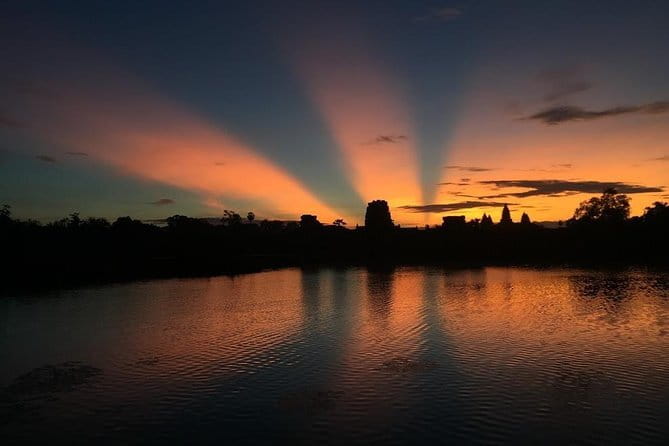
If you care about understanding what you’re looking at, this tour’s biggest advantage is the way the guiding is described. People highlighted that their guides were honest, reliable, and flexible, and that they actively listen to what you want—then shape the visit around it.
In particular, Borey Hang gets repeated praise for blending Angkor temple history with the cultural and religious backdrop of both Hinduism and Buddhism. One review also notes his family has been in Siem Reap for many generations, which helps explain why he can connect the monuments to life in the region rather than treating Angkor like a sealed museum.
There’s also a very practical photography angle. Guides are described as helping with photo spots and sharing tips, including iPhone photography guidance. In a place where you’re often trying to get carvings, faces, and temple geometry all in one frame, that kind of on-the-ground advice can save you time and frustration.
Day 1: Banteay Srei’s pink stone, Preah Khan’s maze, and Khmer temple engineering
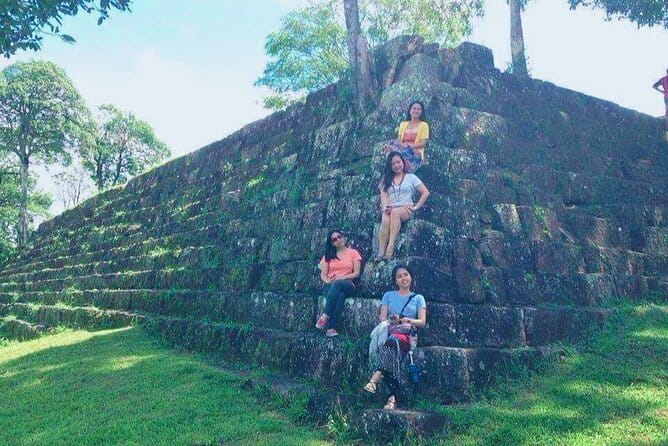
Day 1 is all about variety. You start with two temples tied to Hindu devotion, then shift into complex corridors, then land on a lineup of smaller, distinctive sites that still feel “worth stopping for” instead of filler.
Banteay Srei: the jewel of Angkorian art
You’ll begin at Banteay Srei, described as the jewel in the crown of Angkorian art. It’s a Hindu temple dedicated to Lord Shiva, built in the 10th century. The most eye-catching detail is the pinkish-hue stone. The tour timing is about an hour, which is a good window for getting close to carvings without feeling like you’re on a countdown.
What I like about starting here: it sets a visual tone fast. You immediately see that Angkor isn’t only big stone masses. It’s also fine work.
Banteay Samre: same era, different mood
Next is Banteay Samre, dated to the same general period as Angkor Wat and built in the 12th century by Suryavarman II, dedicated to Lord Vishnu. It’s described as in fairly healthy preservation due to less exposure compared to some other sites (a practical point: you may feel more comfortable slowing down to read details).
About an hour here keeps your day balanced—enough time to notice sculptural differences, not so long that fatigue builds.
Preah Khan: a maze of corridors and carvings
Then you move to Preah Khan (Sacred Sword), one of Angkor’s largest complexes. The description calls it a maze of vaulted corridors with fine carvings and lichen-clad stonework. It’s positioned as a counterpoint to Ta Prohm, and it generally sees slightly fewer visitors.
This is a smart move for photographers and people who like atmosphere. A more maze-like complex changes how you move. You’re not just walking a straight line—you’re following space and shadow.
Neak Pean: a small Buddhist temple on an island
After that big complex, Neak Pean is a quick reset. It’s a Buddhist temple called Preah Neak Poan, described as the Intertwined snake, built by Jayavarman VII. The standout feature is its setting: an artificial island in the middle of a manmade lake called Jayatataka (or north Baray).
You’re scheduled for about 40 minutes. That timing is perfect for focusing on the island setting and the temple scale without turning it into a long detour.
Ta Som: a short stop with big head faces
Ta Som is the satellite temple of Preah Khan, built by Jayavarman VII in the late 12th century. The tour lists it as very small, but worth a quick look—especially for the large head at the eastern gate.
This stop is a good example of what makes a two-day route work: even when a temple is small, it can still be memorable if you know what to notice.
Eastern Mebon: a temple that shifted with the waterline
You’ll then visit Eastern Mebon, a Hindu temple erected by Rajendravarman II. The description says it would have been on an islet in the center of Eastern Baray, but now it has shifted much onto dry land.
You’ll have about 50 minutes. This stop is more interesting if you like the idea of how Angkor’s waterworks shape the monument’s meaning. Even when you don’t see the old island setting the way it once was, the story is built into what you’re looking at.
Pre Rup: a pyramid temple-mountain for a strong final note
Finally on Day 1 is Pre Rup, built by Rajendravarman II in the 10th century. It’s described as a pyramid-shaped temple-mountain with three tiers. Your time here is about 40 minutes.
Why end Day 1 with this? It gives you a compact finish that feels structural and intentional. After corridors, islands, and gates, the pyramid form is a clean way to reset your eyes.
Day 2: Angkor Wat’s scale, Angkor Thom’s city walls, and Ta Prohm’s film-set mood
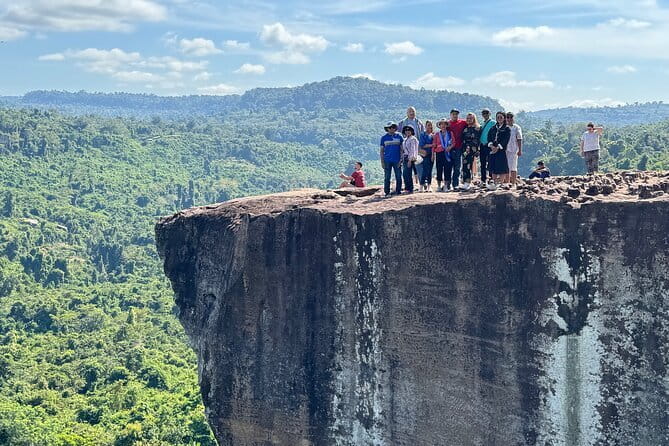
Day 2 is where Angkor’s headline monuments take over. The route also keeps you from spending all your time on the biggest complex. You get both major anchors and a signature ruin that people often remember most.
Angkor Wat: the largest, built to honor Vishnu
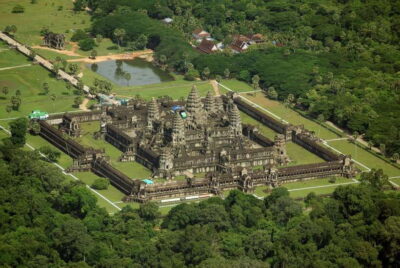
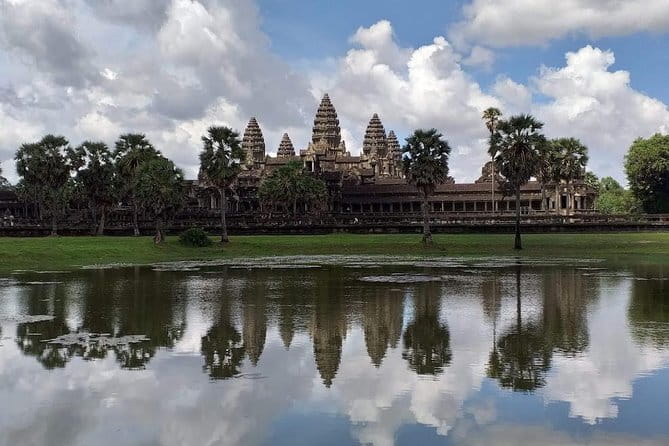
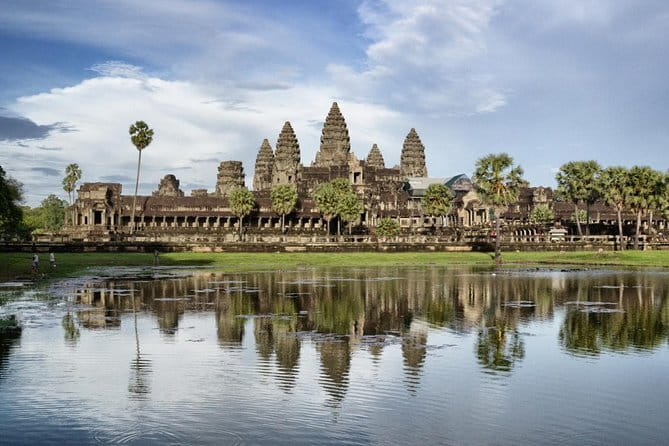
You’ll start at Angkor Wat, built by Suryavarman II in the 12th century to honor Lord Vishnu. The description calls it the largest and most breathtaking of Angkor’s monuments.
Your scheduled time is about two hours. That’s enough for a first strong look and a second pass if your guide thinks you’ll appreciate certain carvings more at a different angle or with a clearer story attached. The guide’s explanations about the Hindu identity behind the architecture can also change how you see it.
Phnom Bakheng: five tiers and a blink-and-you’ll-miss-it stop
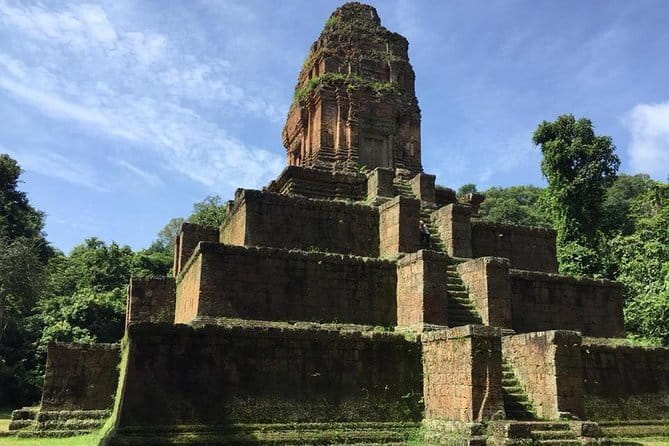
Next is Phnom Bakheng, built by Yasovarman I in the early 10th century. It’s described as the first of the temple-mountains built in the vicinity of Angkor, with five tiers and seven leveled sections.
The tour lists a very short stop—about 1 minute. That doesn’t mean it’s unimportant. It means this day keeps you moving, likely so you can save more time for the heavy hitters.
If you want more time for Phnom Bakheng, the best leverage is to talk to your guide early in the day so your pacing matches your priorities.
Angkor Thom: the Great City and the Bayon core
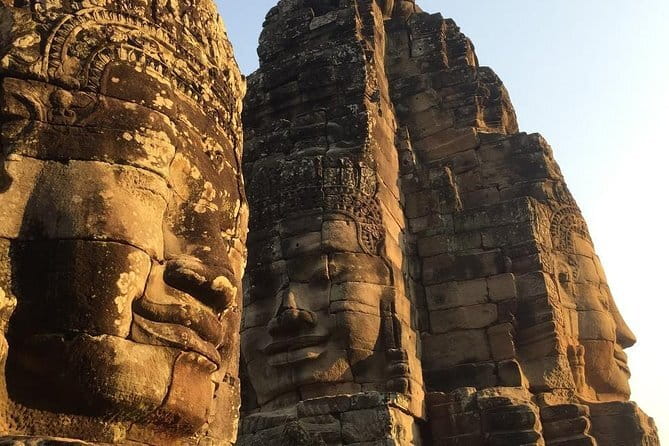
Then you head into Angkor Thom (Great City), described as the last city of Angkor built by Jayavarman VII. The description even gives a sense of scale, saying it may have supported up to one million people in the surrounding region at its height. At the center is the Bayon (which the tour highlights).
Your time here is about two hours. That’s the kind of chunk that works for city-scale ruins, where you need enough time to walk and orient yourself to appreciate the plan.
Ta Prohm: atmospheric ruins swallowed by trees
Finally comes Ta Prohm, described as the most atmospheric ruin at Angkor and a must on most hit lists. The defining feature in the description is that it has been swallowed by trees, unlike many other monuments.
You’ll have about one hour. This is also where guide flexibility matters. One review notes that after seeing how much a family enjoyed Ta Prohm on Day 1, the guide suggested a pivot to help them get the most out of the moment. If you love that scene—tree roots on stone—this is the stop to put your camera down and just look too.
Getting the most out of the itinerary: pacing, walking, and focus
The tour requires moderate physical fitness, and that’s mainly about tempo and terrain, not about athletic moves. The stop durations give you clues: you’re usually in the 30–120 minute range, with several around an hour. That means you won’t be stuck forever in one spot, but you will be standing and walking between sites.
Here’s how I’d think about it as you plan your two days:
- On Day 1, the variety helps you avoid monotony. You alternate between Shiva and Vishnu contexts, big complexes and smaller standouts.
- On Day 2, you get longer blocks for the city and the headline monuments, which helps your brain “connect the dots.”
- If your priority is photography, the guide’s photo support and the chance to spend time where you’re already excited can be a big payoff.
Also, since the tour includes an air-conditioned vehicle, you get regular breaks between ruins. That matters when your schedule has a lot of daylight exposure and stone surfaces.
Who this tour fits best—and who might want a different style
This two-day Angkor temples tour is a great match if you want:
- A private experience with only your group
- A guide who explains the history and religious contexts behind what you see
- Support for photography, including iPhone tips and advice on photo spots
- A balanced route that includes big monuments and smaller, more specific sites
It may be less ideal if:
- You’re counting on admission tickets being included in the price
- You want long stops at just one or two monuments without any tradeoffs
- You prefer a very low-walking day (the tour does call for moderate physical fitness)
Should you book this Two Day Angkor Temples Tour?
Yes, if you want Angkor with structure and a guide who actually works with your pace. The strongest reasons to book are the flexible, attentive guiding and the blend of sites—from Banteay Srei’s pink stone and Preah Khan’s corridor maze to Angkor Wat’s scale and Ta Prohm’s atmospheric ruin.
If you’re price-sensitive, do the math before you commit: add likely admission tickets to the tour price, and remember GST isn’t included. Also, if you’re visiting under tight weather constraints, keep an eye on conditions since this experience requires good weather.
Bottom line: this is a smart choice for people who don’t just want photos—they want to understand what they’re looking at, and they want the route to respond when a stop grabs their attention.
FAQ
Is pickup included on this Angkor temples tour?
Pickup is offered. The tour description also notes a ticket redemption point at Angkor Enterprise on Apsara Rd in Siem Reap.
How long is the Two Day Angkor Temples Tour?
It runs for 2 days (about 2 days).
What is included in the price?
The tour includes an air-conditioned vehicle. The tour is private, and only your group participates.
Are admission tickets to the temples included?
No. Admission tickets are not included, so you’ll need to budget for entry to each site.
How much does the tour cost per person?
The listed price is $102.57 per person.
Is the tour GST included?
No. GST is listed as not included.
Do I need moderate physical fitness?
Yes. The tour notes that travelers should have a moderate physical fitness level.
What if the weather is bad?
The experience requires good weather. If it’s canceled due to poor weather, you’ll be offered a different date or a full refund.
Is it a group tour with other people?
No. It’s described as a private tour/activity, so only your group participates.