REVIEW · EVENING EXPERIENCES
Phnom Bakheng Sunset Tour, Pre Rup, Neak Pean, Preah Khan
Book on GetYourGuide →Bookable on GetYourGuide
This route feels like a movie reel of Khmer spirituality, moving from carefully planned Hindu temples to tree-rooted ruins and then straight into sunset views. What I like most is the pacing: you start mid-day, cover the major highlights, and end with Phnom Bakheng at the right time of day.
Two things I especially like: the tour includes the big trio—Pre Rup, Neak Pean, and Preah Khan—so you get more than just a sunset photo stop, and the guide support is strong, with English that makes temple details click fast.
One consideration: Phnom Bakheng means a climb. You’ll go up 200 steps, and the tour isn’t suitable for pregnant women.
In This Review
- Quick hits
- How the 6-hour loop works in real life
- Pre Rup: the state temple with a view mindset
- Neak Pean and Jayatataka Baray: a temple on water’s idea
- Preah Khan: a bigger, messier devotion story
- Phnom Bakheng sunset: the view is the payoff, the steps are the cost
- The value check: $55 plus the temple ticket
- Your guide (often Son) makes the difference
- Transport, snacks, and small comfort wins
- Who should book this Phnom Bakheng sunset tour
- Should you book it?
- FAQ
- What time does the tour start and end?
- How long is the tour?
- What temples are included?
- Is the Phnom Bakheng climb included?
- What is included in the price?
- Do I need to buy temple tickets?
- Is this tour suitable for everyone?
Quick hits
- Pre Rup: a temple-mountain built as a state temple for King Rajendravarman
- Neak Pean: an artificial island temple in Jayatataka Baray
- Preah Khan: the biggest stop on this loop, built by Jayavarman VII for his father
- Phnom Bakheng: finish with sunset from the top of the hill
- English-first guiding: your guide, often Son, is praised for clear English and practical tips
How the 6-hour loop works in real life
This is a 6-hour afternoon tour in Siem Reap Province. You’ll meet your guide and driver at your hotel at 12:30 pm, then you’ll spend the day moving through key temple sites in a set order, finishing around 7:30 pm back in Siem Reap city.
That timing matters more than you might think. Starting in the middle of the day helps you avoid only doing temples at the hottest hours, and ending at sunset gives you a reason to stay focused until the end. If you’re juggling more than one day at Angkor, this format also gives you a clean, organized chunk of time.
For transport, you ride in a shared tuk-tuk (good for smaller groups) or an air-conditioned vehicle if your group is 4 or more. Either way, the practical goal is the same: fewer logistics headaches so you can concentrate on temples.
Pre Rup: the state temple with a view mindset
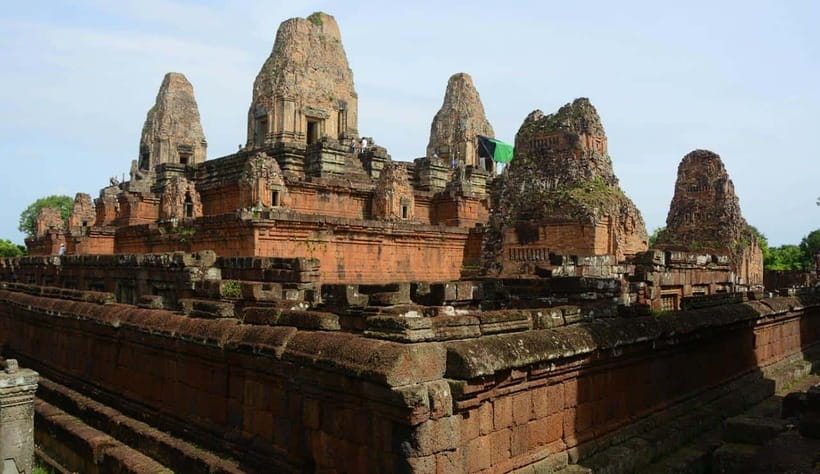
Your tour begins at Pre Rup. This isn’t just another ruin on the map. It was built as the state temple of Khmer King Rajendravarman, dedicated in 961 or early 962. You’ll notice the “temple mountain” design—built using a combination of brick, laterite, and sandstone—which is a big part of why people come here.
I like this stop because it’s structured. Even if you’re not a temple-architecture nerd, the overall shape helps you understand what you’re looking at. A temple mountain design is meant to feel like a step-by-step climb toward something sacred, and Pre Rup sets that mood for the rest of the loop.
What you might want to plan for: this place can feel like a lot of stone in a small area, so don’t rush. Take a moment to slow down at key points and let your guide connect the dots between Hindu ideas and how Khmer builders expressed devotion through layout.
Neak Pean and Jayatataka Baray: a temple on water’s idea
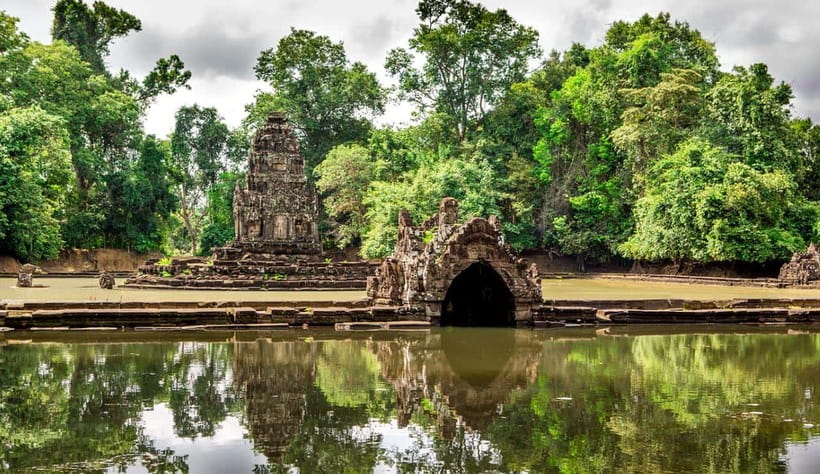
Next up is Neak Pean, which sits on an artificial island in Jayatataka Baray. This is the kind of site that changes how you think about Angkor’s engineering. Instead of a temple sitting by itself, you’re looking at a temple placed inside a broader water landscape concept.
Neak Pean is a Hindu temple built in the 12th century, and it’s designed around the idea of a circular island—an intentional, symbolic layout rather than a random “pretty ruin” situation. I like this stop because it gives a different texture to the day. After temple mountain geometry at Pre Rup, Neak Pean feels more like a designed moment, tied to the water system.
The practical payoff: Neak Pean also tends to be a strong “photo plus understanding” stop. With a good English guide, you’ll get past surface details and start recognizing why Khmer builders cared about meaning and not just materials.
Preah Khan: a bigger, messier devotion story
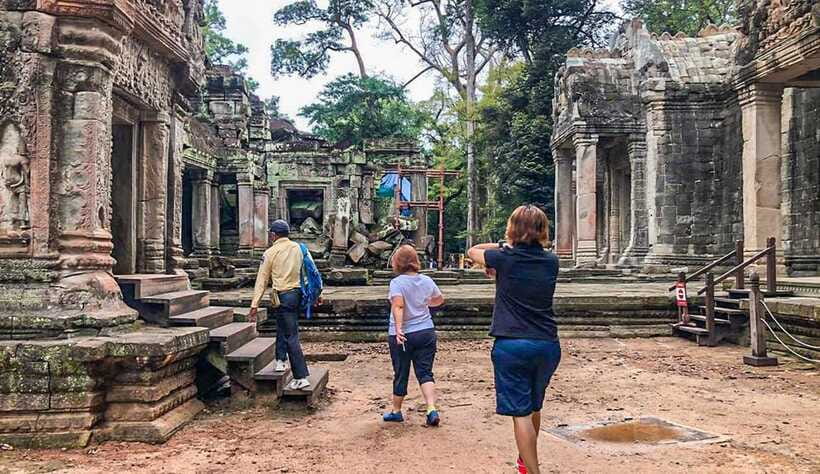
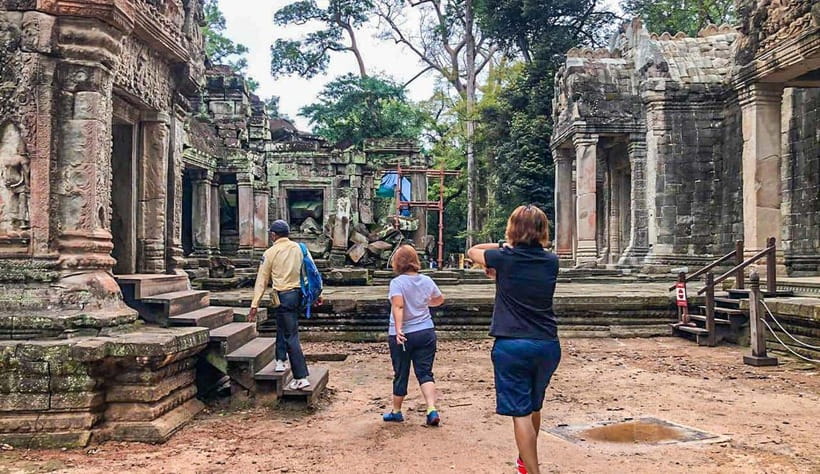
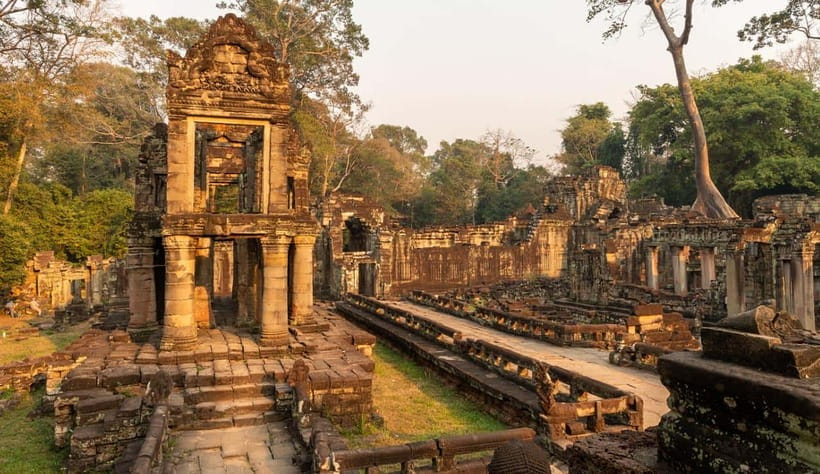
Then you move to Preah Khan. This is the biggest temple on the loop, located northeast of Angkor Thom. It was built by King Jayavarman VII to honor his father, and it carries that quality people often look for in Cambodia: slightly untamed, visually layered, and full of atmosphere.
What makes Preah Khan special on this tour is the mix you get in one day. You go from planned temple structure to the water-focused design at Neak Pean, then you arrive at Preah Khan, where the scale and feel are larger. The site is also known for that memorable contrast between stone and growth—tree roots and crumbling sections give it an honest, lived-in look rather than a perfectly restored look.
A small drawback: because Preah Khan is bigger than some of the other stops, you’ll want to wear comfortable shoes and keep expectations realistic. You won’t “see everything.” Instead, focus on the main areas your guide points out and ask questions as you walk. That’s the best way to get value out of the time you have.
Phnom Bakheng sunset: the view is the payoff, the steps are the cost
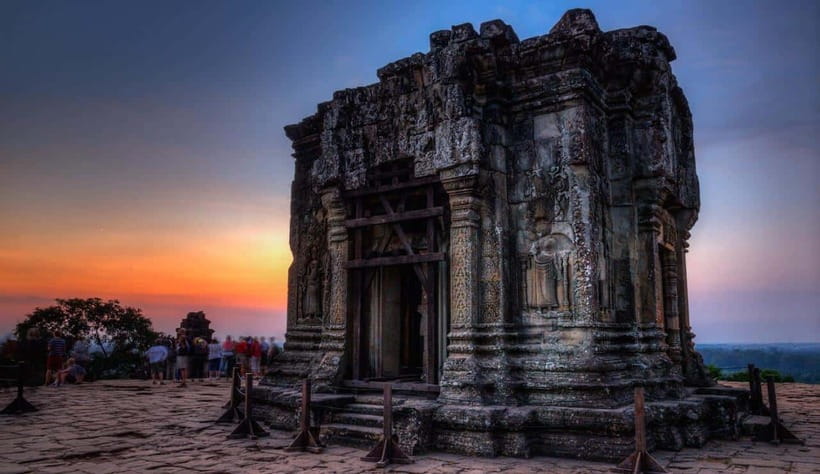
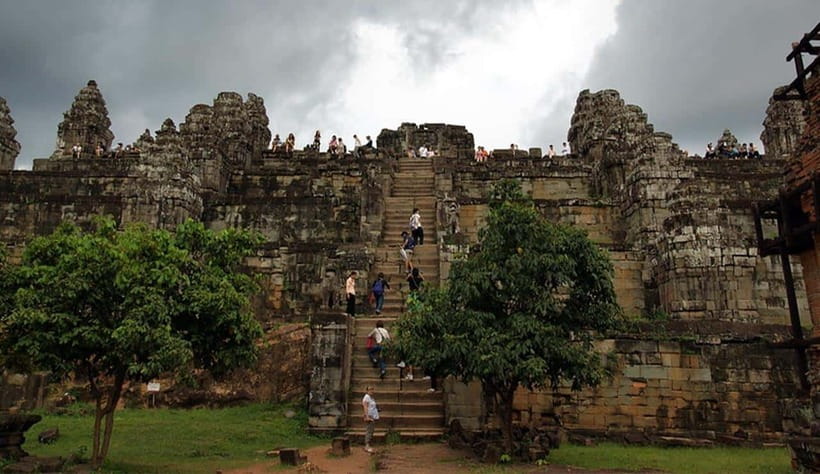
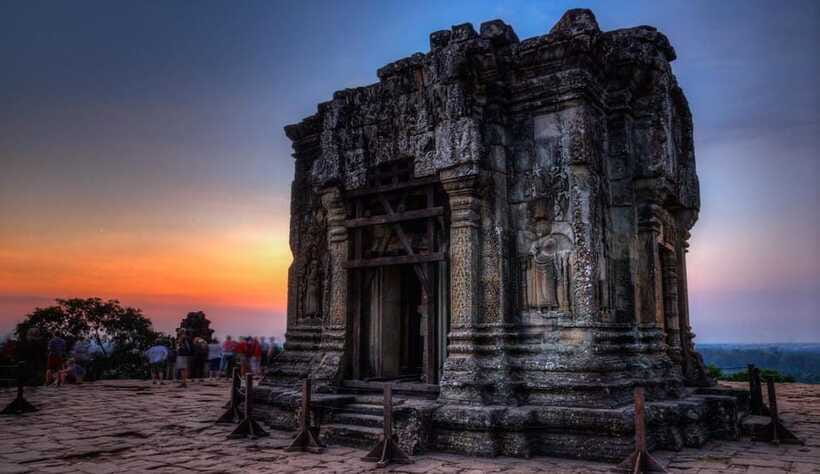
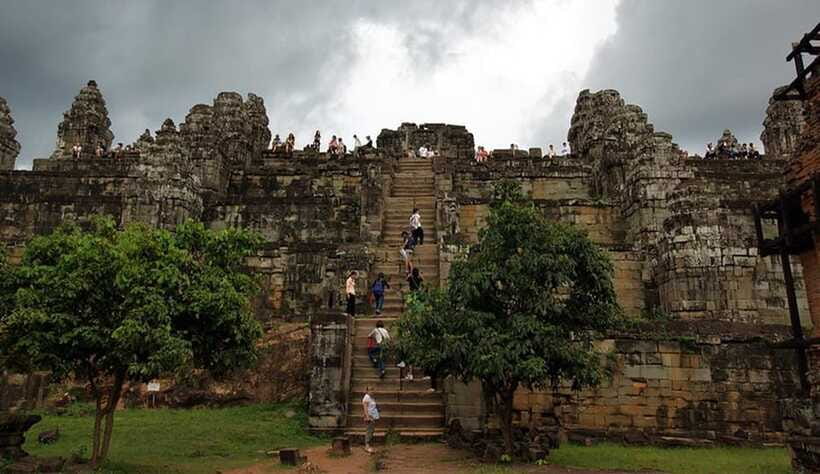
The day ends with Phnom Bakheng, a Hindu temple in the form of a temple mountain dedicated to Shiva, built at the end of the 9th century during King Yasovarman’s reign. If you only did one temple at sunset in Siem Reap, this is the one you choose.
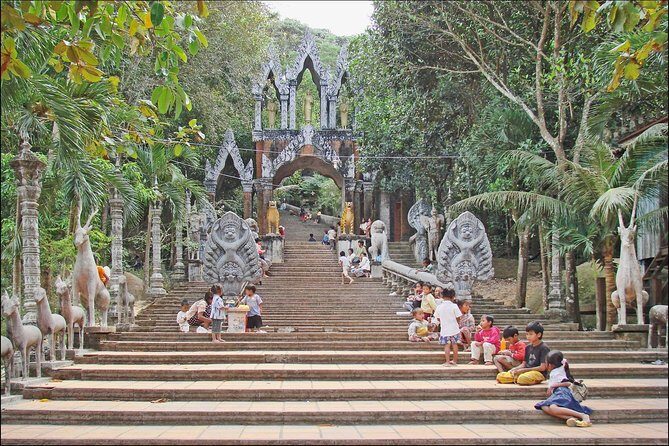
Here’s the key practical detail: you will climb 200 steps to reach the top. This isn’t a casual stroll. If your legs get sore easily, take it slow, pause if you need to, and treat the climb as part of the experience rather than something you have to “get through.”
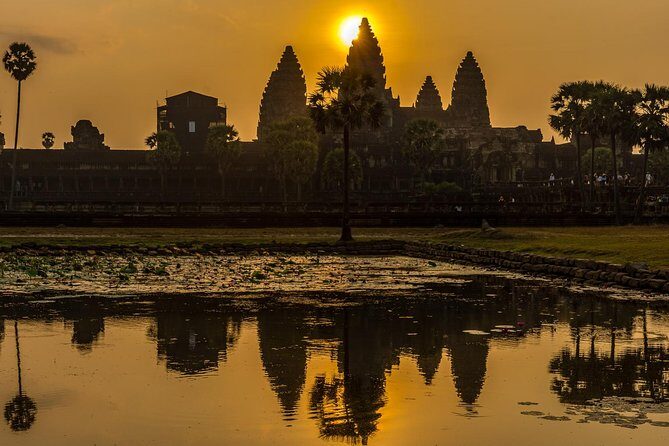
Why the sunset moment matters: Phnom Bakheng is designed to be experienced from above and from a distance. When the sky shifts, that temple-mountain form becomes more than architecture—it becomes a silhouette and a scene. You’re not just looking at old stone; you’re seeing the idea of the place in the light it was meant for.
I’d also plan your energy for the climb. If you’re tired, you’ll feel it at the steps. If you pace yourself, the last part of the tour feels like a reward instead of a chore.
The value check: $55 plus the temple ticket
This tour costs $55 per person for a total of about 6 hours. For that price, you get hotel pickup and drop-off, an English-speaking guide, local snacks, and cold water.
What’s not included is the temple ticket, listed as $37/day. That matters for budgeting. If you’re comparing this tour against other “sunset” options, don’t just compare the headline price. Compare the total cost: tour fee + temple ticket.
In my view, the value comes from two things. First, you get a full loop across multiple temples, not only a late-afternoon climb. Second, the guide experience can turn temple walls into something you actually understand. One guide mentioned specifically in strong reviews is Son, praised for professional, kind behavior, perfect English, and helpful tips. When a guide can explain Hindu and Buddhist connections clearly, you spend less time guessing and more time enjoying.
Your guide (often Son) makes the difference
The most consistent praise in the feedback you provided isn’t about fancy extras. It’s about the guide.
I’d expect a guide who can do three jobs at once:
- Point out what you’re looking at in simple terms
- Share insights on Hinduism and Buddhism as you move through sites
- Keep the day flowing so you’re not lost between stops
That’s exactly what your guide feedback suggests for Son: professional and experienced, kind and polite, and strong English. There’s also mention of kids having fun, which tells me the guide likely knows how to make temples less intimidating and more interactive.
My practical suggestion: ask questions while you’re walking, not after you’re already tired. If you want to understand the symbolism behind temple layouts or why certain features look the way they do, this tour is built for those “on the spot” explanations.
Transport, snacks, and small comfort wins
You’re not just buying temple access—you’re buying reduced friction.
- Hotel pickup and drop-off means you don’t waste time figuring out transit
- You’ll get local snacks and cold water
- Your transport will be either a shared tuk-tuk (1 to 3 people) or an air-conditioned vehicle (4+)
Those small comforts matter on an all-temple afternoon because you’ll be walking and climbing on and off. The snacks help you avoid the classic tourist problem: arriving hungry and cranky at the last stop.
Who should book this Phnom Bakheng sunset tour
This tour is a great fit if you want:
- A structured afternoon that ends with a real sunset plan
- Multiple major temple stops in one day: Pre Rup, Neak Pean, Preah Khan, then Phnom Bakheng
- Clear English guidance that connects site details to the bigger spiritual picture
It may not be the right choice if:
- You can’t handle stair climbing. Phnom Bakheng includes 200 steps.
- You’re pregnant. The tour is not suitable for pregnant women.
If you’re traveling with kids, this kind of guided loop can work well, especially when your guide keeps things engaging while you walk between temples.
Should you book it?
Yes—if you want a complete temple circuit with a sunset finish and you’re okay with climbing at the end.
Book this tour when:
- You want more than a single photo stop and prefer a logical sequence of sites
- You value an English-speaking guide who gives tips and explanations, not just directions
- You’re planning a day around Angkor and want a clean time block from 12:30 pm to about 7:30 pm
Skip or reconsider if:
- The idea of 200 steps is a deal-breaker for your body
- Your budget can’t handle the temple ticket addition
If you’re looking for an experience that balances key temples with an unforgettable sunset, this is one of the more straightforward ways to do it—especially when you bring comfortable shoes and let your guide do the explaining.
FAQ
What time does the tour start and end?
You’ll meet your guide and driver at 12:30 pm at your hotel. The tour is scheduled to return to Siem Reap city around 7:30 pm.
How long is the tour?
The duration is 6 hours.
What temples are included?
This tour visits Pre Rup, Neak Pean, Preah Khan, and ends with sunset at Phnom Bakheng.
Is the Phnom Bakheng climb included?
Yes. You will climb 200 steps to reach the top of Phnom Bakheng.
What is included in the price?
Included are hotel pickup and drop-off, an English-speaking tour guide, local snacks, cold water, and transportation by shared tuk-tuk (1 to 3 people) or an air-conditioned vehicle (4+ people).
Do I need to buy temple tickets?
Yes. Temple tickets are not included, and the listed cost is $37/day.
Is this tour suitable for everyone?
The tour is marked as not suitable for pregnant women. Also, plan for the 200-step climb at Phnom Bakheng.