REVIEW · SIEM REAP
Angkor Wat Sunrise by Tuk Tuk – Personalized Private Tour
Book on Viator →Bookable on Viator
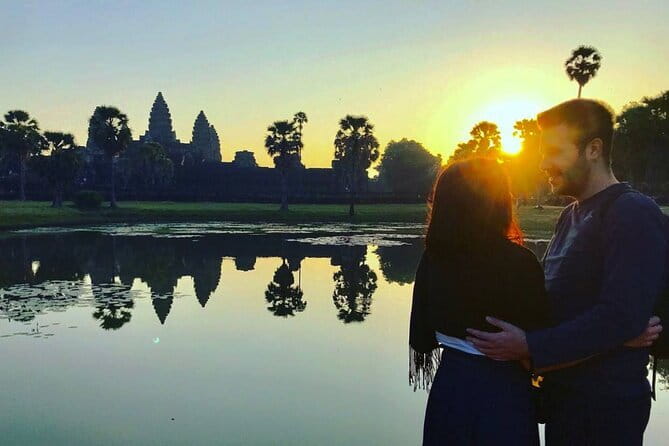
Angkor Wat at sunrise is a different planet. This private tour is built for your pace, with hotel pick-up, a local guide who knows the stories behind the stone, and extra attention for photos along the way. It also leans away from the loudest crowds by timing key temples earlier, so your morning feels calmer and more personal.
What I especially like is the focus on quiet viewing at Angkor Wat and the way the guide helps you get great pictures, not just “see the sights.” Another win is the sequence through Ta Prohm, a slower stop at Banteay Kdei, then the main gateway-and-city heart at Victory Gate and Bayon, which gives you a clearer sense of how the Khmer capital fit together.
One practical drawback: it’s a very early start (4:30 a.m.), and while the tour includes transport and small comforts, it does not include entrance fees or food. If you need a late breakfast and a relaxed morning schedule, plan to adjust your expectations.
In This Review
- Key highlights that actually matter
- 4:30 a.m. private pick-up: how the timing sets the tone
- Angkor Wat sunrise: quiet viewing, photo help, and what to expect
- Ta Prohm and Banteay Kdei: when the tour slows down
- Victory Gate and Bayon: connecting Khmer art across the route
- Transportation, included comforts, and how to dress for respect
- Price and value: what $45 covers, and what you should budget for
- Who this tour suits best (and who might want a different plan)
- Real-world guide experience: the names that keep showing up
- Should you book Angkor Wat Sunrise by Tuk Tuk?
- FAQ
- What time does the tour start?
- How long is the Angkor Wat sunrise tour?
- Is hotel pick-up included?
- What’s included in the tour price?
- Are entrance fees included?
- Is the tour private?
- Do I need to bring anything for food?
- What transport will I use?
- What’s the dress code?
- What if I see a man wearing an orange rope?
Key highlights that actually matter
- Sunrise start with hotel pick-up: begins at 4:30 a.m. with convenient access from the Raffles Grand Hotel d’AngkorKhum area
- Angkor Wat from a quieter spot: you’re guided to one of the best and quietest sunrise viewing positions
- Guides who help with photos: your local host can act as a personal photographer during the temple stops
- Temple timing that avoids peak crush: Ta Prohm is visited at a calmer time instead of the busy afternoon rush
- A balanced route beyond the headline temples: includes the often-overlooked Banteay Kdei plus Victory Gate and Bayon
- Comfort basics included: cold water and a towel, plus tuk tuk or car transport options
4:30 a.m. private pick-up: how the timing sets the tone
This tour starts at 4:30 a.m. in Siem Reap, and you return to the same meeting point afterward. That early start is the whole point. Angkor Wat is a magnet, and most days the main challenge isn’t the temple itself—it’s the crowds and the chaos of everyone trying to be in the right place at the right time.
Going early changes the feel fast. The air is cooler, the light is softer, and the mood is more respectful. You’re not fighting people at the exact moment the sun appears. You’re moving with a plan, guided to a strong spot for sunrise and then stepping into the next temples while others are still waking up.
You’ll travel by tuk tuk or car (car is an optional choice), and the tour includes cold water and a towel. That’s not a luxury add-on; it matters because you’ll likely be out in low light, then stepping into brighter conditions. Small comforts help more than you’d think when you’re doing this early.
Also, this is a private tour, so only your group participates. That makes the pace feel smoother, especially when you want time for photos or questions. If you’re the type who likes to linger at carvings, you’ll appreciate not being rushed into the next stop like cattle.
Angkor Wat sunrise: quiet viewing, photo help, and what to expect
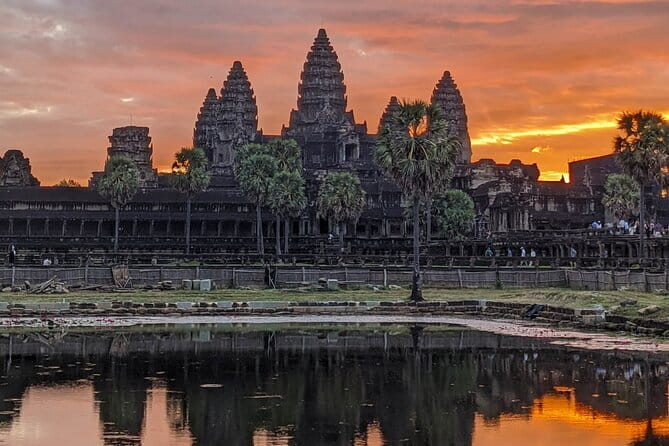
The morning begins with pick-up and a drive to Angkor Wat, timed for sunrise. The tour includes about 2 hours at Angkor Wat, and the guide leads you to one of the best and quietest spots to watch the sunrise.
What you can expect here isn’t just a viewpoint. It’s a guided interpretation of what you’re seeing. The best Angkor Wat tours don’t treat the temple like a postcard. They explain the layout, the symbolism, and why this complex is so central to Khmer culture. A few of the guide names that come up strongly in feedback include Sao Siem and Siem, and the praise is consistent: strong English, solid history, and clear explanations that make the carvings feel less random.
One thing to note: entrance fees are not included. The tour lists entrance fees as $37 per person in one day. So the value here is not just the sunrise moment. You’re paying for your guide, transport, and the timed route; you’ll budget separately for ticketed entry.
On the photo side, the tour is designed to help you capture the visit. The overview specifically says the guide will act as your personal photographer to help with stunning photos. That’s a big deal if you don’t want to spend the whole morning handing your camera to strangers or missing the sunrise while you’re fiddling with settings.
Ta Prohm and Banteay Kdei: when the tour slows down
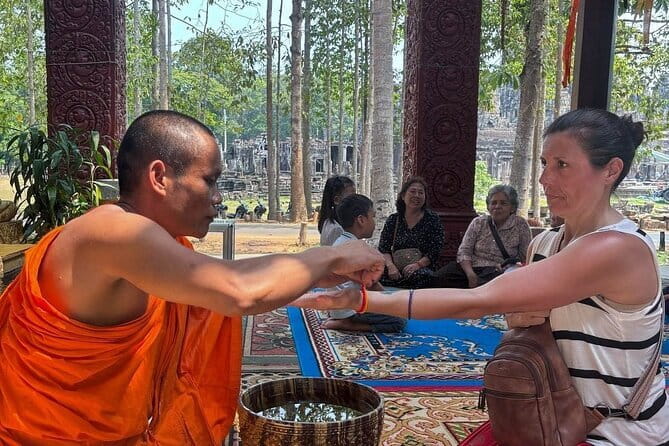
After Angkor Wat, the next stop is Ta Prohm for about 1 hour. Ta Prohm is famous for the dramatic roots and the feel of a temple reclaimed by nature. Most large groups hit it later in the day, when the heat rises and the crowds grow. This tour does something smart: it schedules Ta Prohm at a calmer time instead of the busy afternoon window.
That time shift changes your experience. You can actually look. You can step back and see how the architecture frames the trees, and you’re less likely to be squeezed through narrow spaces with strangers pressing from behind. If you love atmosphere over checklists, this is where the tour can feel especially worth it.
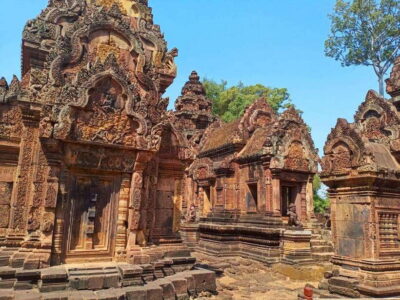
Then you move to Banteay Kdei, a 45-minute stop described as a peaceful temple often overlooked by many people. That’s valuable because it gives you contrast. After the headline-grab of Ta Prohm, Banteay Kdei offers a quieter setting where you can wander with less noise and fewer interruptions. The tour positions this as a chance to connect with the spiritual atmosphere without the crowds.
This is also where a good guide earns their keep. When fewer people are shouting and posing, you notice details: the way a courtyard is shaped, how the carvings wear over time, and how temples function as lived spaces in the past. You’re not just “passing through.” You’re building a mental map of the region.
Practical note: even though Banteay Kdei is less crowded, you’re still walking on temple grounds in the early morning light. Wear shoes you trust. If you’ve got moderate mobility limits, the tour warns you to have moderate physical fitness. That doesn’t mean it’s a hike marathon, but it does mean you should be comfortable with uneven surfaces and time on your feet.
Victory Gate and Bayon: connecting Khmer art across the route
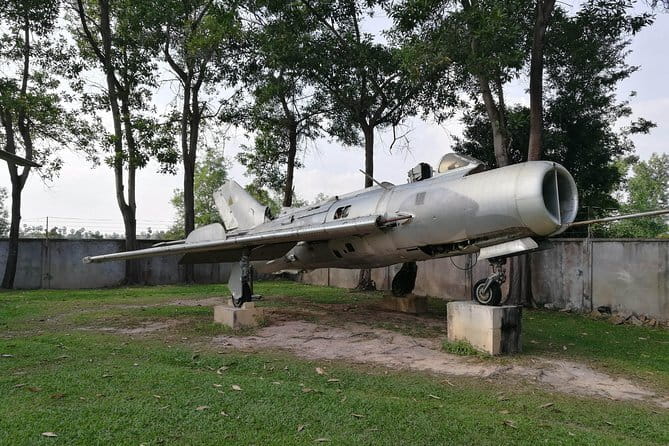
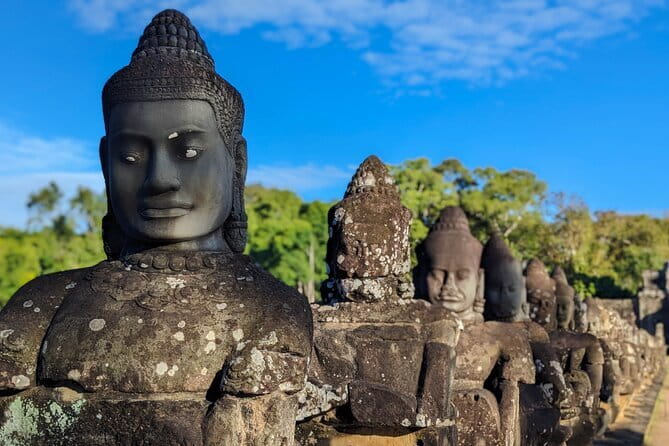
Next up is Victory Gate, a short 15-minute walk-through. Victory Gate dates to the height of the Khmer Empire in the 12th century, and it’s known for the towering arch and the smiling faces carved into the design. Even with the shorter time, this stop can work like a “bridge” between temples—like a visual reminder that you’re moving through the heart of a powerful city, not just visiting monuments one by one.
After that, you reach Bayon Temple in the heart of the ancient Khmer capital for about 45 minutes. Bayon is famous for its towers lined with mysterious smiling faces. This is often the moment where the trip starts to feel bigger than the photos. The guide shares context as you explore, which helps you read the carvings and understand why they’re there.
If Angkor Wat is the headline, Bayon is the mood shift: more faces, more density, more of that “this place meant something” feeling. The fact that the tour includes both Victory Gate and Bayon in the same morning helps. You don’t treat them like separate attractions. You experience them as parts of the same story arc.
Also, the route feels intentionally paced: long enough to explore key spaces, short enough that you’re not exhausted before the sunrise memories fade. That’s a big deal on a 6 to 8 hour total tour day.
Transportation, included comforts, and how to dress for respect
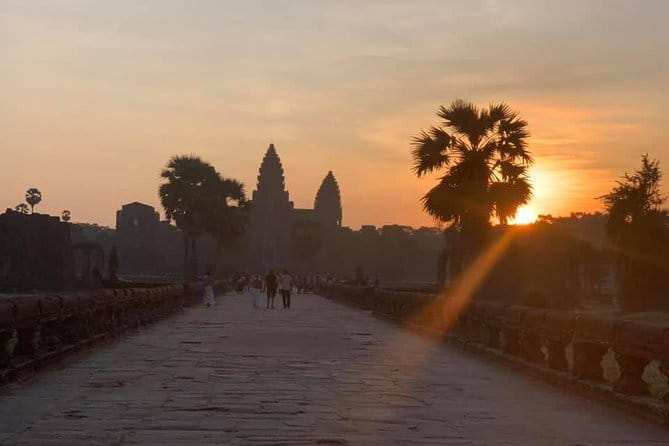
This tour gives you tuk tuk or car transport, with the option depending on what you choose. Tuk tuk can feel fun and local; car can feel easier if you’re traveling with someone who’s less comfortable in early-morning jolts. Either way, you’re not dealing with navigation or coordinating rides while you’re in temple-time mode.
The tour includes cold water and a towel. That’s not just nice. It’s practical for early starts and long walking stretches, especially before food is even on the menu.
Dress code is spelled out clearly, and it’s worth taking seriously:
- Shirt should cover shoulders
- Shorts should be longer than the knees
These rules aren’t about being polite for strangers. They’re about respecting Khmer culture. If you show up dressed too casually, you may get unwanted attention or feel uncomfortable adjusting on-site.
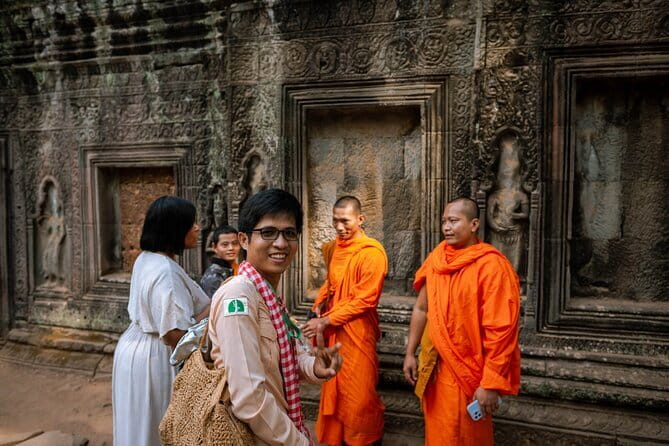
There’s also a specific respect cue mentioned in the tour details: when you see a man wearing an orange rope, show respect because he is a Buddhist monk. That’s the kind of small cultural instruction that makes a big difference, and it’s the sort of thing a good guide expects you to follow.
Price and value: what $45 covers, and what you should budget for
The tour is priced at $45 per person and is commonly booked about 21 days in advance on average. For a private sunrise tour in a high-demand area, $45 can look like a bargain—then you notice what’s extra.
Here’s the clean breakdown:
- Included: professional guide, transportation (tuk tuk or car), cold water/towel
- Not included: entrance fees (listed as $37 per person in one day), plus food and drinks
So your real total cost will depend on entrance tickets. But even with that added, you’re paying for something harder to copy: the timing, the quieter sunrise spot, and the guide who helps interpret the sites and take better photos.
You’ll also benefit from the private setup. If you’re traveling as a couple or small group, the value often shows up in how much you actually get out of the morning. Group tours can be cheaper, but they frequently lose time. This tour spends time where it matters: the sunrise position, Ta Prohm at a calmer moment, and quieter stops like Banteay Kdei.
Who this tour suits best (and who might want a different plan)
This is a strong fit if you:
- Want private attention and flexibility for photos and questions
- Care about temple history and Khmer culture, explained clearly by your guide
- Prefer hitting the big temples before the crowd energy spikes
- Like the idea of a route that includes both headline stops and calmer extras
It also suits you if you’re traveling with a partner or friend who likes structure but doesn’t want the “follow-the-leader” feeling.
You might want to think twice if:
- You hate very early starts. The 4:30 a.m. beginning is not gentle
- You don’t want to pay separate entrance fees and handle your own food
- You have limited comfort with uneven temple terrain and a moderate fitness requirement
That early start is the tradeoff. You’re buying time-shifted access to a more peaceful Angkor day.
Real-world guide experience: the names that keep showing up
The feedback attached to this experience puts heavy emphasis on guide quality, especially English clarity and how well the guide connects carvings to meaning.
Guides named in the supplied feedback include:
- Sao Siem, described as fluent in English and strong on history and Cambodian culture
- Siem, praised for making the temples’ stories feel alive and for helping guests enjoy the sunrise without stress
- Samnang, highlighted as helpful and knowledgeable, with good support during the day
It’s not just “they knew facts.” The recurring theme is that the explanations are clear enough to change how you look at the temples, and the guide is responsive when you have questions. That’s exactly what you want from a private tour: someone who adjusts to your curiosity level rather than reciting a script.
Also, the tour experience includes the idea of the guide acting as your photographer. That matters because sunrise photos often fail for one reason: nobody has time to both watch and shoot. Having someone assist can save you from that classic mistake.
Should you book Angkor Wat Sunrise by Tuk Tuk?
I’d book this tour if sunrise is your priority and you want a calmer, guided route that covers the core temples without feeling like a rush job. The combination of early timing, private pace, photo help, and a route that balances big names (Angkor Wat and Bayon) with calmer stops (Ta Prohm earlier and Banteay Kdei) makes it a solid value play.
I’d skip it or switch plans if you’re not into early mornings, you’re hoping entrance fees are included, or you want food provided. Those are the main “gotchas” here, and they’re easy to plan around.
If you do book: dress for coverage, bring comfortable walking shoes, and be ready for a meaningful morning that starts before most of Siem Reap is fully awake.
FAQ
What time does the tour start?
The start time is 4:30 a.m.
How long is the Angkor Wat sunrise tour?
The duration is 6 to 8 hours (approx.).
Is hotel pick-up included?
Yes. Pickup is offered, with the start meeting point at Raffles Grand Hotel d’AngkorKhum.
What’s included in the tour price?
Included are a professional guide, transportation (tuk tuk or car optional), and cold water/towel.
Are entrance fees included?
No. Entrance fees are not included. The listed entrance fees are $37 per person in one day.
Is the tour private?
Yes. It’s a private tour/activity, so only your group participates.
Do I need to bring anything for food?
Food and drinks are not included, so you’ll need to plan for your own meals.
What transport will I use?
You’ll use tuk tuk or a car (optional choice).
What’s the dress code?
You should dress to respect Khmer culture: shirts should cover shoulders and shorts should be longer than the knees.
What if I see a man wearing an orange rope?
The tour notes that an orange rope indicates a Buddhist monk. You should show respect when you see him.