Sunset at Angkor feels like a ritual. This guided small circuit strings together major temples with story-rich commentary on Khmer history, then closes with great sunset views from Angkor Thom. One thing to plan for: the $37 one-day Angkor Pass entrance fee isn’t included in the $54 tour price.
I like that the day starts at 9:00 am, so you’re not racing sunrise crowds. You’ll also get AC transportation and cold bottled water, which matters more than you think when you’re walking temple grounds for hours.
The only real catch is practical: you’ll spend much of the day outdoors, and you must follow the dress rule (shoulders and knees covered) to enter the temples. So bring the right clothes, then let the guide do the heavy lifting.
In This Review
- Key things to know before you go
- Why this circuit starts after breakfast (and still hits sunset)
- Price and logistics: the real cost is tour + Angkor Pass
- Angkor Wat first: why the morning visit feels easier
- Banteay Kdei: the quieter stop that makes Ta Prohm hit harder
- Ta Prohm: the Tomb Raider temple and the trees that win
- Ta Keo: a short climb that’s worth it
- Angkor Thom via Victory Gate: optional spots and the sunset finish
- Guides who make the carvings make sense: Vanna and Pal Chen
- Comfort and timing: what the AC and small group really buy you
- Who this tour suits best (and who might want a different format)
- Should you book this Angkor Wat small circuit and sunset tour?
- FAQ
- What time does the tour start?
- How long is the Angkor Wat Small Circuit & Sunset Tour?
- What is included in the tour price?
- Is the entrance fee included?
- What temples and sites are visited?
- Does this tour include sunrise?
- Is lunch provided?
- What should I wear to enter temples?
- Is it a private tour?
Key things to know before you go
- No sunrise scramble: start at 9:00 am and end with sunset views from Angkor Thom.
- AC ride + cold water: built-in comfort for a long temple day.
- A guided interpretation matters: you’ll hear Khmer history and meanings of carvings while you walk.
- A smart temple mix: Angkor Wat, Ta Prohm, and the Angkor Thom complex in one day.
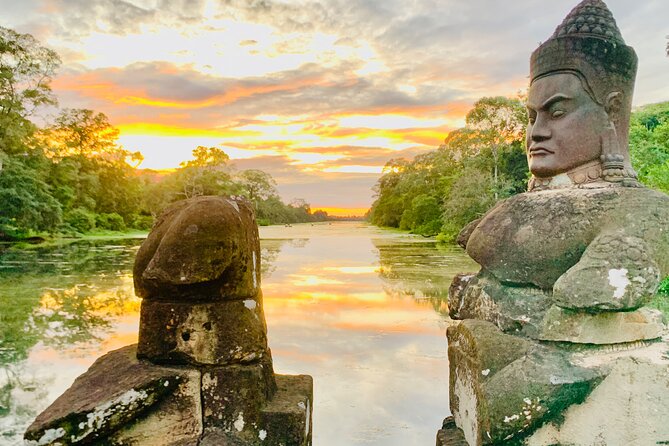
- Sunset from Angkor Thom: you’ll finish where the light hits the stones well.
- Dress code required: cover shoulders and knees or you may not be allowed in.
Why this circuit starts after breakfast (and still hits sunset)
This is designed for a relaxed Angkor day. Instead of getting up in the dark for sunrise, you start at 9:00 am and move through the sites through the morning and early afternoon. The payoff is that you finish with sunset views from Angkor Thom, so you still get the dramatic ending without the early-morning grind.
The total time is about 8 to 9 hours, so think of it as a full-day circuit, not a quick “see the highlights” loop. You’ll have downtime to break for lunch, but food and drinks are on you. If you’re the type who gets cranky when lunch turns into a scavenger hunt, plan a simple strategy: eat before you start, and keep a little buffer for your own lunch stop.
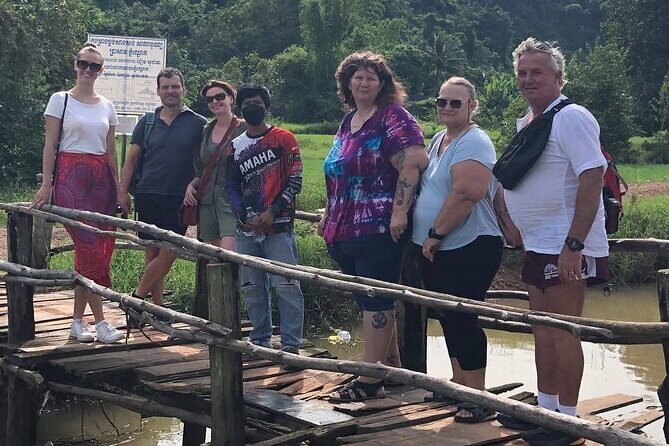
Also, this tour is private for your group. That usually means fewer bottlenecks and less waiting around than a large bus tour, especially on tighter paths inside temple areas.
Price and logistics: the real cost is tour + Angkor Pass
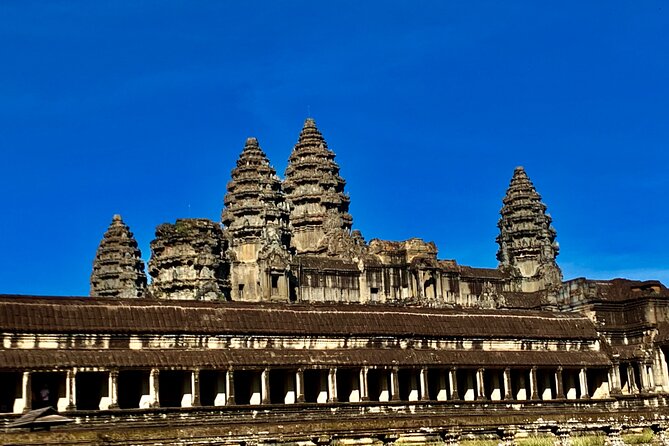
The tour price is $54 per person, and what makes it feel like value is what’s included: an English-speaking guide, air-conditioned transportation, and cold bottled water. You’re paying for a guided day that’s built around timing and a logical route across the Angkor Archaeological Park.
But you also need to budget for the entrance fee: the one-day Angkor Pass is $37 per person and isn’t included. Put it together and you should expect around $91 per person for the day’s “entry + tour,” before lunch and drinks.
A few other practical notes that affect your day:
- You’ll need to meet the temple dress code: shoulders and knees covered.
- You’ll start with a mobile ticket, which can make it easier to present entry materials when you arrive.
- Entrance tickets aren’t bundled into the tour price, so if you’re trying to keep spending predictable, decide in advance how you’ll handle the pass cost.
Finally, the circuit is timed for the sunset at Angkor Thom. That means once you’re on-site, you’ll want to stay close to your group and not wander off mid-route.
Angkor Wat first: why the morning visit feels easier
Angkor Wat is where your eyes need a little setup. You’ll spend about 2 hours exploring the vast temple grounds. Without a guide, Angkor Wat can feel like you’re just walking through big stone scenes and trying to guess what you’re looking at.
With a guide, you get context as you go. The commentary is focused on Khmer history, and you’ll hear explanations that connect the carvings and layout to the meaning behind what you’re seeing. Even if you’ve visited Angkor Wat before, this kind of guided framing can turn the experience from sightseeing into comprehension.
A practical advantage of doing Angkor Wat in the morning: you’re usually more functional early in the day. Later in the circuit, your feet are tired and your brain is counting steps. The morning visit helps you absorb the big picture before fatigue creeps in.
Banteay Kdei: the quieter stop that makes Ta Prohm hit harder
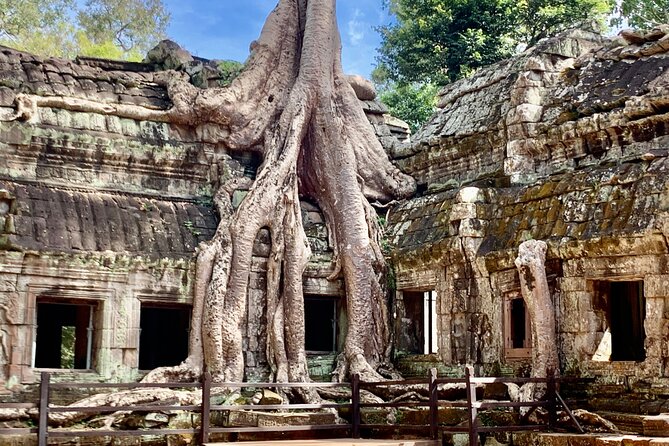
Next up is Banteay Kdei, a Buddhist temple built during the reign of King Jayavarman VII at the end of the 12th century. You’ll have about 30 minutes here, and the best part is the mood. It’s described as peaceful and quiet, and that quiet matters because it gives you a contrast before you reach the more famous, photo-heavy jungle-temple scene.
This stop works like a breather in the middle of a long day. If you’re the kind of traveler who likes slower looking—walking, scanning walls, noticing stone details—Banteay Kdei is the sort of place where you can actually slow down.
If you’re expecting a massive crowd spectacle like you might see at Angkor Wat, you may find Banteay Kdei feels more intimate. That’s not a drawback. It’s part of why the route feels smart.
Ta Prohm: the Tomb Raider temple and the trees that win
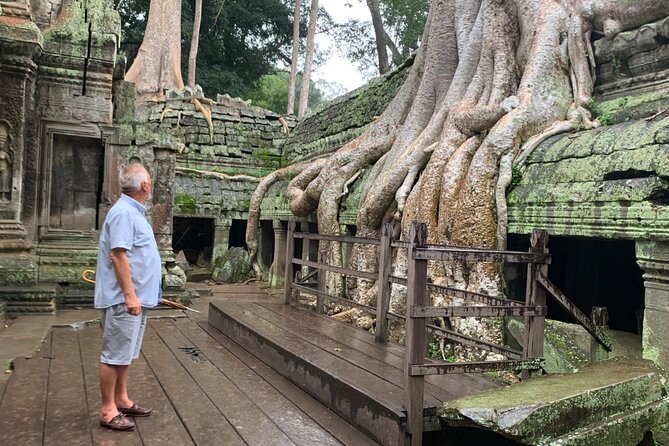
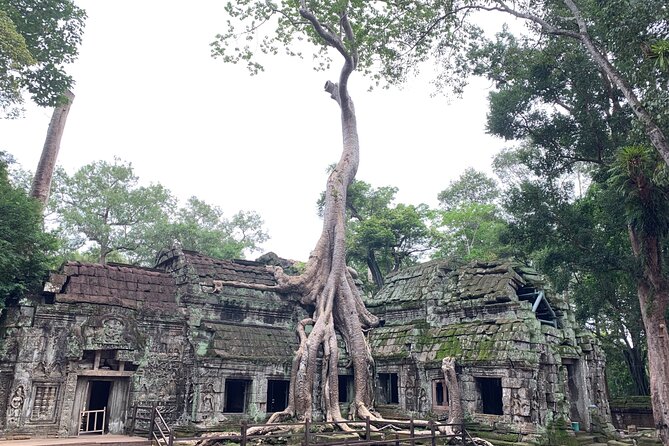
Then comes Ta Prohm (about 2 hours), the temple people talk about for one reason: the trees growing through the ruins. It’s the famous Tomb Raider temple look, and it’s not just a gimmick. The mix of stone geometry and plant growth creates a scene that feels alive, even when you’re looking at very old things.
This is also a stop where a guide adds value. You’ll hear context while you’re standing in the same spaces that power the iconic photos. Instead of just thinking, That’s cool, you’ll understand the historical and cultural framing that goes along with what you’re seeing.
One practical note: because Ta Prohm is so visually busy, it can be easy to move too fast. Slow down for a few minutes. Pick one angle, watch how the light hits the stone, then rotate. That helps you actually feel the scale.
Ta Keo: a short climb that’s worth it
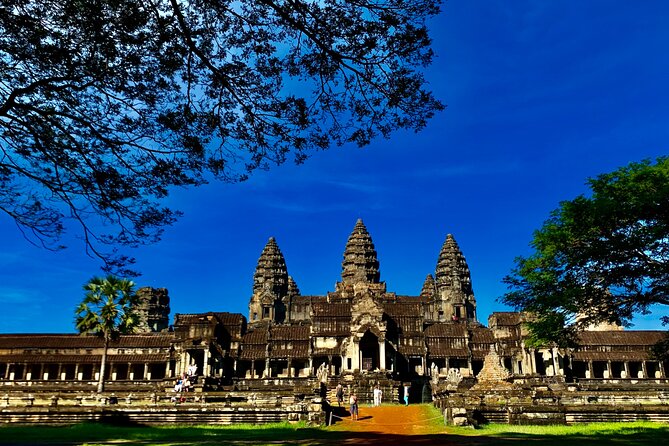
After the larger stops, you’ll hit Ta Keo with about 20 minutes set aside. This is a smaller block in the route, but it has a payoff: you’ll be able to climb up and view the surroundings.
This is a good time to decide how you like to travel physically. If climbing stairs is fine for you, Ta Keo is a quick reward. If you’re not comfortable with steps, keep it simple: focus on views you can reach without rushing.
Even in short time, a climb like this changes the experience. You stop thinking in terms of walking paths and start seeing the temple setting like it’s a planned city layout.
Angkor Thom via Victory Gate: optional spots and the sunset finish
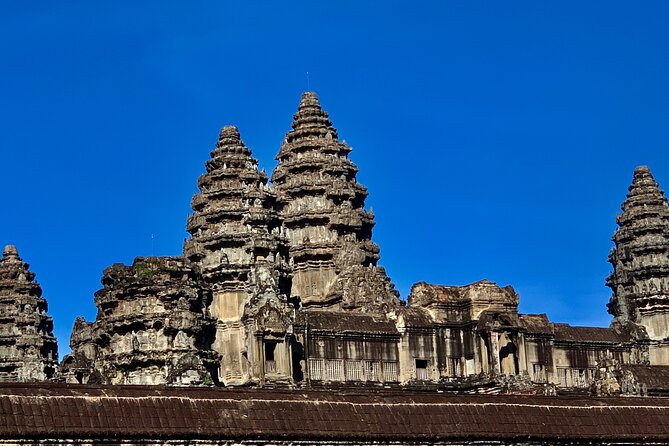
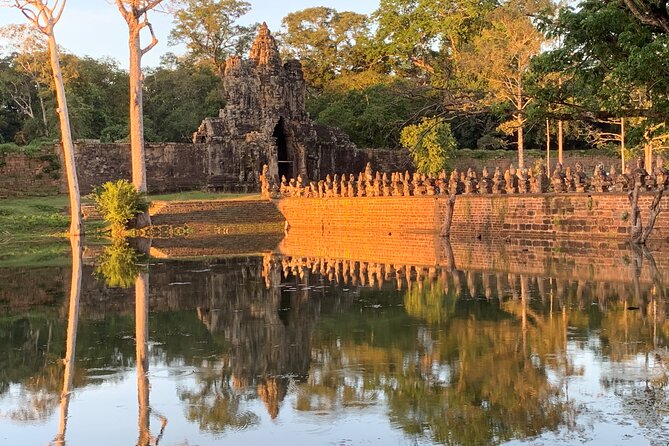
The final main area is Angkor Thom, entered via the Victory Gate, with about 2 hours to explore. This is where the circuit shifts from individual temples to an entire ancient-city compound.
You’ll have a chance for optional stops inside the Angkor Thom complex, including places like Spean Thmor, Chau Say Tevoda, Thommanon, Sourprat, and the Terrace of the Leper. The names are more than labels. They help you track what part of the compound you’re standing in, so it doesn’t feel like a random walk across ruins.
The big reason this part of the day is special is the timing. You’ll end with sunset views from Angkor Thom. Angkor at sunset is about more than the sky turning pretty. It’s when details show up in stone textures, and silhouettes look crisp against the light.
The best strategy is to listen to your guide as you move and then position yourself for sunset without panicking. If you wait too long to settle into a viewing spot, you can end up standing while everyone else is already set. Your group will handle the flow, but you’ll still want to be ready to stop moving when the light changes.
Guides who make the carvings make sense: Vanna and Pal Chen
This is one of those tours where the guide’s skill level can noticeably change your experience.
One guide named in the feedback is Vanna. He’s described as having strong English and real depth about the temples, the ruins, and the meanings of the engravings you see on the walls. What really stands out is that he doesn’t just list facts. He tells stories, mixing personal context with historical context, so the monuments feel connected instead of abstract.
Another guide mentioned is Pal Chen, who was described as an ex-Buddhist monk. That background comes through in how he frames the temples and the symbolism behind what you’re seeing. If you care about interpretation—why something looks the way it looks—this kind of guide background can make the day feel more grounded.
You may not know who you’ll get. But the takeaway is clear: this tour is built around an English-speaking guide who explains the site, not just a driver who drops you off.
Comfort and timing: what the AC and small group really buy you
The included AC car or minivan or minibus isn’t a luxury detail here. It’s a practical time and energy saver. You’ll be traveling between multiple temple zones, and heat and sun can make walking feel harder than it should.
Cold bottled water is also included. That’s a simple thing, but it helps you avoid the late-day scramble for hydration. You’ll still want to pace yourself and wear sun protection, but starting the circuit with water handled is smart.
Because this is private for your group, you can also expect smoother movement as the day goes on. Temple routes can get confusing if you’re trying to manage yourself and navigation at the same time. Having a guide keeps you focused on what matters instead of what turns are next.
Who this tour suits best (and who might want a different format)
This small circuit and sunset tour is a great fit if:
- You want a full Angkor day without an early sunrise wake-up.
- You’d rather have a guide explain temple meaning as you walk.
- You like the mix of big-name sites (Angkor Wat and Ta Prohm) plus additional stops in the Angkor Thom complex.
- You want comfort upgrades like AC transport and included cold water.
It might be less ideal if:
- You’re very sensitive to long days. Eight to nine hours outdoors is still a lot.
- You don’t want to pay separately for the one-day Angkor Pass.
- You dislike walking and step climbs, since there are times for climbing at Ta Keo and lots of ground to cover across the compound areas.
Should you book this Angkor Wat small circuit and sunset tour?
If you want a guided Angkor day with a clear route and a satisfying ending, I’d book it. The value comes from stacking the included guide, AC transport, and cold water on top of a temple lineup that makes sense in one day: Angkor Wat, Banteay Kdei, Ta Prohm, Ta Keo, and then Angkor Thom for sunset.
It’s especially worth booking if you like context. Guides like Vanna and Pal Chen (as described) show the carvings and structures with meaning, not just directions. That turns the day from photos into understanding.
Before you go, do two things: plan for the $37 Angkor Pass cost, and pack temple-friendly clothes (shoulders and knees covered). If you handle those, you’ll set yourself up for a smooth, rewarding day that ends with Angkor Thom in golden light.
FAQ
What time does the tour start?
The tour starts at 9:00 am.
How long is the Angkor Wat Small Circuit & Sunset Tour?
It runs about 8 to 9 hours.
What is included in the tour price?
The tour includes an English-speaking guide, AC transportation, and cold bottled water.
Is the entrance fee included?
No. You’ll need to pay the one-day Angkor Pass entrance fee (listed as $37.00 per person).
What temples and sites are visited?
You’ll visit Angkor Wat, Banteay Kdei, Ta Prohm, Ta Keo, and Angkor Thom (entered via Victory Gate). You may also have optional stops inside Angkor Thom such as Spean Thmor, Chau Say Tevoda, Thommanon, Sourprat, and the Terrace of the Leper.
Does this tour include sunrise?
No. This is a sunset-focused day. The plan starts after breakfast and ends with sunset views from Angkor Thom.
Is lunch provided?
No. Foods and drinks are not included. Lunch is an own-expense break.
What should I wear to enter temples?
You need clothes that cover your shoulders and knees, or you will not be allowed access to the temples.
Is it a private tour?
Yes. It’s described as private, meaning only your group participates. Group discounts may be available.