Early morning helps at Angkor.
This premium tour is built for people who want the big hits at a calmer pace, with a private-feeling ride and time to see key temples like Angkor Wat and Ta Prohm without getting stuck on packed buses. You’re also going off to the sides, using forest and countryside paths, plus a village-style stop that gives you a break from pure temple sightseeing. It runs about 7 hours 30 minutes, starts at 8:00 am, and keeps the group capped at 8, so the day doesn’t feel like a stampede.
I love the structure here: you get the must-see temples plus “in-between” stops that add context, like Bayon’s faces and the Elephant Terrace. I also like that food and drinks are included, so you can keep moving instead of hunting for snacks. One thing to consider: temple entrance tickets are not included, so you’ll need to budget for admission on top of the tour price.
In This Review
- Key highlights if you’re deciding now
- Premium Ride Through Angkor: What 7.5 Hours Feels Like
- Angkor Wat First: Seeing the Main Temple with Room to Breathe
- Angkor Thom South Gate, Bayon Faces, and Elephant Terrace
- South Gate: A dramatic entrance
- Bayon Temple: 216 stone faces
- Terrace of the Elephants: carved power
- Ta Prohm’s Trees and Ruins: When the Temple Feels Alive
- Srah Srang Village Area: A Calm Pause Near the Reservoir
- Gate of the Dead: A Short Stop That Adds Meaning
- Food and Drinks Included: A Practical Day-Maker
- Price and Value: How $94 Works With Temple Admission
- Who This Tour Fits Best (and Who Might Want Another Option)
- Should You Book Angkor Wat Premium Tour?
- FAQ
- Are temple entrance tickets included?
- What’s included in the tour price?
- How long is the Angkor Wat Premium Tour?
- What time does the tour start?
- How many people are in the group?
- What is the cancellation policy?
Key highlights if you’re deciding now
- Small group vibe (max 8): easier pacing and fewer bottlenecks at photo spots.
- Personal driver and off-track routes: more time feeling like you’re exploring, less time waiting.
- Temples plus quieter cultural stops: Srah Srang gives you a breather near the reservoir area.
- Food and drinks included: a practical win on a long temple day.
- Guides like Benoît and Kim (often praised): strong explanations and kind, patient handling of the route.
- Mobile ticket setup: easier check-in so you spend more time sightseeing.
Premium Ride Through Angkor: What 7.5 Hours Feels Like
This is a long, satisfying day, but it’s not a nonstop sprint. The tour clocks in at about 7 hours 30 minutes, and it starts at 8:00 am, which matters a lot at Angkor. Early in the morning, the lighting is better for stone carvings, and the crowds are usually easier to work around, even though Angkor is never fully quiet.
The “premium” part shows up in the pace and the way you travel between sites. Instead of being stuck with a busload schedule, you’re set up with a pickup option and a personal driver approach. That usually means less time lost to logistics and more time spent at temples when you can actually see details.
Group size also matters. With up to 8 travelers, the day tends to feel more human-scale. You can ask questions, linger a bit longer at a carving, or take a breath when the heat starts to press in. (And yes, it will feel hot. Angkor days often do.)
One more practical note: the tour includes food and drinks, so plan to treat meals as part of your sightseeing timing, not a separate errand. That alone makes a long day easier on your feet and your mood.
Angkor Wat First: Seeing the Main Temple with Room to Breathe
The anchor of the day is Angkor Wat, and you get a generous 2 hours 30 minutes there. Admission tickets are not included, so you’ll need that separate temple pass for a full day entry. Still, the time you get at Angkor Wat is what makes this tour feel worth it.
Why so much time? Angkor Wat isn’t just one view. It’s layers: the outer spaces, causeways and galleries, and the stone storytelling carved into multiple levels. With enough time, you can walk at a realistic speed rather than sprinting from one famous angle to the next.
You’ll also move through more than just the obvious courtyard snapshots. The tour is designed to help you notice architecture and carving rhythm, which is where Angkor stops being generic and starts feeling personal. And since the tour route is set up to use forest or jungle paths and quieter connections where possible, you’re not spending the day only in the most crowded lanes.
Practical tip: bring a bottle you can refill and something for sun protection. You’ll be under open sky at parts of the walk, and your best photos often come when you’re standing still long enough to frame.
Angkor Thom South Gate, Bayon Faces, and Elephant Terrace
After Angkor Wat, the day shifts into Angkor Thom, and this is where Khmer history starts to feel more like a living story than a museum label.
South Gate: A dramatic entrance
You visit Angkor Thom South Gate for about 15 minutes. It’s brief on paper, but that kind of stop works because the gate is instantly readable: massive stonework, strong symmetry, and the sense you’re entering a royal space. Treat this as your transition point. Use it to reset your pace before Bayon.
Bayon Temple: 216 stone faces
At Bayon Temple, you get about 1 hour. Bayon is known for its 216 stone Brahma faces, and the real value of spending time here is not just spotting the faces, but noticing how the temple’s reliefs connect to daily life and mythology themes. Bayon is the centerpiece of Angkor Thom, so your guide’s explanations matter, especially if you’re trying to understand what you’re seeing instead of only photographing it.
A 1-hour stop is enough to walk through key areas and catch details without feeling like you’re herded. It’s also the kind of temple where you’ll want shade breaks, because you can end up looking upward for long stretches.
Terrace of the Elephants: carved power
Next is Terrace of the Elephants for about 30 minutes. This terrace is famous because Khmer kings used it to watch important processions. The point isn’t just to see carvings; it’s to imagine the activity in the space. When you understand the terrace’s original purpose, the stonework stops being decorative and turns into evidence of how rulers staged public moments.
If you like architecture and symbolism, this is one of your stronger “value per minute” stops.
Ta Prohm’s Trees and Ruins: When the Temple Feels Alive
Ta Prohm is one of the most recognizable names on the whole Angkor circuit, and this tour gives you about 2 hours there. Admission is not included, but you’ll likely already have your pass if you planned ahead for the day.
What makes Ta Prohm special is the way trees grow through and around the ruins, creating a look people associate with famous movies. Even if that theme isn’t your focus, the temple still hits because of contrast: fragile-looking stone, roots, and a sense of time layered on top of itself.
The best way to enjoy Ta Prohm is to slow down. Don’t just hunt for the most photographed angles. Step back and look for the structure behind the chaos: where the corridors lead, how surfaces were once intact, and how the growth of trees changed the space.
This tour’s off-track planning helps here too. Instead of being stuck in the busiest flow only, you’re more likely to experience the temple in smaller pockets, with less whiplash between seeing and moving on.
Wear shoes you’re comfortable walking in for a long day. Ta Prohm is rugged, and smooth walking paths are not the priority.
Srah Srang Village Area: A Calm Pause Near the Reservoir
After a day of big stone monuments, the stop at Srah Srang feels like a reset. You spend about 30 minutes here, and this stop is marked as admission included.
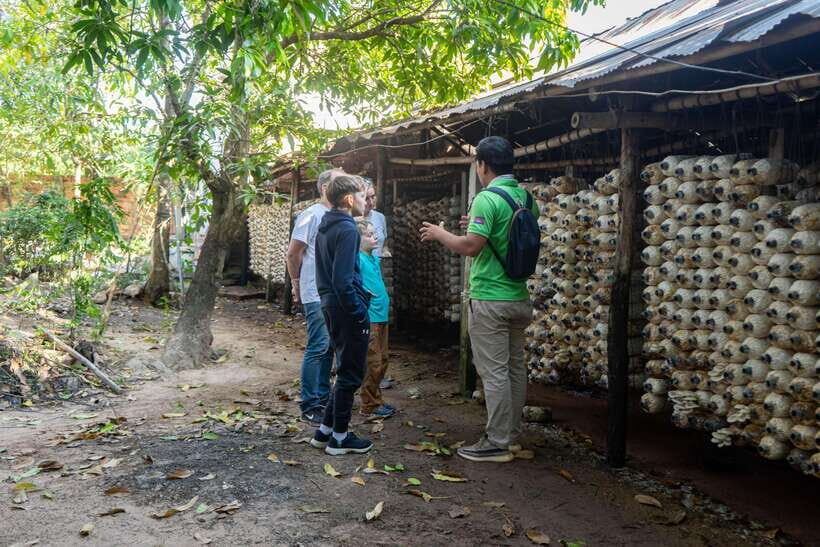
Srah Srang is near the reservoir area, and it’s described as a quiet settlement where you can see traditional local life. This is the kind of stop that makes the whole day feel less like a checklist. You get a softer pace, more human scale, and a chance to see Cambodia beyond temple walls.
What I like about adding a village-style reservoir stop is that it gives context to the region. Angkor wasn’t built in isolation. People lived, farmed, and worked around these water systems and settlements. Even with just a brief visit, you come away with a better sense of what the area supported.
If you want a break from climbing, this is also a good moment to catch your breath. Use the time to hydrate and let your feet cool down.
Gate of the Dead: A Short Stop That Adds Meaning
You finish with Gate of the Dead for about 15 minutes. It’s part of the Angkor Thom complex, and it features stone carvings of divine beings.
This is a classic example of how a small stop can still matter. If you focus only on the largest temples, you might miss the way these gates set the tone for movement through sacred spaces. A brief visit keeps it from turning into “one more thing,” while still giving you that satisfying final note.
Think of it like punctuation at the end of a paragraph. It helps your mental map of Angkor Thom close cleanly.
Food and Drinks Included: A Practical Day-Maker
One of the easiest wins in this tour is that food and drinks are included. On temple days, that can be the difference between a smooth schedule and a stressful scramble.
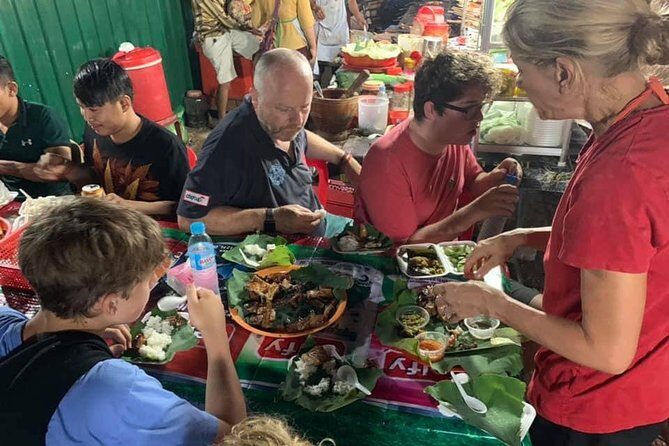
From past experiences shared with the operator style, the meal portion isn’t just about calories. It’s also tied to local tastes, and you may get a chance to sample Cambodian food rather than only eating the usual tourist fast-food fallback. Even if the menu changes, the point is consistent: you eat without breaking the flow of the day.
I also appreciate the “less decision-making” side of it. You don’t want to be thinking about where to eat while you’re balancing sun, stairs, and a long route. When food is already built in, you can spend your brain on what you’re seeing.
Price and Value: How $94 Works With Temple Admission
The tour price is $94.00 per person, and the big catch is that temple entrance tickets are not included. The information you’ll need is clear: a 1-day temple pass is $37 per person and covers all temples.
So your realistic total is closer to $131 per person for a full day covering the tour + admission. That’s still reasonable for what you’re getting, because you’re paying for:
- A personal driver setup with transport between multiple major temple stops
- Food and drinks included
- A schedule that spends solid time at Angkor Wat, Bayon, and Ta Prohm
- A small group limit (max 8), which usually reduces waiting and crowd crush moments
If you were to do temples on your own, you’d still pay for admission and transport somehow. What you’re buying here is time, organization, and the route choices that aim to reduce crowds by moving through less obvious connections.
One thing to watch: premium tours are only “premium” if the planning actually helps you. In this case, the tour’s off-track approach and the countryside/village stop are the elements that make the price feel justified rather than just paying for a fancy car.
Who This Tour Fits Best (and Who Might Want Another Option)
This tour works especially well if you:
- Want a small-group Angkor day without the bus chaos
- Prefer a driver-led route over solo navigation
- Like learning context, not just taking photos
- Appreciate a cultural pause (Srah Srang) between big temples
It may be less ideal if you:
- Want complete freedom to change routes on the fly
- Hate any kind of structured schedule when walking between sites
- Are trying to keep the total cost ultra-low (because admission is extra)
If you’re traveling as a couple, a small group of friends, or a family that can handle a long walking day, this is a strong fit. If your group size stays under control, you benefit the most from that maximum 8 travelers limit.
Should You Book Angkor Wat Premium Tour?
If your goal is seeing Angkor with a smoother flow, and you don’t want to spend the day bargaining with logistics, I’d book this. The combination of major temples (Angkor Wat, Bayon, Ta Prohm) plus context stops like the Elephant Terrace and Srah Srang makes it feel like a rounded day, not a rushed highlights tour.
Do book if you’re comfortable budgeting for the temple pass on top of the tour price. And do it if you like having someone else handle the route so you can focus on the stone, the carvings, and the quieter pockets the day is trying to reach.
Skip it only if you want a cheaper DIY day or you strongly dislike guided structure. Otherwise, this is a practical way to experience Angkor without feeling trapped in the loudest crowd flow.
FAQ
Are temple entrance tickets included?
No. Temple entrance is not included. A 1-day pass is listed at $37 per person and covers admission to all the temples.
What’s included in the tour price?
The tour includes food and drinks. Pickup is offered, and you’ll also receive a mobile ticket.
How long is the Angkor Wat Premium Tour?
The duration is about 7 hours 30 minutes.
What time does the tour start?
The start time is 8:00 am.
How many people are in the group?
The tour has a maximum of 8 travelers.
What is the cancellation policy?
You can cancel for a full refund if you cancel at least 24 hours before the experience’s start time. If you cancel less than 24 hours before, the amount paid is not refunded. Free cancellation applies based on local time cutoffs.
If you want, tell me your travel dates and whether you prefer a more relaxed pace or more walking, and I’ll help you plan how to set expectations for an Angkor day like this.