REVIEW · 2-DAY EXPERIENCES
Angkor 2-Day Sunset & Sunrise Small-Group Tour
Book on Viator →Operated by Journey Cambodia · Bookable on Viator
Two sunrises is a good way to do Angkor. This Angkor Wat sunrise and sunset tour strings together the big-ticket moments with a few calmer temples, all in a small group and in an air-conditioned vehicle.
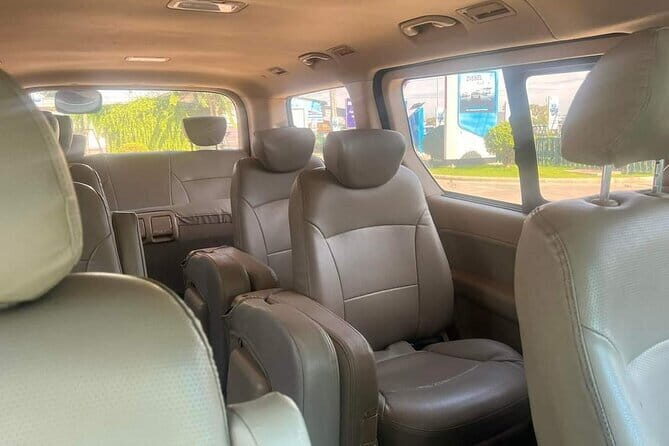
I especially like the AC transport instead of an open-air tuk-tuk slog, plus the steady rhythm of cool water and a cool towel between stops. I also like that you’re not just doing the obvious names: Banteay Srei is included, and it’s the kind of place that makes the trip feel bigger than a checklist.
One thing to consider is the pace. Day 2 is an early, pre-dawn start, and you’ll be on your feet a lot in heat and dust, so build in a willingness to move fast and keep going.
In This Review
- Key things I’d bet on
- Price and value: $49 is the start, not the finish
- Hotel pickup and AC comfort: the practical win in Siem Reap heat
- Day 1: Preah Khan roots, Neak Pean calm, Banteay Srei detail, Pre Rup views
- Stop 1: Preah Khan (about 1 hour)
- Stop 2: Neak Pean (about 40 minutes)
- Stop 3: Banteay Srei (about 1 hour 30 minutes)
- Stop 4: Pre Rup (about 1 hour 30 minutes)
- Optional add-on that can appear (landmine museum)
- Day 2: Pre-dawn departure to Angkor Wat in darkness
- Angkor Wat sunrise and morning circuit (about 3 hours)
- Angkor Thom (about 1 hour 30 minutes) plus South Gate (about 30 minutes)
- Terrace of the Elephants area (about 1 hour 30 minutes)
- Ta Prohm (about 1 hour)
- How the guide and driver change everything (and which names you might meet)
- Timing, walking, and photos: how to survive the long days
- Meals and what breaks to expect
- Who this tour is best for (and who should think twice)
- Should you book this Angkor 2-Day Sunrise & Sunset tour?
- FAQ
- Is the $49 tour price all-in?
- Do I get hotel pickup and drop-off?
- What time do I leave for Angkor Wat sunrise?
- What’s included during the two days?
- Are meals included?
- What dress code do I need for the temples?
- Can I cancel for a full refund?
Key things I’d bet on
- Small group size (max 15) means less time waiting and more chance to get your guide’s attention for photos and questions
- Hotel pickup and drop-off keeps the mornings from turning into a logistics headache
- Angkor Wat sunrise with pre-arranged access saves you from hunting for a plan in the dark
- Banteay Srei on day one adds a finely detailed, less crowded-feeling contrast to the main circuit
- Air-conditioned vehicle plus bottled water and cool towels helps you survive the midday stretch
- Professional guide support with photo stops and explanations makes the temples easier to read as you walk
Price and value: $49 is the start, not the finish
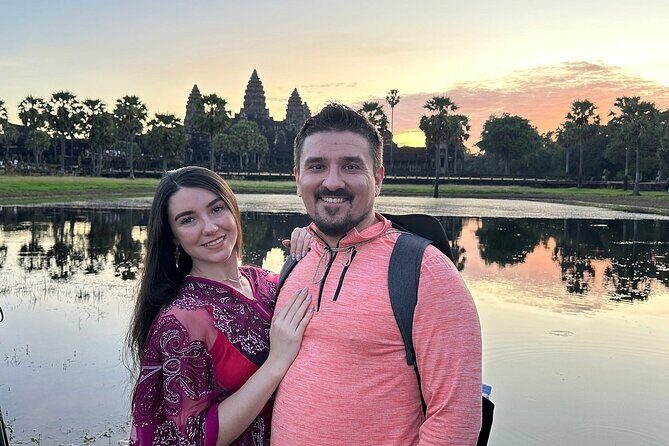
The headline price is $49 per person, which is a real deal for two days of temple touring—especially because the tour includes a licensed English-speaking guide, hotel pickup/drop-off, and the comfort factor of an air-conditioned vehicle. But you should budget correctly from the start.
The big add-on is the temple pass. You’ll pay an additional $62 per person directly to the site (not included in the $49). That pass covers access for your multi-day visit, and it’s the only part of the price you shouldn’t try to ignore. Meals aren’t included either, so you’ll need to cover lunch on your own.
So what are you really paying for? In my mind, you’re paying for:
- a planned route that hits both the dramatic sunrise/sunset moments and key monuments
- an AC ride that makes the long days bearable
- a guide who helps you understand what you’re looking at so you don’t just walk through stone
- a small-group setup, which keeps things from feeling like mass transit
If you’re comparing to hiring a private car for two days, the math usually favors this kind of guided group format—especially with sunrise pre-arranged and the “cool between temples” support.
Hotel pickup and AC comfort: the practical win in Siem Reap heat
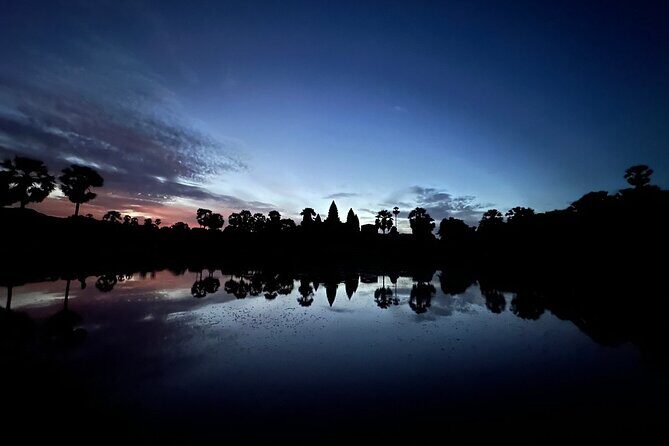
Angkor is spectacular, but Siem Reap heat can be brutal. The tour’s choice to use an air-conditioned vehicle instead of open-air tuk-tuks isn’t a luxury flex. It’s the difference between arriving at temples with energy versus showing up as a sweaty statue.
You’ll also get complimentary bottled water and a cool towel, which matters more than it sounds. After a bright, dusty stop, that little reset helps you keep your hands steady for photos and your brain switched on for temple details.
One more practical point: the tour is capped at 15 travelers, and the small-group feel shows up in the way your guide can keep the group together without constant waiting. Some guides and drivers on this tour are known for being very on-time with the return to the bus for towels and water, which makes the whole day smoother.
Day 1: Preah Khan roots, Neak Pean calm, Banteay Srei detail, Pre Rup views
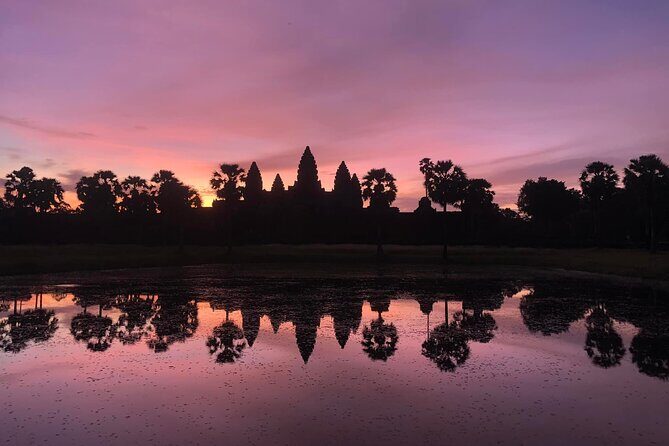
Day one starts at 8:00 am. It’s the full-on “build momentum” day: temples in the morning, a long stretch of exploring, then a sunset experience included at the end.
Stop 1: Preah Khan (about 1 hour)
Preah Khan has that classic Angkor look, but with extra atmosphere: ruined stone, thick tree roots, and a feeling of something half-swallowed by nature. It’s the kind of place where your guide’s storytelling helps you notice patterns in the carvings instead of treating it like one more ruin photo.
Admission is not included, so you’ll need your temple pass ready.
Stop 2: Neak Pean (about 40 minutes)
Next comes Neak Pean, built around a concept that feels almost serene on paper: an artificial island with a Buddhist temple on a circular island in the Jayatataka Baray. This stop is shorter, which is nice when day one already includes a lot of ground.
Stop 3: Banteay Srei (about 1 hour 30 minutes)
Then you get Banteay Srei, the standout for many people on this tour. It’s smaller than the mega-temples, but it’s famous for the fine sandstone reliefs—details that reward slow looking and a guide pointing things out.
Because it’s more intimate, it also tends to feel like a change of pace from the big, dramatic stone walls. Expect more attention to carving quality and proportions rather than just scale.
Stop 4: Pre Rup (about 1 hour 30 minutes)
Pre Rup is a temple mountain built with brick, laterite, and sandstone, dedicated in 961 or early 962 to the state temple of Khmer King Rajendravarman. Even without a deep knowledge of Khmer politics, the “temple mountain” shape makes sense the moment you see it: it’s a visual way of saying power, order, and ritual space.
Day one includes a sunset element as well. Some guests have mentioned that the sunset viewpoint can involve a noticeable incline and hot, smoky conditions, so plan for the possibility that the sky might not cooperate every day.
Optional add-on that can appear (landmine museum)
One of the experiences people described with this tour includes an optional landmine museum stop on day one, with a separate entrance fee. If it’s offered on your departure and you’re curious, it’s worth considering because it adds context about Cambodia’s more recent history and the impact on local people.
You’re not forced into it, and the option is useful if you want a break from temple-only pacing.
Day 2: Pre-dawn departure to Angkor Wat in darkness
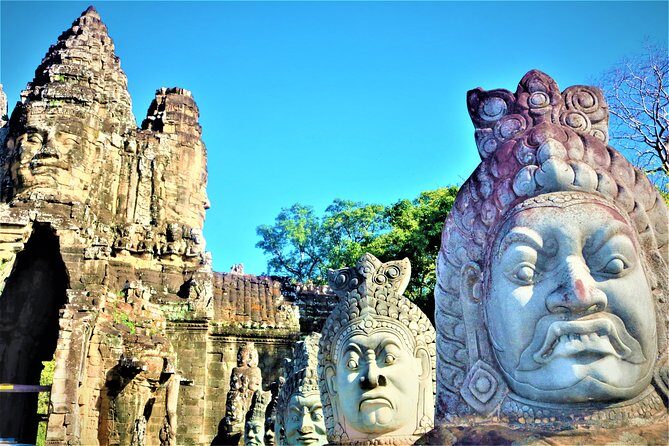
Day two is where your alarm really gets a workout. You’ll be picked up pre-dawn—typically 4:10 to 4:30 am depending on the season—so you can be in place for the sunrise at Angkor Wat.
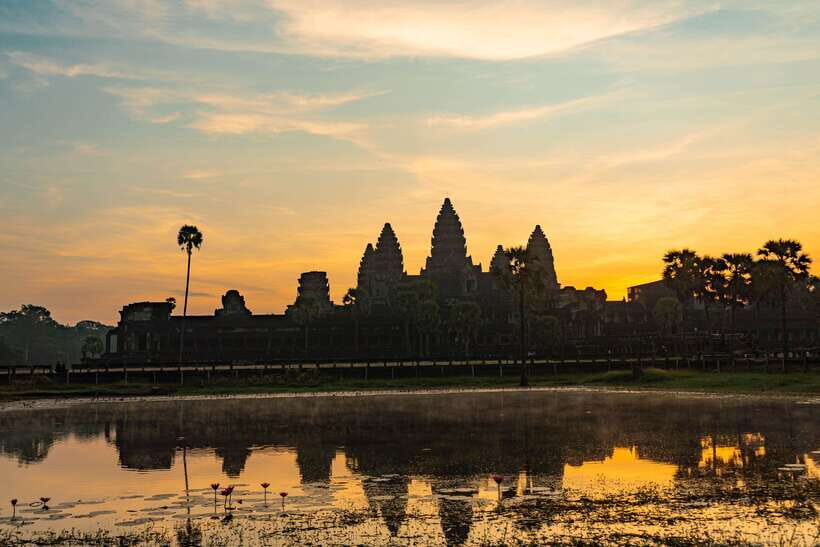
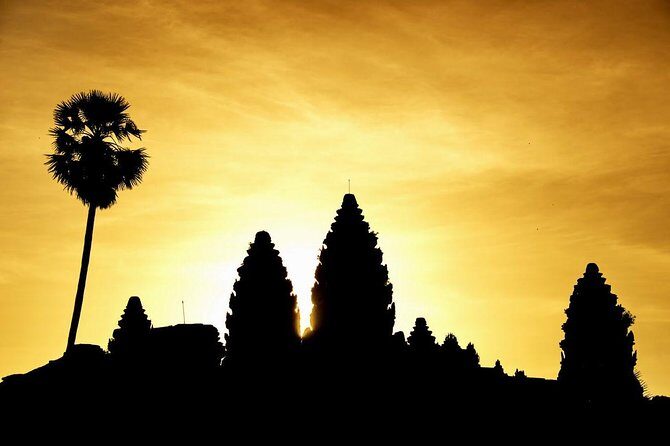
The tour aims to make this less chaotic. You’re arranged to enter Angkor Wat in darkness from the eastern side, then experience the light shift as the sunrise arrives.
Angkor Wat sunrise and morning circuit (about 3 hours)
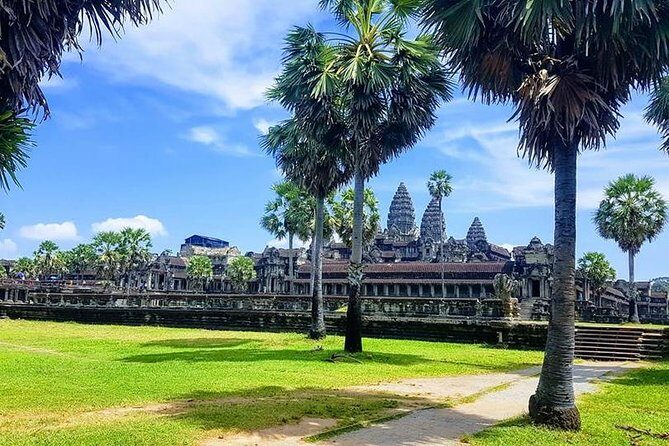
Angkor Wat is the headline for a reason. In the early morning, it’s quieter and more reflective than midday, and that shift changes how the carvings and stone surfaces feel. It’s not just photos—it’s a mood.
If it’s cloudy or if the air quality isn’t perfect, sunrise can still be beautiful, just less crisp. Smog was specifically mentioned as a factor affecting a sunset experience, and it’s smart to remember the atmosphere is out of anyone’s control.
Angkor Thom (about 1 hour 30 minutes) plus South Gate (about 30 minutes)
After Angkor Wat, you’ll move into Angkor Thom, the Khmer Empire’s former capital city. You’ll have time to get your bearings before heading inside around Bayon.
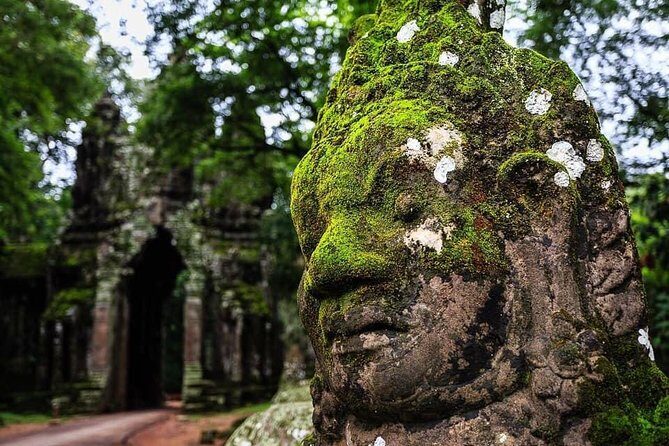
Then you add the South Gate, which is dramatic and helps you understand how the city was meant to be entered and viewed.
Terrace of the Elephants area (about 1 hour 30 minutes)
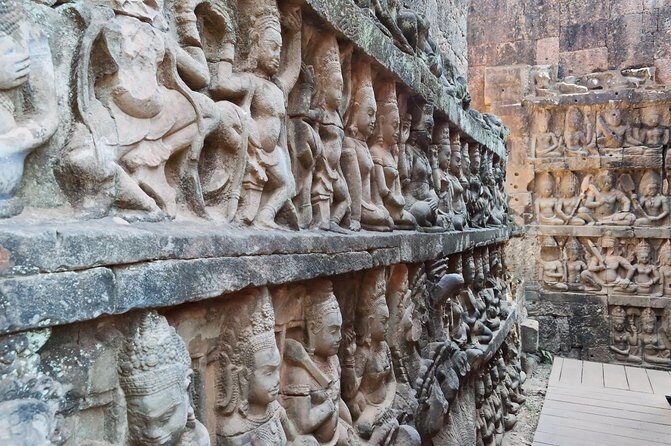
Next you pass through the area connected to the famous Terrace of the Leper King and the Terrace of Elephant. This is one of those stops where the storytelling matters. From a distance, it can look like more carvings and steps; with a guide explaining what you’re seeing, the space becomes easier to read.
Ta Prohm (about 1 hour)
Finally comes Ta Prohm, and it’s often the most atmospheric stop on day two.
Ta Prohm is famous for how it looks today—left in a way that resembles how it appeared when French explorer Henri Mouhot “rediscovered” the site in the 1850s. It’s also noted for its former community role: Ta Prohm was once home to 2,740 monks. That detail turns the stones from scenery into context.
You’ll likely feel the contrast: day two starts with sky-light and huge monuments, and by the time you reach Ta Prohm you’re walking into something softer, tangled with roots, and quietly cinematic.
How the guide and driver change everything (and which names you might meet)
With temple tours, the guide can be the difference between I walked through it and I understood it. This tour leans hard into guided support.
From the experiences shared, specific guide names that show up include:
- Sopheap Rath (often praised for hospitality)
- Sokpee (patient, on schedule, and good for photo spots)
- Sak (charming, helpful with timing, and very active with photos)
- Pal (fun, friendly, and often described as turning temples into stories you can follow)
- Sopheap Sumsot, Chhay, Bun, Pi (Pireak), and Sarak
Drivers mentioned alongside those guides include Moa, Mr. Ha, Naro, Keal, and Mao again—often praised for cold water and cool towels at return times, plus safe driving even on rough roads.
Here’s the practical takeaway for you: when your guide is actively helping with photo angles and explaining what you’re looking at, you’ll waste less time and you’ll get better memories. Several people also talked about guides using tools like an iPad with images or repetition to help information stick.
Even with a tight schedule, the best guides also keep the group moving without bullying you. One mention was that you can sometimes wander briefly on your own as long as you’re back on time.
Timing, walking, and photos: how to survive the long days
This tour is built on real temple hours, not just “temple-themed sightseeing.” That means you need to be ready for uneven timing, dust, and long stretches.
A typical pattern people described:
- Day one runs long, sometimes from around 8:00 am until roughly 7:00 pm with sunset
- Day two finishes around noon, after sunrise and the major follow-up sites
You’ll walk a lot across uneven ground. Comfortable shoes aren’t optional here; they’re the only way you keep your pace without paying for it later.
Also consider your breathing and heat tolerance. One guest flagged the uphill climb for a sunset viewpoint as difficult with heat and pollution, especially for someone with asthma. I’d treat that as a heads-up: if you have breathing issues, tell your guide on the day, and ask what the steepest part is so you can manage it.
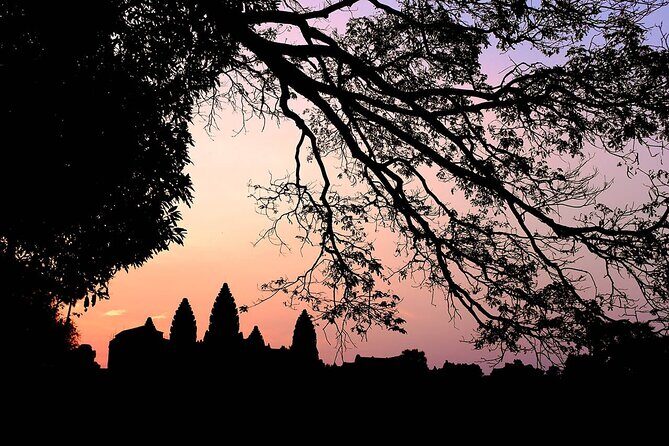
For photos, the tour approach helps. You’re taken to key viewpoints early, and guides often help everyone line up for shots without you having to ask strangers to play photographer. Still, bring the mindset that sunrise and sunset are timing games—clouds and air quality can change the view.
Meals and what breaks to expect
Meals are not included. You’ll eat where your schedule allows, and the lunch stop tends to be described as simple and inexpensive by people who used it.
The best way to handle food on this kind of tour is to keep your expectations aligned:
- drink water throughout (you’ll get plenty from the tour)
- plan on paying for meals yourself
- use the bus resets as your real decompression time
If you’re traveling with kids, the tour can work because the route is structured and there’s a bus between stops, but you’ll still need patience for the early morning start.
Who this tour is best for (and who should think twice)
Book this tour if you want:
- sunrise at Angkor Wat with pre-arranged access and a calm early-morning feel
- a mix of mega-monuments and a high-detail stop like Banteay Srei
- small-group pacing with an AC vehicle, water, and cool towels
- a guide who helps you understand what you’re seeing and helps with photos
Consider a different plan if you:
- hate early mornings and can’t handle pre-dawn starts
- have health limits that make inclines or heavy heat hard to manage (ask questions before you commit)
- want a slow, unguided wander with lots of free time
For many first-timers to Angkor, this is an efficient way to get a big overview without feeling rushed in the wrong ways. For repeat visitors, it can still be worthwhile because it includes stops beyond only the most famous names.
Should you book this Angkor 2-Day Sunrise & Sunset tour?
If you’re going to Angkor once, this is a strong structure: you get sunrise at Angkor Wat, a full day of major and meaningful temples, and a second day that mixes big-city remnants with Ta Prohm’s atmospheric vibe.
I’d book it if you value comfort between stops, like having a guide explain the stories behind carvings, and want photo-ready timing without DIY planning in the dark.
I wouldn’t book it if you can’t handle long days, dust, and a very early departure. For everyone else, it’s a solid value—just remember to budget the $62 temple pass and plan for meals on your own.
FAQ
Is the $49 tour price all-in?
No. The $49 base price does not include the Angkor temple pass. You need to pay $62 per person directly for the pass on the day of your activity. Meals are also not included.
Do I get hotel pickup and drop-off?
Yes. The tour includes convenient hotel pickup and drop-off in Siem Reap.
What time do I leave for Angkor Wat sunrise?
You’ll depart pre-dawn, typically 4:10 to 4:30 am depending on the season.
What’s included during the two days?
The tour includes a guided experience at major Angkor highlights such as Angkor Wat sunrise, Angkor Thom, Terrace of the Elephants area, Ta Prohm, and Banteay Srei, plus a sunset experience on day one. You also get bottled water and a cool towel during the tour.
Are meals included?
No. Meals are not included, and you’ll choose where to eat on your own during meal breaks.
What dress code do I need for the temples?
Dress is casual, but shoulders and knees must be covered inside temples.
Can I cancel for a full refund?
Yes. You can cancel up to 24 hours in advance for a full refund. If you cancel less than 24 hours before the start time, you won’t get a refund.