Angkor can feel overwhelming. This private two-day plan makes it simple. I love the private A/C pickup and drop-off, and I love that you get an official English-speaking guide to help you make sense of each temple, not just snap photos. The main thing to consider is the temple tickets are not included, so you’ll still need to plan for buying the Angkor Pass on-site.
What makes this experience work is the mix of big names and quieter stops, plus that classic sunset moment at Phnom Bakheng. On top of the sightseeing, you get cold drinks and fresh tissue during the tour, which matters once you’re walking in full sun. Because it’s private, you’ll set the rhythm a bit more than on group tours.
You’ll cover a lot in 2 days, but it’s built as a sequence: inner-circle highlights, then outer-circuit temples, with a market break at the end. If you hate early mornings or long hot walks, this may feel like a workout.
In This Review
- Key things I’d circle before you book
- Why This 2-Day Private Angkor Plan Feels Efficient
- Price, the Angkor Pass, and What You’ll Pay Beyond $113.05
- Day 1: Angkor Thom Highlights, Ta Prohm, Angkor Wat, Then Phnom Bakheng Sunset
- Angkor Thom South Gate (start point with restored faces)
- Bayon Temple (the face temple that keeps following you)
- Angkor Thom (a quick, big-picture moment)
- Baphuon Temple (a strong base and layered levels)
- Phimeanakas (palace-area temple with a former golden pinnacle)
- Terrace of the Elephants (terrace carvings with a “procession” feel)
- Terrace of the Leper King (bas-reliefs and late-Jayavarman grandeur)
- Ta Nei Temple (quiet, near a reservoir)
- Ta Prohm (the jungle-famous temple, with a built-in story)
- Angkor Wat (the big masterpiece and the best-preserved crown)
- Phnom Bakheng (sunset views over Angkor Archaeological Park)
- Day 2: Pink Sandstone Charm, Then Outer-Circuit Temples Like Neak Pean
- Banteay Srei (pink sandstone carvings)
- Banteay Samre (restoration clarity, plus visible decay)
- Pre Rup (a bold design with strong proportion)
- Ta Som (small, quiet, not restored)
- Neak Pean (a man-made pond with temple mystique)
- Preah Khan (big temple energy and a 12th-century backstory)
- Banteay Prei (rarely visited, for the “in-depth” crowd)
- Preah Dak Market area + Om Pich steamed toddy palm cake (snack and souvenirs)
- How the Guide Makes a Private Angkor Tour Worth It
- Comfort Tips for Siem Reap Heat (So You Enjoy the Ruins More)
- Should You Book This 2-Day Private Angkor Tour?
- FAQ
- What’s the duration of this Angkor private tour?
- Where does the tour start and end?
- Is the tour private?
- What’s included in the price?
- What’s not included?
- Do I need to buy tickets for Angkor temples?
- Are meals provided?
- Does the itinerary include a sunset?
- How far in advance should I book?
- Can I cancel for a full refund?
Key things I’d circle before you book
- Hotel pickup + private A/C vehicle so you’re not stuck juggling tuk-tuks all day
- Licensed English-speaking guide to explain what you’re seeing at each site
- Angkor Pass handled at the park entrance with your guide’s help
- Sunset at Phnom Bakheng for wide views over the Angkor area
- Big temples plus smaller stops like Ta Nei, Ta Som, and Neak Pean
- A final touch at Preah Dak Market area for snacks and souvenirs
Why This 2-Day Private Angkor Plan Feels Efficient
This tour is built for people who want Angkor without the chaos. You start each day with pickup from your hotel in Siem Reap, then ride in a private, air-conditioned vehicle between sites. That alone changes the mood: you spend less time negotiating and more time looking closely.
The private part matters most at Angkor, because the temples are not all obvious. A licensed guide can point out the story behind the stone faces at Bayon, the function of terraces, and why certain temples feel more “Buddhist” or “Hindu” in their layout. That turns your visit from checklists into understanding.
There’s also a practical rhythm: the itinerary groups temples that fit together in a way that helps you keep moving. It still involves a lot of walking, but the route makes sense for a two-day window.
Price, the Angkor Pass, and What You’ll Pay Beyond $113.05
This tour costs $113.05 per person for about two days. For what you get—private vehicle, hotel pickup/drop-off, and a licensed guide in English—that price can be good value, especially if you’re traveling as a small group or couple.
What’s not included is the key item: entrance fees via the Angkor Pass. Your guide will assist you in purchasing it at the entrance before the tour begins. Plan for this as a separate line item. Without that Pass, you won’t have access to the temple sites on the route.
Meals are also your responsibility. Lunches are available at local restaurants, with menu prices listed around $3–$10 per dish. The tour doesn’t lock you into one restaurant, so you can keep your day flexible.
Finally, tips for your guide and driver are not included. That’s normal for this kind of service, but it’s worth budgeting so it doesn’t feel like a surprise.
Day 1: Angkor Thom Highlights, Ta Prohm, Angkor Wat, Then Phnom Bakheng Sunset
Day 1 is all about the core Angkor experience—starting with the dramatic arrival points, then moving into temples that most people dream about before they ever arrive in Cambodia.
Angkor Thom South Gate (start point with restored faces)
You kick off at the South Gate of Angkor Thom, a fully restored entryway and the main road route into Angkor Thom from Angkor Wat. This is a great warm-up stop because it sets the scale: it’s not just one temple, it’s a whole world of stone.
One practical note: tickets aren’t included for this stop, so it’s tied to your Angkor Pass timing.
Bayon Temple (the face temple that keeps following you)
Next is Bayon Temple, built during Jayavarman VII’s reign. What makes it special is simple: it’s described as the only Buddhist state temple and the last major temple built in the Angkor Empire. The stone faces are iconic, but the value here is having someone explain the symbolism and the layout so you don’t just stare upward for two hours.
Angkor Thom (a quick, big-picture moment)
You’ll also have time at Angkor Thom itself (the itinerary lists a stop there after Bayon). This helps you connect the dots between the gate, Bayon’s towers, and the central zone of the ancient capital.
It’s short on purpose—this is a fast orientation so you can spend your energy on the more detailed temples next.
Baphuon Temple (a strong base and layered levels)
Then it’s Baphuon, known for its rectangular sandstone base with five levels. It’s not the typical “smaller and smaller” temple shape you might expect, which makes it more interesting to compare against the other sites on your route.
Phimeanakas (palace-area temple with a former golden pinnacle)
Phimeanakas sits near the center of the royal palace area. The description notes it originally may have had a golden pinnacle, and it’s remembered in historical accounts as a Tower of sorts. Even if the gold is long gone, the positioning is the point: you’re seeing a temple tied to royal power.
Terrace of the Elephants (terrace carvings with a “procession” feel)
You move to Terrace of the Elephants. This one is about motion in stone—servants and princes in the carvings, and the sense of steps that keep a steady pace. If you enjoy details in bas-reliefs, you’ll like this stop more than you expect.
Terrace of the Leper King (bas-reliefs and late-Jayavarman grandeur)
Next comes Terrace of the Leper King, also from Jayavarman VII’s era. The big draw is the dramatic bas-reliefs on both inner and outer areas. The itinerary gives you a solid viewing window, but it’s one of those sites where the carvings reward patience.
Ta Nei Temple (quiet, near a reservoir)
Ta Nei is presented as a late 12th-century stone temple dedicated to the Buddha, near the East Baray reservoir. It’s quieter than the headline names, which is exactly why it’s on the route. This is where your guide’s explanations can help you spot differences without feeling like you’re racing.
Ta Prohm (the jungle-famous temple, with a built-in story)
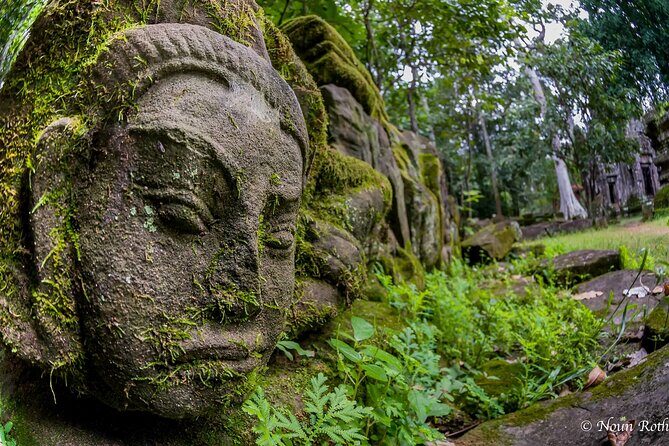
Then you arrive at Ta Prohm, the jungle-covered temple made famous through pop culture. The real value here is that the temple has been left largely untouched by archaeologists except for clearing paths and strengthening. That means you’re seeing an “in-between” condition—ruin and nature at the same time.
Angkor Wat (the big masterpiece and the best-preserved crown)
After Ta Prohm, you go to Angkor Wat. It’s the largest monument of the Angkor group and described as the best preserved. Your time here is longer than most other stops, which is good because this is where you’ll likely want multiple angles: courtyards, the bas-reliefs, and the approach lines.
If you like photography, this is also where your guide’s timing helps. Getting the light right takes planning, and having a schedule makes it less stressful.
Phnom Bakheng (sunset views over Angkor Archaeological Park)
Finally, day 1 ends with Phnom Bakheng, billed as the highest temple in the Angkor Archaeological Park and a prime spot for panoramic sunset views. This is the emotional payoff stop, the one people remember months later because it shifts the ruins from architecture to atmosphere.
Expect a heavier crowd vibe than earlier sites during sunset hours. Go steady, hydrate, and plan for some uphill steps.
Day 2: Pink Sandstone Charm, Then Outer-Circuit Temples Like Neak Pean
Day 2 goes more outward. You still get major temples, but the route leans into “less rushed” sightseeing—places that feel quieter and more you-focused.
Banteay Srei (pink sandstone carvings)
First up is Banteay Srei, described as a precious jewel of Khmer art by French archaeologists. The standout here is the pink sandstone carvings, and the fact that it’s often easier to enjoy at a slower pace than the biggest crowded names.
If you like craftsmanship, you’ll probably want extra time here.
Banteay Samre (restoration clarity, plus visible decay)
Next is Banteay Samre, described as one of the more complete complexes thanks to restoration using anastylosis. The itinerary notes maintenance gaps over the past 20 years, so you may see a mix: restored parts alongside areas that show wear.
That mix can be a plus. It makes the ruins feel real rather than museum-perfect.
Pre Rup (a bold design with strong proportion)
Then comes Pre Rup, praised for bold architectural design and good balance of scale and proportion. It’s very much a “look at the shape” temple, and that helps if you’re feeling temple fatigue after day 1. A design like this gives your eyes something clean and structured.
Ta Som (small, quiet, not restored)
Ta Som is listed as not restored and described as a small, quiet temple. If you’re trying to see Angkor beyond the Instagram-famous stops, you’ll likely enjoy this. It’s the kind of place where you can hear your own footsteps and really notice how nature interacts with stone.
Neak Pean (a man-made pond with temple mystique)
Then you go to Neak Pean, a square man-made pond bordered by steps, surrounded by four small structures. Even if you don’t get lost in the symbolism, it’s a memorable scene—water, stone edges, and those small temple points forming a pattern.
Preah Khan (big temple energy and a 12th-century backstory)
Preah Khan is on the Grand Circuit, described as built in the second half of the 12th century by King Jayavarman VII, dedicated to his father. You get about an hour here, which helps. This one tends to be spacious, so a longer viewing slot gives you room to wander without feeling lost.
Banteay Prei (rarely visited, for the “in-depth” crowd)
Then there’s Banteay Prei, described as rarely visited and near Prasat Prei. It’s marked as a minor temple that’s most interesting if you want deeper Angkor study rather than only highlights. If you’re short on patience for small sites, this could be the least satisfying stop. If you like exploring, it can be the best “I didn’t know this existed” moment.
Preah Dak Market area + Om Pich steamed toddy palm cake (snack and souvenirs)
Day 2 closes with time at the Preah Dak Market area, including a mention of Om Pich steamed toddy palm cake and souvenir browsing. This is practical: you get a chance to buy small gifts and snacks, and you don’t end your trip with only temples and heat.
If you’re careful with spending, stick to a budget before you start browsing. Markets can be fun, but they can also get out of hand fast.
How the Guide Makes a Private Angkor Tour Worth It
The biggest repeated praise across real trips like this is how the guide handles the experience. Names that show up include Mr Lorn Leap, Sara, Ry, and Leam and La, all mentioned in positive contexts. Even if you don’t get those exact guides, the service style is clear: friendly, story-focused, and built around making temple details click.
I also like that the guides help with the “in-between” parts. For example, they assist with the Angkor Pass purchase before you start, so you’re not standing around figuring it out in a rush.
During very hot periods (April is specifically mentioned in one recent experience), it helps that guides keep an eye on comfort. One recent account notes water and even cold towels between temples. Your tour includes cool drink water and fresh tissue, so you’re not stuck sweating through the whole day with nothing to help.
And since this is private, you can ask quick questions without feeling like you’re slowing down a big group.
Comfort Tips for Siem Reap Heat (So You Enjoy the Ruins More)
Angkor is one of those places where the weather drives your experience. It can be hot, and the days involve a lot of sun and walking.
Here’s how I’d plan for it:
- Wear light clothes and shoes you can walk in for hours.
- Use sunscreen and bring a hat if you’re sensitive to heat.
- Take water breaks when your guide offers them, not when you’re already wiped out.
- For the sunset at Phnom Bakheng, be ready for a slower, more crowded approach and some uphill steps.
One smart move: save your biggest energy for the sunset. Day 2 has plenty of great stops, but sunset is the payoff.
Should You Book This 2-Day Private Angkor Tour?
Book it if you want:
- A private guide who helps you understand what you’re seeing
- A route that includes both the headline temples and supporting cast sites
- Hotel pickup/drop-off and transfers in a private A/C vehicle
- Sunset at Phnom Bakheng without having to organize it yourself
Skip it if:
- You’re hoping for a slow, easy day with minimal walking
- You don’t want to deal with separate temple ticket costs (the Angkor Pass is not included)
- You prefer to pick your own temples one by one without a set route
For most people—couples, first-time Angkor visitors, and history-leaning tourists—this is a strong value way to cover a lot in a short time, with the comfort benefits that make it feel more like a trip than a race.
FAQ
What’s the duration of this Angkor private tour?
It’s listed as 2 days (approximately).
Where does the tour start and end?
You get hotel pickup and drop-off in Siem Reap. You provide your hotel name and hotel address for pickup.
Is the tour private?
Yes. It’s a private tour/activity, so only your group participates.
What’s included in the price?
Included items are hotel pickup and drop-off, a professional licensed English-speaking guide, private air-conditioned vehicle transfers, and cool drink water and fresh tissue during the tour.
What’s not included?
Entrance fees (the Angkor Pass) are not included, and tips for the guide and driver are also not included. Meals during the tour are not included.
Do I need to buy tickets for Angkor temples?
Yes. The tour states that the Angkor Pass covers the temples in the itinerary, and your tour guide will assist you in purchasing it at the entrance of Angkor Park before starting.
Are meals provided?
Lunches are available at local restaurants, but meals are at your own expense.
Does the itinerary include a sunset?
Yes. Day 1 ends with sunset at Phnom Bakheng.
How far in advance should I book?
On average, it’s booked 32 days in advance.
Can I cancel for a full refund?
Yes. Free cancellation is offered if you cancel up to 24 hours in advance for a full refund. If you cancel less than 24 hours before the start time, the amount paid is not refunded.