Silk starts with a lotus stem.
In Siem Reap, the Lotus Silk Farm tour takes you to the source of rare Khmer lotus silk, a craft that dates back about 1,000 years. You’ll also see why the lotus matters in Buddhism, and how a UNESCO-recognized textile tradition is still being practiced instead of lost.
I especially like two parts of the experience. First, you get real hands-on creation: you make three take-home pieces using traditional methods—lotus stem paper, lotus fiber yarn, and a seed bracelet. Second, the work is framed as a true social enterprise, with support for 150 women artisans and a “use the whole plant” approach (no waste storyline).
One thing to keep in mind: the tour is listed around 2.5 hours, but the full round-trip block from pick-up to drop-off can run closer to 4 hours. Also, the pace can feel a bit rushed if you want every single step explained in slow motion—so come with questions.
In This Review
- Key highlights I’d circle first
- Why lotus silk is more than a souvenir
- Getting there from Biolab Café: simple, but mind the time block
- The 30-minute production tour: fibers, seeds, and stems all get used
- Boat ride through the lotus fields: learn the plant in motion
- Artisan workshops: make paper, spin fiber yarn, craft a seed bracelet
- Lotus stem paper
- Fiber yarn
- Seed bracelet
- Lotus tea ceremony: a short break that keeps the day human
- Cultural boutique: browse, but know what you’re paying for
- Price and value: why $40 makes sense here
- Who should book this tour (and who might skip)
- Should you book Lotus Silk Farm?
- FAQ
- How long is the Lotus Silk Farm tour?
- Where do I meet the shuttle?
- What time do shuttles depart from Biolab Café?
- What activities are included?
- What can I create during the workshops?
- Is the tour limited in group size?
- Do I need private transportation or hotel pickup?
- Is the tour refundable if my plans change?
Key highlights I’d circle first
- Three take-home crafts: paper, yarn, and a seed bracelet
- 30 minutes of real production: extracting fiber from lotus stems
- Boat time on the lotus fields: watch flower handling and learn the symbolism
- Lotus tea stop: homemade biscuits in a green garden setting
- A true zero-waste concept: stems, seeds, and flowers all get used
- Small group size: up to 30 people
Why lotus silk is more than a souvenir
Lotus silk has a reputation for being rare, but here’s the practical reason it’s rare: it starts with lotus fibers that come from specific parts of the plant, and the process is labor-heavy. The farm presents lotus silk as one of the last places keeping a Khmer technique alive, which is a big deal in Cambodia where many traditional crafts fade when younger workers move on.
Then there’s the symbolism side. The lotus is tied to Buddhism as a flower of purity and transformation—so when you’re standing in the fields and learning how the plant is handled, it’s not only about making fabric. You’re seeing the flower as culture, plus material science. That combo is what makes the visit feel grounded instead of like a showroom stop.
Finally, the “it reaches luxury fashion” angle is part of the story too. The lotus fibers you touch here are described as being supplied to international luxury houses, and textiles made from them are said to range from about $400 to $7,500. You don’t need that to enjoy the tour, but it helps explain why the craft is treated with care and why the farm invests in preserving the method instead of mass-producing a cheaper imitation.
Getting there from Biolab Café: simple, but mind the time block
This tour uses a central pick-up point: Biolab Café (Wat Bo Village area). The shuttle is a grey van, and departures are scheduled at 8:30 AM, 10:00 AM, 12:00 PM, and 2:00 PM. The advice is to arrive about 5 minutes early, ideally right in front of the garden area.
A mobile ticket is used, which makes your arrival smoother if you’re comfortable showing a QR code. The vehicle is air-conditioned, and you get round-trip shuttle service from downtown—so you’re not paying extra for hotel pickup.
Here’s the practical timing note that matters: the tour content is roughly 2.5 hours on paper, but door-to-door can feel like a longer morning or afternoon block. Plan your day with some breathing room, especially if you’re also doing Angkor-temple circuits later. If your schedule is tight, pick a departure that doesn’t squeeze your next activity.
Group size is kept to a maximum of 30 people, which helps. It still feels like a group day, but you’re not packed like a bus tour with no room to ask questions.
The 30-minute production tour: fibers, seeds, and stems all get used
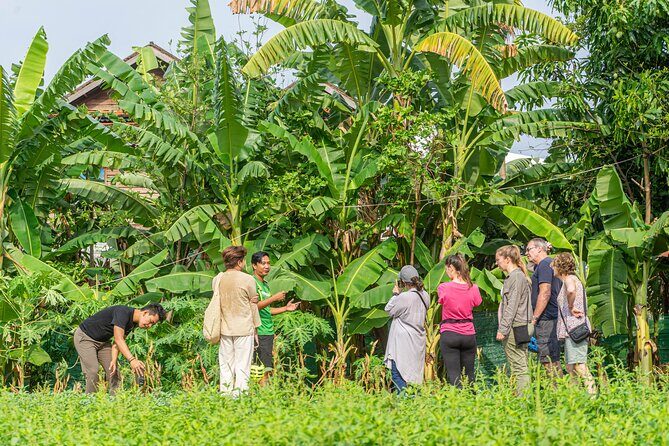
The tour begins with a 30-minute production segment focused on where lotus silk actually comes from. You’ll see artisans working with lotus stems and learning how fibers are extracted. Even if you’ve never worked with plant-based materials before, this part gives you a clear mental map of the workflow.
What’s especially useful is the farm’s “circular economy” claim: the whole plant gets a job. The stems become fiber for textiles. The seeds go toward jewelry. Other plant parts become items like paper, tea, and cosmetics (that last list is part of what they describe on-site). The point isn’t just sustainability as a slogan—it’s that the craft isn’t only about silk fabric. It’s about turning multiple byproducts into finished goods.
One way to get more out of this part is to listen for the small practical differences. Lotus fiber isn’t cotton fiber. Paper from stems isn’t the same process as cutting tree pulp. When you realize that the same plant can feed several crafts, you stop thinking of this as a single product tour and start seeing it as a small system.
Boat ride through the lotus fields: learn the plant in motion
Next comes the 30-minute boat journey through lotus fields. You board a wooden boat and glide past lotus blooms, with the guide explaining why the lotus holds meaning in Buddhism. You’ll also see lotus flower handling, including flower folding.
This is one of the sections where your senses do some of the learning. The lotus fields can look like a postcard at a distance, but up close you notice how the flowers sit, how they’re handled, and how careful people are with the plant. That helps you understand why a production process needs patience.
You’ll also receive a fresh lotus bouquet after this segment. It’s a nice touch, but the bigger value is what the bouquet represents: it’s part of the farm’s craft ecosystem, not just a quick gift for photos. If you’re the kind of person who usually skips craft shopping, this is one moment that makes you slow down and pay attention.
A small practical note: boat rides always come with water-and-sun reality. Bring sunglasses if you use them, and wear something you’re fine getting a little dusty. If you’re sensitive to heat, choose an earlier departure.
Artisan workshops: make paper, spin fiber yarn, craft a seed bracelet
The heart of the day is the 1-hour artisan workshops, where you actually create three pieces. This is where the tour earns its value. You’re not only watching—you’re making something you can hold and use as proof that you participated.
Lotus stem paper
You’ll transform lotus stems into handmade paper. The process teaches more than a technique; it teaches patience. Even though you’re not likely to leave with an entire printing-house setup, you’ll get a sense of how plant material becomes sheets and why handmade paper has texture and character.
Fiber yarn
Next is fiber yarn, using lotus fiber and spinning it in a traditional way. If you’ve ever tried spinning with your hands, you know it isn’t instant. Expect a learning curve. The good part is that this is exactly the kind of skill that makes handmade goods feel real—because you worked for it.
Seed bracelet
Finally, you’ll create a seed bracelet using seeds and beads. This part is visually satisfying and a bit more approachable than fiber work. It’s also a perfect reminder that the farm isn’t treating the lotus as a single-use fiber source. The seeds are part of the design language.
You’ll take home what you make. That matters because you leave with tangible items, not only stories in your head.
One caution: the pace can feel a touch rushed. If you want extra time or deeper explanation on any step, ask right away while the materials are in front of you. Waiting until the end means the group moves on.
Lotus tea ceremony: a short break that keeps the day human
After the workshop, there’s a 15-minute tea ceremony with lotus tea and homemade biscuits. It’s not just a snack stop. It’s a reset so your brain can switch from hand skills back to reflection.
This segment also helps you connect the plant to taste. The tour isn’t only about selling a fabric. It’s about the lotus as a multi-use plant—something the farm keeps returning to, from fiber to paper to tea.
Cultural boutique: browse, but know what you’re paying for
There’s a cultural boutique on-site where you can browse lotus silk textiles, jewelry, and artisan creations. Personal purchases are optional, but if you’re tempted, use your new understanding as a filter.
Here’s the helpful mindset: if lotus silk is rare and labor-intensive, then the boutique items aren’t cheap for the wrong reasons. They’re expensive because making the base material takes work. If you’re buying, don’t just compare prices against cheap tourist crafts—compare against handmade plant-based craft realities.
Also, since you’re making items during the tour, you’ll be able to notice differences more easily: texture, finish, and how the materials hold up.
Price and value: why $40 makes sense here
At $40 per person, this tour can be a good value because the price isn’t only for admission. You get several included elements in one ticket:
- A bilingual guide is available (English and French)
- Round-trip shuttle from Biolab Café in an air-conditioned vehicle
- Tea with homemade biscuits
- A fresh lotus bouquet
- Workshop time and the chance to create three pieces
- Boat journey and the production viewing segment
- All fees and taxes
If you tried to piece this together yourself in Siem Reap—transport, guide, a boat ride, and hands-on craft time—you’d likely spend more than $40 once you start adding the “small costs” that add up quickly.
The only real cost you should budget for is your personal purchasing decision at the boutique, plus gratuities if you feel the service deserved it. If you’re traveling with a tight budget, you can still walk away satisfied with the items you make and the bouquet you receive.
Who should book this tour (and who might skip)
This is a strong choice if you like hands-on experiences and want to see a real craft workflow, not just a photo stop. It also fits well if you’re into sustainability stories, because the farm focuses on using the whole plant and supporting artisans.
It’s also a good match for mixed groups: some people will enjoy the boat portion, others will focus on the workshop. The day has a rhythm that keeps moving.
Consider skipping or rethinking if:
- You have only a short window in your schedule and can’t afford a longer door-to-door day
- You want a slow, detailed explanation of every single step for everything you don’t make
- You get impatient with group pacing (even when the content is worth it)
Should you book Lotus Silk Farm?
If you’re in Siem Reap and you want a craft experience with real structure—production viewing, a boat ride, tea, and hands-on making—this is one of the better-value days you can build. The standout reason is that you don’t just learn about lotus silk; you create items and take them home.
Book it when you can give it time. Pick a departure that doesn’t leave you rushing to your next plan, and arrive at Biolab Café a few minutes early. Bring questions for the artisans during the workshop. And if you’re shopping later, you’ll understand what you’re paying for.
FAQ
How long is the Lotus Silk Farm tour?
The experience is listed at about 2 hours 30 minutes.
Where do I meet the shuttle?
You meet at Biolab Café (Wat Bo Village area, Siem Reap). The tour starts and ends back at the meeting point.
What time do shuttles depart from Biolab Café?
Departures are scheduled for 8:30 AM, 10:00 AM, 12:00 PM, and 2:00 PM.
What activities are included?
You get a production tour, a boat journey on the lotus fields, artisan workshops where you create three pieces, a tea ceremony, and time to browse the on-site boutique.
What can I create during the workshops?
You create three heirloom-style items: lotus stem paper, fiber yarn, and a seed bracelet.
Is the tour limited in group size?
Yes. The maximum group size is 30 travelers.
Do I need private transportation or hotel pickup?
No. There is no private transportation or hotel pickup. The shuttle uses the central meeting point at Biolab Café.
Is the tour refundable if my plans change?
Free cancellation is available up to 24 hours in advance for a full refund.