Kampot turns out to be a smart half-day circuit. You’ll roll out by tuk tuk from Kampot, bouncing past rice fields and countryside scenes, then stack four very different stops: salt production, a cave temple, a dam-water viewpoint called Secret Lake, and Kampot pepper at La Plantation. It’s the kind of outing that makes a morning feel busy in the best way.
Two things I really like: you get an English-speaking driver-guide (not just someone who drives), and the day includes cold water plus hotel pickup/drop-off in Kampot city center. That combination keeps the experience smooth even when roads get rough.
The one thing to consider is comfort. The cave road can be bumpy and dusty, and the cave climb involves steps plus heat, so bring a dust cover and plan your pace.
In This Review
- Key highlights you’ll feel right away
- A 5–6 hour tuk tuk circuit with Kampot pickup
- Salt Fields stop: what you’ll see and when it looks best
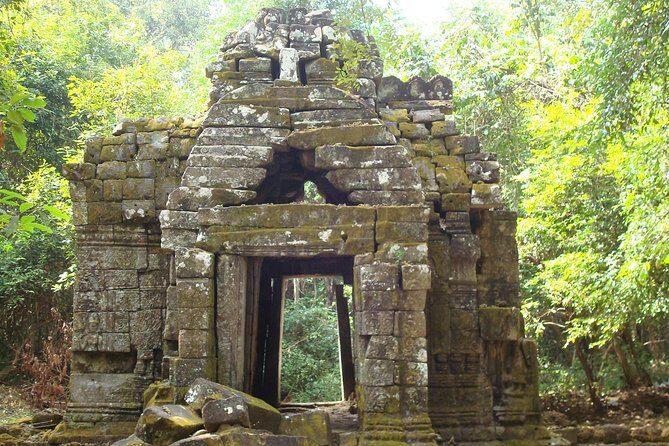
- Phnom Chhngok Cave Temple: steps, heat, and a bumpy approach
- Brateak Krola Lake: why it’s called Secret Lake
- La Plantation and Kampot pepper: what makes it worth the time
- Price and value: does $20 make sense in real terms?
- Guide matters: Wandon, Roy, and Ray bring the day alive
- Practical tips that make the day smoother
- Should you book this Kampot pepper, salt fields, cave, and Secret Lake tour?
- FAQ
- What is the price of this tour?
- How long is the tour?
- What time does the tour start?
- Does the tour include pickup and drop-off?
- What transport do you use?
- Are meals included?
- Which stops are free and which may cost extra?
Key highlights you’ll feel right away
- Tuk tuk + English driver-guide: you’ll hear context, not just directions.
- Salt fields first: a quick look at how Cambodia produces salt-related goods.
- Phnom Chhngok Cave Temple: short visit, big atmosphere, and a real climb.
- Brateak Krola Lake: called Secret Lake, but it’s a man-made dam with serious history.
- La Plantation for Kampot pepper: learning how pepper is grown plus tastings.
- Small group size: up to 16 travelers, so stops don’t feel chaotic.
A 5–6 hour tuk tuk circuit with Kampot pickup
This is built like a practical half-day loop: you start at 8:00am and you’ll be out roughly 5 to 6 hours. The transport is a tuk tuk, and the operator says pickup and drop-off are in Kampot city center, so you avoid the hassle of figuring out rides between rural sites.
Group size matters. With a maximum of 16 travelers, you’re not stuck waiting behind a huge bus crowd. You’ll still feel the rhythm of a small-group tour: some waiting when you switch locations, then a quick focus once you arrive.
Expect straightforward inclusions. You get cold water, entrance fees are listed as included overall, and the tour also offers group discounts. What’s not included: meals, and pickup outside Kampot isn’t part of the package.
Salt Fields stop: what you’ll see and when it looks best
The day opens with the Salt Fields stop for about 30 minutes. This one is marked as free, and the point is to watch how salt farmers work the flats and manage production. Even in a short time, you’ll get a sense of how salt fits into Cambodia’s export economy.
Timing can change what you see. If rain is in the air, salt may not look as active or dramatic, which can make this stop feel a bit less visually intense. If you’re there when the weather cooperates, you’ll usually get clearer views of the working areas and the process.
One practical note: salt-field viewing can mean bright sun and reflective ground. Bring sun protection and don’t assume the morning breeze will keep you comfortable.
Phnom Chhngok Cave Temple: steps, heat, and a bumpy approach
Next up is Phnom Chhngok Cave Temple, also about 30 minutes. Here’s the important part: the cave admission is flagged as not included in the schedule you’re given, so plan to pay entry at the site unless your booking confirms otherwise. Either way, the stop itself is short, so you’ll want to arrive ready to move.
Getting there is part of the experience. The road is described as winding dirt, and the ride can be bumpy. If you’re prone to motion sickness, sit where you feel most stable, and keep your eyes on the road ahead during the rough sections.
Inside, the cave can be challenging mainly because of steps and heat. One helpful tip to keep in mind: after exploring, it’s safer to exit via the steps instead of going deeper into the cave routes, since the interior can become slippery with big drop-offs. If you’re with kids or anyone who dislikes uneven surfaces, stick close to the main path and move slowly.
Also: this temple stop may run through a working crop area on the way, so you’re not just visiting ruins—you’re walking through real countryside.
Brateak Krola Lake: why it’s called Secret Lake
You’ll then visit Brateak Krola Lake, also called Secret Lake, for about 15 minutes. The schedule says the admission here is free, and the short time is intentional. This is a quick viewpoint stop, not a long hangout.
Here’s the nuance that matters: Secret Lake isn’t natural. It’s a man-made dam, and during the Khmer Rouge era it was built with slave labor. That gives the stop a heavy layer beneath the scenic look, so it’s worth treating it with respect and not rushing through.
What to expect on the ground. Several people note it isn’t really a secret in practice, and the area can sit near a fairly busy road. So if you’re hoping for total solitude, adjust your expectations. Think: quick photo stop, short learning moment, then back on the road.
La Plantation and Kampot pepper: what makes it worth the time
Your final major stop is La Plantation, about 2 hours. Admission is listed as free here, and this is the part many people come back talking about—because Kampot pepper is the star, not just a background story.
You’ll learn the history of Kampot Pepper and see how it’s produced in traditional ways. The tour format on this site usually includes a guided walk through pepper growing areas, then a tasting/session where you can sample what’s produced. People also point out the pepper ice cream as a fun add-on if it’s available during your visit.
A useful detail: the tour language changes by location. The overall guide is English, and a French-speaking guide is available at La Plantation only. So if you want extra depth at the pepper farm, this stop is where that bilingual support can come into play.
Plan for a shop. There’s typically an onsite sales area, and products can be priced higher than average, but the quality is a big part of why people don’t mind. If you want to bring pepper home, this is where you’ll do it, and you’ll know what you’re buying.
Price and value: does $20 make sense in real terms?
At $20 per person for a roughly half-day tuk tuk tour, the value depends on two things: what you get in transport time, and how much you learn through the guide.
You’re not only paying for car time. You’re also paying for:
- a driver who doubles as an English tour guide
- cold water
- included access costs on the salt fields and lake stops (and free entry at La Plantation)
- pickup/drop-off in Kampot city center
The one possible “extra” to watch is cave entry. The schedule marks Phnom Chhngok Cave Temple admission not included, even though entrance fees are generally described as included. So I’d budget a small amount for the cave, just to keep the day from turning into a surprise at the gate.
Another value check: the route is paced as a “see a lot without rushing too hard” circuit. Many people like that they aren’t being hurried through each stop. For $20, that balance is usually the difference between a nice local tour and a stressful checklist.
Guide matters: Wandon, Roy, and Ray bring the day alive
This type of route lives or dies by the person driving it. The standout pattern in the guide feedback is consistency: punctual pickup, clear English, and story-driven explanations.
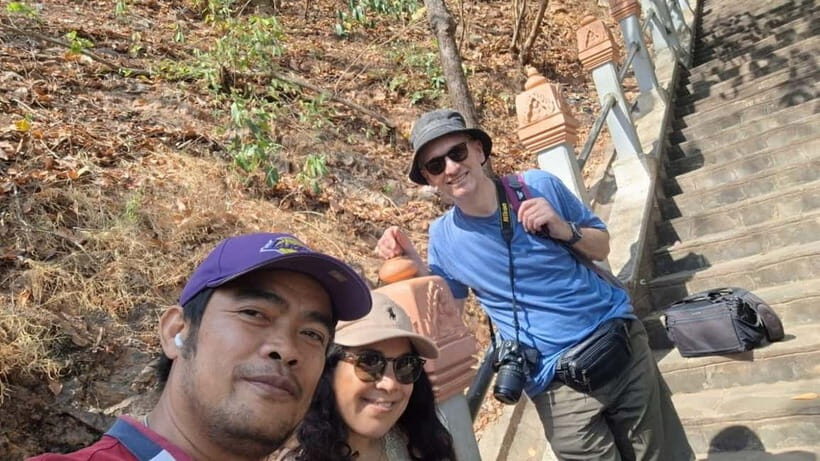
Names you might hear include Wandon, Roy, and Ray. When these guides are on your route, the day tends to include humor, extra context, and practical tips for what to watch for at each stop. One person highlighted that their guide made sure they weren’t rushed, and that’s a big deal on a day with uneven roads and heat.
If you’re the type who likes learning while looking at something, this is where the tour earns its money. A tuk tuk by itself is fun, but a tuk tuk with context is the difference between seeing places and understanding them.
Practical tips that make the day smoother
First: bring something for dust. The roads to the cave and pepper areas can be rough and dusty, and several people recommend wearing a dust mask and protecting your eyes (some even mention glasses or a hat). Even if the morning starts calm, the dirt sections can kick up quickly.
Second: pack for heat. Cave steps plus sun can be tough in warmer months. If you visit in the hotter season, go slow on the climb and take short breaks when you need them.
Third: wear safe shoes. You’re dealing with steps and uneven cave surfaces. The cave can also be slippery, so think grip first, not style.
Fourth: don’t plan meals inside the tour. Food isn’t included, so either eat before pickup or be ready to handle lunch on your own schedule afterward. Some people find that La Plantation’s site timing works well for a long break, but you should still assume meals are not part of the base price.
Finally: if you’re thinking of adding extra stops beyond Kampot city center, clarify costs before you go. One review describes an unexpected add-on fee for a longer trip toward Kep, and that’s the kind of situation that’s best avoided by making terms crystal clear at the start.
Should you book this Kampot pepper, salt fields, cave, and Secret Lake tour?
Book it if you want a real countryside morning with a strong focus on Kampot pepper plus two or three meaningful stops beyond the obvious city sights. It’s especially a good fit if you like driver-guides who explain what you’re seeing and you’re okay with bumpy roads and a small climb.
Skip it (or adjust expectations) if you hate dust, you’re not up for steps, or you’re expecting a long “nature day.” The lake stop is short, and it’s not a secluded hideaway. Also keep in mind that cave entry may require a separate payment at the site.
If your plans shift, the operator lists free cancellation up to 24 hours before the start time, so it’s relatively low-risk to reserve early and finalize details closer to departure.
FAQ
What is the price of this tour?
It’s priced at $20.00 per person.
How long is the tour?
The duration is about 5 to 6 hours.
What time does the tour start?
The start time is 8:00am.
Does the tour include pickup and drop-off?
Yes. Pickup and drop-off are available at your hotel in Kampot city center. Pickup out of Kampot town isn’t included.
What transport do you use?
The tour uses a tuk tuk, and the driver also acts as an English tour guide.
Are meals included?
No. Meals are not included.
Which stops are free and which may cost extra?
The salt fields and Brateak Krola Lake stops are listed as free, and La Plantation is free. Phnom Chhngok Cave Temple admission is marked as not included in the schedule provided.