REVIEW · SIEM REAP
From Siem Reap: Angkor Wat and Floating Village 3-Day Trip
Book on Viator →Bookable on Viator
Early mornings start the magic.
This 3-day Angkor Wat plus Tonle Sap trip is built for people who want the big-name temples and the quieter, more human side of Cambodia in one sweep. You’ll move temple to temple with a guide who explains what you’re seeing, then swap stone ruins for stilt-house life at Tonle Sap Lake. The cool part is the pacing: you’re not stuck in a single loop, and you get a mix of famous viewpoints and smaller stops.
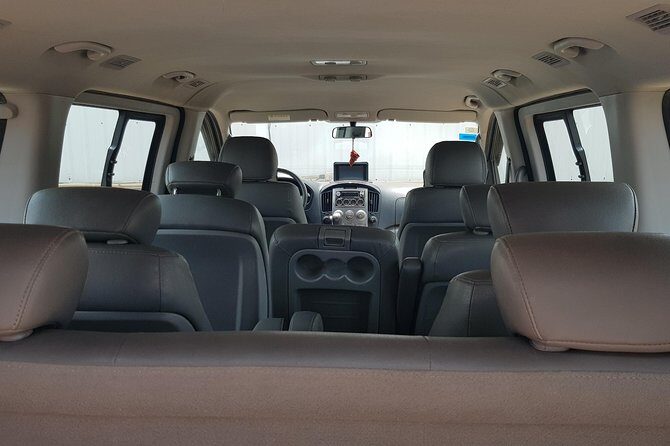
Two things I really like: the guide-led context and the comfort of air-conditioned private transport. It’s not just photos; you get the stories behind places like Angkor Thom and Ta Prohm, and the ride time between sites stays civilized. The other big win is that the tour includes hotel pickup/drop-off plus cool water and towels—small items that matter when you’re walking under a hot sun.
One consideration: temple tickets and the Tonle Sap boat add-ons are extra. On top of the $199 base price, you’ll budget for the Angkor 3-day pass and the Tonle Sap pass/boat ride, and lunch and dinner are on your own. If you want everything fully covered, this isn’t the style of tour where you pay once and forget it.
In This Review
- Key things to know before you go
- Price and Logistics: what $199 really covers
- Pickup comfort: starting in the right place
- Day 1: Angkor Thom, Angkor Wat, and a possible sunset at Phnom Bakheng
- Angkor Thom South Gate: a first big reveal
- Angkor Archaeological Park break: plan meals for yourself
- Angkor Wat: the main event
- Phnom Bakheng (or Pre Rup): sunset if conditions cooperate
- Day 2: Banteay Srei, Beng Mealea’s jungle feel, and Kampong Phluk on Tonle Sap
- Banteay Srei: smaller temple, big personality
- Beng Mealea: the jungle-temple contrast
- Bakong: a shorter stop that breaks up the day
- Lunch reset at Angkor Archaeological Park
- Kampong Phluk: stilt-house life on Tonle Sap Lake
- Day 3: Angkor Wat sunrise, Ta Prohm, and the quieter temple chain
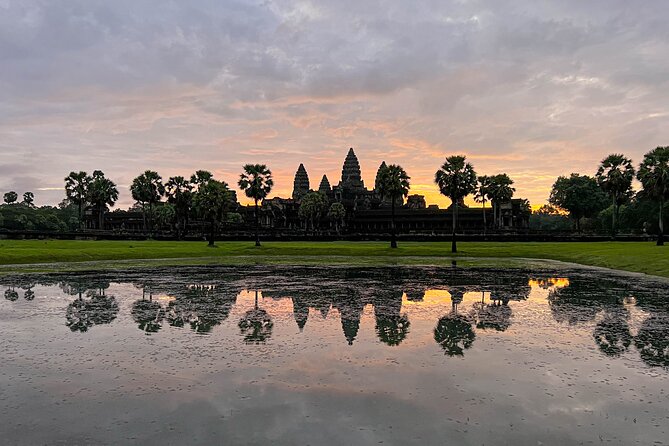
- Angkor Wat sunrise: possible waiting time + local breakfast
- Ta Prohm: the Jungle-temple made famous
- Pre Rup and Ta Som: viewpoints and calmer corners
- Neak Pean and Preah Khan: keep moving, keep noticing details
- Guides and day-to-day pace: why the people part matters
- Heat, clothing rules, and staying on the good side of the Apsara Authority
- What the itinerary feels like in real life
- Who should book this 3-day Angkor Wat and Floating Village trip
- Should you book it
- FAQ
- What’s included in the $199 per person price?
- Do I need to buy the Angkor 3-day pass separately?
- Is the Tonle Sap floating village boat ride included?
- Are lunch and dinner included?
- Is this tour private or shared with other travelers?
- Does the tour include airport pickup and drop-off?
- What’s the dress code for the temples?
- What should I bring for the heat?
- What happens if weather is bad?
Key things to know before you go
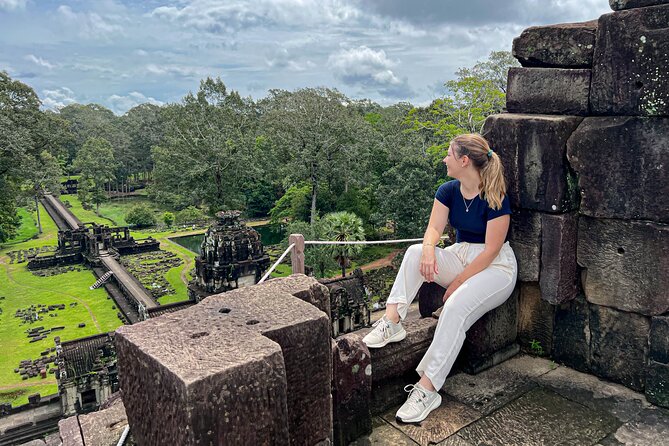
- Angkor 3-day pass is extra, so plan the ticket budget before you arrive
- Tonle Sap pass plus a private boat ride is extra, and that part is the real floating-village highlight
- Private transport keeps long day-trips from feeling like a bus tour
- Sunrise timing on Day 3 is part of the deal, with a chance to wait for early light
- Banteay Srei + Beng Mealea adds variety beyond the usual Angkor route
- The tour provides cool water and towels, but you still need sun and mosquito protection
Price and Logistics: what $199 really covers
The advertised price is $199 per person, and that includes the tour structure: an English-speaking guide, private transport in an air-conditioned vehicle, and hotel pickup and drop-off. You also get cool water and towels during the day, which sounds simple until you’re standing on temple paths with the heat rising.
Then come the add-ons. The big one is the Angkor 3-day pass, listed at $62 per person. You’ll also pay for the Tonle Sap pass and a private boat ride, listed at $15 per person. Lunch and dinner aren’t included, so you should expect to spend for meals each day. Day 3 includes breakfast, so at least you’re not buying that while you’re dealing with sunrise timing.
Is this good value? For many people, yes—because you’re paying for more than one day of temple entry and you’re not doing it alone. Two separate ticket systems (Angkor and Tonle Sap) often catch travelers by surprise, and here the costs are clearly called out. If you come prepared, the base price plus tickets lines up well with a full 3-day, guide-led circuit.
Pickup comfort: starting in the right place
You meet your guide in the morning and the tour moves from there with private transport, not a shared shuttle. Air-conditioned driving matters in Siem Reap. It reduces the time you’re baking in the car, and it makes the schedule feel smoother when you have several stops packed into one day.
A practical detail I appreciate: the tour includes hotel pickup and drop-off, and it also lists airport pickup and drop-off as included. If you’re on a tight itinerary (or arriving late), that can save time and coordination headaches.
Day 1: Angkor Thom, Angkor Wat, and a possible sunset at Phnom Bakheng
Day 1 is the “settle in and get oriented” day, with big classics and one very atmospheric sunset option.
Angkor Thom South Gate: a first big reveal
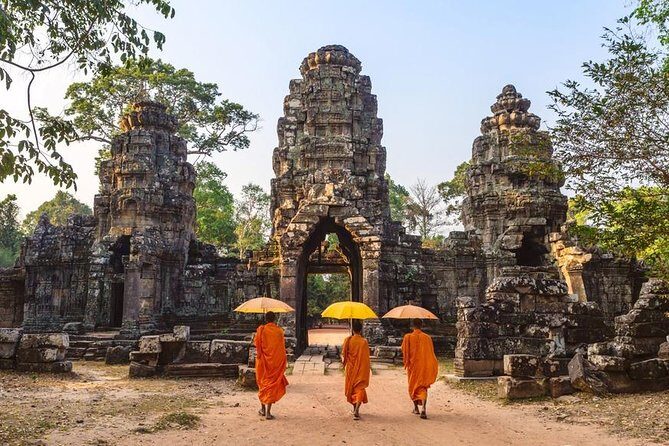
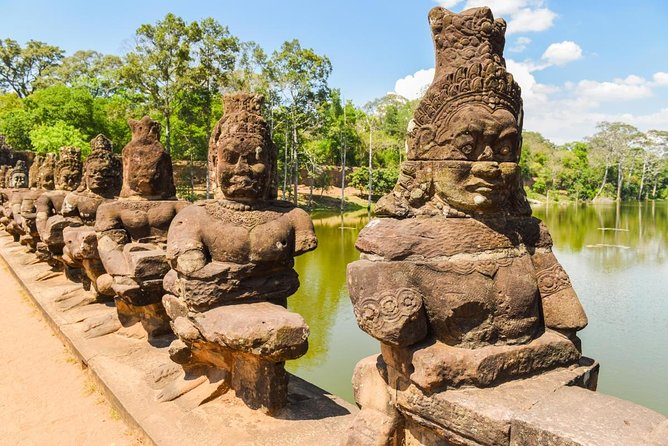
You start early—around 8:00 am meeting at the hotel lobby. The first stop is the South Gate of Angkor Thom, the gateway to the ancient city of the Khmer Empire. This is a strong start because it sets scale right away. You’re not walking into random ruins; you’re walking into a planned, fortified world.
One drawback to keep in mind: gates and courtyards fill up fast and the walking can be exposed. Go in with sun protection and keep your water handy.
Angkor Archaeological Park break: plan meals for yourself
Next is Angkor Archaeological Park, with a lunch break window of about 45 to 60 minutes. Lunch is not included, and you’ll need to pay for food and drinks on your own. The upside is that this break is long enough to actually reset—especially helpful after the early temple walking.
If you’re picky about food, this is the moment to pick something you’ll genuinely eat, not just something fast.
Angkor Wat: the main event
Then you go to Angkor Wat, one of the world’s most recognizable temple complexes. Your guide explains the background and you’ll get time to see the architecture up close rather than racing through for a single photo.
Admission is extra via the Angkor pass, so this is where you’ll want to make sure your ticket plans are solid. Time on site is listed at about 1 hour 30 minutes, which means you’ll see the core elements without the itinerary feeling endless.
Phnom Bakheng (or Pre Rup): sunset if conditions cooperate
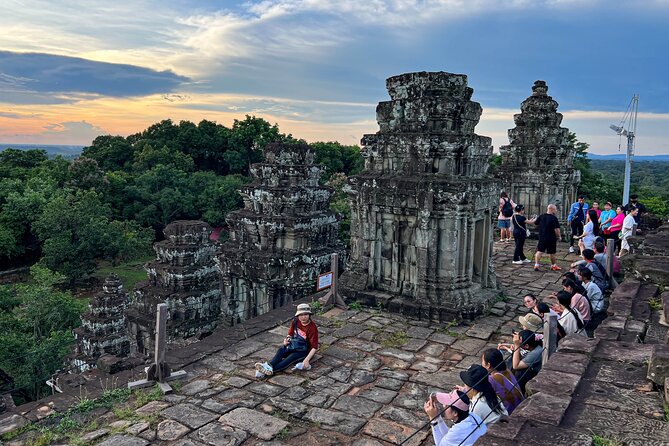
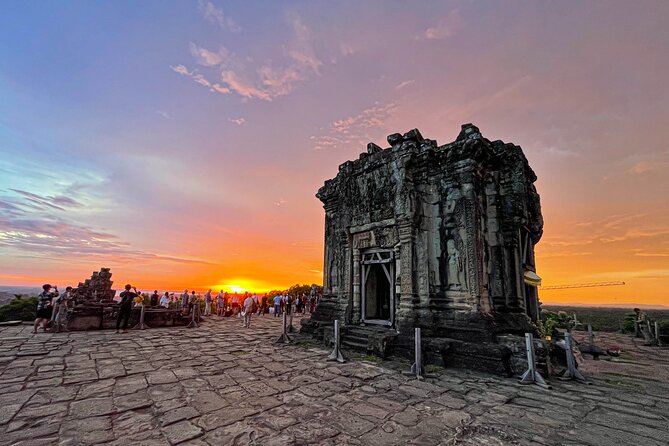
The final stop is Phnom Bakheng for sunset, if the weather allows and you’re not too tired. If you’re wiped, you still have the Pre Rup option mentioned as an alternative viewpoint. This is a good setup because it gives flexibility: you’re aiming for a sky payoff, but you’re not guaranteed it if the day turns humid or visibility drops.
Admission isn’t included here either, so again, your Angkor pass matters.
Day 2: Banteay Srei, Beng Mealea’s jungle feel, and Kampong Phluk on Tonle Sap
Day 2 shifts away from the heaviest crowds and leans into variety: smaller, more delicate temples and one “jungle temple” experience, then floating villages.
Banteay Srei: smaller temple, big personality
You’ll visit Banteay Srei, a 10th-century temple dedicated to Shiva. The time here is shorter—about 45 minutes—but that’s usually enough for Banteay Srei because it’s detailed and the charm is in the carving and the proportions.
This is a good day choice because Banteay Srei feels different from the largest Angkor monuments. If you worry your Angkor days will blur together, this stop helps prevent that.
Beng Mealea: the jungle-temple contrast
Next is Beng Mealea, often described as the jungle-temple. It’s from the Angkor Wat period and sits about 40 km east of the main temple group. You get about 1 hour here.
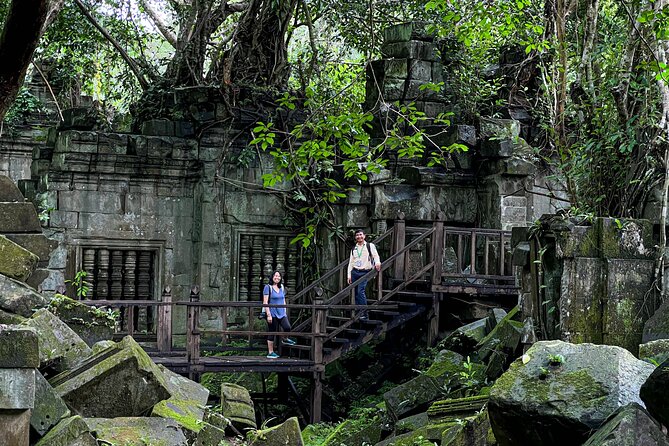
The trade-off with Beng Mealea: it can feel less “polished” than the main sites because the setting is more wild. That’s also why it’s compelling. If you like ruins that look less curated, you’ll likely enjoy it more than the temple complexes where everything feels restored.
Bakong: a shorter stop that breaks up the day
Then comes Prasat Bakong, listed as about 45 minutes, and it’s marked free admission. The nice value here is you get another temple mountain experience without adding another ticket cost for this stop. If you’re doing the Angkor pass already, it still adds a different view and a change of rhythm.
Lunch reset at Angkor Archaeological Park
You return for another lunch break at Angkor Archaeological Park (again about 45 to 60 minutes). Lunch is on you here too. It’s a solid mid-day pause before you head to the lake.
Kampong Phluk: stilt-house life on Tonle Sap Lake
In the afternoon, you’ll reach Kampong Phluk Floating Village at Tonle Sap Lake. The stop is listed at about 1 hour. This is where you swap temple stone for traditional stilt-houses of fishermen’s families. The tour notes there are more than 1000 fishermen families, and that part of what you’re seeing connects to Buddhist monastery life too.
Important cost detail: the Tonle Sap pass and private boat ride are extra at $15 per person. If you’re only half-paying attention to budget items, make sure you don’t forget that this is the moment you’ll likely remember most about “the floating village” experience, and it’s tied to that ticket.
Day 3: Angkor Wat sunrise, Ta Prohm, and the quieter temple chain
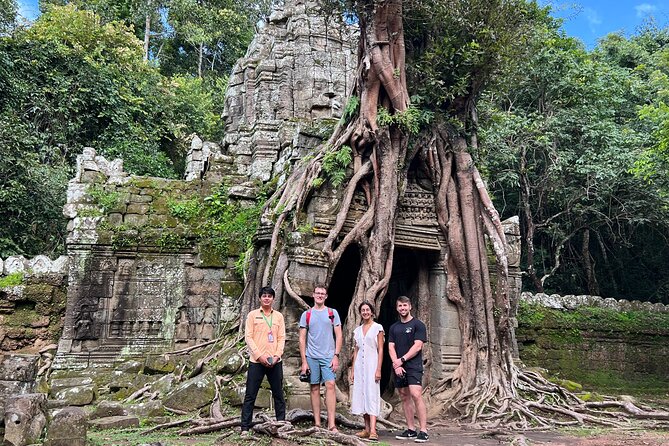
Day 3 is the sunrise-and-stay-awake day. It’s also the one where the itinerary builds momentum: early light at Angkor Wat, then a run of temples that each feel distinct.
Angkor Wat sunrise: possible waiting time + local breakfast
You may spend about 1 hour waiting for sunrise. After sunrise, there’s a short break in the village for local breakfast. The example given includes Khmer rice noodles, with other authentic Khmer options.
This is one of the most practical parts of the tour: you’re not just rushing to a sunrise viewpoint and leaving right away. The break helps you keep your energy for the rest of the morning. Bring the same heat and mosquito protection you used earlier—morning is cooler, but it won’t stay cool for long.
Ta Prohm: the Jungle-temple made famous
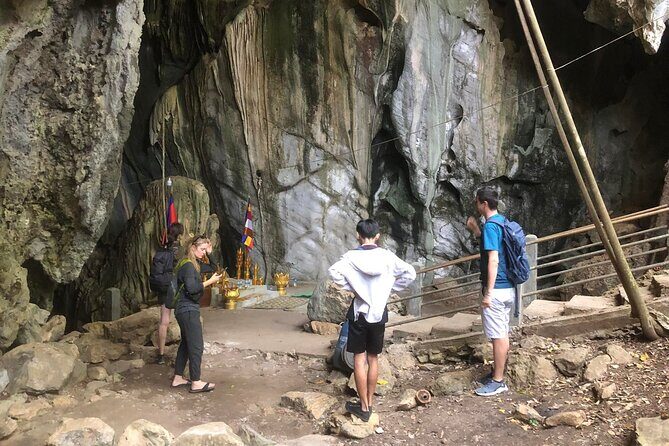
Next is Ta Prohm, known as the jungle-temple and associated with the film Tomb Raider. The time here is about 1 hour.
I like this stop for two reasons. First, it’s visually unforgettable—massive tree roots and stonework in one frame. Second, the guide can help you read the place beyond the pop-culture label, so you understand what you’re seeing structurally and historically.
Pre Rup and Ta Som: viewpoints and calmer corners
After Ta Prohm, you go to Pre Rup (about 35 minutes) and then Ta Som (about 25 minutes). Both are Khmer temple sites with distinct designs and less “one-big-photo-only” energy compared with the most iconic areas.
Pre Rup often functions like a viewpoint stop—short, focused, and best when you’re paying attention to how the temple sits in relation to the surrounding ruins.
Neak Pean and Preah Khan: keep moving, keep noticing details
The last stretch includes Neak Pean (about 25 minutes) and Preah Khan (about 1 hour). Neak Pean is described as an artificial island with a Buddhist temple on a circular island in Jayatataka Baray, and it’s connected with temple-area water features. Preah Khan is a 12th-century temple built for King Jayavarman VII, honoring his father.
This pair can feel like the itinerary’s “brain” portion: less about a single landmark and more about understanding how water, worship, and city planning were linked. If you like temples that reward close watching, you’ll probably enjoy this ending.
Guides and day-to-day pace: why the people part matters
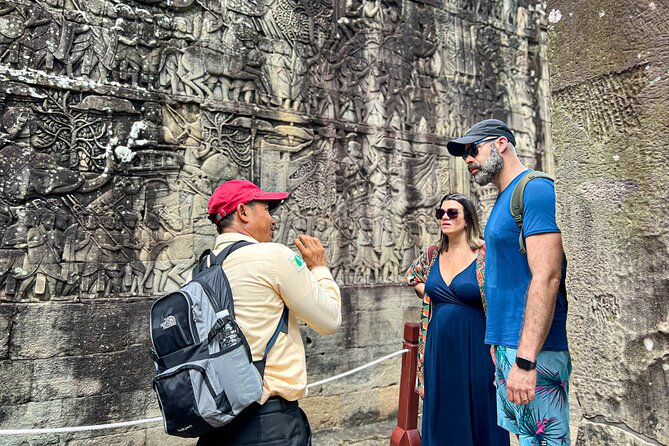
A huge part of getting value out of an Angkor tour is not the driving—it’s the guide. The experience is set up so you hear what you’re looking at while you’re still standing there.
In the feedback for this type of tour, the standout pattern is how professional and kind the guides and drivers are. For example, Sean is highlighted as professional, and Mr. Sophon is noted as phenomenally kind and extremely professional. Another guide name that comes up is Mr. Sam, praised for being professional, available, and friendly. Even if you don’t get the same exact team, that quality bar matters: good guiding keeps the sites from feeling like a checklist.
Another practical point: the tour includes group discounts and runs as a private tour/activity with only your group participating. That’s important for comfort. It means fewer pauses for other travelers, and it makes it easier to adapt when someone needs a slower walking pace or an extra moment at a viewpoint.
Heat, clothing rules, and staying on the good side of the Apsara Authority
Angkor can be deceptively tiring. The tour materials spell out the reality: it gets very hot walking around the temple complex. So bring your best simple systems.
Plan on:
- Water (the tour provides cool water during the tour, but you still need personal hydration habits)
- Sun protection like sunscreen
- Mosquito spray
- Appropriate clothing: shoulders and knees should be covered
The dressing standard is clear: both men and women should wear modest clothing at their comfort level, with loose, lightweight long clothing recommended for hot weather. Comfortable shoes are a must. And the park authority can refuse entry to areas if clothing is considered immodest. That’s not a theoretical risk—temples are strict about this, and you don’t want to lose time because of a wardrobe mistake.
What the itinerary feels like in real life
If you like structure, this schedule works. You have an early start on Day 1, a more varied Day 2 with Beng Mealea and Kampong Phluk, and Day 3 that begins before sunrise and continues through a chain of temples.
The downside of any 3-day Angkor plan is time density. You’ll walk. You’ll sweat. You’ll want to recharge in the car. That’s why the air-conditioned transport and towel/water touches are more than perks—they help you survive the schedule without turning cranky.
You also get a balanced mix: the “must-sees” (Angkor Wat, Ta Prohm) plus temples that feel different (Banteay Srei, Beng Mealea) and a human-scale cultural stop (Tonle Sap). If you’re worried it’ll be too much stone, Tonle Sap breaks that up in a meaningful way.
Who should book this 3-day Angkor Wat and Floating Village trip
This tour is a strong fit if:
- You want guide-led explanations while you’re in the sites
- You like a private feel with air-conditioned transport
- You want a sunrise experience at Angkor Wat rather than skipping it
- You want more than the standard Angkor highlights by adding Banteay Srei and Beng Mealea
- You want Tonle Sap’s Kampong Phluk experience as part of the same trip
It may not be ideal if:
- You hate add-on costs and want everything included in one price
- You’re very sensitive to heat and long days without frequent long breaks
- You’d rather spend days slowly instead of hitting multiple temple stops each day
Should you book it
I’d book this if your goal is a well-paced 3-day circuit that covers the big icons and also includes two stops that add texture: Beng Mealea and Kampong Phluk. The private transport, hotel pickup/drop-off, and the fact that water and towels are provided make the itinerary much more doable in real conditions.
Just go into it with eyes open: budget for the Angkor pass ($62) and Tonle Sap pass + private boat ride ($15), and plan your lunches and dinners. If you do that, you’ll get a lot of temple time plus the lake experience, all guided and organized in a way that doesn’t feel chaotic.
FAQ
What’s included in the $199 per person price?
The tour price includes an English-speaking tour guide, private transport by air-conditioned vehicle, free cool water and towels during the tour, and hotel pick-up and drop-off. Day 3 also includes breakfast.
Do I need to buy the Angkor 3-day pass separately?
Yes. The Angkor pass of 3 days is listed as extra at $62 per person.
Is the Tonle Sap floating village boat ride included?
Not fully. The Tonle Sap pass and a private boat ride are listed as extra at $15 per person.
Are lunch and dinner included?
No. Lunch and dinner (and soft drinks) are not included, so you’ll pay for food and beverages yourself during the lunch breaks.
Is this tour private or shared with other travelers?
It’s private. The activity notes that only your group will participate.
Does the tour include airport pickup and drop-off?
Yes, airport pickup and drop-off are included.
What’s the dress code for the temples?
You should dress respectfully with clothing that covers shoulders and knees. Loose, lightweight, long clothing is recommended, and comfortable shoes are required. Entry can be refused if clothing is considered immodest.
What should I bring for the heat?
You’ll want to carry sun protection and mosquito spray. The tour notes that it can get very hot, so be prepared with appropriate skin protection and hydration.
What happens if weather is bad?
The experience requires good weather. If it’s canceled due to poor weather, you’ll be offered a different date or a full refund.