REVIEW · SIEM REAP
Angkor Cab: Siem Reap 3 day private tour: ‘off the beaten track’
Book on Viator →Bookable on Viator
Angkor Cab makes planning feel simpler. This private 3-day route is a strong first run through Angkor, with private transport and a plan built to dodge some crowds. I like the mix of big-ticket sights with smaller temples, and I also like that the driving is calm and the temple guide work is in clear English. The main catch to plan for: major temple entry costs and meals are not included, so you’ll need to budget for the pass and lunch.
You also get real orientation time, not just a checklist. Day 1 leans into lesser-visited sites and then swings to Srah Srang and Tonle Sap, so you see more than stone ruins. On Day 2 you go big, starting very early for Angkor Wat sunrise, then pairing Angkor Thom and Ta Prohm. Day 3 adds Beng Mealea and other quieter Khmer-era stops, which is where the off-the-beaten-track idea starts to feel real.
If you’re sensitive to early mornings, Day 2 will be the hardest part. Otherwise, it’s an efficient, private way to see a lot while still keeping the day-to-day pace comfortable.
In This Review
- Key Things I’d Pay Attention To
- Three Days That Balance the Big Names With Quieter Angkor Stops
- Price and Logistics: What’s Included, What You’ll Pay Separately
- Day 1: Pink Banteay Srei, Samre, Kdei, and Srah Srang
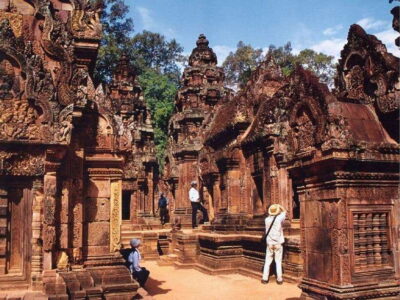
- Banteay Srei: That 10-Century Pink Temple Look
- Banteay Samre: A Temple Near East Baray
- Banteay Kdei: Jayavarman VII and a Buddhist Temple Angle
- Srah Srang: The Large Swimming Pool Moment
- Day 1 Evening Side Trip: Tonle Sap Lake for Real Cambodia Scale
- Day 2: Angkor Wat Sunrise, Angkor Thom South Gate, and Ta Prohm
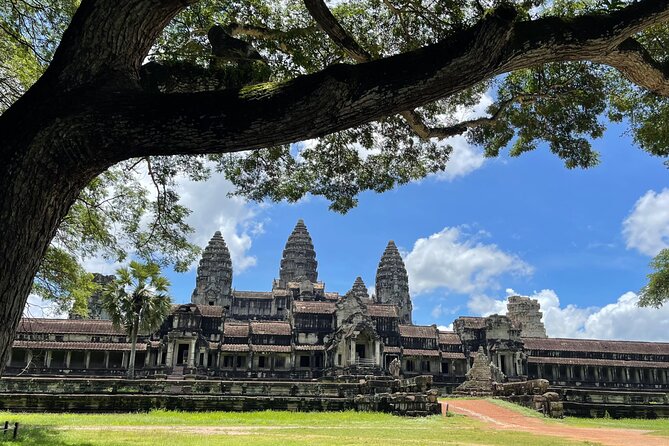
- Angkor Wat at Dawn: Why the Start Time Matters
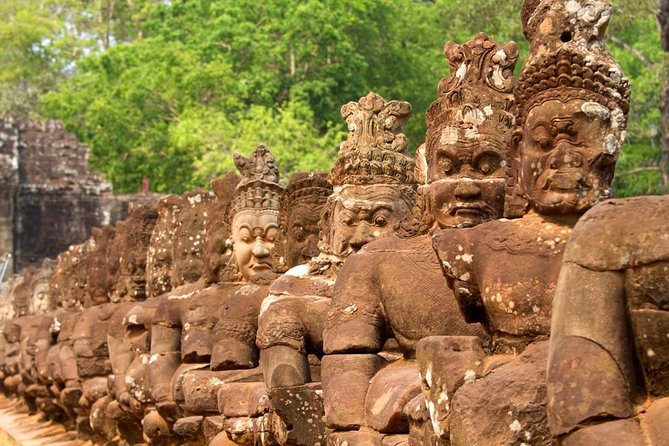
- Angkor Thom: South Gate Photos and Temple Core Time
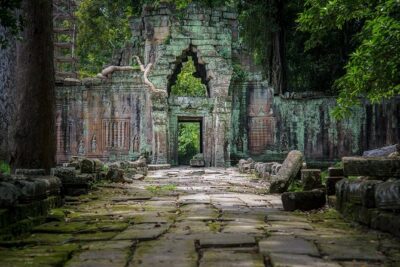
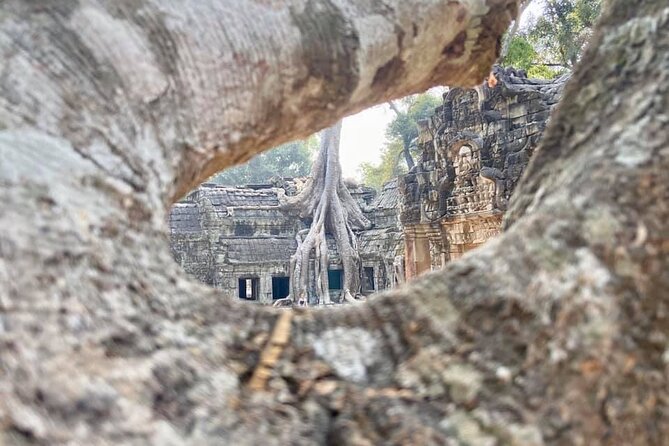
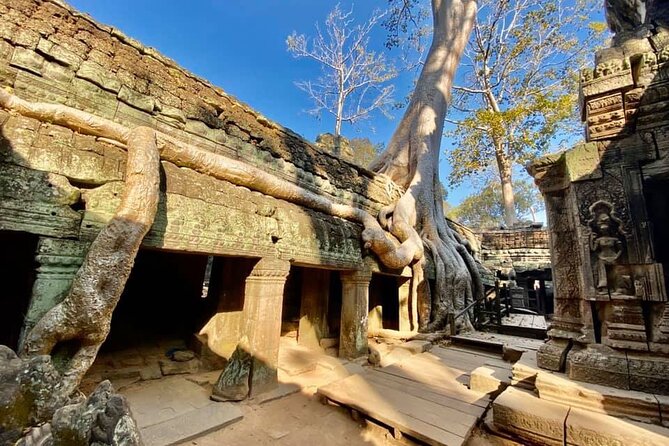
- Ta Prohm: The Tree-Grown Temple Stop
- Day 3: Beng Mealea’s Adventure Feel, Then Bakong and Preah Ko
- Beng Mealea: Where the Off-the-Beaten-Track Idea Feels Real
- Bakong: The Ancient Capital Temple Stop
- Preah Ko: Sacred Bull and a Hindu Dedication
- What “Off the Beaten Track” Means Here (Not Just a Marketing Line)
- Value for Money: Does $550 Make Sense for Up to 3 People?
- Who This Tour Suits Best
- Should You Book This 3-Day Private Tour?
- FAQ
- How many days is the Angkor Cab 3-day private tour?
- What is the price, and how many people can join?
- Is pickup from your hotel included?
- Do I need to buy the Angkor Temple Pass separately?
- Are meals included?
- What time does the tour start?
- What’s included in the tour price?
- Is there free cancellation?
Key Things I’d Pay Attention To
- Private group of up to 3: Less waiting, more flexibility, easier photo stops
- Early start on Day 2: Sunrise at Angkor Wat with pickup around 5am
- Quiet temple strategy: Day 1 and Day 3 focus on smaller Angkor-area sites
- Tonle Sap time included: About 2 hours at the big freshwater lake
- Guide-led visits at multiple sites: Professional temple guide for each stop
- Bring your pass and food budget: Angkor Temple Pass and meals are not included
Three Days That Balance the Big Names With Quieter Angkor Stops
This is the kind of tour you’ll appreciate if you’re new to Siem Reap and want a clean, organized introduction without feeling herded from one famous monument to the next. The route is built around a straightforward idea: see Angkor Wat and Ta Prohm, yes, but also give yourself time at temples people often skip when they chase only the headline sights.
On Day 1, you start with Banteay Srei and Banteay Samre, then move through Banteay Kdei and Srah Srang before heading to Tonle Sap Lake. That sequence matters because it shows different “flavors” of the region. You get the visual wow of Angkor temple architecture, then a shift toward everyday Cambodian life and the lake setting.
Day 2 is the classic Angkor punch: sunrise at Angkor Wat, then Angkor Thom (including the South Gate), and finally Ta Prohm. The tour keeps the structure clear so you can focus on photos, walking, and absorbing the guide’s explanation rather than doing logistics.
Day 3 goes even further away from the usual crowd trail with Beng Mealea, then wraps with Bakong and Preah Ko. Beng Mealea is the kind of place where you’ll understand why people talk about Angkor beyond the postcard icons.
Price and Logistics: What’s Included, What You’ll Pay Separately
For the price, you’re paying for a private setup: a driver, a professional guide, and a car for your small group (up to 3 people). At $550 per group, the math gets much better if you’re traveling as a trio, or if two of you want real privacy without sharing your schedule.
Here’s what’s included:
- bottled water
- driver
- professional guide
- private tour
What’s not included:
- food and drinks (lunch is flexible, typically $5 to $10 per person, byo)
- Angkor Temple Pass
- other activity fees if needed
You’ll also receive a mobile ticket, and pickup is offered. Meeting time is listed as 9:00am, but you should plan for a much earlier start on Day 2 for Angkor Wat sunrise.
Temple Pass Reality Check: Since the Angkor Temple Pass isn’t included, you’ll want to confirm how many days or which type you need before you arrive. The easiest way to avoid stress is to treat the pass as a non-negotiable part of your budget, right next to entry fees.
Day 1: Pink Banteay Srei, Samre, Kdei, and Srah Srang
Day 1 is where this tour earns its off-the-beaten-track label. Instead of jumping straight to the most famous complexes, you ease into Angkor with stops that are still impressive but tend to feel calmer.
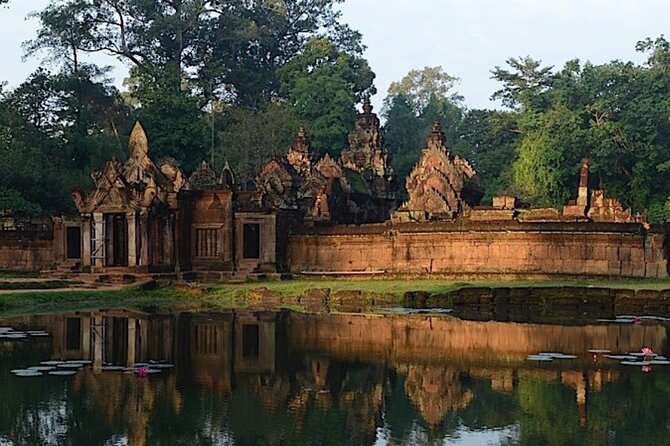
Banteay Srei: That 10-Century Pink Temple Look
You’ll travel from your hotel to Banteay Srei in about 45 minutes. This is the “pink temple” stop, and it’s a great choice early in the trip because it sets expectations. The guide gives details on the temple tour, so even if you don’t consider yourself a temple expert, you’ll get meaning instead of just sightseeing from outside.
This stop also works well on a practical level: early in your trip you’re still fresh. You’re not battling a late-day crowd crush, and your brain is ready to notice carvings, layout, and the way the site is designed.
Banteay Samre: A Temple Near East Baray
Next is Banteay Samre (about 45 minutes), connected to the area of East Baray and associated with King Suryavarman II. This stop is shorter than some, around 45 minutes, but that timing can be an advantage. You get a focused temple visit without turning the day into one long march.
Banteay Kdei: Jayavarman VII and a Buddhist Temple Angle
Then you head to Banteay Kdei for about an hour. The tour describes it as a citadel of chambers built from the mid-12th to early-13th century by Jayavarman VII, with a Buddhist temple focus. After a local lunch, this transition feels natural: you go from smaller-site detail to a more substantial temple complex, and your guide can connect what you’re seeing to the broader Angkor era.
Local lunch is practical here because the tour doesn’t force one specific place or one specific meal style. You’ll be choosing lunch based on what you like, with an expected range of about $5 to $10 per person.
Srah Srang: The Large Swimming Pool Moment
After Banteay Kdei, you walk over to Srah Srang for about 30 minutes. The big draw is that it’s described as the largest swimming pool in the world, built in the mid-10th century and modified by Jayavarman VII in the 12th century.
This is one of those stops that feels like a reset. It’s less about peak architecture and more about atmosphere and scale. Even if you’re not a “waterworks” person, it helps you understand how Angkor wasn’t only temples. There were systems, reservoirs, and built environments around daily life.
Day 1 Evening Side Trip: Tonle Sap Lake for Real Cambodia Scale
Tonle Sap Lake is on the schedule for about 2 hours. The tour notes that Tonle Sap is the biggest freshwater lake in Southeast Asia, and the area changes dramatically between wet and dry seasons.
Why this stop is valuable: it breaks up the temple-heavy rhythm. You see a different kind of geography, and the scale information helps you picture why this region was so important for livelihoods. The tour also mentions the lake is surrounded by five provinces in Cambodia, which is a helpful detail if you want a bigger mental map of where everything sits.
A practical tip: wear something comfortable for a lake stop, because your time there can include walking around viewpoints and just standing to take in the water. Bring sun protection, since Cambodia sun does not care about your itinerary.
Day 2: Angkor Wat Sunrise, Angkor Thom South Gate, and Ta Prohm
Day 2 is the one you’ve been building toward. It starts with a very early pickup, with the plan described as around 5am. The drive from your hotel to Angkor Wat is around 30 minutes, and the purpose is sunrise behind Angkor Wat.
Angkor Wat at Dawn: Why the Start Time Matters
Spending about 3 hours at Angkor Wat gives you time beyond the first wave of photo-taking. Sunrise visits can be crowded in the general sense, but the bigger advantage of this tour’s structure is that you’re not scrambling to get there. You’re on a schedule designed around timing, and your guide can point out what to look for while the light is changing.
If it’s your first time at Angkor Wat, sunrise is also the best “orientation moment.” The monument reads differently with morning light. And it’s a less frantic start than arriving later in the day, which helps your headspace.
Angkor Thom: South Gate Photos and Temple Core Time
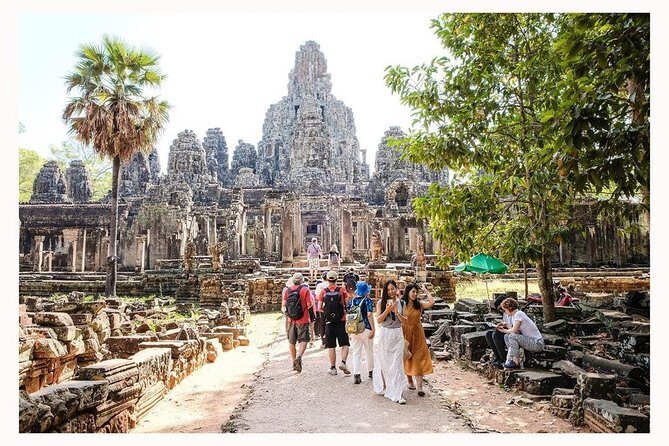
After Angkor Wat, you head to Angkor Thom, the tour notes it’s about a 5-minute drive from there to the capital complex area. You stop at the South Gate for pictures before moving to the main temples in Angkor Thom for about 2 hours total.
This portion is important because Angkor Thom is where you start to see how the Angkor city concept worked. You’re not just looking at one building. You’re reading an entire space.
Ta Prohm: The Tree-Grown Temple Stop
Then you go to Ta Prohm, described as about 15 minutes away, with a quick stop along the way at a stone bridge for tree growth above it. Ta Prohm gets about 1 hour.
Ta Prohm is famous, but the guide matters. With someone explaining what you’re looking at, it’s easier to notice why it’s more than a dramatic photo location. You see the temple and the vegetation as one story rather than two separate things.
Day 3: Beng Mealea’s Adventure Feel, Then Bakong and Preah Ko
Day 3 leans more “explore” and a bit less “line up and photograph.” Your guide and driver meet you around 9am, and the trip to Beng Mealea is about 1.5 hours.
Beng Mealea: Where the Off-the-Beaten-Track Idea Feels Real
Beng Mealea takes about 3 hours. The description also mentions you’ll see local daily activities along the way, which is exactly what makes longer drives worth it. You’re not only moving between temples; you’re watching Cambodia living as you travel.
Beng Mealea can involve more uneven walking than the smoother, more maintained stops. That’s in line with the tour note about moderate physical fitness level. If you’re comfortable walking in varied terrain, you’ll likely enjoy this day more than you expect.
Bakong: The Ancient Capital Temple Stop
After Beng Mealea, you head to Bakong, described as the ancient Khmer capital city area (Hariharalaya). Bakong is about a 40-minute visit.
This stop is shorter, which is useful because it keeps your final day from turning into a full marathon after already spending time at Beng Mealea. You’ll still get the sense of place: a capital area temple rather than a one-off structure.
Preah Ko: Sacred Bull and a Hindu Dedication
Then you move to Preah Ko, about 30 minutes. The tour describes it as The Sacred bull, the first temple built in Hariharalaya in the year 879 by Hindu King Indravarman I, dedicated to Shiva.
This is a nice closing note because it rounds out the spiritual mix you saw earlier in the trip. By the end of Day 3, you can connect the dots between temple purposes, rulers, and the way these sites were planned.
What “Off the Beaten Track” Means Here (Not Just a Marketing Line)
This tour earns the phrase through its balance of timing and selection. You’re not only traveling to big names. You’re also spending real time at:
- Banteay Srei and Banteay Samre
- Banteay Kdei and Srah Srang
- Beng Mealea
- Bakong and Preah Ko
Those stops help you avoid spending every waking hour in the busiest, most photographed areas. And because it’s private, you can pause for photos and explanations without competing with the clock for everyone else’s tour.
The other big factor is pace. The itinerary is structured with sensible visiting windows: 30 minutes at Srah Srang, about an hour at Banteay Kdei, longer blocks at major temples like Angkor Wat and Beng Mealea. That rhythm makes a difference when it’s hot and you’re walking.
Value for Money: Does $550 Make Sense for Up to 3 People?
If you’re thinking about value, treat this as three things you’re buying:
1) A private driver
2) A professional guide across multiple days
3) A curated route that mixes iconic and quieter sites
The biggest “value risk” on any Angkor tour is when you’re paying for transport but still need to chase your own entry tickets and food. Here, that’s clear: Angkor Temple Pass and meals aren’t included. That means the headline price isn’t the full cost, but it’s still a straightforward one because the included items are solid and the route is structured.
At $550 per group (up to 3), this works especially well if:
- you want privacy and a consistent schedule
- you don’t want to negotiate transportation day-by-day
- you want a guide to interpret what you’re seeing (so the temples become more than visual hits)
The tour is also rated highly, with a 5-star rating and 100% recommendation based on the provided summary. That doesn’t guarantee your experience, but it does suggest the company’s offering lands well for people who want organized comfort.
One more practical detail: bottled water is included, and one family noted having a private car with AC and cold water. Even if the vehicle model can vary, AC and water are the kind of small comfort items that matter a lot in Siem Reap heat.
Who This Tour Suits Best
This is a good fit if:
- it’s your first trip to Siem Reap and you want a clear introduction
- you like a private setup with safe driving and English guide explanations
- you want a blend of iconic Angkor and quieter temple sites
- your group is up to 3 people, which helps split the per-group cost
It might be less ideal if you:
- hate very early mornings, since Day 2 starts around 5am for sunrise
- expect every day to include fully included meals (lunch is flexible and byo)
The tour also notes moderate physical fitness. That’s your hint to wear good walking shoes and plan for uneven ground at least on one of the days.
Should You Book This 3-Day Private Tour?
I’d say yes if you want a structured, private way to see Angkor without losing time to planning. The itinerary makes practical sense: Day 1 builds context and shows the wider region, Day 2 gives you the iconic temples in the early light, and Day 3 keeps the momentum with quieter sites.
Before you book, do three quick prep steps:
- Budget for the Angkor Temple Pass and for lunch (bring flexibility since food isn’t included)
- Bring comfortable shoes for mixed temple terrain
- Plan for the early wake-up on Day 2 so you can enjoy sunrise instead of treating it like a race
If you want a calm, private Angkor route with a guide who helps you understand what you’re looking at, this is a strong option.
FAQ
How many days is the Angkor Cab 3-day private tour?
It runs for approximately 3 days, covering multiple temple stops and Tonle Sap Lake.
What is the price, and how many people can join?
The price is $550.00 per group, up to 3 people.
Is pickup from your hotel included?
Yes, pickup is offered.
Do I need to buy the Angkor Temple Pass separately?
Yes. The Angkor Temple Pass is not included.
Are meals included?
Food and drinks are not included. Lunch depends on the food you like, generally around $5 to $10 per person, byo.
What time does the tour start?
The meeting/start time is listed as 9:00am, but Day 2 includes an early start around 5am for Angkor Wat sunrise.
What’s included in the tour price?
Included items are bottled water, the driver, a professional guide, and the private tour.
Is there free cancellation?
Yes, free cancellation is offered. You can cancel up to 24 hours in advance for a full refund.